
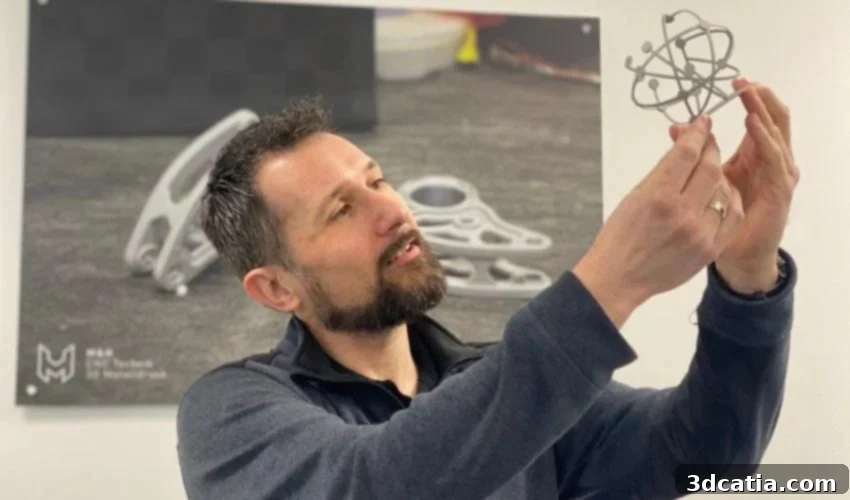
M&H Pioneers US Energy Resilience: 3D Printing Transforms Aircraft Engines into Stationary Power Plants
In 2022, the United States marked a pivotal moment in its energy transition with the enactment of the Inflation Reduction Act (IRA). This landmark legislation significantly bolstered efforts to expand renewable energy sources, allocating substantial funds to accelerate the adoption of green alternatives. The impact has been tangible; last year alone, the US saw the installation of solar systems with a formidable capacity of 33 gigawatts, and projections anticipate an impressive annual growth rate of 14% in the US renewable energy sector by 2028. This robust focus on sustainable energy, however, coexists with a pragmatic recognition of grid stability challenges. Despite the rapid growth in renewables, the inherent intermittency of solar and wind power necessitates reliable backup solutions for periods of low generation, often referred to as “dark phases.” Consequently, the USA is actively developing a strategic “plan B” to fortify its power grid. This involves a notable increase in demand for stationary, gas-powered small power plants, particularly those capable of rapid deployment and flexible operation. A fascinating and innovative solution emerging from this demand is the conversion of powerful aircraft engines to serve these purposes, offering a dynamic way to stabilize the US power grid during emergencies or peak demand. The intricate process of transforming an aircraft engine, originally designed for aerial propulsion, into a stationary power generation unit requires an extraordinary depth of specialized knowledge across various disciplines. This includes advanced insights into material science, the engineering complexities of aviation components, and rigorous adherence to prevailing industry standards. It is precisely this unique blend of expertise that the Austrian company M&H, based in Ilz, brings to the table, securing a multi-million dollar cooperation deal that underscores their unparalleled capabilities in this burgeoning field.
M&H, an Austrian powerhouse in advanced manufacturing, has carved out a formidable reputation through its core specializations in 3D printing and CNC machining. The company’s extensive experience spans demanding sectors such as high-performance racing and the rigorous aviation industry, where precision, durability, and innovation are paramount. This deep-seated expertise, particularly its profound understanding and application of 3D metal printing coupled with the mastery of high-performance materials, has enabled M&H to outmaneuver fierce international competition. Their distinctive capabilities have positioned them as a strategic partner in this groundbreaking initiative, where M&H will play a crucial role in overseeing and executing the complex transformation of aircraft turbines into reliable stationary power units. This partnership not only highlights M&H’s technological prowess but also its critical contribution to global energy infrastructure solutions, leveraging its legacy in precision engineering to meet future energy demands.
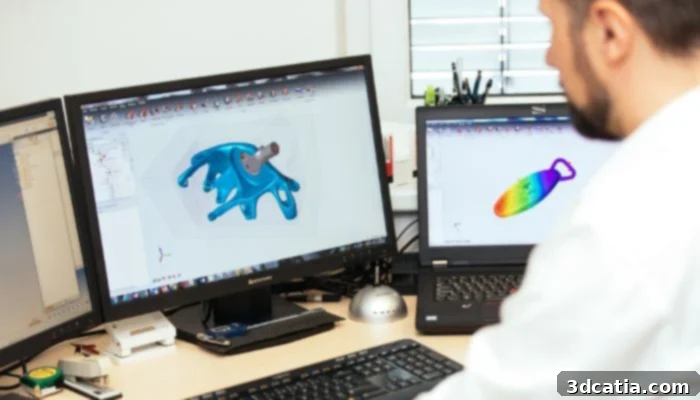
M&H specializes in 3D metal printing and CNC machining and has entered a new partnership thanks to its expertise. (Photo Credits: M&H)
As a cornerstone of this transformative collaboration, M&H is tasked with the critical responsibility of supplying intricate components for these stationary gas turbines, alongside providing a comprehensive suite of related engineering and manufacturing services. The project is commencing with an intensive initial pilot phase, during which M&H is set to produce and deliver 168 highly specialized, additively manufactured turbine blades. These crucial components are designed for integration into the exhaust systems of the turbine units, with delivery scheduled for Texas by the autumn. The successful completion and performance verification of this pilot phase are instrumental, as they are anticipated to trigger a significant extension of the contract, potentially stretching until 2031. Under such an extension, M&H would be committed to delivering an astounding volume of over 25,000 components, underscoring the long-term vision and scale of this strategic partnership. M&H has proudly confirmed that production is currently well underway, with initial batches of parts already successfully manufactured and delivered, demonstrating their efficiency and adherence to timelines. Jochen Wagner, Sales Manager at M&H, shared his enthusiasm regarding their early successes: “With the first prototypes delivered, we were immediately able to demonstrate our qualities and surpass existing best performances in terms of precision and rigidity. This achievement is also significantly attributed to the fact that we operate one of the largest 3D metal printers in Austria, our state-of-the-art SLM800.” This statement highlights not only M&H’s commitment to excellence but also its investment in cutting-edge technology that provides a distinct competitive advantage in the complex world of additive manufacturing for high-performance applications.
The manufacturing of these highly complex structural elements, many of which feature intricate internal cavities essential for optimal performance and thermal management, requires the use of exceptional materials and sophisticated processing techniques. M&H has chosen Inconel 718, a paramount choice for such demanding applications. Inconel 718 is a highly complex, heat-resistant nickel-chromium superalloy renowned for its outstanding strength, excellent corrosion resistance, and remarkable performance at extreme temperatures, properties critical for components operating within the harsh environment of a gas turbine’s exhaust system. However, working with such advanced materials presents its own set of challenges, particularly its propensity for deformation during manufacturing due to thermal stresses or mechanical forces. To counteract this, M&H employs a specialized process step known as pre-deforming. Patrick Herzig, Managing Director at M&H, elucidated the importance of this technique: “During manufacturing, materials such as Inconel 718 can be significantly deformed by heat or mechanical forces, leading to deviations from the intended geometry. This technique of pre-deforming the material is crucial; it strategically shapes the material in advance, ensuring that it retains the correct, precise shape and size after undergoing all subsequent processing steps, including 3D printing and post-processing. This meticulous approach is vital for achieving the high dimensional accuracy and structural integrity required for critical turbine components.” This careful control over material behavior through advanced manufacturing processes is a testament to M&H’s deep metallurgical and engineering expertise, ensuring the delivery of components that meet the most stringent performance criteria.
As a true pioneer in the realm of 3D printing, M&H has proactively amassed an unparalleled depth of knowledge across various additive manufacturing technologies and high-performance materials. This extensive foundation has enabled the company to successfully navigate and excel in numerous complex projects across diverse industries. However, M&H’s contributions to this critical US energy resilience project extend far beyond mere manufacturing. The company is also entrusted with comprehensive material analysis, a vital step to ensure the integrity and reliability of every component produced. This rigorous testing regimen includes, but is not limited to, detailed chemical testing to verify material composition, tensile testing to assess strength and ductility, crack testing to identify any potential structural flaws, and density cube testing to ensure material uniformity and minimize porosity. Patrick Herzig further elaborated on the significance of these procedures, stating: “These tests are absolutely crucial to ensure that all requirements, which are stringently based on aviation industry standards—known for being among the most demanding in the world—are meticulously met, and that the component quality consistently remains at an exceptionally high level.” Here, M&H’s wealth of experience from other highly regulated industries, where such exhaustive testing and quality assurance protocols are commonplace, proves to be an invaluable asset. Their ability to leverage this cross-industry knowledge and apply it to the energy sector underscores their unique capability to deliver components that are not only technologically advanced but also supremely reliable and safe for critical infrastructure applications.
While M&H has a distinguished track record of achieving numerous successful projects and groundbreaking innovations, securing this new order, valued in the double-digit million range, signifies a monumental milestone for the Austrian company. This substantial contract not only represents a significant financial achievement but also serves as a powerful validation of M&H’s sustained commitment to excellence and its pioneering spirit in advanced manufacturing. Patrick Herzig expressed immense satisfaction with this accomplishment: “This collaboration not only emphasizes our unparalleled expertise in the dynamic and rapidly evolving field of 3D metal printing but also significantly strengthens our strategic position on the international market. It demonstrates our capability to tackle complex global challenges and underscores our role as a key innovator.” This partnership with a leading entity in the US energy sector marks M&H’s expansion into a critical new market, highlighting its capacity to apply its advanced manufacturing solutions to solve pressing energy infrastructure needs on a global scale. It is a clear indicator of the growing recognition of additive manufacturing’s potential to revolutionize not just product design, but also supply chain resilience and strategic industrial capabilities. For those interested in delving deeper into M&H’s innovative solutions and their broader impact, further information can be found on their official website here.
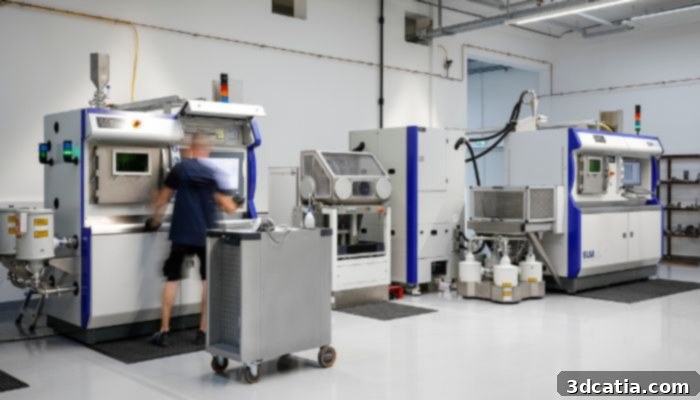
In Ilz, M&H has a high-performance machine park, including the SLM 800, one of the largest 3D metal printers in Austria, which is used to produce the components that are then delivered to Texas. (Photo Credits: M&H)
The conversion of aircraft engines into small, gas-fired power plants represents a fascinating intersection of aerospace technology and energy infrastructure, offering a resilient solution for modern power grids grappling with the integration of intermittent renewables. What are your thoughts on this innovative approach to energy security and grid stabilization? We encourage you to share your perspectives in a comment below or join the conversation on our LinkedIn, Facebook, and Twitter pages! Don’t miss out on the latest advancements and news in the world of 3D printing; sign up for our free weekly newsletter here to receive updates directly in your inbox. Additionally, you can explore all our insightful videos and engaging content on our YouTube channel for a visual dive into additive manufacturing and its applications.
*Cover Photo Credits: Lueflight