
Visionaries and Innovators: The Key Personalities Who Defined 3D Printing in 2019
The year 2019 marked a significant turning point for the additive manufacturing industry. What was once predominantly a realm of rapid prototyping began its robust transformation into a truly production-ready process. This pivotal shift saw the market become increasingly industrialized, moving beyond its experimental stages to integrate deeply into various sectors worldwide. This remarkable growth wasn’t just a technological evolution; it was profoundly shaped by dedicated individuals and pioneering teams whose research, innovation, and relentless drive propelled additive manufacturing into new frontiers. As 2019 drew to a close, it was clear that these twelve personalities, and the entities they represent, had left an indelible mark on the landscape of 3D printing. They pushed boundaries, solved complex challenges, and laid foundational groundwork for the future of manufacturing. Let’s revisit the leaders who illuminated the path forward for 3D printing throughout that impactful year.
The Israeli Research Team: Pioneering Bioprinting with Tal Dvir
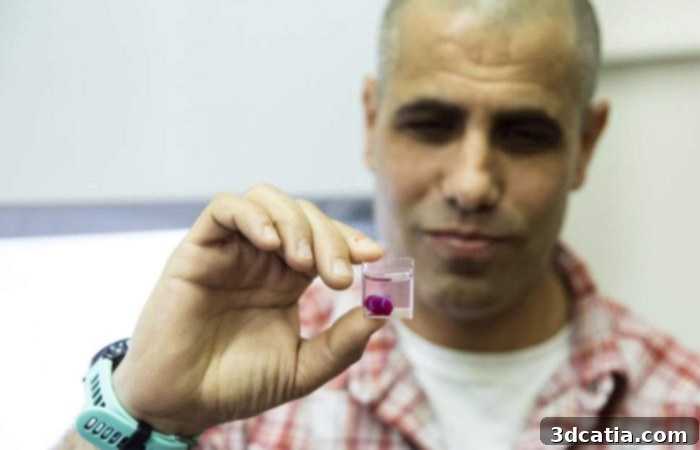
Our journey begins not with a single individual, but with a groundbreaking team of Israeli scientists whose work promised to revolutionize medical science. Led by Professor Tal Dvir, this extraordinary group achieved a monumental feat in bioprinting: they successfully 3D printed a human heart, roughly the size of a rabbit’s heart. What made this accomplishment truly unprecedented was the fact that the organ was meticulously engineered using human blood vessels and tissue, marking a world-first in the medical and additive manufacturing communities. Professor Dvir shared his ambitious vision at the time, stating, “In the next 10 years, I hope there will be organ printers in the best hospitals in the world and that these procedures will be performed routinely.” While numerous challenges in transplantation and functionality remain to be addressed, this pioneering work represented an enormous leap forward for bioprinting and regenerative medicine, opening up incredible possibilities for future healthcare solutions and organ replacement therapies. Their dedication established a new benchmark for what’s possible with 3D printing in the human body.
Randy Altschuler: Scaling On-Demand Manufacturing with Xometry
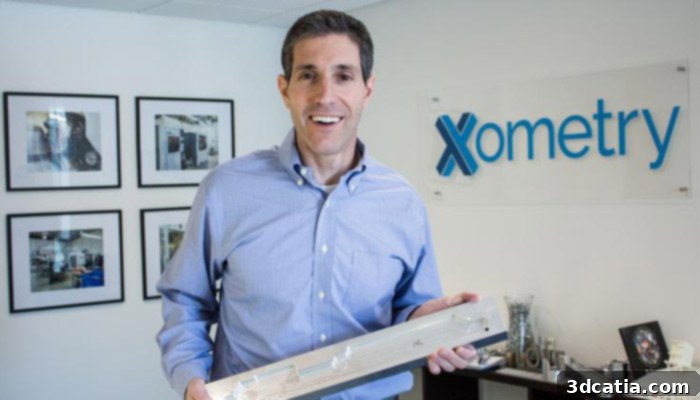
Randy Altschuler, the visionary CEO of Xometry, showcased remarkable growth and strategic acumen in 2019. Having been recognized as one of our featured 3D startups back in 2017, Xometry’s initial mission was to streamline on-demand manufacturing by creating a seamless connection between engineers, designers, and a vast network of manufacturing partners. Under Altschuler’s leadership, this concept blossomed. Just two years later, Xometry secured over $50 million in funding, a testament to its compelling business model and future potential. Altschuler articulated his plan to invest these substantial funds “in growth, product development and global expansion initiatives,” signaling a clear intent to dominate the custom manufacturing space. This ambition was swiftly realized when, only a few months later, the US-based company acquired Shift, Europe’s largest custom manufacturing marketplace. This acquisition significantly expanded Xometry’s global footprint and solidified its position as a leading force in digital manufacturing, driven by Altschuler’s unwavering commitment to making advanced manufacturing accessible and efficient for businesses worldwide. His strategic decisions exemplified the power of digital platforms in transforming traditional manufacturing supply chains.
Fedor Antonov: Innovating Continuous Fiber Composites with Anisoprint
In the realm of advanced materials, Fedor Antonov, CEO and founder of the Russian manufacturer Anisoprint, made significant waves in 2019. Antonov’s vision was to address the limitations of traditional materials by developing an accessible and superior alternative to metal, specifically through continuous fiber composites. To this end, he established Anisoprint in 2015. The company’s 3D printers are built upon a patented co-extrusion technology for composite fibers, ingeniously designed to be compatible with virtually any plastic material available on the market. This unique approach allows for the creation of incredibly strong, lightweight parts with anisotropic properties, pushing the boundaries of what 3D printed components can achieve. Antonov’s commitment to material innovation not only garnered considerable attention but also provided manufacturers with new capabilities for producing high-performance parts, challenging conventional manufacturing wisdom and expanding the practical applications of additive manufacturing into demanding industrial segments. His work underscored the growing importance of material science in the evolution of 3D printing.
Stefanie Brickwede: Driving Global Collaboration with Mobility Goes Additive
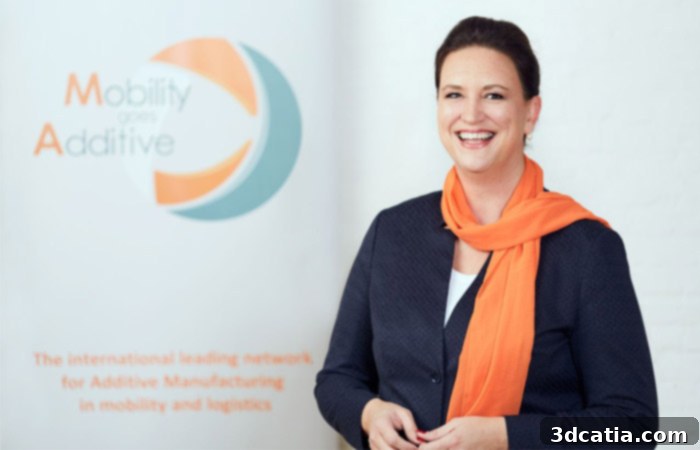
Stefanie Brickwede, Managing Director at Mobility Goes Additive (MGA), emerged as a pivotal figure in fostering collaboration and driving the industrial adoption of additive manufacturing. MGA stands as one of the world’s largest and most influential additive manufacturing networks, meticulously bringing together a diverse ecosystem of companies, research institutes, and associations. Its core mission is to champion the integration of 3D technologies across various professional sectors, particularly within the mobility industry. In 2019, Stefanie Brickwede played a critical role in the international expansion and development of this network. Her unwavering commitment to uniting global stakeholders demonstrated a clear resolve to break down silos and accelerate the widespread acceptance and implementation of 3D printing. Under her dynamic leadership, MGA experienced phenomenal growth, expanding from its initial nine founding members to a robust community of over 90 organizations in just two years. Brickwede’s efforts highlight the power of strategic partnerships and community building in transforming nascent technologies into mainstream industrial solutions.
Xavier Martinez Faneca: Elevating Desktop 3D Printing with BCN3D
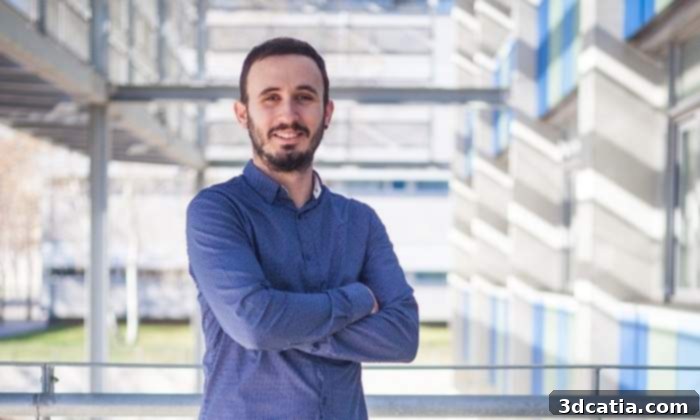
The desktop 3D printing market is intensely competitive, with FDM 3D printers constantly evolving in performance and accessibility. Amidst this bustling landscape, the Spanish manufacturer BCN3D, under the astute leadership of CEO Xavier Martinez Faneca, proved to be an exceptionally active and influential player in 2019. Faneca spearheaded a remarkable year for BCN3D, marked by several strategic advancements. The company successfully raised 2.7 million euros in funding, specifically aimed at strengthening its market position and fueling further innovation. Beyond financial achievements, BCN3D launched its cutting-edge Epsilon professional solution, a significant step in offering high-performance desktop systems for industrial applications. Perhaps most impressively, Faneca also unveiled BCN3D’s sophisticated 3D printer farm, a robust operation integrating 63 machines running tirelessly 24/7. This innovative farm was designed to print the essential components for their future Sigma and Sigmax R19 models, demonstrating a commitment to scalable in-house production. Faneca’s vision propelled BCN3D to the forefront of the professional desktop 3D printing sector, illustrating how focused leadership can drive both product innovation and manufacturing efficiency within a highly dynamic market.
Alain Guillen: Expanding Construction 3D Printing with XtreeE
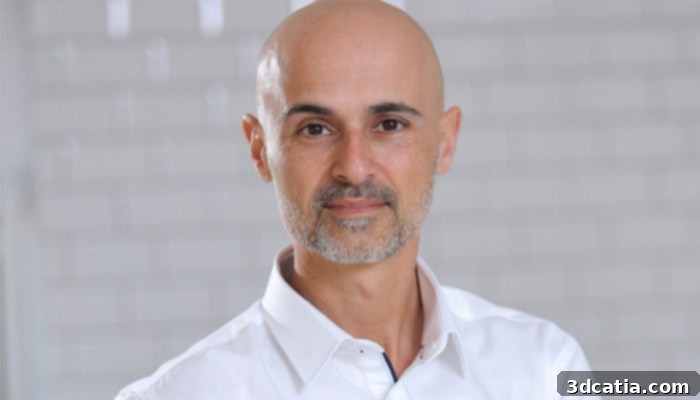
In the burgeoning sector of concrete 3D printing, discerning the leading innovator can be challenging, given the rapid advancements in machine speed, reliability, and durability. However, the French company XtreeE, guided by its Managing Director Alain Guillen, stood out in 2019. XtreeE earned its recognition not only for the impressive array of projects successfully completed throughout the year but also for its ambitious international expansion. A significant milestone was the establishment of new offices in Dubai, a city renowned for its forward-thinking approach to construction and urban development. Alain Guillen demonstrated a profound conviction in the immense potential that Dubai offered, especially given the city’s ambitious target for 25% of its buildings to be 3D printed by 2030. Under his leadership, XtreeE’s innovative approach to large-scale additive manufacturing in construction has garnered global attention, offering scalable solutions for sustainable and efficient building practices. Guillen’s strategic decision to tap into new markets underscored a broader trend of construction 3D printing gaining serious industrial traction, with XtreeE at the forefront of this transformative movement.

Gil Lavi: Building Bridges in Additive Manufacturing with 3D Alliances
Gil Lavi was an undeniable force and an impossible-to-miss personality within the additive manufacturing industry throughout 2019. His omnipresence at international additive manufacturing events and his active engagement across social media platforms made him a highly visible and influential figure. At the close of 2018, Lavi leveraged his extensive industry insights to establish 3D Alliances, a specialized consulting firm. This venture was founded with a clear objective: to act as a crucial bridge between various stakeholders in the additive manufacturing ecosystem. 3D Alliances focuses on assisting manufacturers, software developers, and other key players in identifying the right resellers and establishing robust, efficient distribution networks. Lavi’s unique expertise in market strategy and his ability to forge meaningful connections quickly positioned 3D Alliances as an invaluable partner for companies looking to expand their reach and optimize their market penetration. His work directly contributed to the industrialization and commercialization efforts of many AM companies, making him a central connector in the industry’s growth story and demonstrating the critical role of strategic partnerships in a rapidly evolving market.
François Minec: Driving Material Innovation at BASF 3D Printing Solutions
For those closely following additive manufacturing news, the increasing presence and significant investments by chemical companies in the market have been hard to ignore. BASF, a global chemical giant, exemplifies this trend through its dedicated BASF 3D Printing Solutions division. This division is committed to developing innovative and highly efficient industrial 3D printing materials, a critical element for the widespread adoption of additive manufacturing. François Minec, serving as the CCO and Managing Director of BASF 3D Printing Solutions, played an instrumental role in spearheading this development throughout 2019. His strategic direction was key to a series of significant advancements, including the rebranding of the division’s materials under the new, forward-looking identity “Forward AM.” Furthermore, Minec was central to the strategic acquisition of Sculpteo, a prominent French 3D printing service, which further enhanced BASF’s capabilities and market presence. Under his guidance, BASF solidified its position as a leading supplier of advanced materials for 3D printing, underscoring the vital synergy between material science and additive manufacturing and accelerating the development of industrial-grade solutions.
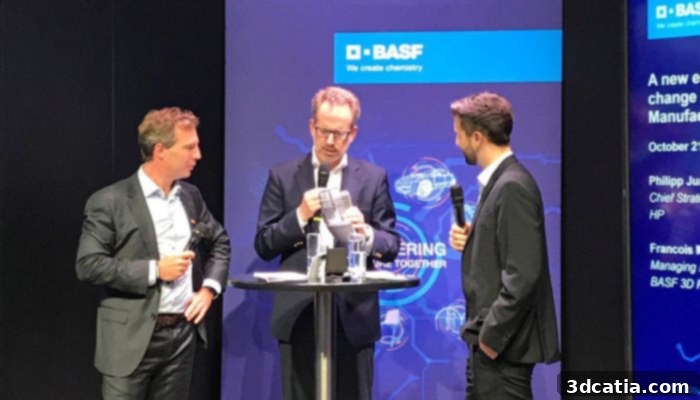
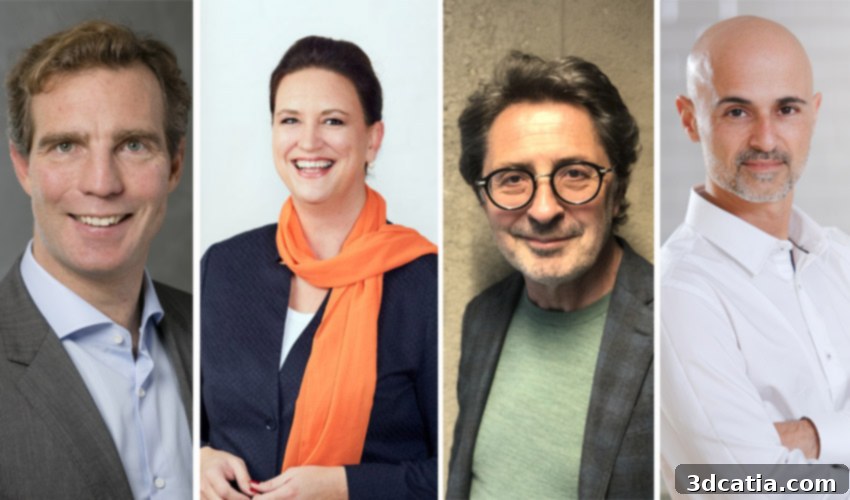
François Minec (left) was involved in the creation of BASF’s Forward AM brand.
Oliver Pohl: Spearheading Automotive Additive Manufacturing at Volkswagen
The automotive industry’s embrace of additive manufacturing took a significant leap forward, with Volkswagen emerging as a prominent leader. In December 2018, the renowned automotive manufacturer Volkswagen inaugurated its dedicated additive manufacturing center, setting the stage for an array of ambitious projects in 2019. This initiative quickly captured widespread attention as the German automotive giant demonstrated exceptional activity in the market, particularly through its strategic collaboration with HP on the groundbreaking Metal Jet Fusion machine. Oliver Pohl, the Head of Additive Manufacturing at Volkswagen, is undoubtedly a figure whose contributions demanded close observation. Under his astute guidance, Pohl and his dedicated teams unveiled a remarkably detailed roadmap outlining Volkswagen’s aggressive plans. This roadmap projected that by 2021, the brand aimed to 3D print an astounding 50,000 to 100,000 functional parts annually, each roughly the size of a football. Pohl’s leadership underscored Volkswagen’s commitment to integrating additive manufacturing into its core production processes, transitioning from prototyping to mass production of critical components and signaling a transformative shift in automotive manufacturing practices.
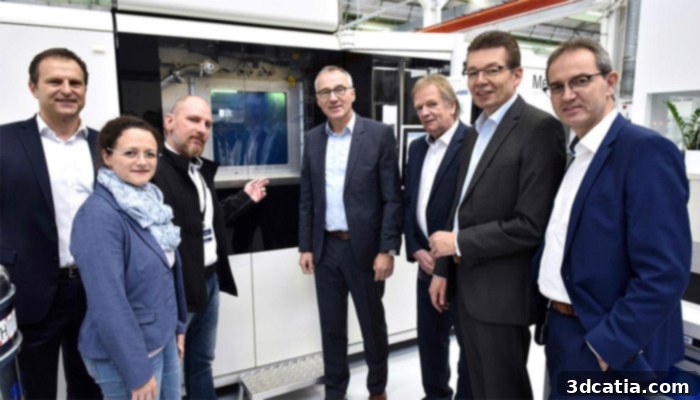
Oliver Pohl (3rd from left) is responsible for additive production at Volkswagen.
Markus Seibold: Optimizing the Additive Manufacturing Value Chain at Siemens
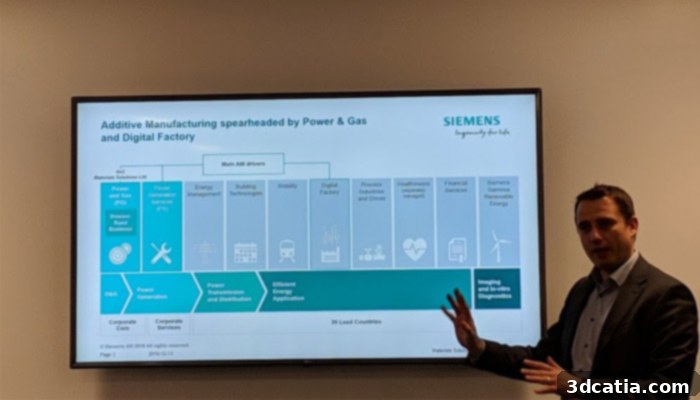
Within the complex landscape of additive manufacturing, the software component plays a critically essential role. It dictates everything from validating design viability and optimizing part quality to maximizing printing efficiency and streamlining post-processing workflows. Recognizing this imperative, Siemens has been quick to develop comprehensive software solutions that govern every stage of the AM process, from initial design concepts to final production. Markus Seibold, the distinguished VP of Additive Manufacturing at Siemens Power and Gas, stands out as a key driver of this transformative growth within the company. Seibold is firmly convinced that 3D technologies impact the entirety of the industrial value chain, not just isolated segments. Under his leadership, Siemens has strategically integrated multiple EOS machines into its plants, specifically to produce high-performance components for their advanced turbines. His ambitious projections indicate that by 2022, more than 200 different turbine parts are expected to be 3D printed, showcasing a robust commitment to industrial-scale adoption. Seibold’s vision highlights the power of integrating cutting-edge software and hardware to unlock unprecedented efficiencies and capabilities in complex industrial applications, positioning Siemens as a leader in industrial additive manufacturing solutions.
Mateusz Sidorowicz: Advancing High-Performance Thermoplastics with 3DGence
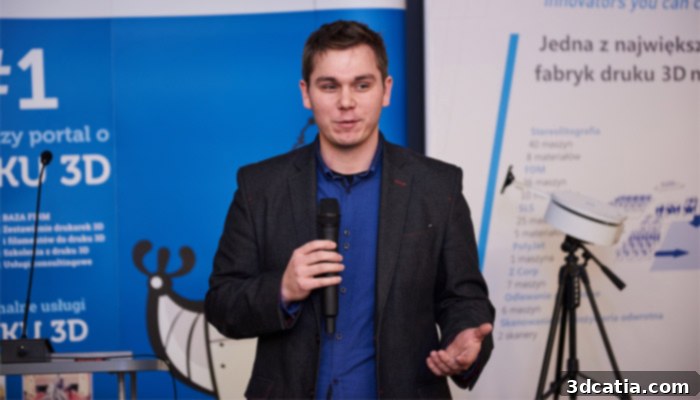
The year 2019 witnessed high-performance thermoplastics firmly establishing their significance within the additive manufacturing market, triggering a corresponding surge in demand for machines capable of processing these advanced materials. Numerous manufacturers introduced new high-temperature 3D printers to meet this growing need, but the Polish company 3DGence emerged as one of the most proactive and influential players in this specialized niche. Mateusz Sidorowicz, the Marketing Director of 3DGence, played a crucial role in the brand’s strategic development and the successful launch of its innovative technical solutions. His efforts were instrumental in bringing cutting-edge products to market, most notably the INDUSTRY F420, which was unveiled towards the end of the year. This high-performance industrial 3D printer underscored 3DGence’s commitment to providing robust solutions for demanding applications using engineering-grade thermoplastics. Sidorowicz’s leadership in marketing and product strategy ensured that 3DGence not only kept pace with but also helped define the rapidly evolving segment of high-temperature 3D printing, making advanced material capabilities accessible to industrial users seeking durable and functional parts.
Blake Teipel: Industrializing Additive Manufacturing with Essentium
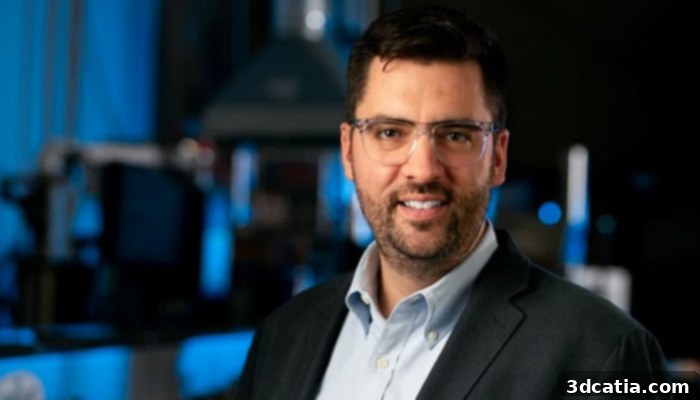
At the outset of 2019, Essentium garnered significant attention by successfully raising $22 million in funding, backed by prominent industry leaders such as Materialise and BASF. This substantial investment was a clear indicator of the market’s confidence in Essentium’s vision, driven by its CEO, Blake Teipel. Under Teipel’s leadership, Essentium is focused on developing industrial additive manufacturing platforms, with a strong emphasis on scaling technology for mass production. Teipel is a fervent believer that the true future of 3D technologies lies intrinsically within the materials themselves, asserting that materials will be increasingly developed and tailored to meet highly specific user needs and demanding industrial applications. His strategic direction positions Essentium not just as a printer manufacturer, but as a holistic solutions provider committed to delivering robust, production-ready systems that can truly industrialize additive manufacturing. Teipel’s insights underscore the critical importance of advanced materials and integrated platforms in moving 3D printing from niche applications to mainstream manufacturing, thereby enabling unprecedented speed, accuracy, and cost-effectiveness.
The year 2019 was undoubtedly a period of accelerated growth and transformation for the additive manufacturing industry, largely due to the tireless efforts and pioneering spirit of these individuals and teams. Their contributions—ranging from breakthroughs in bioprinting and advancements in material science to the industrialization of production platforms and the fostering of global collaborations—set a powerful precedent for the decade to come. These leaders didn’t just adapt to the changing landscape; they actively sculpted it, moving 3D printing from a specialized tool to an indispensable part of global manufacturing. As we reflect on their impact, it’s clear that their vision continues to inspire and drive innovation across all facets of the industry, pushing the boundaries of what’s possible and paving the way for even more revolutionary applications in the future. Who else do you believe made a significant impact on the AM industry in 2019? We’d love to hear your thoughts in the comments below or on our Facebook and Twitter pages! Don’t forget to sign up for our free weekly Newsletter here to get the latest 3D printing news delivered straight to your inbox!