
Ford and HP Pioneer Sustainable 3D Printing: Revolutionizing Automotive Manufacturing with Recycled Materials
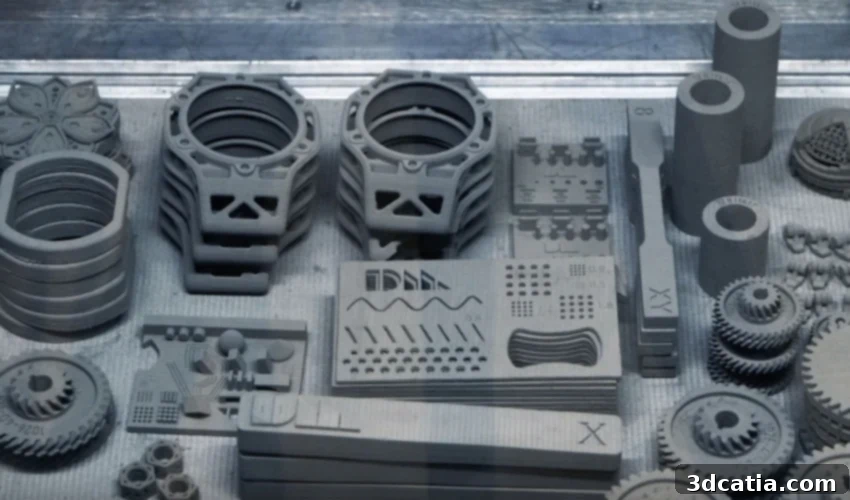
In a pioneering collaboration set to redefine the landscape of sustainable manufacturing, automotive titan Ford has joined forces with technology innovator HP. This formidable partnership has achieved an industry first: transforming used 3D printed parts and waste powders into high-quality, injection-molded automotive components. This initiative represents a significant stride towards a truly circular economy within the manufacturing sector, directly addressing the environmental challenges posed by industrial waste, particularly plastic materials generated from 3D printing processes. A crucial aspect of this breakthrough is that these newly manufactured parts demonstrate no compromise in durability or quality, consistently meeting and often surpassing the stringent performance requirements of their conventionally produced counterparts, despite their recycled origins.
The impetus behind this groundbreaking partnership stems from a shared, profound commitment to sustainability deeply embedded within the corporate philosophies of both Ford and HP. Debbie Mielewski, Ford Technical Fellow for Sustainability, emphasized the core values driving this innovation: “Finding new ways to work with sustainable materials, reducing waste, and leading the development of the circular economy are passions at Ford. Many companies are finding great uses for 3D printing technologies, but, together with HP, we’re the first to find a high-value application for waste powder that likely would have gone to landfill, transforming it into functional and durable auto parts.” This powerful statement not only highlights the innovative spirit of the collaboration but also signifies a paradigm shift where industrial waste is no longer seen as a liability but rather as a valuable resource with significant potential for repurposing.
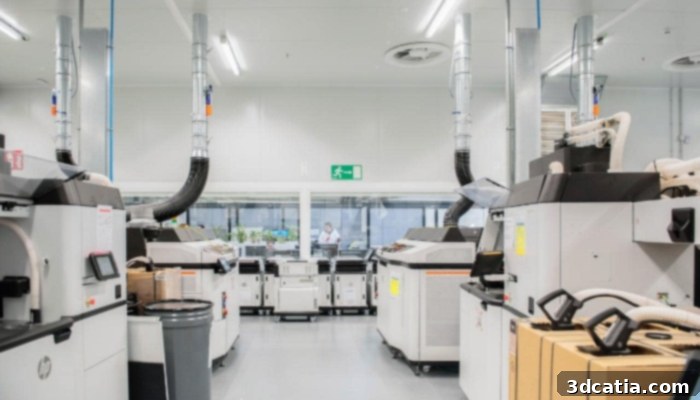
The technical process behind this innovation involves a meticulous approach to material recovery and transformation. Spent powders and rejected parts from HP’s advanced Multi Jet Fusion 3D printing systems are collected and then undergo a specialized compounding and molding process. These materials typically consist of high-performance thermoplastic polymers, such as Nylon 11 or Nylon 12, known for their strength and versatility in additive manufacturing. The primary challenge was to ensure that the recycled material maintained its critical mechanical properties, chemical resistance, and thermal stability required for demanding automotive applications. Through intensive research and development, Ford and HP engineers successfully refined a process that not only preserves these essential characteristics but also yields components offering tangible benefits.
The first successful implementation of these groundbreaking recycled materials is in the production of injection-molded fuel-line clips, which are initially being integrated into Ford Super Duty F-250 trucks. The selection of fuel-line clips was strategic, given their critical function and the need for exceptional resistance to chemicals, moisture, and varying temperatures within the vehicle’s engine compartment. Remarkably, these recycled clips not only meet but demonstrably surpass the rigorous performance standards set for their conventionally manufactured counterparts. Beyond their robust performance, these innovative parts deliver significant additional advantages: a notable 7% reduction in weight and an impressive 10% decrease in manufacturing cost. These benefits are profound, as lighter components contribute directly to enhanced fuel efficiency and reduced vehicle emissions, aligning perfectly with global sustainability objectives, while cost savings improve manufacturing competitiveness and potentially reduce overall vehicle costs.
Recognizing the immense potential of this new material, Ford’s dedicated research team has already identified at least ten other existing fuel line clips across various vehicle models that could similarly benefit from this innovative recycling solution. This forward-thinking approach underscores the scalability and widespread applicability of the technology, indicating its capacity to be integrated across a much broader spectrum of Ford vehicles. The implications extend far beyond just fuel clips; the successful re-engineering of high-performance polymers from 3D printing waste opens doors for countless other small, non-structural, and even semi-structural components throughout a vehicle’s complex architecture. This signals a future where a significant portion of automotive parts could be derived from what was once considered industrial by-product, significantly minimizing the need for virgin materials.
HP’s unwavering commitment to sustainability is intricately woven into the very fabric of its 3D printing technologies, from design to operation. While their systems are widely acclaimed for their high-efficiency production capabilities and advanced material processing, they are also meticulously engineered to minimize excess material generation and maximize the reuse of input materials within their own ecosystem. Ellen Jackowski, HP’s Chief Sustainability and Social Impact Officer, articulated this strategic focus: “You get more sustainable manufacturing processes with 3D, but we are always striving to do more, driving our industry forward to find new ways to reduce, reuse and recycle powders and parts. Our collaboration with Ford extends the environmental benefits of 3D printing even further, showcasing how we are bringing entirely different industries together to make better use of spent manufacturing materials, enabling a new circular economy.” This emphasis on cross-industry collaboration is fundamental, illustrating that achieving ambitious, global sustainability goals necessitates collective effort, shared expertise, and innovative thinking that transcends traditional industrial boundaries.
The profound synergy achieved between Ford and HP has culminated in what effectively constitutes a near-zero-waste solution for these specific 3D printing materials. This achievement transcends merely diverting waste from landfills; it signifies a comprehensive paradigm shift where the entire lifecycle of a material is meticulously considered, from its initial application in additive manufacturing to its subsequent transformation into a robust, functional automotive component. This holistic and forward-thinking approach to material management provides a compelling and scalable blueprint for other industries currently grappling with similar challenges in waste reduction and resource optimization, particularly those utilizing advanced manufacturing technologies.
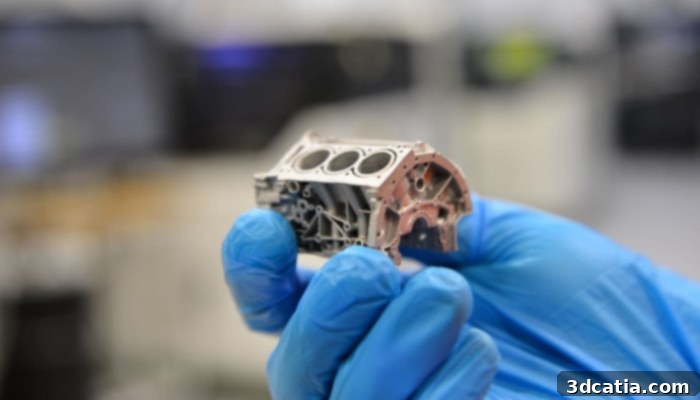
Ford has consistently been at the forefront of integrating 3D printing technologies across various critical aspects of its production processes. From rapid prototyping and complex tooling to the direct production of functional end-use parts, the company has leveraged additive manufacturing to enhance efficiency and innovation. Ford harbors an ambitious, long-term objective: to exclusively utilize totally sustainable materials in its vehicles in the future. Debbie Mielewski further elaborated on how this transformative partnership with HP serves as an indispensable accelerator for realizing this ambitious vision: “A key to achieving our sustainability goals and solving the broader problems of society is working with other like-minded companies, we can’t do it alone. With HP, we defined the waste problem, solved technical challenges, and found a solution in less than one year, which is something in which we all take pride.” This remarkable speed in problem-solving, achieved through dedicated and intense collaboration, vividly underscores the efficacy of combining diverse expertise and resources towards a shared, profoundly impactful goal.
The environmental implications of this project are extensive and critically important. By effectively diverting industrial 3D printing waste streams from landfills and intelligently repurposing them into high-value automotive components, Ford and HP are making substantial contributions to reducing the carbon footprint associated with both industrial manufacturing processes and waste disposal. This initiative serves as a powerful testament to the multifaceted potential of additive manufacturing – not merely as a tool for accelerating product innovation and customization, but equally as a vital catalyst for robust environmental stewardship. It unequivocally demonstrates that advanced manufacturing practices can be inherently sustainable, thereby challenging and ultimately replacing the traditional linear ‘take-make-dispose’ model of industrial production with a more responsible, circular approach.
This pioneering collaboration between Ford and HP establishes a formidable new benchmark for sustainable practices within both the additive manufacturing and global automotive industries. It provides a compelling, real-world example of how technological innovation, when coupled with an unyielding commitment to environmental responsibility, can yield comprehensive solutions that are simultaneously economically viable and ecologically beneficial. As the global adoption of 3D printing continues its exponential growth, the urgent need for robust recycling, reuse, and closed-loop material strategies becomes increasingly paramount. Ford and HP are not simply reacting to this growing imperative; they are proactively shaping the future of industrial sustainability, demonstrating conclusively that a circular economy is not merely an idealistic concept, but an achievable and highly beneficial reality for even the most intricate and demanding manufacturing supply chains.
What are your thoughts on this groundbreaking partnership between Ford and HP, and its profound potential to revolutionize sustainable manufacturing across industries? We eagerly await your perspective! Share your valuable comments below or engage with us on our Facebook, Twitter, and LinkedIn pages. To ensure you never miss out on the very latest advancements and breaking news in the dynamic world of 3D printing, remember to sign up for our complimentary weekly Newsletter here, delivering all essential updates directly to your inbox!