
Revolutionizing Cultural Heritage: Scan the World and Artec 3D Forge a Partnership for Global 3D Digitization
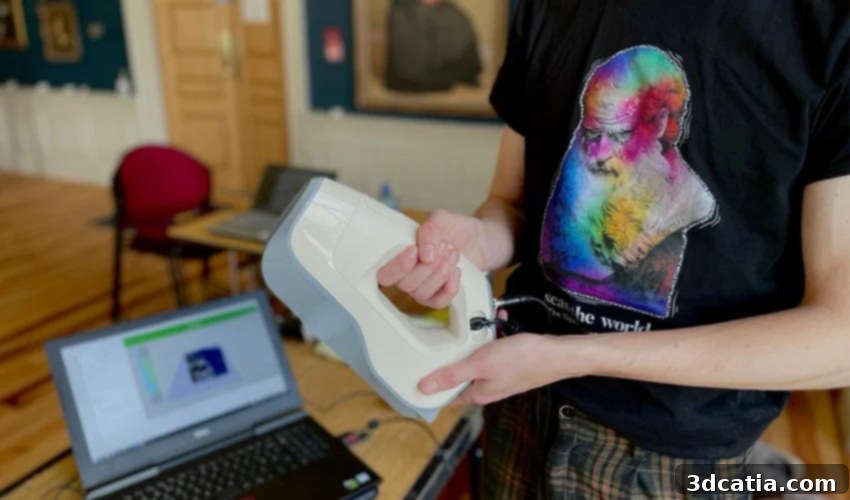
Since its inception in 2014, the ambitious community-driven initiative known as Scan the World has been dedicated to democratizing access to art by making 3D printable cultural artifacts available to a global audience. Operating as a vibrant part of the Google Arts & Culture platform, this pioneering project aims to dismantle traditional barriers to cultural access, ensuring that invaluable heritage from every corner of the globe can be explored and appreciated by anyone, anywhere. In a significant leap forward for its mission, Scan the World recently announced a strategic partnership with the renowned 3D scanner and software manufacturer, Artec 3D. This collaboration marks a pivotal moment, as Scan the World will now leverage the advanced capabilities of the Artec Eva handheld scanner to significantly enhance the speed, ease, and precision with which sculptures, paintings, and other critical artworks are digitized. The initial phase of this exciting endeavor will focus on a remarkable collection housed at the Museum of Arts and Crafts in Hamburg, Germany, setting a new benchmark for cultural preservation and accessibility.
Bridging the Gaps: How 3D Technologies Are Opening Up Cultural Heritage
The unfortunate reality for many is that unfettered access to cultural and historical heritage remains elusive. Geographical constraints, financial limitations, and unforeseen global crises often prevent individuals from experiencing the richness of human history firsthand. However, the advent of cutting-edge 3D technologies offers a powerful solution to this pervasive problem. By digitizing works of art, these innovations effectively erase borders, transforming cultural institutions into global repositories accessible from any location. This paradigm shift became acutely evident during the recent global pandemic, a period when physical museum visits became impossible for millions, even within their own countries, let alone through international travel. Reflecting on this critical period, Elisa D’Antona, the deputy director of Scan the World, eloquently stated, “In a world halted by a global pandemic, we have been made aware of the importance of open digital collections.” This sentiment underscores the urgency and relevance of initiatives like Scan the World, which are not just about digitization, but about ensuring resilience and continuity in cultural engagement.
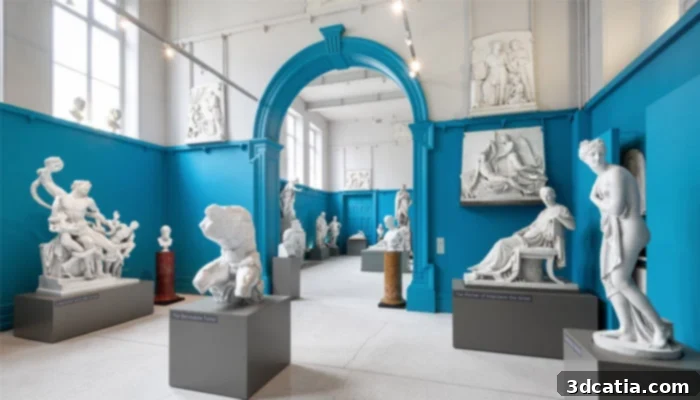
Scan the World’s goal is to provide access to online art collections (photo credits: Jed Niezgoda / jedniezgoda.com)
The Artec 3D Partnership: Elevating Accuracy and Accessibility
The core promise of Scan the World is to cultivate an open and accessible cultural landscape through its ever-expanding repository of open-source digital collections. The strategic partnership with Artec 3D represents a monumental stride towards fulfilling this promise. By integrating Artec 3D’s state-of-the-art scanning solutions, the project is poised to significantly streamline and enhance the digitization of a diverse array of art objects. A key component of this collaboration is the utilization of Artec Studio 16 software, celebrated for its capability to render incredibly realistic colors and capture exceptionally fine details, vital for preserving the authentic essence of priceless artifacts. Jonathan Beck, the visionary founder and director of Scan the World, expressed profound enthusiasm for the collaboration, affirming, “Scan the World is thrilled to embark on this partnership with Artec 3D to share 3D printable heritage with the world. By combining Scan the World’s strong community, storytelling, and object archival with Artec 3D’s industry-leading hardware, this is a very exciting time for the future of high-quality 3D scanned artifacts.” This synergy of community engagement and cutting-edge technology is set to redefine the standards of digital cultural preservation.
The Power of the Artec Eva Scanner in Cultural Digitization
At the heart of this technological advancement lies the Artec Eva portable 3D scanner. This professional-grade solution is engineered to precisely capture all types of objects and surfaces, including those notoriously challenging glossy or black materials that often present difficulties for other scanners. Its high-definition mode dramatically accelerates the reconstruction process, often achieving results nearly twice as fast as conventional methods, all while maintaining unparalleled detail and precision. This makes the Artec Eva an indispensable tool for accurately capturing the intricate complexities and delicate nuances inherent in artistic masterpieces and historical artifacts. The scanner’s user-friendly nature further ensures that the digitization process can be executed efficiently by various teams, thereby broadening the scope and pace of artifact preservation.
Artec Studio 16: Precision and Color Fidelity
Complementing the hardware, Artec Studio 16 software plays a crucial role in bringing these digital models to life with astonishing fidelity. The software’s advanced algorithms enable not just highly accurate geometrical capture but also exceptional color reproduction. This means that the digitized versions of artworks retain the vibrant hues and subtle tonal shifts of the originals, a critical factor for art historians, researchers, and enthusiasts who rely on accurate visual representation. The ability to render such realistic colors and fine details ensures that the digital archives created by Scan the World are not merely structural reproductions but comprehensive digital twins that convey the artistic intent and aesthetic qualities of the original pieces.
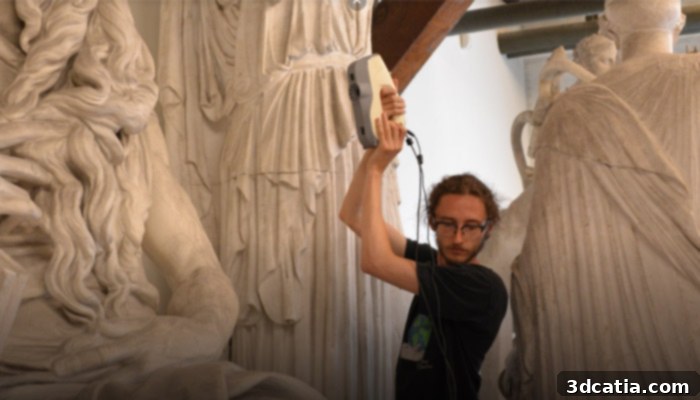
Artec Eva scanner makes it easy to digitize complex artworks
Broader Implications: Education, Research, and the Future of Cultural Heritage
The partnership between Scan the World and Artec 3D extends far beyond merely digitizing objects; it holds profound implications for education, research, and the long-term preservation of global heritage. By making high-quality 3D models openly accessible, this initiative empowers educators to create immersive learning experiences, allowing students to interact with historical artifacts in ways previously unimaginable. Researchers gain unprecedented access to detailed reproductions for comparative analysis, conservation studies, and art historical investigations, free from the constraints of physical access or the fragility of original pieces. This digital archive serves as a crucial safeguard against loss due to natural disasters, conflicts, or decay, ensuring that humanity’s shared past remains intact for future generations.
Furthermore, the emphasis on 3D printable models allows for tactile engagement, offering valuable experiences for individuals with visual impairments or for educational settings that benefit from hands-on interaction. This commitment to tangible digital replicas truly broadens the audience for art and history, making it more inclusive and engaging. The collaboration sets a precedent for how technological innovation can serve the public good, transforming how cultural institutions approach preservation, exhibition, and outreach in the digital age.
A Shared Vision for an Accessible Digital Future
Artyom Yukhin, President and CEO of Artec 3D, encapsulated the profound potential of this collaboration, stating, “Artec 3D has always been committed to keeping our technology at the forefront of the industry and providing applications that can be utilized around the world. Today, we are delighted to make a bold step forward in building a heritage-focused digital community alongside Scan the World – capturing precious artifacts in high detail and making them accessible to all.” This partnership is not just about equipment and software; it’s about a shared vision to build a truly global, inclusive, and accessible digital community centered around cultural heritage. It underscores the transformative power of collaboration between technological innovators and cultural preservationists, paving the way for a future where art and history are truly borderless.
The ongoing efforts of Scan the World, now bolstered by Artec 3D’s advanced scanning capabilities, are continuously expanding the world’s most comprehensive open-source library of cultural heritage. You can explore and engage with these incredible 3D printable artifacts and digital models by visiting the collection directly on the Google Arts & Culture platform HERE.
What are your thoughts on the groundbreaking partnership between Scan the World and Artec 3D and its impact on global cultural accessibility? We encourage you to share your insights in a comment below or join the conversation on our social media channels: LinkedIn, Facebook, and Twitter. Don’t miss out on the latest advancements and news in the 3D printing industry; be sure to sign up for our free weekly Newsletter here, delivering the most important updates directly to your inbox! Additionally, you can find a wealth of informative videos and content on our YouTube channel, offering deeper dives into the world of additive manufacturing and its myriad applications.