
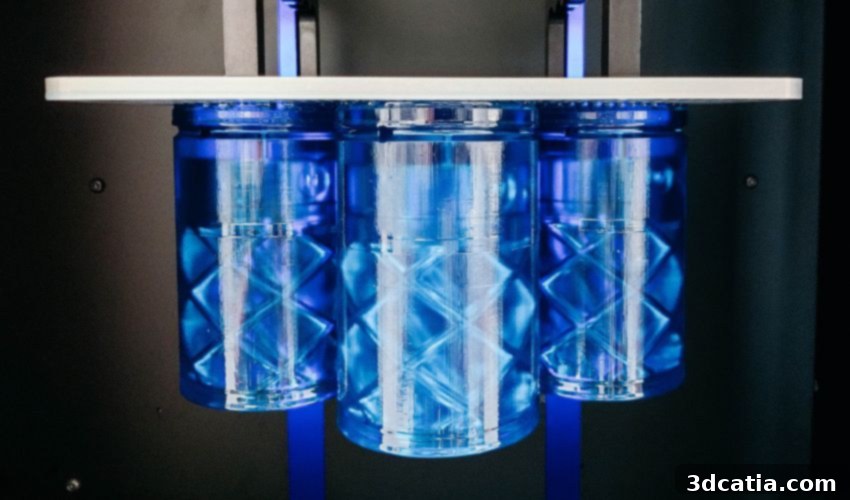
Additive Manufacturing Market Sees Strategic Acquisitions: Nexa3D Boosts Digital Tooling with Addifab, Stratasys Expands Materials Portfolio with Covestro
The landscape of the additive manufacturing sector is once again buzzing with significant acquisition activities, signaling a dynamic shift and strategic consolidation within the industry. After a period that felt relatively subdued compared to the previous year, the market has recently witnessed a flurry of high-profile deals. Leading the charge, Nexa3D announced its acquisition of Addifab, the innovative originator of Freeform Injection Molding. This move follows a year-long successful collaboration between the two companies and comes not long after Nexa3D’s earlier acquisition of XYZprinting’s SLS portfolio. Concurrently, Stratasys, another key player, officially completed its acquisition of Covestro’s extensive additive manufacturing materials business, solidifying its position in the rapidly evolving materials segment of the 3D printing market.
These recent acquisitions, while significant, may not entirely surprise seasoned observers of the wider 3D printing market. The Stratasys-Covestro deal, in particular, had been initially announced in August 2022, with its completion being the anticipated next step. Similarly, Nexa3D’s move to acquire Addifab follows a deep and extended partnership, suggesting a natural progression rather than an abrupt strategic pivot. Nevertheless, the culmination of these deals underscores broader, more profound trends shaping the additive manufacturing industry. They reflect an evolving market characterized by strategic consolidation, an intensified focus on specific high-value applications like digital tooling, and an undeniable emphasis on the critical role of advanced materials in unlocking new possibilities within 3D printing. These trends are indicative of a maturing market that is increasingly seeking integrated, end-to-end solutions to drive industrial adoption and efficiency.
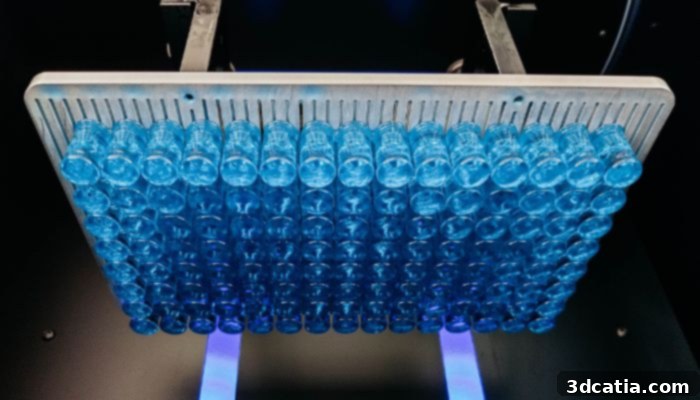
Nexa3D will be acquiring Addifab’s patented tooling resin (photo credits: Nexa3D)
Firstly, market consolidation is frequently regarded as a robust indicator of a healthy and maturing industry. While we observed extensive consolidation last year, its continuation into 2023 suggests sustained strength and potential for further growth within the additive manufacturing sector. This positive outlook is further reinforced by the double-digit growth rates highlighted in the most recent Wohlers Report, a leading authority on 3D printing market intelligence. The integration of capabilities and resources through acquisitions can lead to increased efficiency, accelerated innovation, and more comprehensive solutions for end-users, fostering a more stable and competitive environment. Beyond consolidation, these acquisitions also underscore the ever-growing importance of materials science in additive manufacturing. The Stratasys-Covestro deal is a prime example, specifically targeting the expansion of Stratasys’s AM materials business, clearly indicating its strategy to continuously broaden and diversify its materials portfolio. Similarly, Nexa3D’s acquisition of Addifab goes beyond process integration; it also encompasses the integration of Addifab’s proprietary dissolvable tool process and a patented tooling resin, enabling Nexa3D to offer a more complete and advanced digital tooling solution. This dual focus on consolidating market share and enhancing material capabilities points to a strategic imperative across the industry: to provide specialized, high-performance materials that unlock a wider array of industrial applications for additive manufacturing technologies. The ability to control and innovate with materials is becoming a key differentiator, influencing part performance, production cost, and overall design freedom for manufacturers.
Nexa3D Acquires Addifab to Revolutionize Digital Tooling
At the heart of Nexa3D’s acquisition of Addifab is a powerful strategic move to significantly bolster its capabilities in digital tooling. While often overshadowed by the direct production of end-use parts, tooling remains one of the most impactful and critical applications for 3D printing, especially when deployed as a complementary technology alongside established traditional manufacturing processes. Additive manufacturing offers unparalleled advantages in creating molds, jigs, fixtures, and other tooling components with speed, precision, and design complexity that conventional methods simply cannot match. This particular acquisition is laser-focused on advancing the integration of 3D printing for injection molding tooling, a segment ripe for disruption and efficiency gains. By leveraging additive technologies, companies can dramatically reduce lead times and costs associated with developing complex molds, enabling faster product iterations and more agile manufacturing workflows. This focus on tooling underscores a growing trend in the AM industry towards providing practical, value-driven solutions that bridge the gap between prototyping and high-volume production.
Addifab has garnered considerable recognition for its groundbreaking Freeform Injection Molding (FIM) platform. This proprietary and patented end-to-end digital tooling process stands out for its innovation, notably including a patented tooling resin essential to its functionality. The FIM technology fundamentally changes how injection molds are created, allowing for rapid production of complex mold inserts directly from digital designs. This drastically shortens the tooling development cycle, which traditionally can take weeks or months. For the past year, Nexa3D has been actively harnessing the power of Addifab’s technology through an extensive collaboration. This partnership aimed to make Nexa3D’s high-speed resin printers more accessible to Addifab’s clientele and to jointly tackle ambitious projects with prominent companies, including well-known brands like Wilson Sporting Goods. Their combined efforts have already demonstrated the potential to deliver innovative solutions, proving the effectiveness of integrating Addifab’s tooling expertise with Nexa3D’s advanced additive manufacturing systems. The ability to quickly produce functional injection molds opens up new avenues for agile product development, short-run manufacturing, and customization, making it invaluable across various industries.
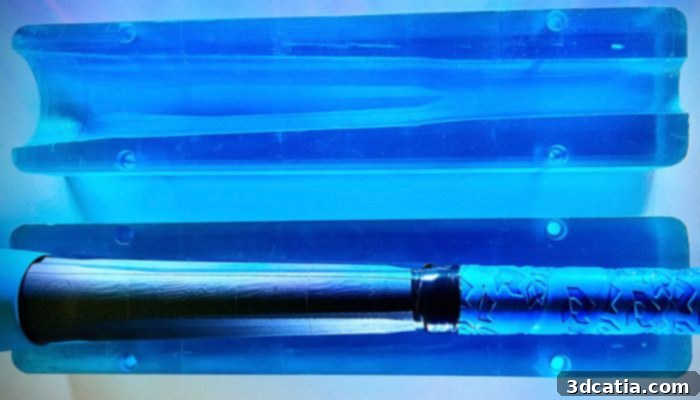
This acquisition will solidify the use of Nexa3D’s printers for tooling (photo credits: Nexa3D)
Lasse G. Staal, co-founder and Business Development Leader at Addifab, eloquently articulated the powerful synergies between the two companies, stating: “Soon after teaming up with Nexa3D, it became increasingly apparent that our combined solution unlocks tremendous opportunities for customers looking to create complex injection molding tools quickly and affordably. A year into our enormously successful commercial collaboration and dozens of customer implementations with the likes of PepsiCo and Wilson Sporting Goods, I’m thrilled that we are officially joining forces.” Staal’s comments highlight the significant value proposition their combined offering brings to the market: enabling the rapid and cost-effective creation of intricate injection molding tools. This capability is transformative for industries requiring high design flexibility and fast turnaround times, allowing brands like PepsiCo to prototype new bottle designs or Wilson Sporting Goods to innovate faster in sports equipment. By officially merging, Nexa3D and Addifab aim to accelerate the adoption of Freeform Injection Molding, empowering a broader range of manufacturers to leverage the benefits of additive tooling for increased agility and competitive advantage in their production processes.
As part of this strategic acquisition, Nexa3D will rebrand Addifab’s proprietary tooling resin to xMOLD. This crucial material will be made universally compatible and available for use across all Nexa3D resin 3D printers, streamlining the workflow and ensuring seamless integration within Nexa3D’s ecosystem. The introduction of xMOLD not only strengthens Nexa3D’s material offerings but also reinforces its commitment to providing comprehensive solutions for advanced manufacturing. While the full impact of this acquisition will unfold over time, it unequivocally signals Nexa3D’s ambitious intent to solidify its standing as a preeminent leader in the application of 3D printing for industrial tooling. By integrating Addifab’s pioneering FIM technology and specialized resins, Nexa3D is poised to significantly accelerate the digital transformation of tooling processes, offering manufacturers unprecedented speed, flexibility, and cost-efficiency in their production cycles. For more detailed information regarding this acquisition, interested parties can refer to the official press release from Nexa3D HERE.
Stratasys Completes Covestro Acquisition, Fortifying Materials Leadership
The finalization of the Stratasys acquisition of Covestro’s additive manufacturing materials business, though long anticipated, is a powerful testament to Stratasys’s enduring strength and strategic resolve within the highly competitive 3D printing market. This move is particularly significant given the recent period of market turbulence, including Nano Dimension’s unsuccessful attempts to acquire the 3D printing giant. The acquisition encompasses a formidable array of assets: cutting-edge R&D facilities and activities, dedicated global development and sales teams spanning Europe, the U.S., and Asia, a robust portfolio of approximately 60 distinct 3D printing materials, and an extensive intellectual property (IP) portfolio. This comprehensive integration of Covestro’s specialized assets immediately broadens Stratasys’s material science capabilities and market reach. Crucially, Stratasys highlights that this acquisition will enable it to address a much wider spectrum of new applications across key additive technologies. This includes expanding its expertise into materials for stereolithography (SLA), DLP (Digital Light Processing), and powder bed fusion, while perfectly complementing its already established leadership in materials for PolyJet and FDM technologies. The expanded material science prowess positions Stratasys to offer a more versatile and compelling suite of solutions to its diverse customer base, solidifying its role as a comprehensive provider across various additive manufacturing processes.
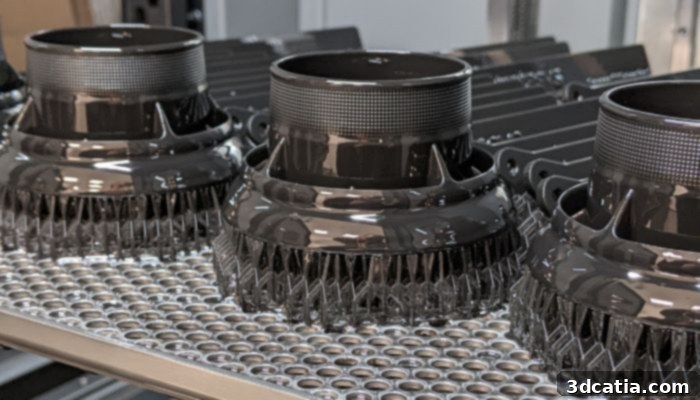
Automotive air vent prototypes made with Somos WaterShed Black resin (photo credits: Stratasys)
Stratasys CEO Dr. Yoav Zeif emphasized the strategic importance of this acquisition, concluding, “Today marks a significant milestone for us as we solidify our leadership in the polymer additive manufacturing industry. With this acquisition, we’re not just expanding our materials portfolio for our broad array of 3D printing technologies – we’re also paving the way for more new innovations. Additionally, our growing team of in-house materials experts will be in a stronger position to collaborate with our materials ecosystem partners. Together, we’ll be able to address more applications faster, pushing the boundaries of what’s possible in additive manufacturing.” Dr. Zeif’s statement eloquently underscores the multifaceted benefits of integrating Covestro’s materials business. It signifies a profound expansion beyond simply adding materials; it’s about fostering innovation. By bringing in a dedicated team of materials experts, Stratasys can significantly accelerate its internal development cycles while simultaneously strengthening its collaborative efforts with existing and new materials ecosystem partners. This dual approach – leveraging both internal R&D and external partnerships – is critical for rapid material discovery and application development. The goal is clear: to broaden the scope of addressable applications, allowing Stratasys to cater to an even wider range of industrial needs and performance requirements, ultimately pushing the frontiers of what polymer additive manufacturing can achieve. This acquisition cements Stratasys’s commitment to materials innovation as a core pillar of its growth strategy. More details can be found in Stratasys’s press release HERE.
What are your thoughts on these strategic moves by Nexa3D and Stratasys? How do you envision these acquisitions reshaping the future of digital tooling and additive manufacturing materials? We invite you to share your insights and comments below or connect with us on our LinkedIn, Facebook, and Twitter pages! For the latest breaking news and comprehensive analysis in the world of 3D printing, don’t forget to subscribe to our free weekly Newsletter here, delivered directly to your inbox. You can also explore our extensive library of videos on our YouTube channel for visual insights into additive manufacturing innovations.
*Cover Photo Credits: Nexa3D