
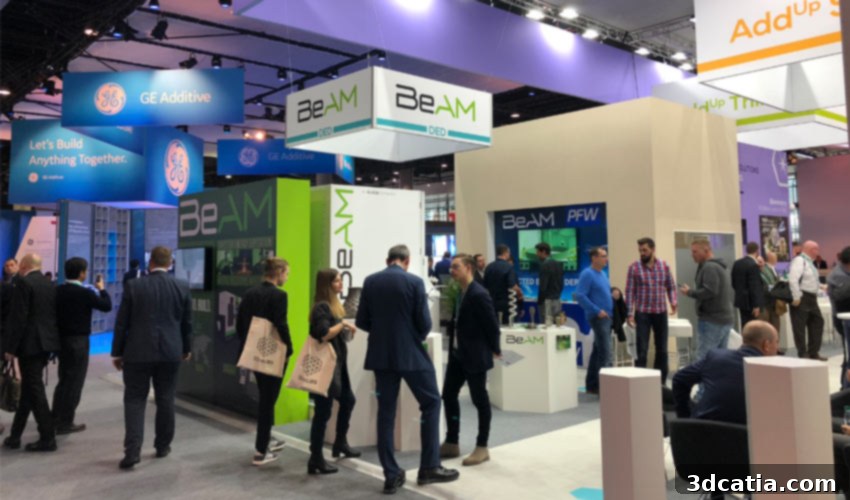
Formnext 2018: Unveiling the Future of Additive Manufacturing – Top 10 Game-Changing Innovations
The Formnext trade fair, a globally recognized epicenter for additive manufacturing and industrial 3D printing, concluded last Friday in Frankfurt after four dynamic days. This annual gathering consistently draws the brightest minds and most innovative companies in the industry, and 2018 was no exception. With 650 exhibitors showcasing their cutting-edge solutions across expansive halls, thousands of visitors immersed themselves in a world dedicated to the latest advancements in 3D technologies. Formnext 2018 truly cemented its status as the premier event for discovering groundbreaking innovations. From revolutionary new machines and advanced materials to sophisticated software and essential accessories, the collective objective was clear: to significantly accelerate the development and adoption of 3D printing technologies across diverse sectors. Our team at 3Dnatives was on-site, meticulously exploring these innovations and engaging with the most influential players. We’ve compiled a comprehensive list of the 10 most impactful novelties that made a lasting impression at Formnext 2018, shaping the trajectory of additive manufacturing for years to come.
1. EOS’s Revolutionary High-Speed LaserProFusion Technology
The esteemed German manufacturer EOS, renowned globally for its advanced metal additive manufacturing solutions, officially unveiled its groundbreaking polymer 3D printing technology, LaserProFusion, at Formnext 2018. This innovation is positioned as a direct alternative to traditional injection molding, aiming to disrupt established manufacturing processes. The LaserProFusion process utilizes an astonishing array of up to one million individual laser diodes simultaneously, a technological leap that promises unprecedented printing speeds. EOS’s ambitious goal with this technology is to deliver a dramatically higher level of productivity, pushing 3D printing closer to true mass production capabilities. While specific details were still somewhat limited, and the physical machine was not on display at the show, the implications for industrial manufacturing are immense. The first commercial units of the LaserProFusion system are eagerly anticipated, with their release projected for 2021. This announcement generated significant buzz, highlighting EOS’s commitment to pushing the boundaries of polymer 3D printing performance.
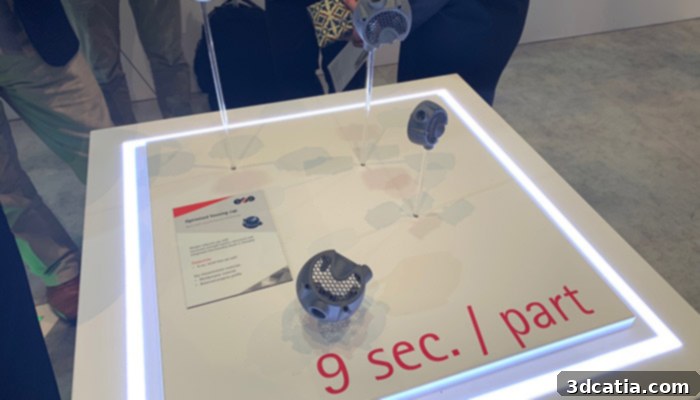
EOS’s LaserProFusion technology demonstrated its potential to print complex parts in mere seconds (photo credits: 3Dnatives)
2. Stratasys Enters the Metal 3D Printing Arena with LPM
The American additive manufacturing behemoth, Stratasys, a name synonymous with polymer 3D printing, made a strategic and highly anticipated move into the metal additive manufacturing market. This pivotal decision, initially announced in May, gained further clarity at Formnext 2018, where the company shared more insights into its proprietary Layered Powder Metallurgy (LPM) technology. Developed internally over several years, the LPM process is an innovative approach to metal part production. It involves the precise deposition of a layer of combined metal powder, which is then selectively bound using a thermal inkjet system that acts as a binder. This technique promises to bring Stratasys’s expertise in material deposition and control to the challenging world of metal fabrication. A significant revelation was the planned material compatibility, with aluminum expected to be one of the first materials available, opening up vast possibilities for lightweighting and high-performance applications in industries like aerospace and automotive. Stratasys’s entry signals a major shift in the metal 3D printing landscape, promising more accessible and reliable metal additive solutions.
3. HP’s Impressive Metal Jet 3D Printer Makes Its Public Debut
First unveiled in September 2018, the HP Metal Jet technology sent ripples through the additive manufacturing community, clearly signaling the manufacturer’s serious ambitions in the metal segment – a material increasingly recognized as key for industrial applications. Formnext 2018 provided the first opportunity for the public to witness this formidable machine firsthand. Visitors to the HP stand were able to admire not only the imposing Metal Jet printer itself but also an array of intricately produced metal parts. The machine’s design is notably refined, reflecting HP’s legacy in precision engineering and user experience. Leveraging a binder jetting-like process, the HP Metal Jet is engineered for high-volume manufacturing of production-grade metal parts at significantly lower costs than other methods, promising a disruptive force in various industries. Initially, the printer is slated for availability from 2020, targeting a select group of privileged users as part of an early adoption program, indicating HP’s strategic and controlled market entry.
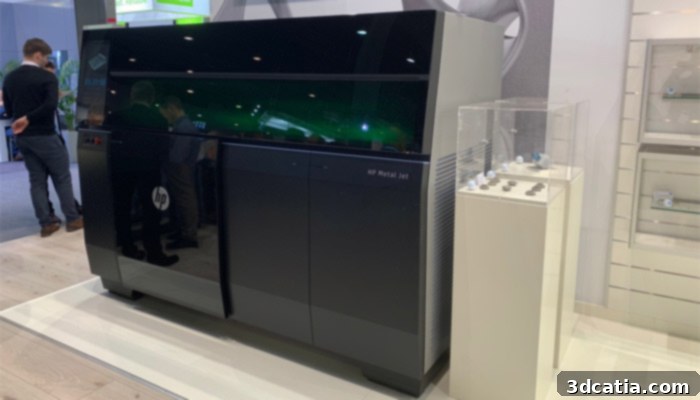
The elegant and imposing HP Metal Jet printer on display at Formnext 2018 (Photo credits: 3Dnatives)
4. Kodak Enters 3D Printing with the Reliable Kodak Portrait
Best known globally for its iconic role in the world of photography, the American company Kodak made a surprising but well-received entry into the 3D printing market with its first FDM (Fused Deposition Modeling) machine, the Kodak Portrait. While a prototype had been teased earlier in the year at CES in Las Vegas, Formnext 2018 marked the official debut of the finished product. The Kodak Portrait boasts a robust set of features, including a dual extrusion system for multi-material or soluble support printing, transparent walls allowing for easy monitoring, and a print volume of 200 x 200 x 235 mm. It offers broad compatibility with a variety of popular plastic filaments, such as PLA, ABS, Nylon, PETG, and PVA. While at first glance the machine may not present revolutionary technological breakthroughs, Kodak’s strategy was clearly focused on delivering exceptional reliability and consistent print quality. This emphasis on dependable performance positions the Portrait as a strong contender in the professional and prosumer FDM market, leveraging Kodak’s long-standing reputation for precision and quality.
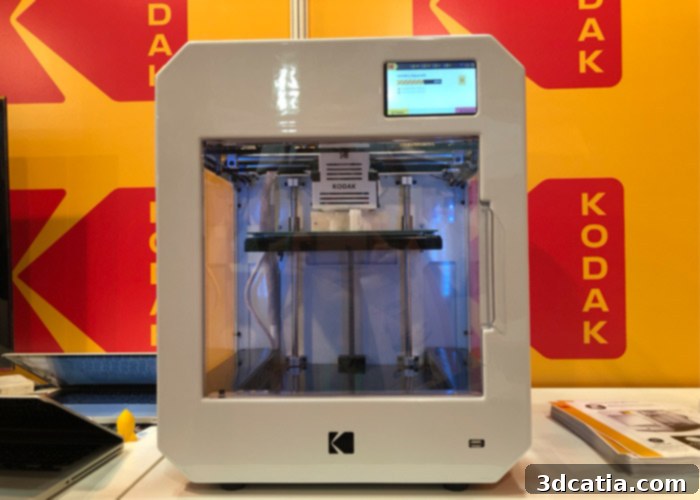
Kodak’s debut FDM machine, the Portrait, showcased its robust design (Photo credits: 3Dnatives)
5. BigRep Expands Its Industrial Large-Format 3D Printer Portfolio
BigRep, a leading manufacturer celebrated for its large-format 3D printers, significantly expanded its product lineup at Formnext 2018 with the introduction of two impressive new machines: the BigRep Pro and the BigRep Edge. Both models incorporate the innovative Metering Extruder Technology, an advanced extrusion system designed to deliver greater accuracy and significantly faster print speeds, particularly crucial for the production of large-scale parts. This technology represents a leap forward in the efficiency and quality of large-format additive manufacturing. Both the BigRep Pro and the BigRep Edge were prominently displayed at the Formnext 2018 show and were immediately available for pre-order. The BigRep Pro offers a generous print volume of 1005 x 1005 x 1005 mm, making it ideal for substantial industrial prototypes and functional parts. The BigRep Edge, even larger, boasts a remarkable print volume of 1500 x 800 x 600 mm and was slated for market release from the second quarter of 2019. These additions underscore BigRep’s commitment to addressing the growing demand for industrial-scale additive manufacturing solutions.
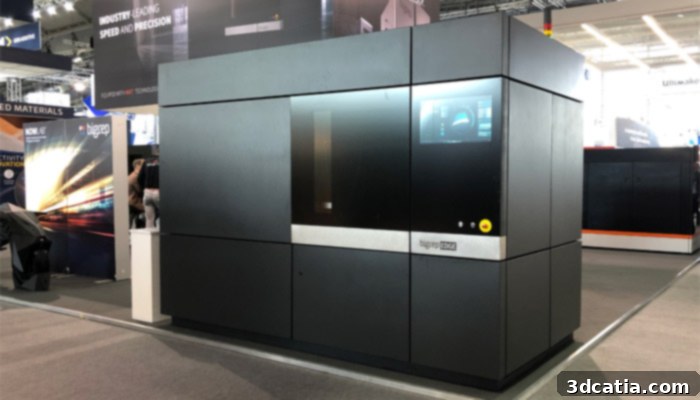
The impressive BigRep EDGE, designed for massive industrial parts (Photo credits: 3Dnatives)
6. Pollen AM’s Cost-Effective PAM Series M for Metal Production
Among the 650 exhibitors at Formnext 2018, several innovative French companies showcased their contributions to additive manufacturing. One notable entrant was Pollen AM, which for the first time presented its groundbreaking metal solution, the PAM Series M. This machine draws inspiration from the well-established technique of Metal Injection Molding (MIM), adapting its principles to an additive manufacturing context. Pollen AM’s approach focuses on making metal 3D printing more accessible and cost-effective, offering a machine that is significantly more affordable than many other metal additive manufacturing systems on the market. The PAM Series M is designed to produce high-quality parts from materials such as stainless steel and titanium, expanding the possibilities for small to medium-sized enterprises and research institutions to engage with industrial metal additive manufacturing. Its introduction represents an exciting step towards democratizing access to metal 3D printing, enabling broader innovation and application.
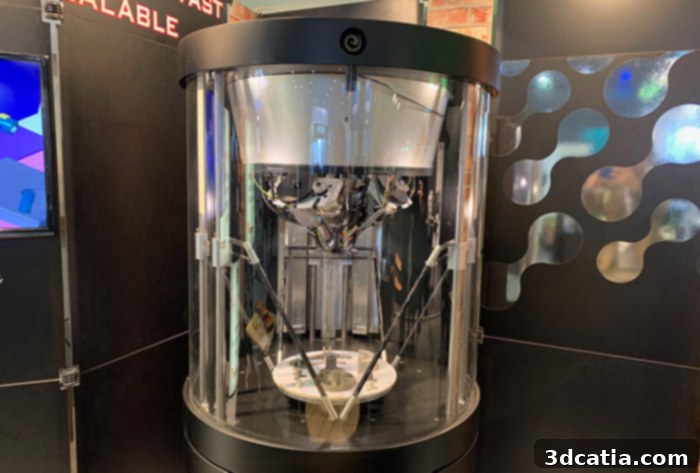
Pollen AM’s PAM Series M, bringing MIM-inspired metal printing to a wider audience (Photo credits: 3Dnatives)
7. Intamsys Unveils the High-Performance FUNMAT PRO 410
Chinese manufacturer Intamsys, a specialist in high-performance polymer 3D printing, further expanded its impressive range of machines compatible with advanced engineering materials. At Formnext 2018, the company proudly unveiled the FUNMAT PRO 410, designed to handle demanding materials such as PEEK and ULTEM. This new machine boasts a substantial print volume of 305 x 305 x 406 mm and features a double extruder capable of reaching temperatures up to 450°C, crucial for processing these high-temperature thermoplastics. Intamsys has also meticulously redesigned the machine’s internal architecture and heating system, specifically aiming to provide enhanced layer adhesion and superior surface quality for printed parts. The ability to reliably print with materials known for their exceptional strength, chemical resistance, and thermal stability makes the FUNMAT PRO 410 an invaluable tool for applications in aerospace, automotive, medical, and industrial sectors where performance is paramount.
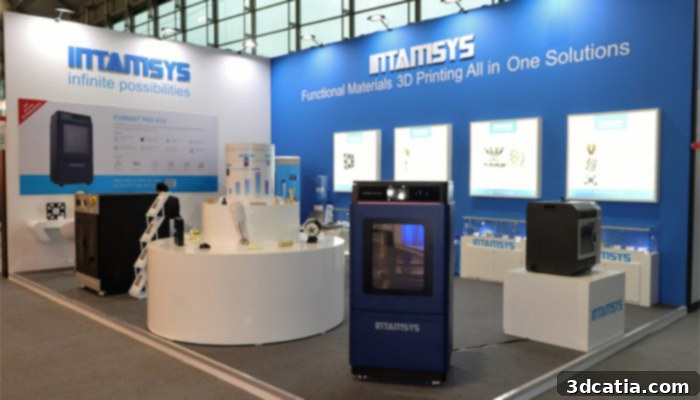
The INTAMSYS booth at Formnext 2018 prominently featuring its new FUNMAT PRO 410 (photo credits: INTAMSYS)
8. Nexa3D Sets New Speed Records with Its SLA Machines
Nexa3D, a dynamic manufacturer focused on resin-based 3D printing, captured significant attention at Formnext 2018 by announcing what appears to be a record-breaking speed for its new Stereolithography (SLA) machines. The company proudly claimed that its new printers are a promising six times faster than current competitive solutions on the market, while simultaneously offering a print volume that is 2.5 times larger. This combination of unprecedented speed and increased build size represents a significant leap forward for resin 3D printing, enabling higher throughput and the production of larger, more complex parts. Nexa3D showcased two distinct 3D printers, the NXE200 and NXE400, which were slated for market release in early 2019, with competitive price points starting at $19,950 and $49,950 respectively. The involvement of Avi Reichental, the former CEO of 3D Systems, who became Nexa3D’s CEO, further underscored the company’s potential and solidifies its position as a manufacturer to watch closely in the rapidly evolving additive manufacturing landscape.
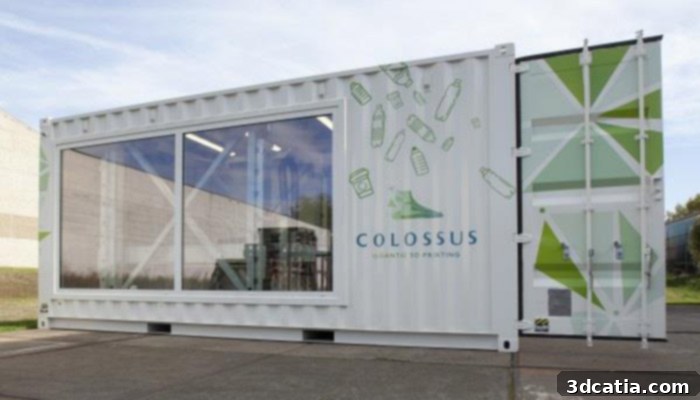
9. Colossus: Additive Manufacturing in a Portable Container
The innovative Belgian start-up Colossus made its debut at Formnext 2018, presenting a truly unique and highly functional 3D printing solution: a large-scale 3D printer fully enclosed within a standard shipping container. This ingenious design allows for unparalleled portability and adaptability, making industrial-scale additive manufacturing accessible in diverse environments. The printer itself operates using plastic pellets as feedstock, a cost-effective and abundant material choice. On the specifications side, Colossus impressed attendees with its remarkable print speed of 15 kg per hour, facilitating rapid production cycles. Equally striking was its colossal print volume, measuring an impressive 3 x 1.5 meters. The container housing the machine is not merely a transport solution; it is engineered as a complete operational unit, featuring a closed, heated enclosure to maintain optimal printing conditions and an integrated material storage system. This self-contained, high-performance additive manufacturing system holds immense potential for on-site fabrication, rapid deployment in remote locations, and flexible manufacturing setups.
10. EnvisionTEC Introduces the Enhanced P4K Perfactory Series with AI
EnvisionTEC, a pioneer in high-precision 3D printing technologies, leveraged Formnext 2018 to introduce a significant upgrade to its renowned Perfactory line of Digital Light Processing (DLP) 3D printers. The new P4K series incorporates a sophisticated 4K projector, delivering an unprecedented level of resolution and detail for resin-based additive manufacturing. A key innovation in this series is the integration of artificial intelligence (AI). This AI program intelligently modulates individual pixels during the printing process, allowing for exceptional precision and remarkably smooth surface finishes on the final parts. Three distinct models were introduced within the P4K series, each offering a different print volume to cater to a range of application needs – with the largest model providing a generous build area of 23 x 14.15 x 22 cm. This blend of ultra-high resolution and AI-driven optimization positions the P4K Perfactory series as a powerful tool for industries demanding the utmost in accuracy and aesthetic quality, such as dental, jewelry, medical device manufacturing, and high-fidelity prototyping.
Formnext 2018 was truly a landmark event, showcasing a dizzying array of innovations that continue to redefine the landscape of additive manufacturing. From breakthroughs in high-speed polymer printing and major players entering the metal market to cost-effective solutions and AI-enhanced precision, the future of 3D printing looks incredibly promising. These advancements underscore a clear trend towards industrialization, greater accessibility, and enhanced performance across the board.
Which of these remarkable innovations from Formnext 2018 left the greatest impression on you? We’d love to hear your thoughts and insights! Share your opinions by leaving a comment below or join the conversation on our Facebook and Twitter pages. And for those keen to stay abreast of all the latest developments in 3D printing, don’t forget to sign up for our free weekly Newsletter, delivering cutting-edge news directly to your inbox!