
Europol Confronts the Rising Tide of 3D Printed Weapons and Ghost Guns Across Europe
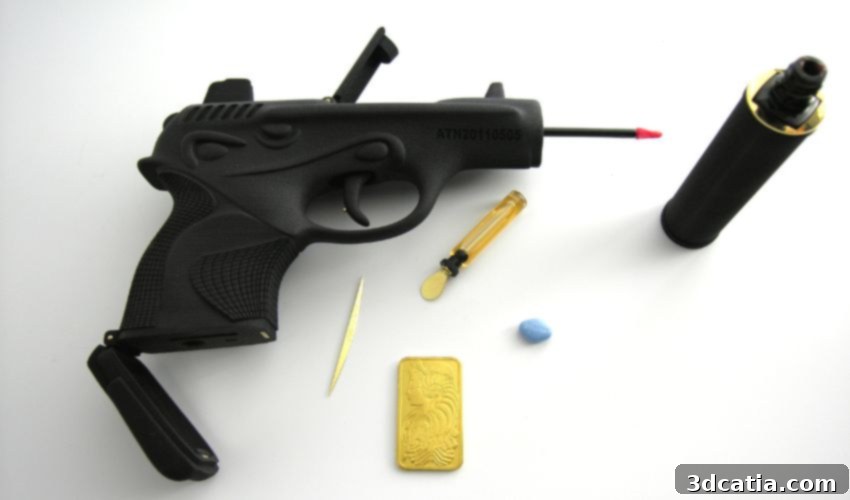
The European continent is witnessing an alarming surge in the seizure of 3D printed weapons, a trend that has prompted serious concern from the European Police Office (Europol). This escalating phenomenon poses a significant challenge to public safety and national security across member states, driving law enforcement agencies to re-evaluate their strategies in combating illegal arms manufacturing. Recognizing the gravity of this threat, Europol recently convened a critical conference, bringing together a diverse array of professionals and experts from across Europe to collaboratively address the multifaceted problem. Martin van der Meij, a senior official at Europol, underscored the institution’s vigilance, stating, “The threat posed by 3D printed weapons is very much on the radar of Europol.” He further elaborated on the disturbing pattern observed in recent years, noting an “increasing number of such firearms seized in investigations across Europe,” indicating a clear and present danger that requires immediate and coordinated action. These weapons, often manufactured with readily available 3D printing technology, represent a new frontier in illicit arms production, sidestepping traditional controls and presenting unique difficulties for identification and traceability. The ability for individuals to produce functional firearms from digital blueprints downloaded from the internet marks a concerning shift in the landscape of criminal activity and domestic terrorism, necessitating a robust and innovative response from international policing bodies.
The sinister potential of these innovative yet illicit firearms has already manifested in tragic incidents across Europe. In 2019, the German city of Halle bore witness to a horrific attack where two innocent people were fatally shot by an assailant wielding a homemade gun. This weapon was chillingly constructed based on digital blueprints readily available online, with key components manufactured using a 3D printer. The incident served as a stark and sobering reminder of how easily individuals with malicious intent can access and leverage this technology for violent ends, bypassing conventional firearm regulations. Moving forward to last year, a significant breakthrough occurred when Spanish police, for the first time, successfully dismantled an illegal workshop in 2021. Located on Tenerife, one of the Atlantic archipelago’s Canary Islands, this clandestine facility was entirely dedicated to the manufacturing of 3D printed weapons. The discovery of such an organized operation highlighted a worrying evolution from individual “hobbyist” production to more structured criminal enterprises. Europol further detailed how, merely a month after the Tenerife raid, a crucial intervention took place in the British town of Keighley. Here, two men and a woman were apprehended as part of an ongoing far-right terrorism investigation. Their charges included the possession of 3D printed weapon components, underscoring the appeal of these untraceable firearms to extremist groups seeking to evade detection by law enforcement agencies. These diverse incidents — from lone-wolf terrorism to organized criminal manufacturing and extremist plots — paint a disturbing picture of the widespread and adaptable threat posed by additive manufacturing in the wrong hands, necessitating a harmonized and proactive response from European authorities.
The Alarming Reality: 3D Printed Weapons Are Untraceable “Ghost Guns”
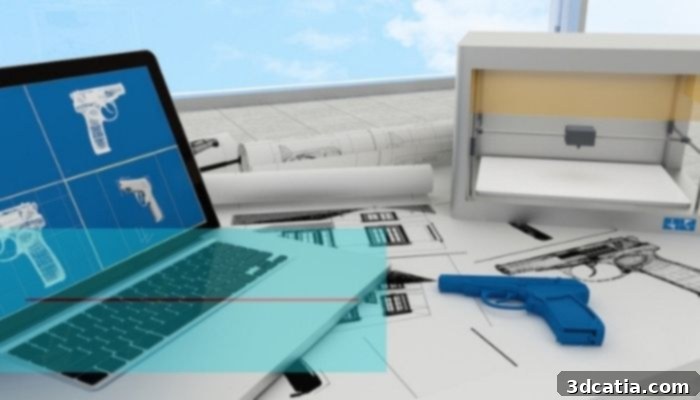
The most troubling characteristic of 3D printed firearms is their inherent untraceability, earning them the ominous moniker “Ghost Guns.” Unlike conventionally manufactured firearms, these weapons often lack serial numbers and can be made from non-metallic materials, making them virtually impossible to track through traditional law enforcement methods and detection systems. This critical loophole allows illicit weapons to circulate without leaving a forensic footprint, posing an unprecedented challenge for crime investigators and ballistics experts. It is precisely in response to this frightening and complex phenomenon that Europol convened its recent conference, gathering an impressive consortium of over 120 stakeholders. This crucial assembly included high-ranking law enforcement professionals, seasoned ballistics experts, meticulous forensic doctors, and influential policymakers, all converging in The Hague, the Netherlands, where Europol’s headquarters are located. The collective aim was clear: to forge a unified front against this burgeoning threat. As Martin van der Meij eloquently articulated, “Such a challenge can only be addressed by combining the expertise, resources, and insights of law enforcement, the private sector, and academia to get such guns off the streets.” This sentiment highlights the necessity of a multi-sectoral approach, acknowledging that no single entity can tackle the problem in isolation. A tangible outcome of this pivotal conference was Europol’s proactive announcement regarding the establishment of an international network of 3D printed firearms experts. This groundbreaking initiative is designed to ensure that law enforcement agencies across Europe remain constantly abreast of the latest developments, manufacturing techniques, and detection methods related to 3D printed firearms, fostering a rapid and informed response capability. The challenges faced in Europe resonate deeply with those encountered across the Atlantic. In the United States, for instance, the Department of Justice (DOJ) has already taken decisive steps. Last year, the US DOJ proposed a significant regulation aimed at updating existing firearm definitions last year, specifically targeting the loophole presented by guns made using 3D printing technologies and other untraceable methods. These measures were explicitly designed to curb the proliferation of so-called “Ghost Guns,” demonstrating a global recognition of the urgent need to adapt legal frameworks to keep pace with rapid technological advancements and their potential misuse.
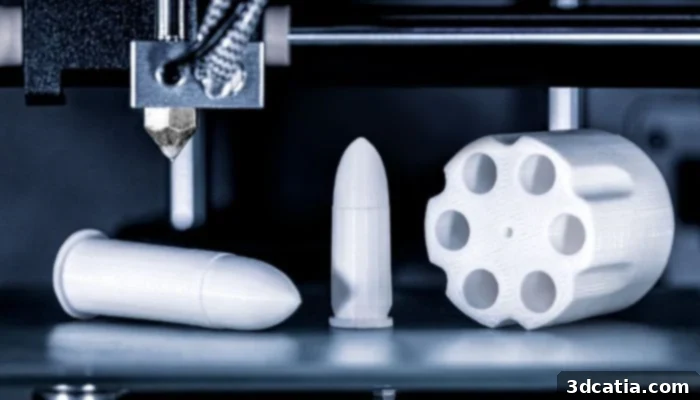
Europe stands at the forefront of additive manufacturing innovation. Over the past decade, an impressive 47% of all patent applications filed in the field of 3D printing at the European Patent Office (EPO) originated from European companies. This technological prowess, while beneficial for countless industries, also presents a double-edged sword when misused for nefarious purposes. Currently, the “democratization” of these new “handmade” firearms faces a momentary limitation primarily due to the inherent resistance characteristics of the materials predominantly used in accessible 3D printing, such as various polymers. These plastics often struggle to withstand the extreme pressures and high temperatures generated by the firing of a projectile, leading to potential malfunctions, short weapon lifespans, or even catastrophic failures for the user. This material constraint has, to some extent, temporarily restricted the widespread adoption of reliable 3D printed firearms. However, experts warn that this situation is precarious and highly susceptible to change, potentially in a significantly adverse direction, within the coming years. Rapid advancements in materials science are continuously yielding stronger, more heat-resistant polymers, advanced composites, and even affordable metal 3D printing technologies. As these innovations become more accessible and cost-effective, the barriers to producing highly durable and reliable 3D printed firearms will inevitably diminish. The prospect of criminals and terrorists being able to produce weapons with capabilities rivaling conventionally manufactured firearms, all from the confines of an unassuming workshop, represents a critical and escalating concern for security agencies worldwide. Therefore, proactive measures and continuous monitoring of technological developments are not merely advisable but absolutely essential to mitigate a future where robust, untraceable firearms are easily within reach of those who would exploit them for illegal and violent acts.
This unsettling development around 3D-printed guns demands widespread awareness and discussion. What are your thoughts on the alarming increase in untraceable firearms produced through additive manufacturing? We invite you to share your perspectives in a comment below or join the conversation on our active LinkedIn, Facebook, and Twitter pages! Stay informed on all the latest innovations and challenges in the world of 3D printing by signing up for our free weekly Newsletter here, delivering essential news straight to your inbox. For more visual insights and in-depth reports, you can also find all our videos on our dedicated YouTube channel.
*Cover Photo Credits: Atelier Ted Noten