
Revolutionizing Biomedical Research: Cardiff University’s Open-Source LEGO 3D Bioprinter Makes Tissue Engineering Accessible
The realm of biomedical research has long been captivated by the transformative potential of 3D bioprinting – a cutting-edge technology capable of constructing living tissues and organs layer by layer. This innovation promises to revolutionize drug discovery, disease modeling, and regenerative medicine. However, the prohibitive cost of advanced 3D bioprinters, often soaring into hundreds of thousands of euros, has created a significant barrier, especially for smaller research institutions, developing nations, and educational facilities with limited financial resources. This challenge has constrained scientific progress and limited global access to this vital technology.
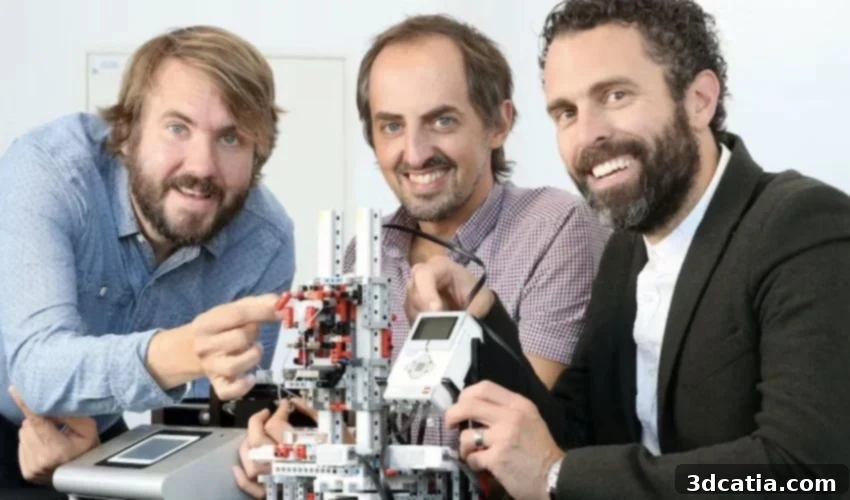
In a groundbreaking development that directly addresses this critical issue, researchers at Cardiff University have unveiled an ingenious solution: a LEGO 3D bioprinter capable of fabricating human tissue, including skin. This remarkable achievement, detailed in a study published in Advanced Materials Technologies, not only showcases innovative engineering but also champions the principles of open science. The Cardiff team has made their entire model open source, providing exact methodologies and instructions to enable anyone, anywhere, to replicate and build this bioprinter. This stark contrast to conventional research, which typically prioritizes intellectual property protection, underscores their commitment to accelerating global biomedical research by making essential tools widely accessible and affordable.
Bridging the Gap: Affordable Bioprinting with Everyday Building Blocks
While the concept of bioprinting – the additive manufacturing of biological structures – is not new, the economic hurdle presented by commercial bioprinters remains a notable deterrent. These sophisticated machines are essential for producing human cell samples, which researchers critically depend on for studying complex diseases and developing effective treatments. Recognizing this persistent obstacle, a dedicated team of experts from Cardiff University’s School of Pharmacy and Pharmaceutical Sciences embarked on a mission to democratize bioprinting. Their innovative approach led to the construction of a fully functional 3D bioprinter, ingeniously crafted almost entirely from standard LEGO bricks.
This pioneering endeavor marks a historic first: a machine assembled from widely available and affordable LEGO components successfully printing human tissue. The choice of LEGO bricks was far from arbitrary; it was a deliberate decision based on their inherent advantages. LEGO offers remarkable precision, allowing for the intricate alignment and movement required for bioprinting. Its versatile and modular nature enables endless configurations and adaptations, providing a flexible platform for experimentation. Crucially, LEGO is exceptionally inexpensive and readily available globally, drastically reducing the entry cost for high-precision scientific instrumentation. These characteristics collectively make LEGO an ideal medium for creating accessible biomedical tools.
Upon completion, the researchers rigorously tested their novel bioprinter. The results were impressive: the device successfully printed viable human skin cells. Specifically, it generated hydrogel droplets – a gel typically composed of polymers with water acting as the blowing agent – containing living keratinocyte-like skin cells. These bio-ink droplets were microfluidically generated, ensuring precise control over their size and distribution. The successful fabrication of these structures lays a vital foundation for the development of sophisticated three-dimensional artificial skin models, opening new avenues for research into dermatological conditions and regenerative medicine.
The Power of Open Source: Enabling Global Scientific Collaboration
A cornerstone of this ambitious project is the Cardiff University team’s unwavering commitment to the open-source philosophy. As previously highlighted, the researchers have meticulously documented and shared their blueprints, methodologies, and extensive explanations. This transparent approach is driven by a singular goal: to significantly lower the barriers to entry for bioprinting, making this advanced technology accessible to research teams worldwide, regardless of their financial constraints. By providing a detailed, step-by-step guide, the project empowers scientists in diverse settings to construct their own bioprinters at a fraction of the cost of commercial alternatives, fostering an environment of innovation and collaborative discovery.
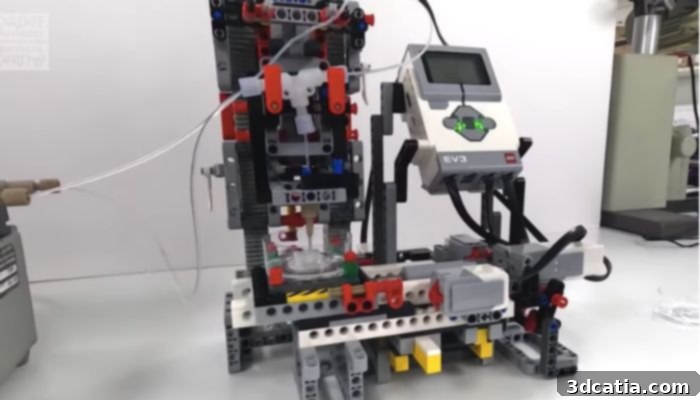
Dr. Sion Coulman, a Senior Lecturer at Cardiff University and a key figure in this project, elaborated on the team’s vision: “We set out to create a bioprinter that anyone can build, with minimal funds and that’s exactly what we have achieved. Our paper intentionally details every element of the build, including the specific LEGO parts used, as well as its capability, so that it can be easily replicated in any lab, anywhere in the world.” This emphasis on replicability and detailed documentation is crucial for maximizing the printer’s adoption and impact within the global scientific community. It demystifies the complex process of bioprinting and transforms it into an achievable endeavor for a broader audience of researchers and educators.
Further attesting to the quality and reliability of their creation, Dr. Oliver Castell, a Serious Brain Power Early Career Researcher and Senior Lecturer, added, “We’ve demonstrated that, despite being constructed from an inexpensive and simple construction tool, this bioprinter is highly engineered and achieves the required level of precision to produce delicate biological material without any compromise in its performance.” This statement powerfully validates the bioprinter’s efficacy, assuring researchers that its cost-effectiveness does not come at the expense of scientific accuracy or the integrity of biological samples. The ability to maintain high performance with such an unconventional and affordable material truly underscores the brilliance of the engineering design.
Paving the Way for Future Biomedical Breakthroughs
The Cardiff University researchers harbor ambitious hopes for their LEGO 3D bioprinter, envisioning it as a catalyst for significant advancements across various domains of biomedical science. They believe this accessible technology will profoundly contribute to a deeper understanding of diseases, facilitate the intricate design and repair of tissues, and ultimately pave the way for more personalized medicine. The ability to print patients’ cultured cells means that treatments can be tailored precisely to an individual’s unique biological makeup, moving away from a one-size-fits-all approach to healthcare. This personalized medicine paradigm holds immense promise for improving treatment efficacy and reducing adverse reactions.
The team has already embarked on pioneering research aimed at printing viable skin models using their innovative machine. These high-fidelity models are expected to be instrumental in developing and rigorously testing new treatments for prevalent and often devastating skin diseases, including various forms of skin cancer. Furthermore, the potential application extends to the crucial field of reconstructive medicine, with the team actively considering the testing and development of advanced skin grafts. Such models provide an ethical and efficient alternative to animal testing, allowing for faster and more relevant results in human-specific contexts.
Looking ahead, Dr. Oliver Castell emphasized the ongoing nature of bioprinting research: “As with all 3D bioprinting, there are more studies to be done to look at developing the cell compatibility and viability of bio-inks.” He concluded with a powerful call to action: “By making our printer readily available, we hope researchers will adopt this technology to share expertise and develop the model with additional LEGO components for the benefit of the entire biomedical research community.” This invitation for widespread adoption and collaborative enhancement highlights the true spirit of open science – a collective effort to push the boundaries of knowledge and technology for the greater good.
A New Era of Accessible Tissue Engineering
The development of Cardiff University’s LEGO 3D bioprinter represents a pivotal moment in the history of biomedical research. By dramatically lowering the cost barrier and embracing an open-source model, the team has not only engineered an impressive piece of technology but has also championed a new paradigm for scientific collaboration and accessibility. This innovation promises to empower countless researchers, educators, and students around the globe to engage with 3D bioprinting, fostering an explosion of creativity and discovery that might otherwise have been stifled by economic constraints. The ability to print human tissues with an affordable, customizable, and widely available system means that the building blocks of life are now truly within reach for a much broader scientific community.
The potential ripple effects are vast, ranging from accelerated drug development and enhanced disease modeling to revolutionary advancements in regenerative medicine and personalized therapies. This initiative underscores the power of ingenuity and collaboration to overcome seemingly insurmountable challenges, proving that sometimes, the most profound scientific breakthroughs can emerge from the simplest and most accessible materials. The Cardiff University LEGO bioprinter is more than just a device; it is a symbol of democratized science, poised to inspire a new generation of biomedical innovators and transform the landscape of human health.
For more detailed information, readers can explore the dedicated article on the Cardiff University website, which offers further insights into the project and its implications. Additionally, the complete findings and technical specifics are available in the full study published in the esteemed journal Advanced Materials Technologies, providing comprehensive scientific documentation for those interested in deeper technical understanding.
What are your thoughts on this groundbreaking 3D bioprinter, constructed entirely from LEGO bricks, and its potential to reshape biomedical research? We invite you to share your perspectives and comments below, or engage with our community on our LinkedIn, Facebook, and Twitter pages! Don’t miss out on the latest advancements and news in the additive manufacturing world; remember to sign up for our free weekly Newsletter here, delivering the most current 3D printing news directly to your inbox. You can also explore all our insightful videos and demonstrations on our dedicated YouTube channel for more visual content.
*Photo Credits: Cardiff University