
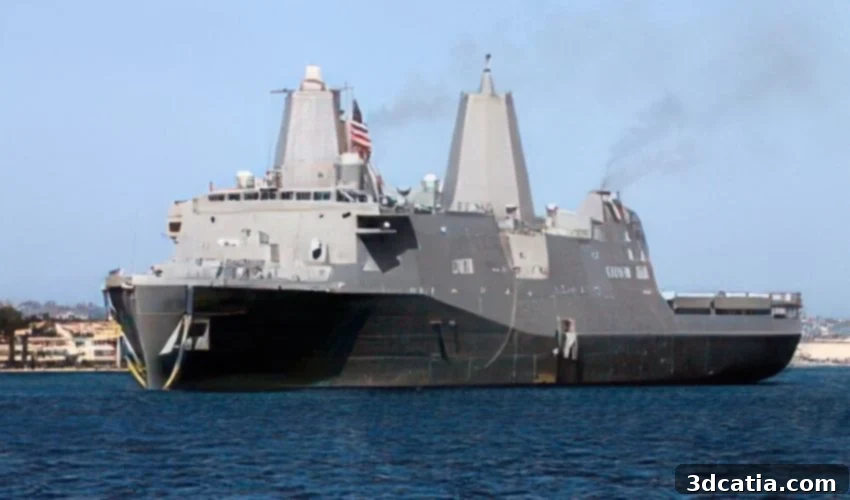
U.S. Navy Advances Onboard Metal 3D Printing: ADDiTEC’s Liquid Metal Jetting Revolutionizes Shipboard Manufacturing
The U.S. Navy has rapidly emerged as a frontrunner in adopting advanced additive manufacturing technologies within the defense sector. This strategic embrace is a direct response to the intricate challenges of modern naval logistics, particularly regarding supply chain resilience and the imperative for rapid, on-demand parts procurement in diverse operational environments. For years, the Navy has showcased successful applications of 3D printing across its fleet, from surface vessels to submarines, demonstrating its potential to circumvent supply chain disruptions and ensure the availability of critical components even during extended deployments at sea. This proactive approach has now culminated in a significant new milestone: ADDiTEC, a leader in metal additive manufacturing, has announced the Navy’s successful implementation of liquid metal jetting (LMJ) technology while afloat, achieving the fabrication of a high-strength aluminum alloy part under challenging conditions. This breakthrough underscores a transformative shift in naval maintenance and readiness capabilities, signaling a future where shipboard manufacturing is not just feasible but integral to operational success.
Understanding Liquid Metal Jetting (LMJ) Technology
Liquid Metal Jetting (LMJ) is an innovative metal 3D printing technology that has captivated the attention of industrial and defense sectors alike for its unique approach to additive manufacturing. Unlike traditional powder-bed fusion methods, LMJ works by jetting molten metal droplets onto a build plate, layer by layer, which then solidify to form a high-density, fully functional metal part. This process avoids the complexities associated with metal powders, such as oxidation, flammability, and extensive post-processing, making it particularly attractive for deployment in non-factory environments. The technology was initially pioneered and developed within Xerox solutions, where its potential for speed, material versatility, and superior mechanical properties was first recognized. The U.S. Navy quickly identified LMJ as a promising solution for its unique logistical requirements, becoming an early adopter and investing in its research and development.
However, the continuity of this promising technology faced uncertainty when Xerox decided to exit its additive manufacturing activities. Recognizing the immense value and strategic importance of LMJ, ADDiTEC stepped in to safeguard its future. ADDiTEC strategically acquired Xerox’s 3D printing business, including the foundational intellectual property, specialized machinery, and expert teams, thereby ensuring the technology’s continued evolution and commercialization. This pivotal acquisition not only rescued a groundbreaking manufacturing method but also positioned ADDiTEC as a key innovator in the metal AM space. The parts successfully produced by the Navy in this latest milestone were fabricated using a containerized ElemX 3D printer, developed by ADDiTEC, which harnesses the full capabilities of LMJ technology. The ElemX’s robust, containerized design is specifically engineered for deployment in demanding environments, making it an ideal choice for shipboard use where space, stability, and operational resilience are paramount.
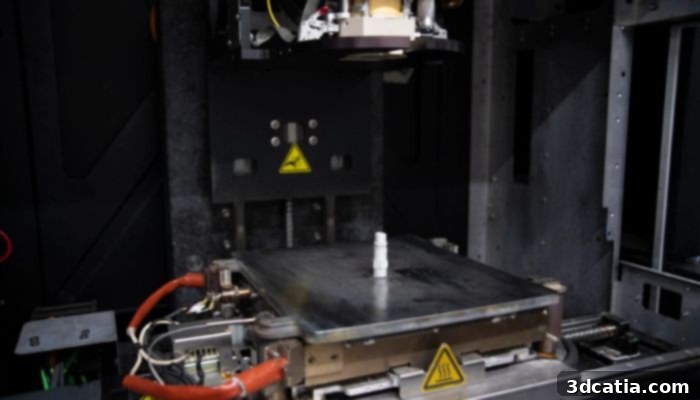
The ElemX 3D printer onboard the USS San Diego (photo credits: Mass Communication Specialist 1st Class Brandon Woods/U.S. Navy)
Onboard Metal 3D Printing: Aboard the USS San Diego
This latest achievement marks a profound step forward for the U.S. Navy. The successful deployment of the ADDiTEC ElemX 3D printer aboard the USS San Diego, while the vessel was homeported in San Diego, demonstrates the Navy’s commitment to integrating cutting-edge additive manufacturing capabilities directly into its operational environments. What makes this particular endeavor exceptionally significant is not only the successful production of functional parts afloat but also the use of high-strength aluminum alloys, specifically Al-6061. Printing with such advanced materials in a maritime setting presents unique challenges, from managing material properties under variable conditions to ensuring the structural integrity required for critical naval applications. The successful fabrication of Al-6061 components showcases the robustness and precision of the LMJ technology even in a dynamic shipboard environment.
Following the printing process, the essential parts were subjected to rigorous evaluation to assess their quality and performance. The results unequivocally confirmed that these 3D-printed aluminum components met the stringent requirements for their intended applications, demonstrating both structural integrity and functional efficacy. This meticulous validation process is crucial for widespread adoption of additive manufacturing in defense, as it builds trust and confidence in the reliability of on-demand manufactured parts. The capability to produce strong, lightweight aluminum parts on a naval vessel transforms the paradigm of maintenance and repair, promising reduced downtime, enhanced operational flexibility, and significant improvements in mission readiness for the U.S. Navy. This milestone on the USS San Diego sets a new benchmark for what is achievable with onboard additive manufacturing.
Commenting on this groundbreaking achievement, Dr. Garth Hobson, Director of the Consortium for Advanced Manufacturing, Research and Education (CAMRE) at the Naval Postgraduate School (NPS) in Monterey, California, expressed his enthusiasm: “We are thrilled with the performance of the ElemX 3D printer. The ease of use and the quality of the printed parts exceeded our expectations. This technology represents a significant enhancement in our ability to maintain and repair equipment while at sea.” Dr. Hobson’s statement underscores the critical success factors of this deployment: user-friendliness in a complex environment and the production of high-quality, reliable parts. This feedback from a key research and education institution validates the practical applicability and transformative potential of ADDiTEC’s Liquid Metal Jetting technology for future naval operations, directly impacting the Navy’s self-sufficiency and sustainment capabilities.
Strategic Collaboration for Naval Innovation: NPS and CAMRE
The Naval Postgraduate School (NPS) and its affiliated Consortium for Advanced Manufacturing Research and Education (CAMRE) have long been at the forefront of driving innovation in defense-related additive manufacturing. Their pivotal role involves not only conducting cutting-edge research but also actively collaborating with industry partners and defense branches to integrate advanced manufacturing solutions into real-world naval environments. This institution serves as a crucial bridge between theoretical advancements in AM and their practical, operational deployment, ensuring that new technologies meet the rigorous demands of military application. Before this latest success on the USS San Diego, NPS and CAMRE were instrumental in various other additive manufacturing initiatives, including the deployment of 3D printing capabilities in technical exercises and aboard other naval vessels, such as the USS Essex. These prior engagements laid the groundwork, accumulating invaluable experience and insights into the challenges and opportunities of shipboard additive manufacturing.
The decision to deploy the ADDiTEC ElemX printer on the USS San Diego was a strategic move by NPS and CAMRE, aimed at rigorously testing the system’s performance for fabricating critical parts under operational conditions. Their overarching goal was clear: to validate the technology’s ability to significantly reduce maintenance downtime, enable faster, more efficient repairs, and ultimately enhance the overall operational readiness and efficiency of naval assets. This initiative was part of a broader vision to revolutionize naval logistics and sustainment by empowering sailors with the ability to manufacture replacement parts on demand, regardless of their proximity to traditional supply chains or shore-based facilities. The successful outcome of this deployment, as confirmed by the recent press release, serves as a powerful testament to the effectiveness of this collaborative research and the groundbreaking potential of Liquid Metal Jetting. It signifies a major leap towards making naval self-sufficiency a tangible reality, profoundly impacting long-duration deployments and reducing the logistical footprint of the U.S. Navy worldwide.
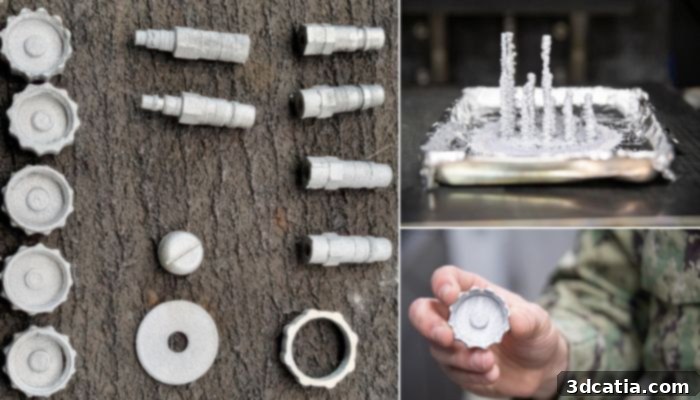
Left: Some of the Aluminum 6061 parts printed with the ElemX (photo credits: ADDiTEC); Other parts made using the ElemX on the USS San Diego (photo credits: Mass Communication Specialist 1st Class Brandon Woods/U.S. Navy)
Transforming Naval Logistics: Implications and Future Outlook
The capability to print high-strength aluminum alloy parts on demand, directly aboard naval vessels like the USS San Diego, represents a monumental and transformative shift in how the U.S. Navy will manage its resources, address maintenance challenges, and sustain its global presence. This strategic innovation signifies a dramatic reduction in dependency on fragile and often extended traditional supply chains, which are particularly vulnerable during prolonged deployments away from land-based logistics hubs or friendly ports. For ships operating in remote or contested environments, the ability to rapidly manufacture mission-critical components, such as Al-6061 parts, translates directly into enhanced operational independence and significantly reduced susceptibility to external logistical constraints. This means fewer delays due to waiting for parts, extended mission capabilities, and greater tactical flexibility.
ADDiTEC, along with the U.S. Navy and its research partners, firmly believes that achieving this milestone will usher in an era of unprecedented self-sufficiency for naval fleets. Beyond just maintenance, this on-demand manufacturing capability fosters a culture of innovation and adaptability within the Navy. It empowers sailors and engineering teams to address unforeseen repair needs with agility, potentially customizing solutions on the fly to meet evolving operational demands. The long-term implications are far-reaching, encompassing significant cost savings by reducing inventory requirements, minimizing shipping expenses, and extending the operational life of existing equipment. Furthermore, the integration of such advanced additive manufacturing technologies onboard ships strengthens the Navy’s strategic advantage in maintaining a persistent and resilient global presence, capable of rapid response and sustainment in any theater of operations. This breakthrough is not merely about printing parts; it’s about fundamentally reshaping the future of naval engineering, logistics, and operational readiness, making the U.S. Navy more formidable and adaptable than ever before.
What are your thoughts on the groundbreaking use of metal 3D printing on the USS San Diego and its potential impact on naval operations? We encourage you to share your insights and comments below, or connect with us on our LinkedIn, Facebook, and Twitter pages! Don’t miss out on the latest advancements in additive manufacturing—sign up for our free weekly newsletter here to get the freshest 3D printing news delivered straight to your inbox. You can also explore all our comprehensive videos on our YouTube channel.
*Cover: The USS San Diego (photo credits: Staff Sgt. Heidi E. Agostini/United States Marine Corps)