
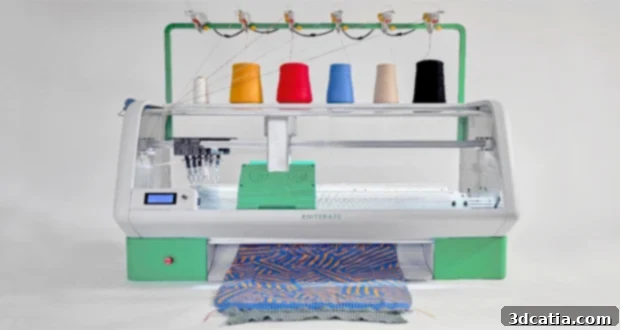
Kniterate: Pioneering the Future of Fashion with Digital Knitting Technology
Imagine a world where your creativity in fashion is unbound, where the clothes you envision can be brought to life with unprecedented ease and precision. This dream is fast becoming a reality, thanks to Kniterate, a revolutionary digital knitting machine that harnesses principles strikingly similar to those found in modern 3D printing. At its core, Kniterate represents a significant leap forward in personal manufacturing, offering a gateway to bespoke clothing creation right from your desktop. The innovation springs from the minds of Gerard Rubio and Triambak Saxena, the brilliant founders of this Spanish startup. Their inspiration was drawn directly from the transformative capabilities of classic 3D printers, leading them to conceptualize and develop a machine that translates digital designs into tangible textile products. Based on an advanced digital production methodology, Kniterate empowers users to create virtually any desired knitted shape or garment by simply feeding in yarn and uploading a digital file from their computer. This transformative approach simplifies the complex process of textile manufacturing, making it accessible to a broader audience, from seasoned designers to passionate hobbyists.
The immense potential of Kniterate was immediately evident to the global community. Shortly after its launch on Kickstarter, the startup achieved extraordinary success, rapidly exceeding its funding goals. Within a mere few days, Kniterate managed to raise over $490,000, a clear testament to the strong market demand for accessible, innovative textile production tools. This rapid crowdfunding success underscored a widespread desire for greater creative control and efficiency in garment manufacturing. To delve deeper into the vision behind Kniterate and understand what Gerard Rubio and Triambak Saxena envision for its future, we had the exclusive opportunity to speak with one of its co-founders, Gerard Rubio, and explore the journey and aspirations of this groundbreaking venture.
The Genesis of Kniterate: Blending 3D Printing and Fashion Design
The seed for Kniterate was planted approximately four years ago, a journey that began at the intersection of diverse technological and creative fields. At that time, I was deeply immersed in the world of blablaLAB, a company dedicated to various projects and workshops centered around 3D printing. This meant that additive manufacturing technology was not just a passing interest, but an integral, daily component of my professional life. Before my venture into 3D printing, my academic background was rooted in design, specifically at a fashion school. There, I had invaluable access to a plethora of textile machines and engaged in numerous workshops, fostering an innate interest and practical understanding of the textile domain. This early exposure instilled a profound appreciation for the intricacies of garment creation and the machinery involved. Beyond formal education, I’ve always possessed a natural curiosity, a compulsion to assemble and disassemble all kinds of mechanisms to understand their inner workings. These complex textile machines, with their precise movements and intricate outputs, particularly captivated me. Their potential for automated, creative production resonated deeply, leading to an undeniable conviction that I had to explore something transformative with them. This unique blend of experience in both fashion design and cutting-edge 3D printing technology provided the perfect fertile ground for the innovative idea that would eventually become Kniterate.
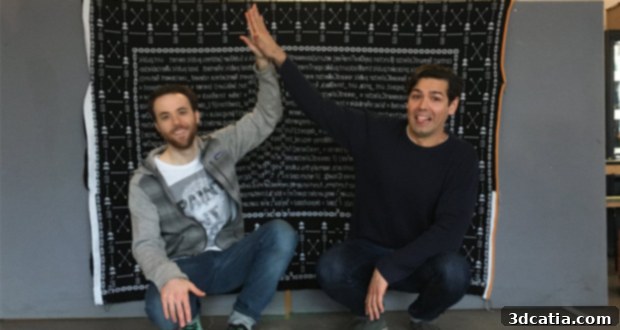
The two creators of Kniterate, Gerard Rubio and Triambak Saxena
For a considerable period, I dedicated myself to an in-depth study of this very subject, meticulously researching the possibilities and limitations of existing technologies. The more I delved into the capabilities of 3D printers, which were increasingly becoming accessible for home use to create three-dimensional objects from digital files, a powerful question crystallized in my mind: If we can print objects, why couldn’t we have a similar, equally accessible machine to create custom clothing? This fundamental reflection served as the undeniable starting point, the spark that ignited the entire Kniterate project. It was a clear vision of bridging the gap between digital design and tangible textile production, much like 3D printing bridged the gap for plastics and other materials. We firmly believe that Kniterate is not just our answer to this pivotal question, but a comprehensive solution that empowers individuals and small businesses to reshape the fashion landscape.
Demystifying the Kniterate Process: Digital Design to Wearable Art
The operational process of our Kniterate machine is designed for intuitive use, drawing fascinating parallels to a conventional FDM (Fused Deposition Modeling) 3D printer. Just as an FDM printer utilizes spools of filament to build objects layer by layer, the Kniterate machine works with spools of various fabric yarns—such as luxurious cotton, warm wool, or versatile synthetics. The initial setup is remarkably straightforward: you simply select your desired yarn color and material, then meticulously guide the thread through the tensioners and wire guides. Once the yarn is correctly threaded, your Kniterate machine is primed and ready to bring your designs to life, transforming raw material into intricate textiles with precision and ease. This user-friendly approach significantly lowers the barrier to entry for digital textile creation.
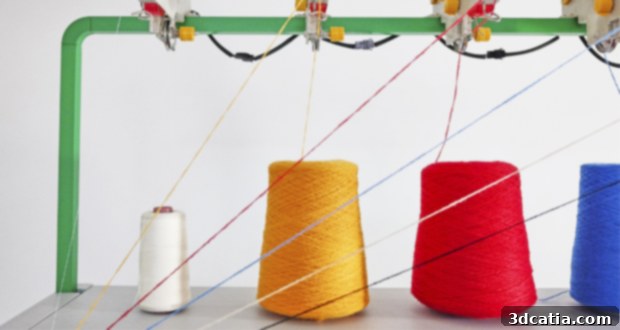
Choose your colors and materials
When it comes to crafting your unique designs, Kniterate offers unparalleled flexibility. Users can leverage any standard 2D design software, such as Adobe Photoshop or Illustrator, to create their patterns and garment layouts. This allows experienced designers to integrate Kniterate seamlessly into their existing workflows. For those new to digital design or seeking a more streamlined approach, we are actively developing a dedicated application. This intuitive application is tailored to provide immense freedom in designing your clothes, offering a comprehensive suite of tools and a library of customizable templates. These templates serve as an excellent starting point, making it incredibly easy to adapt and personalize patterns to achieve the exact aesthetic and fit you desire. Furthermore, our platform fosters a vibrant community: users will have the exciting opportunity to share their creations and patterns with others through a unique digital wardrobe feature, promoting collaboration, inspiration, and a thriving ecosystem of digital textile artists and enthusiasts.
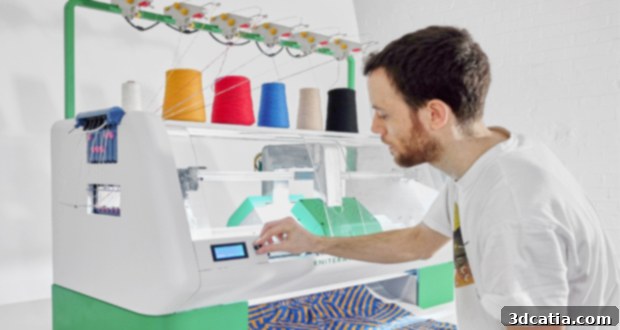
Once your digital design file is meticulously prepared and finalized, the next steps are remarkably simple and efficient. All you need to do is save your design to an SD card, much like you would prepare a file for a 3D printer. This SD card is then inserted directly into the Kniterate machine. From there, you navigate the intuitive interface to select your prepared file and initiate the knitting process with a simple press of the “Knit” button. The machine then diligently begins its work, transforming your digital vision into a physical garment. Upon completion, your newly knitted item will gently emerge on the lower shelf, ready for the final, minimal touches. These concluding steps typically involve merely cutting any excess threads and making any minor adjustments or embellishments to perfect your creation. This entire streamlined process underscores Kniterate’s commitment to making bespoke garment production accessible, efficient, and truly enjoyable for everyone.
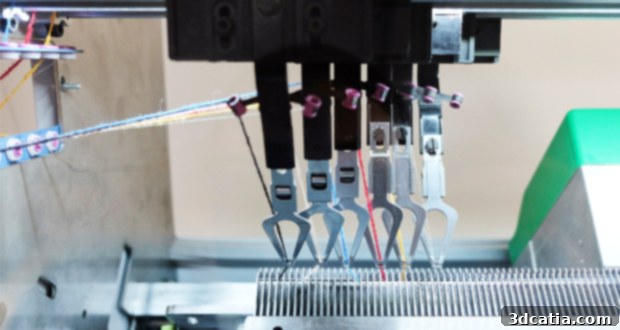
Kniterate and the Evolution of Manufacturing: Additive vs. Subtractive in Textiles
The relationship between additive manufacturing, commonly associated with 3D printing, and the textile industry is far more intertwined and revolutionary than many realize, especially when considering the method of textile production chosen. Traditional garment manufacturing predominantly relies on a subtractive process. Most of the clothes we wear are produced by first creating large bolts of fabric, which are then cut into various pattern pieces. These pieces are subsequently sewn together to form the final garment. While this method has been standard for centuries, it inherently generates a significant amount of material waste. Fabric remnants, often referred to as ‘pre-consumer waste,’ are an unavoidable byproduct of this ‘cut-and-sew’ approach, as large portions of the original fabric canvas are not utilized. This inefficiently combines an additive step (weaving or knitting the large canvas) with a highly wasteful subtractive process (cutting out parts and creating waste), leading to substantial environmental and economic costs within the fashion supply chain. This traditional model is ripe for disruption, and Kniterate offers a compelling alternative.
This is precisely where Kniterate machines introduce a paradigm shift, enabling us to work directly with an additive manufacturing philosophy for textiles. Unlike the traditional method, our machine offers the unique capability to create knitted parts that are directly formed into their desired final shape, without the need for extensive cutting from a larger piece of fabric. This means that a garment, or components of it, can be knitted to exact specifications, drastically reducing material waste. The process eliminates the inefficient ‘subtractive’ steps that characterize conventional garment production, saving not only valuable fabric but also significant time and resources typically spent on post-processing steps like cutting, pattern matching, and complex assembly. This ‘form-to-finish’ approach mirrors the efficiency and precision found in advanced 3D printing, where objects are built up layer by layer into their final geometry. By embracing additive manufacturing, Kniterate not only provides a more sustainable and cost-effective method of textile production but also unlocks unprecedented levels of design freedom and customization, allowing creators to push the boundaries of what is possible in knitwear design.
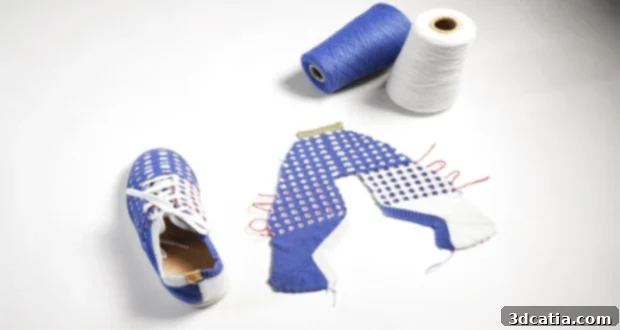
The Future Landscape for Kniterate: Beyond the Initial Launch
As we forge ahead, our immediate and primary focus is unequivocally on the successful production and timely delivery of our Kniterate machines to our enthusiastic supporters and backers on Kickstarter. This critical phase involves meticulous engineering, rigorous quality control, and streamlined logistics to ensure every machine meets our high standards. Concurrently, a significant portion of our efforts is dedicated to the ongoing development and refinement of the accompanying software. This software is the brain behind Kniterate, and we are committed to making it as intuitive, powerful, and versatile as possible, enhancing the user experience and expanding creative possibilities. While these current endeavors demand our full attention, we are brimming with a multitude of ambitious ideas for Kniterate’s future. These long-term visions encompass further technological advancements, expanding our design ecosystem, and potentially exploring new applications for digital knitting. However, for now, our unwavering commitment remains on delivering an exceptional quality product and a robust software experience that empowers our early adopters to begin their journey into digital textile creation.
A Final Message to Aspiring Creators and Innovators
To all our readers who are captivated by the potential of digital knitting and eager to embark on their own journey of custom garment creation, we extend a special invitation. If the innovative capabilities of our Kniterate machine resonate with your creative aspirations, we encourage you to support our project on Kickstarter. By backing us before May 8th, you still have the unique opportunity to secure your own Kniterate machine at a significantly reduced price, making this cutting-edge technology even more accessible. We are confident that investing in Kniterate will unlock a new realm of creative possibilities for you. Furthermore, we highly recommend taking a moment to explore all the compelling photos and engaging videos on our Kickstarter page; they offer a deeper dive into the machine’s functionalities, showcase stunning examples of what can be created, and provide a clearer picture of the revolution we are bringing to personal fashion and textile manufacturing. Join us in shaping the future of fashion!
For a quick visual introduction to Kniterate and its capabilities, watch the video below:
Do you believe that Kniterate is poised to revolutionize the manufacturing of clothing and democratize fashion design? We’d love to hear your thoughts and predictions! Share your insights in a comment below or join the conversation on our vibrant Facebook and Twitter pages. Your feedback helps shape the dialogue around the future of textile innovation!