
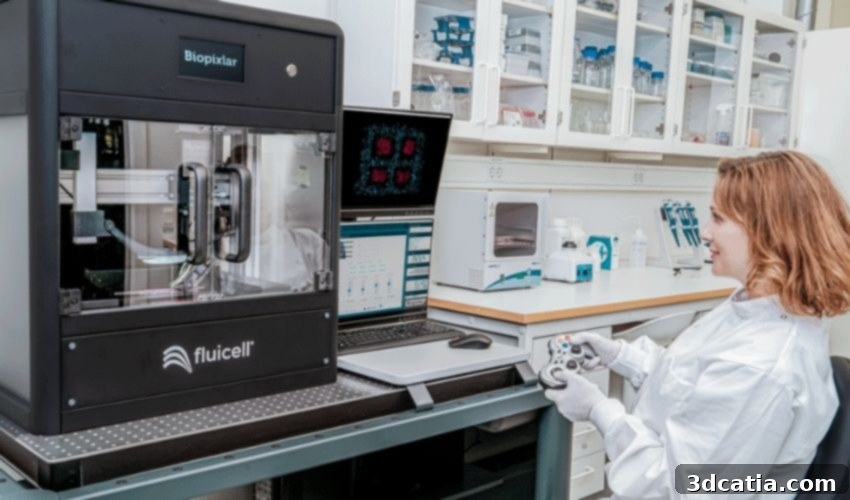
Revolutionizing Diabetes Treatment: Fluicell’s Biopixlar System Pioneers Advanced Bioprinting for Insulin Production
The landscape of medical science is continually being reshaped by groundbreaking innovations, and few fields exhibit as much transformative potential as medical bioprinting. This cutting-edge discipline, which merges principles of tissue engineering, regenerative medicine, and additive manufacturing, is rapidly accelerating the development of novel therapies. Significant strides have been made, particularly in addressing the challenges faced by individuals living with diabetes. Over recent years, we’ve witnessed the emergence of remarkable applications of 3D printing technologies within diabetology. Pioneering companies have successfully created 3D-printed pancreas models, offering invaluable tools for childhood diabetes research and drug discovery. Moreover, ingenious wearable devices, such as a 3D-printed e-ring capable of monitoring glucose levels, have demonstrated the versatility of this technology in patient management. The commitment to advancing these technologies is also evident in the substantial investments poured into research and development for 3D-printed drugs, promising personalized and precisely dosed medications. Amidst these exciting developments, Swedish biotech powerhouse Fluicell has recently emerged as a frontrunner, pushing the boundaries of diabetes treatment even further. Utilizing its uniquely patented Biopixlar bioprinting platform, Fluicell’s dedicated research team has achieved remarkable progress in the early development of advanced therapy medicinal products. Their success lies in creating transferrable biocomposites that meticulously mimic the critical insulin-producing function of the human pancreas, signaling a new dawn for diabetes management.
This particular medical product development from Fluicell is strategically and singularly focused on addressing Type 1 diabetes, a specific area of research that has historically lagged behind other medical conditions in terms of innovative therapeutic solutions. Type 1 diabetes is a chronic autoimmune condition where the body’s immune system mistakenly attacks and destroys the insulin-producing beta cells located in the pancreatic islets. This destruction leads to an absolute deficiency of insulin, a hormone vital for regulating blood glucose levels, ultimately requiring lifelong insulin therapy through injections or pumps. The inability of the pancreas to produce insulin has devastating long-term consequences, including cardiovascular disease, kidney damage, nerve damage, and vision loss, underscoring the urgent need for regenerative approaches. Fluicell’s latest bioprinting project offers a beacon of hope in this challenging landscape. The research team has successfully observed consistent insulin release from their engineered biocomposites in response to glucose stimulation. This observation is not merely a scientific curiosity; it is a vital indicator of functional tissue mimicry and represents one of the most critical prerequisites for the eventual development of transformative, curative treatments for Type 1 diabetes. By replicating this fundamental biological process *ex vivo*, Fluicell is laying the groundwork for future therapies that could potentially restore the body’s natural ability to produce insulin.
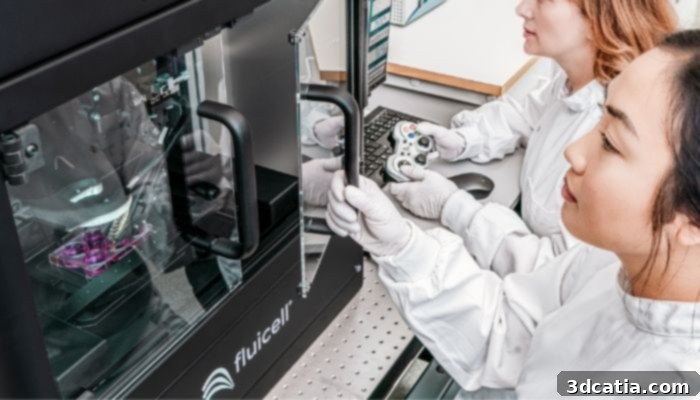
Fluicell Biopixlar: Advancing Precision Bioprinting Without Bioink
At the heart of Fluicell’s groundbreaking achievements lies Biopixlar, an innovative bioprinter that distinguishes itself from conventional bioprinting methodologies. What sets Biopixlar apart is its extraordinary capability to precisely position individual cells or cell aggregates in three dimensions with unparalleled resolution and accuracy, crucially achieving this *without the reliance on bioinks*. Existing bioprinting methods typically depend on scaffolding structures made from bioinks, which are often hydrogels containing stem cells or other cellular components. While effective, bioink-based approaches can introduce complexities related to material compatibility, degradation rates, and the potential impact of the bioink itself on cell viability and function. Biopixlar’s bioink-free approach mitigates these challenges, offering a purer, more direct method for tissue construction. This revolutionary technique allows researchers unprecedented control over the microenvironment of the printed tissue, enabling the creation of more physiologically relevant structures.
Dr. Tatsiana Lobovkina, CSO and the visionary leader of Fluicell’s research team, elaborates on the profound implications of this technology: “With Biopixlar, we can choose one or more cell types, including vital insulin-producing beta cells, and maintain precise control over their exact spatial location and the overall histology – the microscopic anatomy – of the resulting tissue. This level of meticulous control is of crucial importance when it comes to ensuring both the immediate function and the long-term longevity of any transplantable biocomposite. We envision immense potential in creating entirely new tissue-based products for the treatment of diabetes as we continue to advance our development work.” This statement underscores the strategic advantage of Biopixlar: the ability to dictate not just where cells go, but how they interact and form functional tissues that truly mimic natural organs. By creating highly organized, biologically relevant tissue architectures, Fluicell aims to overcome some of the persistent hurdles in regenerative medicine, paving the way for therapies that are both effective and durable. The precision offered by Biopixlar ensures that the complex cellular interactions necessary for sustained insulin production can be replicated outside the body, offering a tangible path toward novel therapeutic solutions for Type 1 diabetes patients.
Biopixlar: A Global Platform for Biomedical Discovery and Innovation
Beyond its immediate application in developing advanced diabetes therapies, Fluicell has designed Biopixlar to function as a versatile global discovery platform, empowering researchers across various disciplines to construct and analyze complex biological tissues. This capability extends far beyond transplantation, opening new avenues for drug development, enhancing our fundamental understanding of diseases, and propelling regenerative medicine research forward. For drug development, Biopixlar enables the creation of more accurate and physiologically relevant in vitro disease models, significantly reducing reliance on animal testing and potentially accelerating the discovery of new therapeutic compounds. Researchers can engineer multi-cellular tissues that precisely replicate specific disease states, allowing for more reliable drug screening and toxicity testing. This not only makes the drug discovery process more efficient but also more ethical and cost-effective. In the realm of disease understanding, the platform allows scientists to meticulously build and observe tissue interactions in a controlled environment, offering unprecedented insights into the progression of various conditions at a cellular level. By manipulating cell types and their spatial organization, researchers can dissect the mechanisms underlying complex diseases, identifying new targets for intervention. For regenerative medicine, Biopixlar provides the tools to engineer functional tissue units that can eventually be scaled up for larger therapeutic applications, moving beyond simple cell cultures to true tissue constructs. The ability to precisely control cell placement and tissue architecture is paramount for developing grafts and implants that can integrate seamlessly with the host body. This multi-faceted utility positions Biopixlar as a powerful tool that could redefine how we approach biomedical research and drive innovation across multiple therapeutic areas. To delve deeper into Fluicell and their cutting-edge biotech research, interested readers can explore more information HERE.
The Future of Bioprinted Therapies and Regenerative Medicine
The advancements made by Fluicell with their Biopixlar platform represent a significant leap forward in the quest to conquer diseases like Type 1 diabetes. While the current findings are in the early development stages, the successful demonstration of glucose-stimulated insulin release from bioprinted composites is a critical validation of the technology’s potential. This breakthrough not only offers hope for Type 1 diabetes patients but also paves the way for broader applications in regenerative medicine, where the precise engineering of functional tissues and organs is the ultimate goal. The ability to create functional tissue modules with such fidelity could revolutionize organ transplantation, drug testing, and our understanding of human physiology and pathology. The road ahead for such advanced therapeutic medicinal products involves rigorous testing, extensive preclinical studies, and multi-phase clinical trials to ensure safety and efficacy in human patients. Scaling up production, ensuring long-term graft survival, and navigating complex regulatory pathways will be key challenges to overcome. However, the foundational technology is now in place, suggesting a future where diseases previously deemed incurable could be managed or even cured through personalized bioprinted therapies. This transformative potential extends beyond diabetes to other conditions requiring tissue repair or replacement, from cardiovascular diseases to neurodegenerative disorders, offering a glimpse into a future where bioprinting profoundly impacts human health and longevity.
What are your thoughts on the incredible contributions that advanced 3D printing and bioprinting technologies are making to diabetes research and beyond? Do you believe these innovations hold the key to truly transformative treatments for chronic conditions? We invite you to share your perspectives and engage in the conversation by leaving a comment below, or by connecting with us on our vibrant Facebook and Twitter pages. To stay informed about all the latest developments, breakthroughs, and news in the dynamic world of 3D printing and advanced manufacturing, don’t forget to sign up for our free weekly newsletter, delivered straight to your inbox!
Photo Credits: Fluicell