
Harvesting Innovation: Unveiling the Impact of 3D Printing in Modern Agriculture
Agriculture, a cornerstone of human civilization, is in a perpetual state of transformation. Throughout history, this vital sector has consistently embraced technological advancements to enhance productivity, optimize resource utilization, and significantly improve food quality and availability. However, contemporary agriculture faces unprecedented challenges, notably the escalating climate crisis and a rapidly growing global demand for food products. These complex issues necessitate an urgent search for innovative, sustainable solutions. Recent studies and pioneering projects indicate that additive manufacturing, commonly known as 3D printing, holds immense promise in addressing these challenges. But how precisely is 3D printing revolutionizing agricultural practices and what role does it play in shaping the future of farming?
While 3D printing is still in its nascent stages of widespread adoption within mainstream agricultural practices, its specialized applications are already paving the way for groundbreaking possibilities. We have witnessed tangible benefits that additive manufacturing has brought to related fields, such as beekeeping, which directly influences agricultural success. These early implementations highlight the technology’s potential, even as there remain areas for further research, development, and broader integration across the agricultural landscape.
Delving into history, it becomes evident that agriculture formed the bedrock of all civilizations, predating even scientific methodologies and written language. For approximately 12,000 years, agricultural practices have accompanied humanity, fundamentally transforming lifestyles and societal structures. The ability to cultivate food reliably enabled nomadic groups to establish permanent settlements, which, in turn, led to the formation of complex societies and laid the groundwork for human progress. This historical significance underscores agriculture’s enduring and critical role in human development, continuously adapting and evolving with humanity’s needs.
The profound importance of agriculture has remained constant throughout millennia. It continues to be a strategic activity, indispensable for the autonomous development, economic stability, and overall wealth of nations. It feeds billions, supplies raw materials for countless industries, and sustains rural economies. According to comprehensive data from the Food and Agriculture Organization of the United Nations (FAO), a staggering 1.23 billion people were employed in agrifood systems in 2019. This extensive study further revealed that nearly half of the world’s population lived in households directly or indirectly linked to these vital agrifood systems, emphasizing its global impact and pervasive influence on human lives and livelihoods.
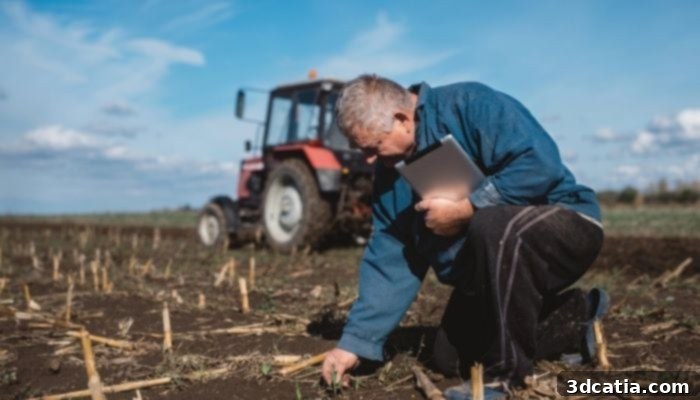
Agriculture is a strategic sector, providing food for the world’s 8.2 billion inhabitants and raw materials for various economic sectors.
For many centuries, farming tasks were characterized by intensive manual labor, a tradition that defined agricultural practices across the globe. The advent of the Industrial Revolution marked a pivotal turning point, fundamentally transforming farming with the introduction of sophisticated machinery. These machines rationalized manual labor, drastically increasing efficiency and scale of operations. From the late 19th century and throughout the 20th century, the widespread adoption of equipment such as tractors, combine harvesters, and advanced plows became not just beneficial but absolutely essential for modern agricultural operations, ushering in an era of mechanized farming and significantly boosting global food production capabilities.
In more recent times, agriculture has embarked on another revolutionary phase by integrating advanced information technology into its core activities, giving rise to the term “Agri-Tech” or “smart farming.” This innovative field encompasses the strategic use of cutting-edge technologies, including autonomous vehicles for precision tasks, drones for aerial surveillance and data collection, satellite imagery for large-scale crop monitoring, robotics for automated tasks like harvesting and planting, advanced scanners for soil and plant health diagnostics, powerful computers, and sophisticated software solutions for data analysis and decision support. The primary goal of Agri-Tech is to optimize agricultural production across every stage, from planting to harvesting, by leveraging data-driven insights and automation. Within this evolving landscape, additive manufacturing is emerging as a powerful tool. Let’s explore how 3D printing is specifically being utilized in the agricultural sector and the profound impact it is beginning to have on modern farming.
Innovative Applications of 3D Printing in Agriculture
When considering the potential applications of 3D printing in agriculture, initial thoughts might gravitate towards practical uses such as the rapid manufacturing of farm tools, the production of essential spare parts for machinery, or even its integration into tractor production lines. However, the scope of 3D printing’s influence extends far beyond these immediate examples. A wealth of ongoing developments, cutting-edge research projects, and concrete, real-world applications are increasingly incorporating additive manufacturing processes. While it is true that 3D printing technologies have not yet achieved the same pervasive implementation in agriculture as they have in sectors like medicine or the automotive industry, this article will demonstrate that the sector is rapidly catching up, with significant progress already underway. We will begin by exploring some of the most impactful and promising applications that are transforming agricultural practices.
Enhancing Agricultural Machinery Production with Additive Processes
Additive manufacturing has already firmly established its value and efficiency in various industrial sectors, particularly in automotive and transportation, where it enables the creation of complex, lightweight, and customized components. Similar benefits are now being realized in the manufacture of agricultural machinery, leading to more efficient, durable, and specialized equipment. A prime example is John Deere, a globally renowned manufacturer of agricultural machinery, which in 2022 successfully produced over 4,000 parts using additive manufacturing within a single year. This significant milestone marked its initial foray into integrating additive manufacturing at its specialized center in Mannheim, Germany, signaling a strategic shift towards more flexible, on-demand, and efficient production methods for both prototypes and end-use components.
Another compelling case study comes from Teyme, a Spanish company specializing in agricultural sprayers and other farm equipment. Teyme leverages HP’s advanced Multi Jet Fusion (MJF) technology to fabricate intricate and critical components such as air outlet adapters and air blade positioners. These precision-engineered parts are seamlessly integrated into their agricultural machinery, demonstrating how 3D printing facilitates the creation of optimized components that enhance performance and reliability, often with designs impossible or impractical to achieve with traditional manufacturing methods. The ability to iterate quickly and produce complex geometries ensures optimal functionality in demanding agricultural environments.

Teyme vaporizer with parts created using Multi Jet Fusion technology (photo credits: Teyme)
Developing Highly Customized Tools for Farmers
One of the most immediate and impactful advantages of 3D printing in agriculture is its capability to rapidly and cost-effectively prototype and produce highly customized tools and components. These can be specifically tailored to meet the unique needs and operational conditions of individual farms and farmers. Examples include bespoke machine parts designed for specific soil types or crop rows, specialized irrigation equipment adapted for particular terrain or crop types, and even critical spare parts for older, legacy machines that are no longer manufactured commercially but are still essential for ongoing operations. This flexibility ensures that farmers are not limited by generic, off-the-shelf solutions but can access tools precisely optimized for their specific requirements, thereby increasing efficiency and extending the lifespan of existing equipment.
Furthermore, the ability to produce these essential tools and components on-site, or through local service providers utilizing 3D printing, dramatically reduces the need for farmers to travel long distances or endure lengthy waiting times for deliveries. This localized, on-demand production minimizes operational interruptions and helps maintain the continuity of farming activities, which are often time-sensitive and critical for crop success. Crucially, the increasing democratization and affordability of additive manufacturing technology means that both small family farms and large-scale agricultural enterprises can leverage and benefit from this transformative capability, fostering greater self-sufficiency, reducing downtime, and encouraging innovation across the entire sector, making specialized tools accessible to all.
Innovating with 3D Printed Sensors and IoT Devices
The integration of the Internet of Things (IoT) in agriculture, forming the backbone of precision agriculture, is profoundly enhancing decision-making processes by providing real-time data. 3D printing plays a significant role in this by enabling the customized fabrication of IoT sensors and devices. These advanced sensors are designed to meticulously monitor various critical environmental and soil conditions, including moisture levels, ambient temperature, wind speed and direction, soil pH, and nutrient concentrations, as well as overall weather patterns. By precisely tailoring sensor housings, mounting brackets, and internal components using 3D printing, developers can create durable, application-specific devices that seamlessly integrate into intelligent agricultural systems, even in harsh outdoor conditions.
This capability empowers farmers with real-time, data-driven insights, leading to improved crop management strategies, optimized resource allocation (such as water and fertilizer), early detection of plant stress or pest infestations, and ultimately, higher yields and greater operational efficiency. The flexibility of 3D printing allows for rapid iteration and customization of these devices, accelerating their development and deployment in diverse farming environments, making smart farming technologies more accessible and effective.
Additive Manufacturing for Advanced Drones and Agricultural Robots
The advent of drones and agricultural robots represents a significant milestone in the automation of field operations, moving towards autonomous farming. Additive manufacturing has been instrumental in the development of these advanced devices, facilitating the creation of lightweight, complex, and highly functional prototypes and even end-use parts. 3D printing enables the production of optimized airframes, custom sensor mounts, and specialized robotic grippers that are both strong and lightweight, enhancing maneuverability and payload capacity. Over recent years, these automated systems have demonstrably proven their capability to perform a range of crucial tasks with exceptional precision and efficiency, including comprehensive crop monitoring through multispectral imaging, automated seeding in difficult terrain, and the highly targeted application of fertilizers and pesticides. This precision reduces waste, minimizes environmental impact, and increases the overall effectiveness of resource management.
An exemplary application comes from the Italian company Soleon, a specialist in unmanned aerial vehicles (UAVs) and drone applications. Soleon partnered with Materialise, a leader in additive manufacturing services, to develop the innovative Soleon Dis-co system. This project aimed to combat the destructive European corn borer, a pervasive pest capable of decimating a significant portion of corn crops. Rather than relying on broad-spectrum chemical pesticides, Soleon and Materialise ingeniously designed a pesticide delivery system that utilized Trichogramma eggs – a species of wasp that naturally preys on the European corn borer, offering an eco-friendly and sustainable biological control solution. For this specialized drone, the airframe and critical components were precisely 3D printed in PA12 nylon using the Selective Laser Sintering (SLS) process, chosen for its ability to produce strong, lightweight, and intricate parts suitable for demanding aerial operations, providing both durability and aerodynamic efficiency.
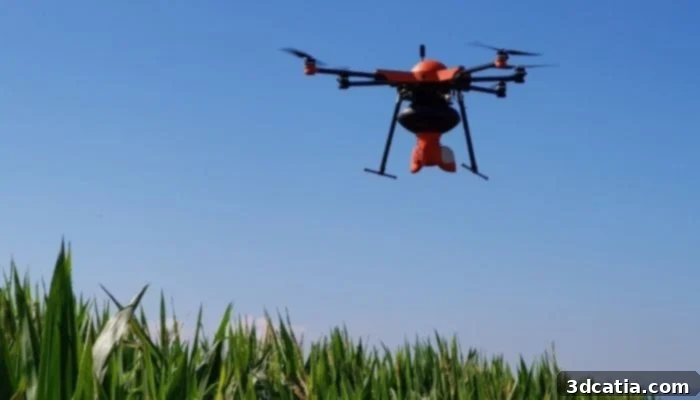
Italian company Soleon’s 3D-printed drone for pest control (photo credits: Soleon)
Biodegradable Containers for Sustainable Planting
Beyond machinery and robotics, 3D printing offers valuable solutions for sustainable planting practices that align with environmental conservation goals. The technology can be effectively utilized to create biodegradable containers or pots specifically designed for seeds and seedlings. These innovative containers facilitate easier planting by providing optimal growing conditions and then naturally decompose in the soil after transplantation, releasing nutrients and eliminating plastic waste. This significantly reduces the environmental footprint associated with traditional plastic trays and pots, which often contribute to landfill waste and microplastic pollution. This application directly supports eco-friendly agriculture by promoting the use of sustainable materials and minimizing pollution throughout the plant’s life cycle.
Optimizing Irrigation Systems with 3D Printed Components
Efficient water management is paramount in modern agriculture, especially in regions facing water scarcity. 3D printing is enhancing irrigation systems through customized component design, leading to remarkable improvements in water conservation and distribution. By leveraging additive manufacturing, it’s possible to produce highly specialized nozzles, connectors, diffusers, and other irrigation parts with intricate geometries that are difficult or impossible to achieve with conventional manufacturing methods. These custom-designed components can optimize water distribution with unprecedented precision, ensuring that crops receive exactly the right amount of water at the precise location, minimizing evaporation and runoff, while significantly reducing overall water waste. This leads to more sustainable water use, improved crop health, and higher yields, contributing to resilient farming practices.
Additive Manufacturing of Advanced Pest Control Devices
Pest control is a critical aspect of agriculture, constantly requiring innovative and environmentally responsible solutions. Additive manufacturing is providing groundbreaking tools for this challenge, enabling highly targeted and effective strategies. Starting with insect traps, 3D printing enables the design and manufacture of highly specific traps tailored to different types of pests. These traps can be optimized with precise geometries, internal baffles, and lure placement features to maximize their effectiveness in attracting and capturing target insects, thereby minimizing reliance on broad-spectrum chemical interventions that can harm beneficial insects and the environment. Furthermore, 3D printing facilitates the creation of sophisticated pheromone-releasing devices – chemical attractants or repellents designed specifically for insects. These devices can be precisely engineered for controlled and sustained dispersion of pheromones over extended periods, allowing for highly targeted pest management strategies that are both efficient and environmentally responsible, moving towards integrated pest management systems.
Enabling Efficient Horizontal Farming with 3D Printed Structures
Horizontal farming, an innovative approach to crop cultivation, particularly advantageous in urban or confined spaces, is another area where additive manufacturing demonstrates significant utility. The Italian company Hexagro specializes in this field, utilizing 3D printing processes to create modular, customizable structures for its horizontal farming systems. These structures are ingeniously designed to adapt to the specific dimensions and environmental conditions of various spaces, such as indoor farms, rooftops, or vertical gardens, as well as to the unique requirements of different crop types. This modularity allows for highly efficient space utilization, flexible cultivation layouts, and the ability to scale production as needed.
Hexagro’s approach includes the 3D printing of custom trays, specialized plant supports, and intricate irrigation channels. These components feature designs meticulously optimized for plant growth, ensuring efficient water and nutrient delivery directly to the roots while minimizing waste. The inherent ability of additive manufacturing to rapidly produce these customized components significantly reduces both development costs and lead times, as new designs can be prototyped and manufactured quickly. This agility enables Hexagro to continually innovate and improve its growing systems, pushing the boundaries of sustainable urban agriculture and maximizing yields in challenging environments, contributing to local food security.
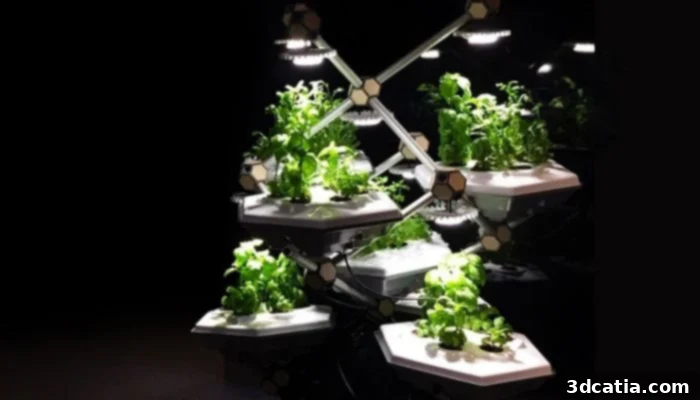
3D-printed horizontal crop with connectors (photo credits: Hexagro)
Scientific Research and the Transformative Role of Additive Manufacturing
Agricultural research has undergone profound evolution in recent years, propelled by rapid technological advancements that are continually redefining traditional practices and fostering a new era of precision agriculture. Among these disruptive innovations, 3D printing is emerging as a revolutionary tool with the potential to fundamentally reshape modern agriculture. Its capacity for rapid prototyping, customization, and the creation of complex geometries offers unprecedented opportunities for scientific exploration and practical application. The convergence of 3D printing capabilities and agricultural science promises to usher in a new era in how agricultural resources are cultivated, managed, and sustained, offering unprecedented precision and customization in research and development.
Groundbreaking Advances in Materials for Agriculture
Thermoplastics, while widely used in agriculture for various applications such as mulches, netting, and packaging, pose significant environmental challenges due to the waste they generate. This waste has a direct and detrimental impact on soil health, contributing to pollution, disturbing microbial ecosystems, and negatively affecting biodiversity. To mitigate these pressing issues, global efforts are increasingly focused on sustainable alternatives, such as the “6R model” (reject, redesign, reduce, reuse, recycle, and recover) advocated by the United Nations. Farmers are actively being encouraged to transition towards natural or biodegradable alternatives. Recent scientific studies, leveraging the versatility of additive manufacturing, have made significant strides in identifying and developing innovative materials with superior environmental properties, paving the way for a greener agricultural future.
For instance, a compelling publication from 2021 explores the potential of 4D printing as a primary process for creating sustainable agricultural materials. This groundbreaking study, titled “4D Printing: Prospects for the production of sustainable plastics for agriculture,” was a collaborative effort between the University of Patras, the Agricultural University of Greece, and the Italian Institute of Technology in Genoa. It highlights the vast possibilities of this advanced technology in addressing agricultural plastic waste.
4D printing represents an exciting evolution of conventional 3D printing, adding the critical dimension of time. In this paradigm, objects are fabricated from “intelligent” or “smart” materials that possess the inherent ability to autonomously change their shape or alter their properties in response to specific external stimuli, such as heat, light, water absorption, or mechanical movement. While 4D printing has primarily found applications in highly specialized fields like medicine for developing adaptive implants or drug delivery systems, its direct applications in agriculture are still largely conceptual or in very early experimental stages. However, the research team’s findings are highly encouraging, demonstrating that applying 4D printing to agricultural plastics could significantly enhance their biodegradability, reduce environmental impact, and deliver substantial economic and production benefits through self-adaptive materials. The primary obstacle to its widespread adoption currently remains the relative novelty and complexity of the 4D printing process itself, requiring further development and optimization to become economically viable.
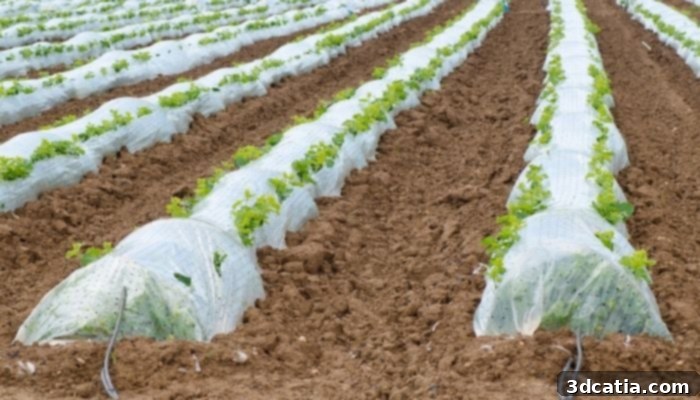
4D printing offers the possibility of increasing the biodegradability of plastics in agriculture
So, what specific advantages could 4D printing introduce to agriculture? Certain shape memory materials exhibit characteristics such as heat resistance, magnetoresistance, and sensitivity to pH levels and osmotic pressure. These properties make them exceptionally well-suited for developing intelligent behaviors in agricultural applications that can respond dynamically to environmental changes. The research team envisions applications including smart food packaging that responds to spoilage indicators, agricultural mulches that adapt to soil moisture, dynamic shade netting that adjusts to sunlight intensity, or even advanced plastic greenhouse covers that self-regulate temperature and humidity. Given that FDM (Fused Deposition Modeling) technology has already enabled the manipulation of PLA and other polymers to exhibit self-forming and memory effects, it is conceivable that this relatively accessible 3D printing technique could facilitate the creation of effective, scalable, and affordable smart tools for practical agricultural use. Other additive manufacturing techniques, such as those based on stereolithography, have also demonstrated significant potential in specialized agricultural applications, opening diverse avenues for future innovation in smart materials for farming.
Revolutionizing Soil Research with 3D Printing
Soil is arguably the most fundamental and critical element in agricultural practice, serving as the foundation for plant growth, nutrient cycling, and overall ecosystem health. Its comprehensive study is therefore paramount for understanding the intricate impacts of human activity and discerning the effects of hydraulic, chemical, and microbiological characteristics on agricultural productivity and environmental sustainability. In a groundbreaking study published in 2020 by the University of Padua in Italy, researchers ingeniously reproduced complex soil structures at a microscopic level to gain deeper insights into their functional mechanisms, particularly water flow and nutrient transport.
To achieve this, the team employed advanced X-ray microtomography to capture highly detailed, three-dimensional data of natural soil samples, providing an unprecedented view of their internal architecture. From this precise data, they were able to 3D print exact, scaled-up replicas of the soil structure using resin, leveraging a 3D Systems ProJet 3510 HD printer, a machine that operates via material jetting technology. These meticulously crafted 3D printed models allowed for the accurate reconstruction of the original soil samples’ intricate structures, including their unique porosity and the specific shapes and connectivity of their pores. This unprecedented ability to create physical, observable models from microscopic data provides a powerful new tool for soil scientists to analyze phenomena that are otherwise difficult to visualize or quantify.
Despite some technical limitations during the printing process that resulted in a slight reduction in conductivity between pores, the research team successfully measured the hydraulic conductivity of most of the prototypes. The results showed a high correlation with natural soil behavior, validating the methodology and demonstrating the potential for accurate physical modeling. This pioneering study has significantly contributed to pushing the boundaries of soil science, offering new avenues for research into soil dynamics, water retention, nutrient transport, and pollutant movement, all critical for optimizing agricultural practices and environmental management.
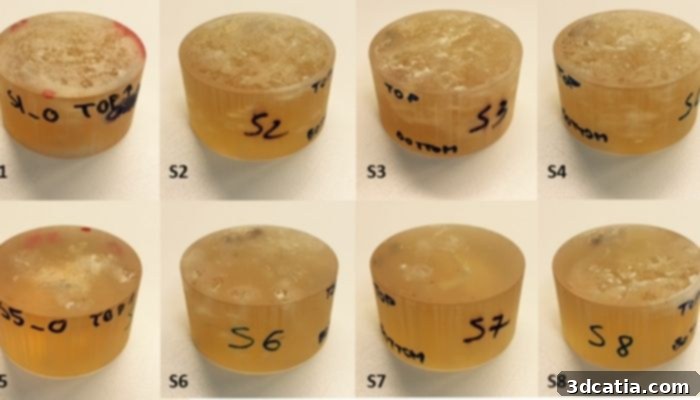
3D printing of different soil tests (photo credits: European Journal of Soil Science)
Another compelling example of additive manufacturing’s utility in soil research comes from a 2021 publication by a multidisciplinary team at the University of Virginia in the USA. Their study, titled “3D printing of biologically active soil structures,” delves into the exciting possibilities of 3D printing complex soil structures designed specifically for seed germination and initial plant growth. This research aims to create controlled, optimized environments that can enhance the initial stages of plant life, offering insights into ideal growth conditions.
In their experiments, the researchers successfully printed additive-free soil structures using extrusion-based 3D printing methods, carefully selecting natural soil components as printing “ink.” The results were highly promising: when the water content was meticulously controlled, these printed structures effectively promoted both seed germination and subsequent plant growth, demonstrating the bio-compatibility of the printed media. While acknowledging that these structures required a significant amount of water to thrive, the study successfully demonstrated the viability of this innovative approach for creating stable, structured growing media. Although the primary focus of this specific research was to demonstrate the feasibility of “green roofs” – vegetated coverings on buildings for insulation and aesthetics – the underlying principle and technology could be readily applied to the cultivation of various herbs and small plants, such as coriander, mint, parsley, and basil, offering new opportunities for controlled environment agriculture and urban farming solutions.
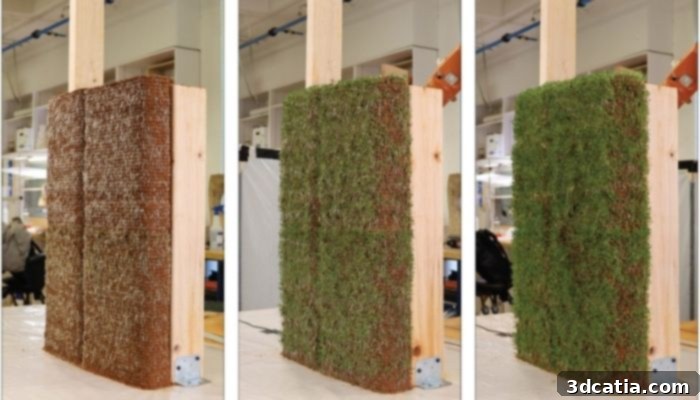
3D-printed “living walls” show vegetation growth after 144 hours (photo credits: University of Virginia)
Advancing Plant Phenotyping Through Additive Manufacturing
Plant phenotyping in agriculture is the systematic process of observing, measuring, and analyzing a plant’s observable characteristics and traits. This crucial activity allows researchers and farmers to make informed predictions about a plant’s condition, performance, and overall health within a specific environment. More precisely, phenotyping represents the dynamic outcome of the interaction between a plant’s genetic information (genotype) and its surrounding environmental conditions (environment), providing invaluable insights into its growth patterns, developmental stages, and adaptive responses to various environmental stressors like drought or disease. A landmark study published in 2024 set a new benchmark in the application of additive manufacturing for plant phenotyping. This collaborative effort between the Institute for Sugar Beet Research (IFZ) and the University of Bonn successfully resulted in the creation of a sophisticated 3D-printed plant model specifically designed for accurate and reliable phenotyping measurements.
To establish a precise and consistent reference tool for the complex processes of data collection and parameter extraction, the scientists meticulously developed a detailed 3D-printed sugar beet plant model. This model was created using Fused Deposition Modeling (FDM) technology, chosen for its accuracy, accessibility, and ability to replicate intricate botanical structures. This innovative study, spearheaded by IFZ doctoral student Jonas Bömer, highlights the significant advantages of this approach. Bömer emphasized the critical importance of this model, stating: “3D printing enabled us to create a cost-effective reference tool to guarantee the integrity of the data collected.” This ensures that phenotyping data is standardized and repeatable across experiments, leading to more robust scientific conclusions and accelerating agricultural research.
The research also extensively utilized 3D scanning as a core methodology for comprehensive data collection, complementing the 3D printed models. 3D scanning technology makes it possible to generate high-resolution digital models of crops, facilitating precise monitoring of their growth and developmental trajectories. This capability is vital for the early detection of potential problems such as disease, nutrient deficiencies, or pest damage, enabling timely intervention and more effective crop management. Jonas Bömer further elaborated on the broader implications: “By analyzing the soil, farmers can improve soil management and implement measures to prevent erosion. The interaction of robots with crops is another problem that can be solved by interpreting depth information. One example is fruit harvesting in automated greenhouses, which reduces and simplifies labor-intensive harvesting tasks.” This underscores how 3D printing and related digital technologies are converging to create smarter, more efficient, and sustainable agricultural systems.
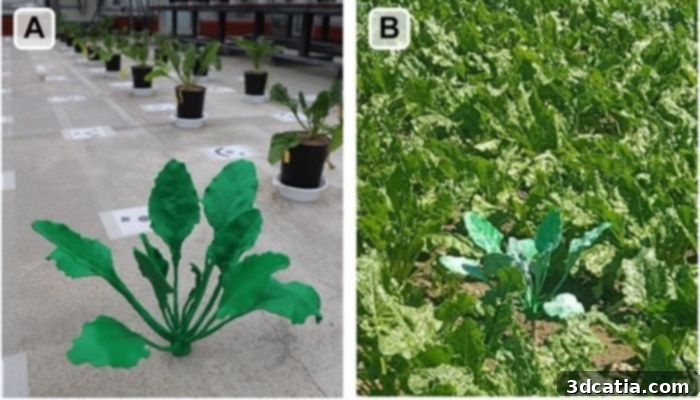
The 3D-printed reference model for sugar beet (photo credits: GigaScience)
3D Printing’s Role in Sustainable Beekeeping
Beekeeping and agriculture are intrinsically linked, forming a symbiotic relationship essential for global food security and ecosystem health. Beekeeping plays an absolutely crucial role in agriculture primarily due to its indispensable contribution to the pollination process. Pollination is a vital biological mechanism for the reproduction of countless plant species, including a vast array of food crops, from fruits and vegetables to nuts and seeds. According to compelling data from the FAO, pollinating species directly influence 35% of global agricultural production and indirectly contribute to a remarkable 75% of it. Among the estimated 200,000 species that contribute to pollination, the approximately 20,000 species of bees stand out as the pollinators par excellence, unmatched in their efficiency and ecological importance.
This profound interdependence between bees and cultivated crops unequivocally highlights the urgent necessity to not only preserve and actively support beekeeping practices but also to robustly protect bee populations themselves. Unfortunately, bees worldwide face severe threats from various sources, including the widespread and intensive use of pesticides, the rampant destruction of their vital natural habitats, and the widespread, increasingly erratic effects of climate change. These factors collectively impede the sustainability and productivity of agriculture on a global scale, leading to concerns about food security. In response to these critical challenges affecting bee species, beekeepers, researchers, and innovators are turning to additive manufacturing for sustainable and effective solutions.
For instance, a master’s student in Mexico recently developed an innovative resin-printed hive designed to stimulate and optimize honey production by bees, showcasing a creative use of technology to enhance apiculture and support local bee populations. Furthermore, the LACRIMA foundation in the UK is making significant strides by 3D printing advanced wooden beehives specifically engineered to protect and sustain bee colonies. Their “LacriNest” hives are produced using a material extrusion process and are meticulously designed to offer bees a natural, undisturbed, and optimally insulated ecosystem, fostering healthier and more productive colonies by mimicking natural nesting conditions and providing superior protection from environmental stressors.
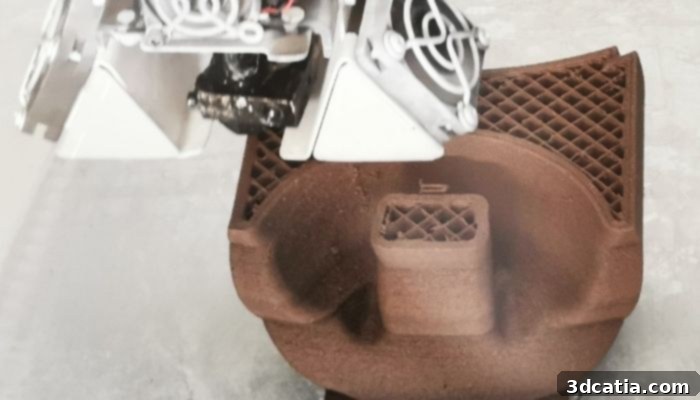
“The improved conditions provided by our 3D-printed hives have resulted in healthier bee colonies. The result is a significant improvement in agricultural productivity in the regions where our hives are used.” Vince Moucha for 3Dnatives (photo credits: LACRIMA)
Vince Moucha, the visionary founder and president of the LACRIMA foundation, shared insightful details in an interview with our team regarding their innovative approach. He explained, “Our 3D-printed hives utilize a special, fully biodegradable material – a wood-based composite – which distinctly sets them apart from both traditional hives and many other 3D-printed solutions. This innovative material, combined with the carefully engineered design of our wooden hive, not only ensures exceptional environmental sustainability but also provides superior insulation and remarkable durability against harsh weather conditions. This creates an optimal living environment for bees, significantly enhancing their health, resilience, and overall productivity, contributing directly to local ecosystems and agricultural output.” This holistic approach underscores the profound potential of 3D printing to contribute meaningfully to ecological preservation and agricultural support.
Numerous studies conducted globally have unequivocally demonstrated that bee populations are critically endangered due to a confluence of factors, including the pervasive and intensive use of chemical pesticides, the irreversible destruction and fragmentation of their vital natural habitats, and the widespread, increasingly erratic effects of climate change. The precipitous decline of bee populations is not merely an ecological concern; it profoundly impacts the production of honey and other essential apiculture products, and perhaps most critically, it compromises the pollination of a vast variety of crops worldwide. This is far from a recent problem; the first alarming warning signs regarding bee decline appeared as early as the last century, signaling a long-standing environmental crisis. Among the proactive solutions being implemented is the construction of specialized hives, often enhanced by 3D printing, designed to provide bees with secure and supportive nesting habitats, helping to counteract the loss of natural environments and fostering healthier bee populations.
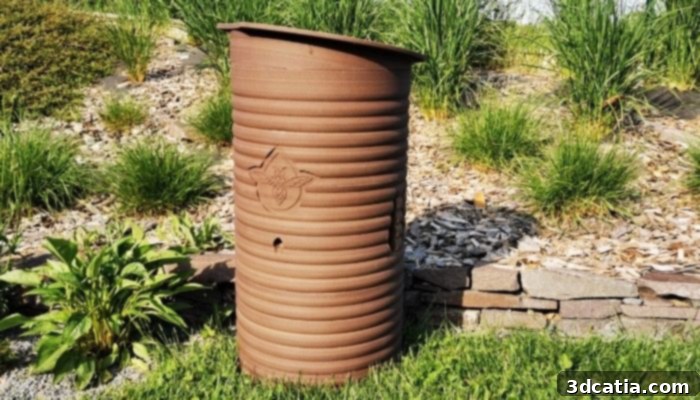
3D-printed wood beehive (photo credits: LACRIMA)
LACRIMA’s founder further elaborated on the integration of these advanced hives into broader sustainable practices, emphasizing their multi-faceted benefits: “3D-printed beehives can be seamlessly integrated into sustainable farming strategies by fostering local production, which in turn significantly reduces transport emissions associated with traditional hive manufacturing and distribution. Moreover, their construction using recyclable and biodegradable materials aligns perfectly with circular economy principles. These hives can also form an integral part of sophisticated integrated pest management systems, by providing natural habitats for beneficial insects, thereby reducing the overall reliance on chemical treatments. This comprehensive approach offers a powerful pathway towards more environmentally conscious and productive agriculture, supporting both biodiversity and food production.”
The Future Landscape: 3D Printing’s Trajectory in Agriculture
The diverse projects highlighted, the innovative applications explored, the tangible benefits identified, and the promising results already observed collectively underscore the immense developmental potential of 3D printing within the agricultural sector. While it is true that this transformative technology is still in its relatively early stages of widespread adoption within agriculture, particularly when compared to more established industries like automotive or aerospace, the pioneering initiatives and research discussed here firmly confirm that its potential is not only vast but also exceptionally promising for reshaping the future of farming, making it more efficient, sustainable, and resilient.
Considering that agriculture is an ancient and deeply rooted sector, with practices often steeped in centuries of tradition and specific techniques, one might reasonably question whether a cutting-edge technology as innovative as additive manufacturing truly has a place in such a time-honored field. The preservation of traditional practices in agriculture often stems from their proven efficacy and sustainability over generations, reflecting generations of accumulated wisdom. However, the agricultural sector has consistently demonstrated a remarkable openness to innovation, never shying away from opportunities to enhance efficiency, productivity, and sustainability in the face of new challenges. While the widespread use of 3D printing specifically is not yet ubiquitous, the sector has a strong track record of successfully integrating other advanced technologies, such as mechanization and Agri-Tech, to drive progress and adapt to changing global demands.
For the moment, the most significant and notable advances driven by additive manufacturing are predominantly concentrated in the realm of scientific research and specialized applications. Experts across the globe are not merely focusing on single, isolated subjects; instead, they are actively pursuing comprehensive solutions to the most pressing current problems facing agriculture, from climate resilience and optimizing resource allocation to enhancing crop yields and mitigating environmental impact. The examples of research mentioned in this article represent just a small fraction of the many groundbreaking studies undoubtedly underway in countries where the agricultural sector holds greater prominence and strategic importance, such as China, which is investing heavily in agri-tech innovation. As 3D printing technology continues its rapid development and as research continues to uncover new and effective solutions through additive manufacturing, we anticipate a much more widespread adoption across all facets of agriculture, leading to even more disruptive and beneficial innovations that will define sustainable farming for generations to come.
What are your thoughts on the burgeoning use of 3D printing in agriculture and its potential to revolutionize farming practices? We invite you to share your insights and opinions in a comment below or join the conversation on our LinkedIn, Facebook, and Twitter pages! Don’t forget to sign up for our free weekly newsletter here for the latest 3D printing news delivered straight to your inbox! You can also explore all our informative videos on our YouTube channel.