
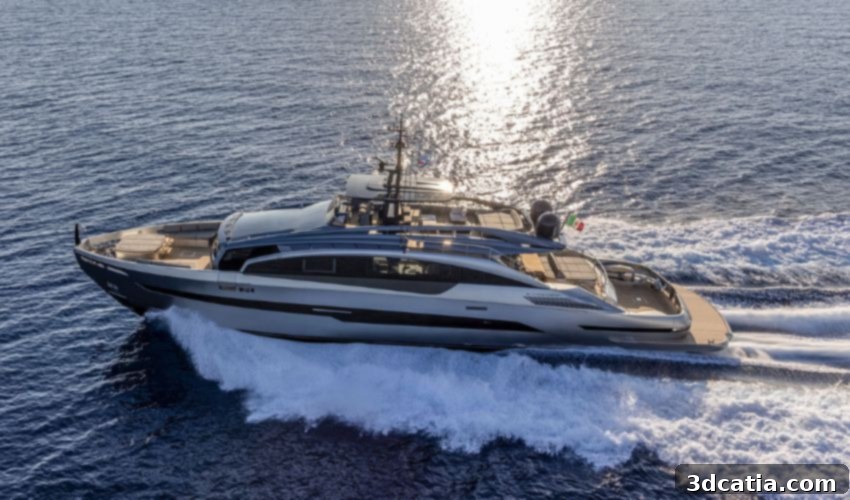
Revolutionizing Luxury Yacht Production: Additive Manufacturing Transforms the Pershing GTX116
The allure of the open sea, the gentle sway of a magnificent vessel, and the breathtaking views from a private deck have long fueled dreams of luxury yacht ownership. For many, lounging on a sun-drenched beach, gazing at sleek boats disappearing over the horizon, ignites a desire to command their own piece of maritime extravagance. This dream is far from solitary, as evidenced by the robust and continuously expanding luxury yacht market. Valued at approximately $10.7 billion in 2023, this exclusive sector is projected to experience significant growth in the coming years. However, owning such a prestigious craft comes with inherent complexities, particularly regarding its upkeep. Like all vehicles, and especially those exposed to the harsh marine environment, luxury yachts demand constant and meticulous maintenance. The relentless exposure to saltwater, corrosive elements, and intense UV radiation can quickly degrade components, leading to peeling surfaces, rusted parts, and structural compromises. Consequently, maintaining these opulent vessels generates substantial ongoing costs, posing a challenge even for the most discerning owners.
Given the high demand and inherent operational expenses associated with luxury yachts, a pivotal question emerges: how can the production of such a sought-after vehicle be optimized not only for enhanced efficiency but also for greater economic viability? This fundamental query led the Ferretti Group, a revered global leader in the manufacturing of luxury motor yachts, to seek innovative solutions. They partnered with Caracol AM, a specialist in advanced additive manufacturing, to explore how modern technology could redefine component production for their new flagship model, the Pershing GTX116. For this magnificent 35-meter vessel, the collaboration between these two pioneering Italian companies focused on redesigning and optimizing critical components: the side air intake grilles and visors. By leveraging the power of additive manufacturing, they aimed to overcome traditional production limitations, ushering in a new era of efficiency, performance, and sustainability for the luxury marine industry.
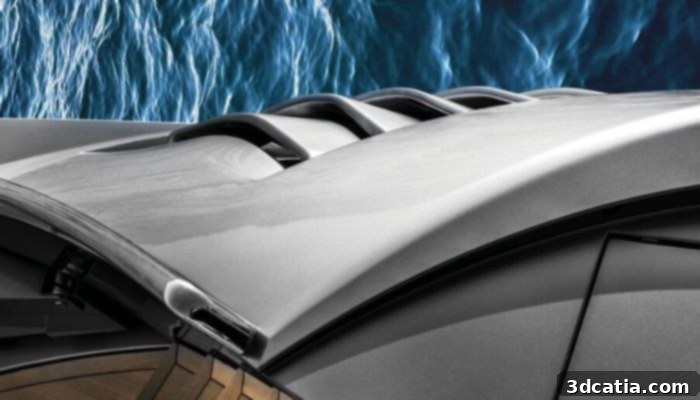
The air grilles created using additive manufacturing for the Pershing GTX116 (photo credits: Caracol)
Rethinking Yacht Components: The Pershing GTX116 Air Grilles and Visors
Traditionally, the production of air grilles and similar large, complex components for luxury yachts has relied heavily on manual lamination of fiberglass onto intricate molds. This conventional method, while established, presents several significant disadvantages that impact both cost and efficiency. Firstly, it necessitates the extensive use of numerous molds, which are costly to design, manufacture, store, and maintain. The reliance on these molds is inherent in most subtractive or traditional composite manufacturing processes, limiting design flexibility and increasing lead times for modifications or new iterations. Secondly, this manual fiberglass lamination process demands a workforce composed of highly skilled personnel with years of specialized training and experience. The scarcity of such expertise, coupled with the labor-intensive nature of the work, not only drives up production costs but also significantly prolongs the overall product delivery time. These two primary conditions — mold dependency and the need for specialized manual labor — create bottlenecks in the production cycle, making it expensive, time-consuming, and less adaptable to design changes or customization.
The Transformative Power of Large Format Additive Manufacturing (LFAM)
Enter Large Format Additive Manufacturing (LFAM), a revolutionary technology poised to fundamentally alter the landscape of large-scale component production. LFAM effectively eliminates the aforementioned disadvantages by digitizing the manufacturing process and offering unparalleled design freedom. Unlike traditional methods, LFAM does not require molds, thereby removing their associated costs, storage issues, and design constraints. This innovative approach allows for the creation of parts with highly complex geometries that would be impossible or prohibitively expensive to produce with conventional techniques. The benefits extend beyond design flexibility: LFAM significantly halves lead times, dramatically reduces material waste by more than 50% through precise material deposition, and optimizes overall part weight. The ability to create lighter, yet equally robust, components contributes to operational efficiencies, such as improved fuel economy for the yacht. Furthermore, these overall savings and efficiencies also translate into faster and more economical maintenance processes should part degradation occur over time, ensuring a longer operational lifespan for the vessel’s critical components.
In a testament to the power of LFAM, Caracol AM successfully manufactured the intricate air grilles for the Pershing GTX116 in an astonishingly short timeframe of just 72 hours. This remarkable feat was achieved using their advanced Heron 300 system, a sophisticated LFAM technology equipped with a high-precision extruder (HA) and a fine 3 mm nozzle. The choice of material for these critical components was equally deliberate: a reinforced ASA (acrylonitrile styrene acrylate) composite, specifically enriched with 20 percent glass fiber. This material was selected for its superior mechanical properties, excellent UV resistance, and inherent suitability for marine environments. The resulting air grids, each measuring an impressive 4200 x 400 x 400 mm and weighing 40 kg, exemplify how LFAM can produce large, complex, and highly functional parts efficiently.
As previously highlighted, the marine environment is particularly unforgiving, constantly challenging the durability of vehicle parts through corrosive saltwater, fluctuating temperatures, and mechanical stresses. The selection of this lightweight yet exceptionally strong ASA composite material ensures a significantly extended life for the air grilles, far surpassing that of traditional materials in such harsh conditions. The inherent resistance of reinforced ASA to UV degradation and chemical exposure makes it an ideal candidate for exterior yacht components. To further enhance their durability and, crucially, to meet the exacting aesthetic standards demanded by the luxury industry, the 3D-printed grilles underwent a final finishing process: they were expertly coated with gel coat. This application not only increased their strength and resistance to environmental factors but also provided the flawless, high-gloss finish characteristic of premium yacht design, seamlessly integrating the advanced additive manufactured parts into the vessel’s luxurious appeal.
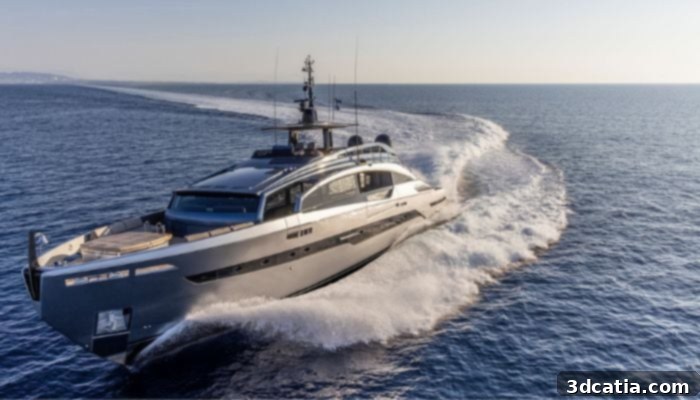
The Pershing GTX116 (photo credits: Ferretti S.p.A)
The Broader Impact: Additive Manufacturing Across High-Demand Industries
The successful application of additive manufacturing technologies in the creation of the Pershing GTX116’s components underscores its position as a winning choice for all industries that demand parts exhibiting not only specific strength and durability characteristics but also precise aesthetic standards. This advanced technology offers an unprecedented ability to create complex parts intended for operation in adverse environments—conditions that subject components to corrosive elements, precarious structural stresses, and high temperatures. These challenging scenarios are typical of both the maritime and aerospace industries, where component failure can have catastrophic consequences and maintenance costs are astronomical. The ability of additive manufacturing to produce parts with tailored material properties, optimized geometries for maximum performance, and integrated functionalities makes it invaluable for these high-stakes sectors. Moreover, the inherent flexibility of AM processes allows for rapid prototyping and iteration, drastically reducing the time and cost associated with design refinement and certification, further cementing its role as a disruptive force in modern engineering.
The collaboration on the Pershing GTX116, in particular, serves as an exceptional example of how the pinnacle of luxury craftsmanship can seamlessly integrate with the cutting-edge capabilities of additive manufacturing. This synergy enables the marine industry to meet the incredibly high demands of its discerning clientele, who expect nothing less than perfection in performance, durability, and aesthetic appeal. The case of the Pershing GTX116 demonstrates that 3D printing is not just for small prototypes or industrial components; it is capable of producing large, load-bearing, and visually critical parts for the most opulent applications. Looking ahead, this success story opens up exciting possibilities for the future of yacht construction. Perhaps, in the not-too-distant future, it will be a common sight to witness luxury yachts, made entirely or predominantly with advanced 3D printing techniques, elegantly plying the azure routes of the Mediterranean and beyond. Such vessels would not only embody superior engineering but also symbolize a commitment to innovation, sustainability, and unparalleled customization.
What are your thoughts on the sophisticated 3D-printed air grilles featured on the magnificent Pershing GTX116? We invite you to share your insights and comments below or engage with us on our LinkedIn, Facebook, and Twitter pages! For the latest advancements and breaking news in the world of 3D printing, don’t forget to sign up for our free weekly Newsletter here, delivered straight to your inbox! You can also explore all our engaging videos and exclusive content on our YouTube channel, where innovation comes to life.
*Cover Photo Credits: Ferretti S.p.A