
The Transformative Power of 3D Printing in Healthcare: Enhancing Efficiency and Patient Care
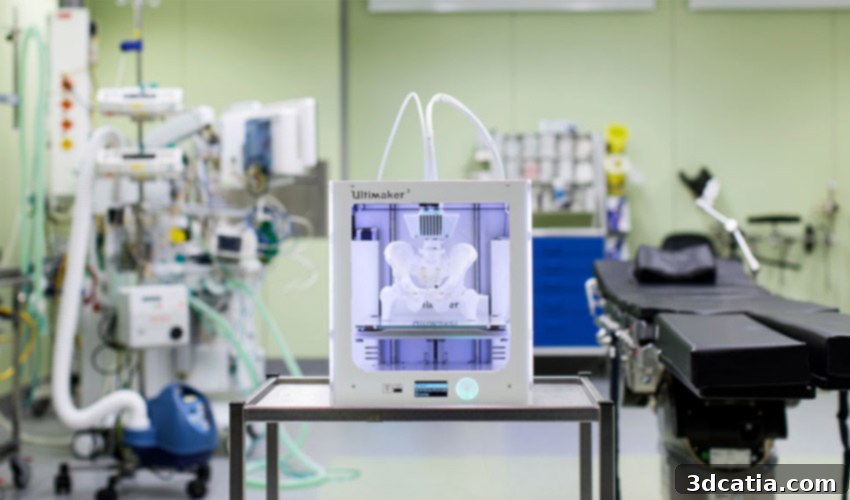
The integration of additive manufacturing, more commonly known as 3D printing, into healthcare establishments is a topic of significant and growing interest. This question forms the core of extensive research conducted by Dr. Atana Chaudhuri, an associate professor of technology and operations management at Durham University Business School. His comprehensive survey meticulously illustrates the profound impact 3D technologies can have on the operational practices of medical professionals across various specialties within hospitals, fundamentally enhancing the quality of patient care. The compelling results of this study unequivocally position 3D printing as a pivotal tool for alleviating critical pressures faced by hospitals, particularly in terms of reducing both operational time and associated expenses. Dr. Chaudhuri’s research, however, is not without a note of caution: healthcare institutions must diligently assess the distinct advantages and inherent constraints of such advanced technology integration into their existing structures. Furthermore, ensuring that healthcare staff receive adequate and specialized training is paramount to maximizing the benefits and safe implementation of these innovative solutions.
Real-World Impact: 3D Printing in Action at Leading Hospitals
Numerous examples from hospitals across the United States vividly demonstrate the successful integration of additive manufacturing into direct patient care. A prime illustration is Seattle Children’s Hospital, recognized as one of America’s top children’s hospitals. This pioneering institution has effectively leveraged the Stratasys Digital Anatomy 3D printer. This cutting-edge technology allows their medical teams to meticulously plan and rigorously practice intricate surgeries, especially for patients presenting with rare and complex medical conditions. Such applications within a hospital setting empower doctors to design highly accurate anatomical models, conceptualize and prototype bespoke medical devices, and visualize their surgical operations with unprecedented precision. Dr. Chaudhuri’s ongoing study serves as a critical framework for quantifying the efficacy of 3D technologies in hospital environments, seeking to definitively answer whether their impact truly translates into tangible, positive outcomes for both practitioners and patients.
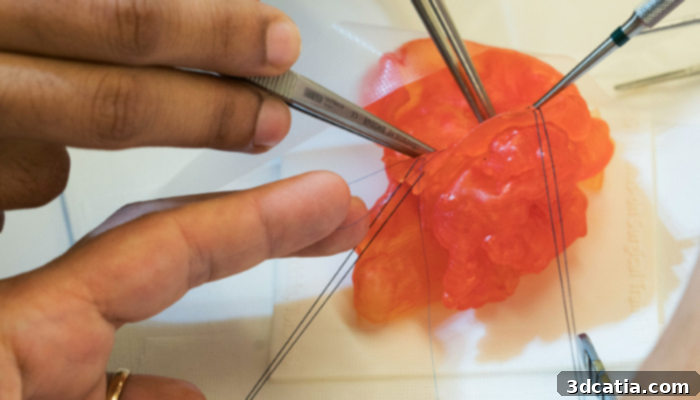
Digital Anatomy software and materials realistically mimic bone and tissue. (Photo Credit: Stratasys)
Quantifiable Benefits: Reducing Surgical Time and Improving Patient Recovery
One of the most significant observations emerging from Dr. Chaudhuri’s comprehensive report is the remarkable capability of additive manufacturing to substantially reduce operating times. Dr. Chaudhuri explicitly states: “Surgical operations typically lasting from 4 to 8 hours can be shortened by 1.5 to 2.5 hours if patient-specific instruments are used, and by a significant 25 to 30 minutes if only an anatomical model is utilized to meticulously plan the operation.” This efficiency gain is not merely an incremental improvement; it represents a transformative advantage that could enable hospitals to treat a greater number of patients, thereby addressing long waiting lists and enhancing overall healthcare accessibility. The time dimension extends beyond the operating theater to encompass a patient’s convalescence period. The study compellingly demonstrates that the judicious use of 3D printing can lead to dramatically improved recovery rates—approximately twice as fast compared to traditional methods. Furthermore, and perhaps even more critically, it significantly reduces the likelihood of a patient needing to return to the hospital for complications or revisions after their initial operation. This is particularly evident in procedures involving implants. When an implant is meticulously 3D printed, customized to the patient’s unique anatomy and needs, it typically boasts a much longer lifespan and superior integration compared to conventional, off-the-shelf implants. This translates not only to better patient outcomes but also to long-term cost savings for the healthcare system by minimizing follow-up procedures and associated care.
The Power of Personalization in Medical Devices
Beyond mere time-saving, the ability of 3D printing to create patient-specific instruments and implants introduces an unprecedented level of personalization into medical care. For instance, in complex orthopedic surgeries, custom-designed cutting guides ensure that bone resections are performed with unparalleled accuracy, minimizing errors and improving the fit of prosthetics. Similarly, patient-specific implants, such as cranial plates or joint replacements, are precisely matched to the individual’s anatomy, leading to better biomechanical function, reduced risk of rejection or failure, and ultimately, a more comfortable and effective recovery. This tailored approach moves healthcare away from a one-size-fits-all model towards a truly individualized form of treatment, where every component is optimized for the patient’s unique physiological requirements. This level of customization not only enhances surgical precision but also contributes to greater patient satisfaction and long-term health benefits.
Fostering Collaboration: The Crucial Link Between Medicine and Engineering
A fundamental assertion of Dr. Chaudhuri’s report is that robust cooperation between medical practitioners and 3D printing engineers is absolutely critical for successful implementation. Surgeons, in particular, need to be seamlessly integrated into the additive manufacturing process as early as possible to ensure that the various 3D printed parts, whether anatomical models, surgical guides, or custom implants, are optimally designed and produced for their specific clinical needs. Dr. Chaudhuri elaborates on this point, challenging a common misconception: “There is a myth that surgeons are not involved in 3D design or printing. But surgeons who proactively learn how to segment medical images, how to design a precise surgical guide, or even how to conceptualize a patient-specific implant, will undoubtedly be ahead of the curve. Ultimately, a significant number of surgeons will seek to acquire knowledge in 3D printing, and it will inevitably become an integrated component of the standard medical curriculum.” This underscores a paradigm shift in medical education and practice, where interdisciplinary skills become increasingly valuable. It should also be noted that this collaborative imperative works in both directions. While there might be a tendency to assume that 3D printing specialists lack an understanding of complex medical requirements, this is frequently not the case. Particularly in recent times, accelerated by rapid innovations and widespread application during crises such as the COVID-19 pandemic, additive manufacturing specialists have gained invaluable insights into medical contexts, demonstrating their capacity to adapt quickly and contribute meaningfully to healthcare solutions, from ventilator parts to custom protective gear.
Bridging the Knowledge Gap: Training and Education
The call for surgeons to learn 3D design and the integration of 3D printing into medical curricula highlights a growing recognition of the need for specialized training. This training isn’t just about operating a 3D printer; it encompasses understanding material science, CAD software for medical applications, biomechanical principles, and the regulatory landscape for medical devices. For hospitals to truly harness the potential of additive manufacturing, dedicated training programs, workshops, and potentially specialized departments or labs focusing on medical 3D printing will be essential. This ensures that healthcare professionals are not just consumers of 3D printed products but active participants in their design and application, driving innovation from within the clinical setting. Moreover, such training can foster a culture of innovation, encouraging medical staff to identify new opportunities for 3D printing to solve existing clinical challenges.
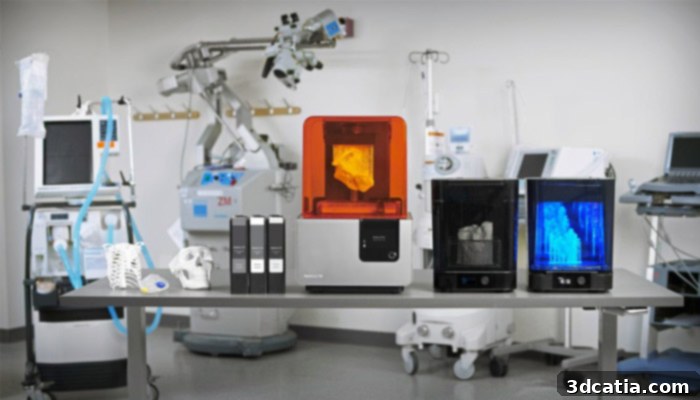
Photo Credit: Formlabs
Balancing Innovation with Investment: A Strategic Imperative
Despite the compelling advantages, Dr. Chaudhuri’s study issues a crucial call for caution: while the integration of additive manufacturing offers undeniable benefits, it invariably necessitates substantial financial investments. These investments span across acquiring sophisticated 3D printers, securing a consistent supply of biocompatible materials, investing in specialized design software, and, critically, allocating resources for the training and upskilling of hospital staff. This presents a significant challenge, as hospital budgets are frequently tight and already stretched thin. Decision-makers often face a difficult trade-off, where seemingly more immediate priorities—such as increasing staff numbers, improving nurses’ salaries, or upgrading outdated diagnostic equipment—might appear to take precedence over long-term technological adoption. However, Dr. Chaudhuri concludes with an optimistic yet pragmatic outlook: “The benefits can far outweigh the costs, both for hospitals in terms of operational efficiency and for patients in terms of improved care and outcomes. But, we need to know where to apply it strategically and, crucially, how to accurately quantify these benefits.” This statement highlights the necessity for meticulous cost-benefit analyses, pilot programs, and a clear understanding of specific clinical needs where 3D printing can provide the most impactful and measurable returns. It’s not about indiscriminate adoption, but rather strategic implementation that targets areas with the highest potential for enhancing patient safety, improving surgical outcomes, and optimizing resource utilization.
Overcoming Investment Hurdles: The Path Forward
To navigate these financial hurdles, hospitals might explore various strategies, including partnerships with academic institutions, grants for medical innovation, or collaboration with 3D printing companies for equipment and expertise sharing. The long-term savings from reduced surgical times, faster patient recovery, fewer complications, and custom implant longevity can significantly offset initial investments. Furthermore, as the technology matures and becomes more widespread, the cost of 3D printers and materials is expected to decrease, making it more accessible to a broader range of healthcare facilities. The key lies in developing a robust business case that clearly articulates the return on investment (ROI) in terms of both financial savings and, more importantly, enhanced patient welfare and improved clinical outcomes. This will necessitate strong leadership and a forward-thinking approach to medical technology adoption.
The Future of Healthcare is Personalized and Printed
The ongoing research by Dr. Chaudhuri and the growing number of successful applications in leading hospitals worldwide underscore a clear trend: 3D printing is no longer a niche technology in healthcare but a rapidly evolving, indispensable tool. From revolutionizing surgical planning and customizing medical devices to accelerating patient recovery and training the next generation of medical professionals, additive manufacturing offers a myriad of benefits that address some of the most pressing challenges in modern healthcare. While the initial investment and the need for specialized training require careful consideration, the long-term advantages in terms of efficiency, cost-effectiveness, and superior patient outcomes are compelling. The future of healthcare is moving towards an era of highly personalized medicine, and 3D printing stands at the forefront of this transformation, promising a future where medical solutions are as unique as the patients they serve. The continued dialogue and collaboration between medical experts, engineers, and policymakers will be essential to fully unlock the potential of this revolutionary technology.
What are your thoughts on integrating 3D printing into hospitals and the future of personalized medicine? Share your insights in a comment below or connect with us on our Facebook and Twitter pages. Don’t forget to sign up for our free weekly newsletter, ensuring you receive all the latest news and developments in 3D printing directly to your inbox!