
Combatting 3D Printed Ghost Guns: The Growing Challenge of Untraceable Firearms and Conversion Devices
In recent years, the rapid advancements in 3D printing technology have made it increasingly accessible to both industrial sectors and the general public. This innovative manufacturing method, initially lauded for its transformative potential across diverse industries ranging from healthcare to aerospace, has regrettably become a focal point of concern due to its exploitation for illicit purposes. Specifically, the misuse of 3D printing to produce untraceable firearms, often referred to as “ghost guns,” presents a formidable and escalating challenge for law enforcement agencies worldwide. These dangerous weapons lack serial numbers, making them virtually impossible to trace back to their origin, thereby undermining traditional methods of crime investigation and firearm regulation. The city of Evansville, Indiana, has unfortunately found itself at the forefront of this unsettling trend, grappling with the immediate public safety implications of this technological misuse.
A significant case drawing national attention emerged in January, highlighting the severity of this issue. Marquel D. Payne, a 39-year-old individual, was formally charged with multiple serious offenses, including possession of a firearm by a convicted felon, possession of an unregistered firearm, and possession of a machinegun. These charges stemmed from a comprehensive investigation by Evansville Police officers, who discovered an alarming cache within Payne’s residence. The raid uncovered several 3D printed guns, numerous gun components, and a substantial quantity of conversion devices, commonly known as ‘switches’. The investigation, spearheaded by the diligent efforts of the Evansville-Vanderburgh Crime Gun Intelligence Center (CGIC), specifically identified approximately 60 plastic machinegun conversion devices. These small, yet highly dangerous, components are expertly designed to transform standard semi-automatic and single-fire weapons into fully automatic firearms, drastically increasing their lethality and posing an immense threat to community safety. The sheer volume of these illicit devices underscores the growing scale of this problem.
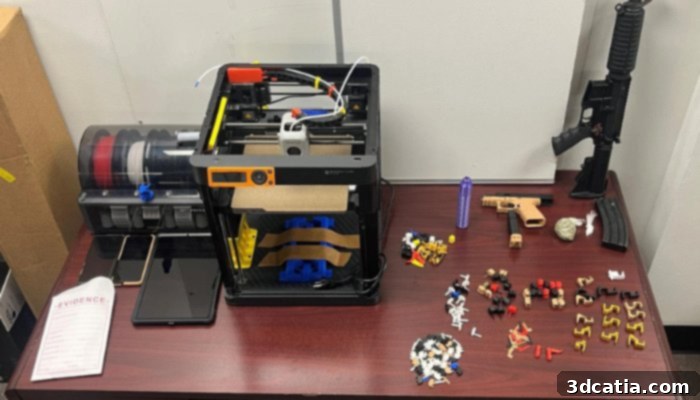
3D printer, guns, and gun components seized on January 31st. (Photo Credits: US Attorney’s Office)
US Attorney Zachary Myers, representing the Southern District of Indiana, voiced profound concern regarding the illicitly seized 3D printed firearms and conversion devices. He emphatically stated, “Getting illegal machinegun conversion devices off our streets is a critical public safety priority. Fully automatic weapons and untraceable ‘ghost guns’ pose a serious danger to our communities, especially when they are in the hands of people who have no lawful business possessing any firearm.” This powerful statement reflects the urgency and gravity of the situation, echoing similar concerns raised by the Evansville Police Department just last month. The consistency of these warnings suggests a disturbing trend: an increasing proliferation of machinegun switches within the city, contributing to heightened risks of gun violence and criminal activity. The ability to easily convert firearms into automatic weapons significantly amplifies their destructive potential, making the fight against these devices paramount for local and federal authorities.
The investigation into Marquel D. Payne began when Evansville detectives received crucial intelligence from two anonymous sources. These individuals reported that Payne was actively involved in manufacturing and attempting to sell 3D printed switches and homemade firearms, brazenly advertising them as untraceable. This criminal enterprise, leveraging accessible 3D printing technology, allowed Payne to operate outside the conventional frameworks of firearm commerce and regulation. The nature of these allegations and the evidence uncovered quickly escalated the case, drawing the attention of federal authorities. In recent weeks, the US Department of Justice announced its decision to try Payne at the federal level, underscoring the serious implications and the broader national security concerns associated with 3D printed illicit firearms and conversion devices. This federal intervention signals a strong stance against the proliferation of ghost guns and the individuals who produce them, recognizing the threat they pose to national safety and order.
This particular case in Evansville bears a striking resemblance to a prior incident from last September in Indianapolis, where a federal judge sentenced a 31-year-old man to more than seven years in federal prison for possession of a machine gun. In that instance, prosecutors also alleged that the individual utilized 3D printers to produce similar ‘switches,’ which he subsequently sold for financial gain. The parallels between these cases highlight a worrying pattern: the emergence of a black market for 3D printed firearm components, driven by individuals seeking to profit from bypassing stringent gun laws. The ability to create these components in a clandestine manner presents a significant challenge to law enforcement, as it undermines traditional supply chain monitoring and regulatory oversight. These cases serve as stark reminders of the ease with which readily available technology can be repurposed for dangerous criminal activities, necessitating a robust and adaptive response from legal and investigative bodies.
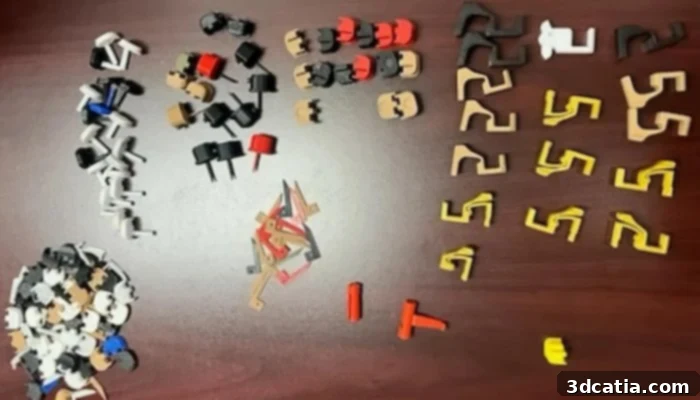
Seized 3D printed gun ‘switches’ (Photo Credits: Evansville Police Department)
Assessing the Emergence of 3D Printed Guns and Gun Components
The increasing focus on the proliferation of 3D printed switches has generated significant alarm, primarily due to their potential for misuse by enabling criminals to effortlessly modify standard firearms into weapons capable of rapid, automatic firing. These nefarious devices, also known by specific monikers such as ‘Glock switches’ and ‘auto sears,’ are explicitly classified as machine guns under federal law because of their inherent ability to facilitate automatic firing when attached to an otherwise semi-automatic firearm. It is crucial to understand that even the mere possession or sale of these conversion devices is illegal, regardless of whether they are actively installed on a firearm. The rise of increasingly accessible and affordable 3D printing technology exacerbates this challenge, making it exponentially more difficult for police to effectively combat illegal firearm production. Criminals can now circumvent traditional gun regulations by manufacturing these switches at home, away from the scrutiny of licensed firearm dealers and background checks. This technological bypass allows for the creation of weapons that pose an unprecedented threat to public safety. Addressing these profound challenges, Daryl S. McCormick, Special Agent in Charge of ATF’s Columbus Field Division, articulated his deep concerns:
“Unfortunately, these deadly conversion devices continue to show up in our communities. US law has long recognized that automatic weapons pose a special risk to public safety, both through the sheer volume of bullets fired and the likelihood that innocent bystanders will be injured or killed. Combine that with an untraceable firearm and an unregistered silencer in the hands of a convicted felon, and it is clear that this individual is solely interested in feeding violence in southern Indiana.”
Special Agent McCormick’s statement underscores the multidimensional threat posed by these devices. The ability to unleash a high volume of bullets in a short period dramatically increases the risk of indiscriminate harm and fatalities, not just to intended targets but also to innocent bystanders. When these components are coupled with untraceable “ghost guns” and, in some instances, unregistered silencers, the danger escalates exponentially. The involvement of convicted felons, who are legally prohibited from possessing any firearms, highlights a systematic attempt to circumvent existing laws and exacerbate criminal violence. This confluence of factors creates a volatile environment that demands a comprehensive and coordinated response from all levels of law enforcement. The accessibility of digital blueprints for these switches online further complicates the issue, as individuals can download and print them with relative ease, making regulation of the physical objects much harder.
The ongoing investigation into Marquel D. Payne’s activities exemplifies the critical importance of inter-agency cooperation in addressing this evolving threat. It currently involves a collaborative effort between the Bureau of Alcohol, Tobacco, Firearms and Explosives (ATF), the Evansville Crime Gun Intelligence Center (CGIC), the Evansville Police Department, and the Vanderburgh County Sheriff’s Office. This multi-faceted approach, combining federal and local resources, is essential for dismantling such illicit operations and bringing perpetrators to justice. If found guilty of the charges, Payne faces a maximum sentence of 15 years in federal prison, a testament to the severe legal ramifications associated with manufacturing and possessing these dangerous devices. This stringent penalty reflects society’s determination to curb the spread of ghost guns and machinegun conversion devices, ensuring public safety remains paramount. The ongoing efforts of these agencies are crucial in adapting to the dynamic landscape of criminal innovation, where technology is increasingly leveraged for illegal activities. For more comprehensive information on this specific case and the broader legal context, interested readers can click here.
The emergence of 3D printed gun switches and ghost guns represents a critical juncture in the ongoing battle against illegal firearms. While 3D printing offers incredible benefits to many industries, its misuse demands vigilant oversight and proactive enforcement. The cases in Evansville and Indianapolis serve as stark reminders of the urgent need for robust regulatory frameworks, enhanced intelligence gathering, and sustained collaborative efforts to safeguard our communities from these untraceable and highly dangerous weapons. As technology continues to evolve, so too must our strategies for preventing its exploitation for criminal ends, ensuring that the promise of innovation is not overshadowed by its potential for harm.
What are your thoughts on the emergence of 3D printed gun switches and ghost guns in 2024? Do you believe current regulations are sufficient, or do we need new legislation to address this technological challenge? Share your insights in a comment below or join the discussion on our LinkedIn, Facebook, and Twitter pages! Don’t forget to sign up for our free weekly newsletter here to receive the latest 3D printing news straight to your inbox! You can also find all our videos and expert interviews on our YouTube channel, offering deeper dives into the world of additive manufacturing and its societal impacts.