
Gillette’s Razor Maker: Unlocking Ultimate Personalization with 3D Printed Handles
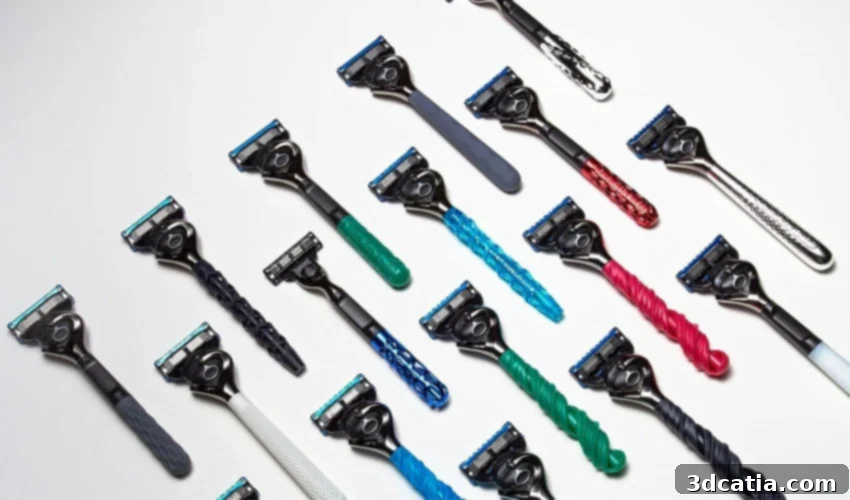
Imagine a world where your everyday items are not just functional but also a true reflection of your personal style. This vision is rapidly becoming a reality, and leading the charge in the personal grooming sector is the iconic American brand Gillette with its groundbreaking initiative: Razor Maker. This innovative concept empowers consumers to design and 3D print the handle of their disposable razor, transforming a mundane daily ritual into a bespoke experience. The introduction of Razor Maker signifies a monumental leap towards hyper-personalization, offering users a unique product with an unparalleled level of customization previously unattainable through traditional manufacturing methods. Far beyond mere utility, these meticulously crafted 3D printed razor handles are designed to elevate your bathroom aesthetics, adding a distinctive touch that speaks volumes about your individuality.
The contemporary consumer landscape is characterized by an insatiable demand for unique, customized products. Individuals are no longer content with off-the-shelf items; they aspire to products that resonate with their identity and help them stand out from the crowd. This powerful trend is observable across diverse industries, from fashion and clothing, where personalized apparel and accessories are highly sought after, to the automotive sector, where car buyers increasingly opt for tailor-made features and finishes. Even within the furniture industry, bespoke designs are gaining significant traction, reflecting a broader societal shift towards personalization. In this evolving market, 3D printing technologies emerge as a pivotal enabler. Additive manufacturing, as it is formally known, offers an inherent advantage: it allows for the efficient design and production of custom parts in small volumes, often at attractive costs, while maintaining exceptionally high standards of quality and complexity. This flexibility makes it an ideal method for creating highly individualized products without the prohibitive costs associated with traditional mass production tooling and processes.
Recognizing the immense potential of this transformative manufacturing process, Gillette embarked on the Razor Maker journey to create custom razor handles. This forward-thinking initiative aligns perfectly with the brand’s commitment to innovation and customer satisfaction. Gillette’s move is not isolated; it echoes similar efforts by other prominent brands in the personal care space. For instance, Philips previously pioneered offerings of tailored electric shavers for men, demonstrating an understanding of the growing desire for personalized grooming tools. Gillette’s venture into 3D printed customization solidifies this trend, marking a significant milestone in bringing advanced manufacturing directly into the hands of consumers. By leveraging 3D printing, Gillette is not just selling razors; it’s selling an experience – the experience of owning a grooming tool that is uniquely yours, crafted to your specific preferences.
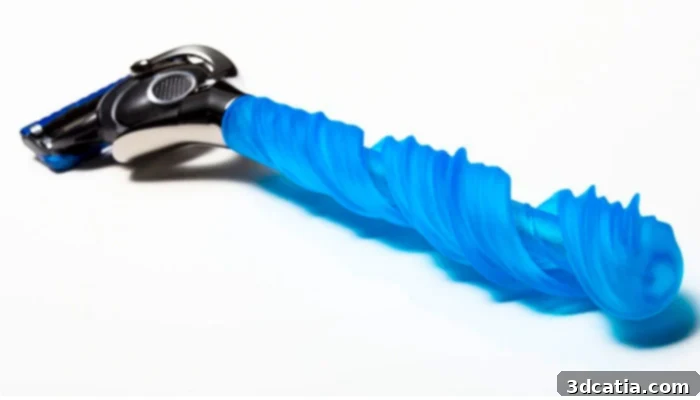
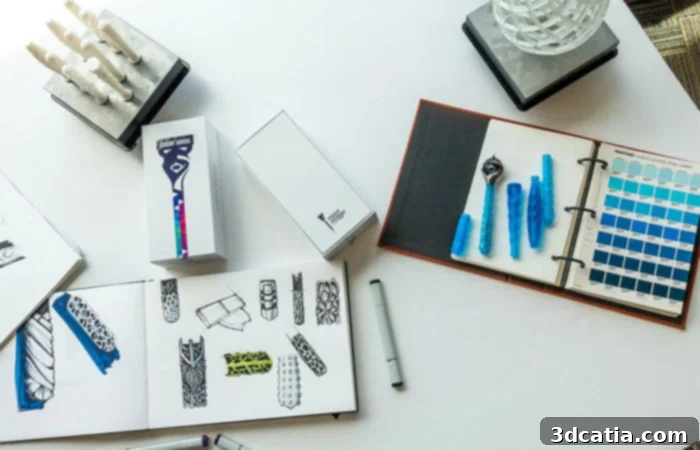
A 3D printed razor handle, showcasing the intricate designs possible with additive manufacturing.
Razor Maker: Enabling Unprecedented Personalization Through 3D Printing Technology
The Gillette Razor Maker program, initially launched in limited quantities within the United States, represents a sophisticated fusion of cutting-edge technology and consumer-centric design. At the heart of this customization initiative lies the advanced capabilities of stereolithography (SLA) 3D printing. Each bespoke razor handle is meticulously produced on an SLA machine from the renowned Formlabs range, a leading innovator in desktop 3D printing solutions. SLA technology is particularly well-suited for this application due to its ability to produce highly detailed, smooth, and aesthetically pleasing parts with exceptional precision, which is crucial for a product meant to be handled daily and endure regular use. This partnership between a consumer goods giant like Gillette and an additive manufacturing leader like Formlabs highlights the growing maturity and applicability of 3D printing for end-use consumer products.
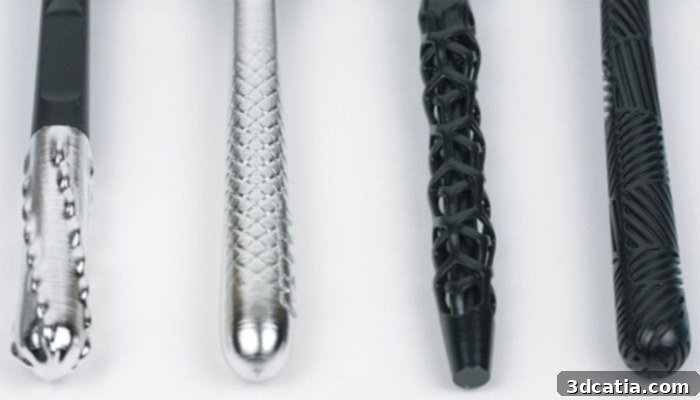
The process of creating a personalized razor handle is remarkably user-friendly and conducted entirely through Gillette’s dedicated Razor Maker website. Consumers are invited into an intuitive online design studio where they can embark on their creative journey. The customization options are extensive and truly allow for a unique expression. Users can select from a diverse gallery of 48 distinct handle models, each boasting intricate geometries and ergonomic designs that are only feasible to produce efficiently via 3D printing. These designs range from sleek and minimalist to bold and artistic, ensuring there’s a style to suit every preference. After selecting their preferred handle template, the customization journey continues with an array of aesthetic choices. Consumers can further personalize their chosen design by selecting from seven vibrant colors, including classic black, pristine white, fiery red, cool blue, earthy green, sophisticated grey, and lustrous chrome. To add an even more personal touch, users have the option to engrave custom text directly onto the handle, perhaps their initials, a significant date, or a motivational word. This extensive level of personalization ensures that each Razor Maker handle is genuinely one-of-a-kind. Crucially, these custom 3D printed sleeves are engineered for seamless compatibility with Gillette’s widely popular MACH3 or Fusion5 ProGlide blades, ensuring that convenience and performance are not compromised by customization.
Pankaj Bhalla, Director of Gillette & Venus North America, eloquently articulated the strategic rationale behind the Razor Maker initiative: “Gillette is in the business of helping men look, feel and be their best, and that means giving them access to grooming options that not only meet their shaving needs, but also match their lifestyle, look and budget. The Razor Maker™ pilot furthers our commitment to place power in the hands of consumers and literally have them custom-make their razors exactly the way they want them – tailored to their grooming preference, budget, look, color and style.” He further emphasized, “This is one of the many ways we are fulfilling our commitment to being The Best A Man Can Get.” Bhalla’s statement underscores Gillette’s deep understanding of evolving consumer expectations and their proactive approach to meeting these demands. It highlights a shift from a one-size-fits-all model to a highly individualized approach, where the consumer is at the helm of the product design process. This strategy not only enhances customer satisfaction but also fosters a stronger connection between the brand and its users by offering truly bespoke solutions.
3D Printing: The Catalyst for Mass Customization in Consumer Goods
The Gillette Razor Maker program is a prime example of how 3D printing is revolutionizing mass customization, extending its reach beyond industrial applications into everyday consumer goods. This initiative joins a growing roster of objects that are being reimagined through additive manufacturing, allowing for unprecedented levels of personalization. We can recall other pioneering examples, such as the 3D printed toothbrush, which significantly altered the perception of what was once considered a purely practical and standardized accessory. These innovations demonstrate that 3D printing can imbue even the most mundane items with a sense of individuality and enhanced functionality. David Lakatos, Product Manager at Formlabs, a key partner in this venture, firmly substantiates this paradigm shift. “Mass customization with 3D printing is finally becoming a reality for consumers to experience end-use printed products,” Lakatos states, capturing the essence of this transformative moment. He elaborates on the historical context: “Historically, 3D printing has been involved in the development or manufacturing processes for most products people interact with every day, but consumers have had little interaction with 3D printing itself.” This observation highlights the traditional role of 3D printing as a prototyping tool, largely hidden from the end-user. However, with initiatives like Razor Maker, this dynamic is rapidly changing. Lakatos concludes by expressing Formlabs’ enthusiasm: “We’re thrilled to be partnering with Gillette. These new custom razor handles are the next step towards changing that dynamic and getting 3D-printed products directly into the hands of consumers.” This collaboration signifies a critical juncture where additive manufacturing transitions from a backend industrial tool to a frontline consumer engagement platform.
The direct integration of 3D printing into consumer-facing product lines offers numerous advantages. For manufacturers, it enables agile product development, reduces inventory costs associated with traditional mass production, and fosters direct consumer engagement, leading to invaluable insights into preferences and trends. For consumers, the benefits are even more tangible: products that fit their specific needs, reflect their personal style, and offer an enhanced sense of ownership and connection. The ability to choose from a vast library of designs, select bespoke colors, and add personalized text means that the razor handle is not just a tool, but an extension of one’s identity. This level of intimacy with a product was once reserved for high-end luxury items but is now becoming accessible for everyday essentials, thanks to the scalability and cost-effectiveness of modern 3D printing solutions like those offered by Formlabs.
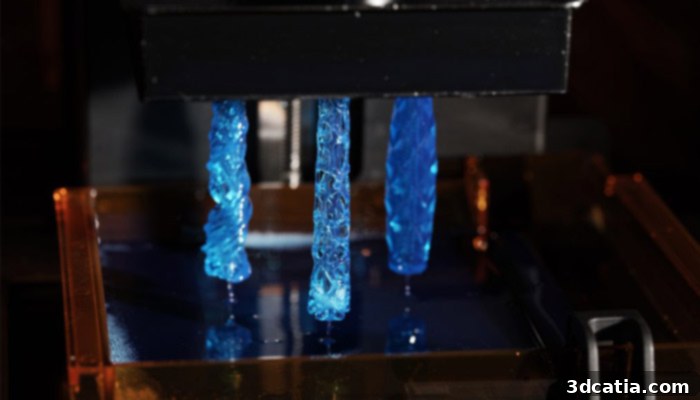
The intricate sleeves are precisely printed on Form 2 Formlabs machines, showcasing the detail and quality achievable with SLA technology.
The ordering and fulfillment process for the Gillette Razor Maker is designed to be efficient, considering the bespoke nature of each item. After placing an order for their uniquely designed 3D printed razor handle, consumers can expect to receive their personalized grooming tool within 2-3 weeks. This timeframe accounts for the individual production and finishing of each custom handle, a testament to the precision and care involved in additive manufacturing. Pricing for these custom handles is also thoughtfully structured to provide options. A partially 3D printed handle, featuring a black rubber grip for enhanced ergonomics, is priced at an accessible $19. For those seeking a fully 3D printed experience with maximum design integration, the cost is $25. This pricing strategy offers consumers flexibility while reflecting the value of a personalized, high-quality product produced with advanced technology. Considering the uniqueness and the intricate manufacturing process, these price points represent an attractive value proposition for a truly custom-made item that enhances a daily routine. For more comprehensive details on the innovative partnership between Gillette and Formlabs, interested individuals can explore the dedicated section on the Formlabs website. To embark on your own customization journey and order your very own 3D printed razor handle, simply click HERE.
Gillette’s Razor Maker program is more than just a new product offering; it’s a powerful statement about the future of consumer goods. It demonstrates how leading brands are embracing 3D printing to move beyond mass production towards a future of mass customization, where every consumer can be a co-creator. This initiative not only provides a unique and personalized shaving experience but also opens the door for other industries to explore the boundless possibilities of additive manufacturing. It underscores the profound impact that such technologies can have on our daily lives, transforming ordinary objects into extraordinary personal statements. The implications for consumer engagement, brand loyalty, and product innovation are immense, signaling a dynamic shift in how products are conceived, manufactured, and consumed.
What are your thoughts on this exciting advancement in personalized grooming and the application of 3D printing in everyday consumer items? Do you believe custom 3D printed razor handles represent the future of personal care products? We encourage you to share your insights and opinions in a comment below or join the conversation on our Facebook and Twitter pages! And don’t forget to sign up for our free weekly Newsletter to receive all the latest news, trends, and innovations in the dynamic world of 3D printing sent directly to your inbox!