
Advancements in Additive Manufacturing: BCN3D Smart Cabinet, Eurovision’s Sustainable Trophy, Ultimaker PETG, and the Future of 3D Printing
The world of 3D printing is in a perpetual state of evolution, constantly unveiling new solutions that enhance user experience, promote sustainability, and push the boundaries of what’s possible. This week, we dive into several exciting developments that underscore this dynamic progress. From innovative material storage systems designed to optimize print quality, to an iconic trophy reimagined with recycled materials, and a new filament engineered for superior performance, additive manufacturing continues to prove its versatility and transformative power. We’ll also explore the journey of 3D printing from its nascent stages to its current indispensable role across diverse industries, offering a glimpse into its promising future. Join us as we explore these key highlights shaping the landscape of modern manufacturing.
TOP 1: The BCN3D Smart Cabinet: Revolutionizing Filament Storage and Performance
Maintaining optimal conditions for 3D printing filaments is not just a best practice; it’s a critical factor for achieving high-quality, consistent results. Many popular filaments, such as PLA, PETG, Nylon, and ABS, are hygroscopic, meaning they readily absorb moisture from the surrounding environment. This absorbed humidity can lead to a host of printing problems, including stringing, bubbling, poor layer adhesion, increased brittleness, and ultimately, failed prints and wasted material. Recognizing this fundamental challenge, BCN3D has introduced a sophisticated solution: the Smart Cabinet.
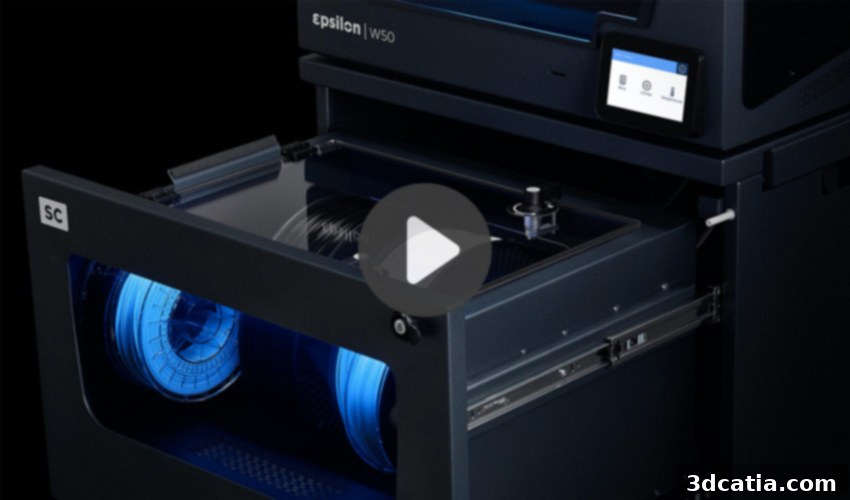
The BCN3D Smart Cabinet is far more than just a storage box; it’s an intelligent, actively controlled environment designed to keep 3D printing materials in their prime. According to the manufacturer, this innovative system allows users to store their filaments under optimal conditions by precisely controlling the humidity levels. This proactive approach ensures that filaments retain their ideal properties, significantly increasing performance and reliability during printing processes. The core of its effectiveness lies in its desiccant regeneration technology, which continuously monitors and adjusts humidity levels to prevent moisture absorption. This eliminates the need for manual filament drying, saving valuable time and effort for users.
Beyond its advanced humidity control, the Smart Cabinet offers practical advantages for any workshop or lab. BCN3D highlights its ease of mobility, allowing users to reposition it as needed, while still providing ample storage capacity. It is designed to accommodate up to 10 small spools of filament, or a combination of larger and smaller spools, ensuring that a variety of materials are readily available and perfectly preserved. This blend of intelligent environmental control and convenient storage capacity positions the BCN3D Smart Cabinet as an essential tool for professionals, educators, and enthusiasts alike who demand the highest quality from their 3D prints and wish to extend the lifespan of their valuable materials. By addressing one of the most common pitfalls in FDM 3D printing, BCN3D is empowering users to achieve greater success and efficiency in their additive manufacturing endeavors.
TOP 2: Eurovision’s Sustainable 3D Printed Trophy – A Symbol of Innovation and Circular Economy
The Eurovision Song Contest is renowned for its spectacle, creativity, and ability to bring diverse cultures together. For its 2021 edition, hosted in Rotterdam, the Netherlands, the organizers added another layer of innovation and a powerful message of sustainability to the event: a 3D printed trophy crafted from recycled materials. This decision marked a significant moment, demonstrating how high-profile global events can leverage cutting-edge technology to promote environmental consciousness and the principles of a circular economy.
The trophy, an iconic symbol of victory and artistic achievement, was meticulously 3D printed from recycled PET. What makes this initiative particularly impactful is the origin of the material – it was made from plastic waste recovered from the sea. This direct link to ocean clean-up efforts underscores Eurovision’s commitment to addressing pressing environmental challenges and using its platform to advocate for a more responsible approach to resource management. By transforming waste into a coveted prize, the trophy itself became a tangible representation of regeneration and the potential for a circular economy, where resources are kept in use for as long as possible, extracting maximum value from them, then recovering and regenerating products and materials at the end of each service life.
The creation of the trophy utilized a Continuous Fiber Additive Manufacturing (CFAM) printer, strategically placed outside one of the main locations for public viewing. This advanced 3D printing technology allowed for the continuous addition of a reinforcing fiber, in this case, glass, to the recycled PET printing material. The incorporation of glass fiber is crucial, as it significantly enhances the mechanical properties of the final piece. The resulting trophy is not only aesthetically pleasing but also remarkably strong, sturdy, and exceptionally durable. This robustness ensures the trophy can withstand handling and serve as a lasting memento, further contributing to its sustainable design by extending its lifespan.
The choice to 3D print the Eurovision trophy from recycled, reinforced PET sends a clear and inspiring message to a global audience. It highlights the potential of additive manufacturing to create complex, high-quality objects while simultaneously championing environmental responsibility. It serves as a powerful example of how design, technology, and ecological awareness can converge to produce something truly meaningful, encouraging other industries and events to explore similar sustainable production methods and embrace the principles of a circular economy.
Top 3: The Art and Engineering of Building a 3D Printed Guitar
For aspiring musicians, DIY enthusiasts, and innovative designers, the dream of crafting a personalized musical instrument has become more attainable than ever before, thanks to the revolutionary capabilities of 3D printing. The technology offers an unparalleled degree of design freedom, allowing for complex geometries, custom ergonomics, and unique aesthetic flourishes that would be prohibitively difficult or impossible to achieve with traditional manufacturing methods. If you’re considering building your own guitar, 3D printing provides a pathway to not just construct an instrument, but to engineer a truly bespoke sonic and visual experience.
The process of creating a 3D printed guitar typically involves designing and printing individual components – such as the body, neck, headstock, and even internal bracing – which are then meticulously assembled. This modular approach allows for experimentation with different designs, materials, and configurations. The video linked below offers a fascinating insight into this intricate process, showcasing which individual components are needed for the finished musical instrument. It highlights the importance of precise design to ensure all parts fit seamlessly together, laying the foundation for both structural integrity and acoustic performance. Material selection is also paramount; considerations like rigidity, density, and resonance must be carefully balanced to achieve the desired sound characteristics.
However, 3D printing is only the first step. To ensure the guitar not only looks impressive but also sounds acoustically perfect, significant post-processing is often required. This can include sanding, filling, painting, and applying specialized finishes to enhance the instrument’s aesthetics and playability. More importantly, the internal structures and sound chambers might need fine-tuning to optimize resonance and minimize unwanted vibrations. The video illustrates these crucial post-processing steps, demonstrating how printed components are refined to produce rich, clear tones. Furthermore, to ensure visual coherence and extend the personalized aesthetic, a covering for a speaker is also produced using 3D printing, creating a harmonious and unified setup.
Integrating the electronics into a 3D printed guitar presents its own unique set of challenges. Unlike traditional wooden bodies that can be routed, 3D printed structures require careful planning during the design phase to create cavities for pickups, wiring, control knobs, and output jacks. Ensuring proper shielding to prevent interference, precise fitting of electronic components, and seamless cable routing are all critical for functional performance. The video provides a valuable glimpse into these intricate steps, allowing viewers to see firsthand the hurdles that must be overcome when incorporating the sensitive electronic heart into the innovative 3D printed shell. This blend of cutting-edge technology and traditional craftsmanship culminates in a truly unique and highly functional musical instrument.
TOP 4: Ultimaker’s Newest Filament: Introducing Ultimaker PETG for Industrial-Grade Reliability
Ultimaker, a prominent Dutch manufacturer known for its high-performance 3D printers and materials, has recently expanded its filament portfolio with the introduction of Ultimaker PETG. This new 3D printing material is engineered to address some of the most common and frustrating problems encountered during the printing process, such as warping and stringing, thereby enhancing user experience and print reliability across a wide range of applications. PETG (Polyethylene Terephthalate Glycol) has long been a popular choice in the 3D printing community due to its excellent balance of properties, bridging the gap between easier-to-print materials like PLA and more robust engineering plastics like ABS.
What sets Ultimaker PETG filament apart is its specialized formulation, meticulously designed to minimize typical PETG printing issues. Warping, where the edges of a print lift from the build plate, and stringing or “threading,” where fine wisps of plastic appear between printed parts, are notorious challenges that can compromise print quality and lead to print failures. Ultimaker’s extensive research and development have resulted in a PETG filament that is, remarkably, as easy to print as PLA while delivering superior mechanical characteristics. This makes it an ideal choice for users seeking a more robust material without the common frustrations associated with more demanding engineering filaments.
The manufacturer highlights that Ultimaker PETG filament boasts a compelling balance of critical properties, making it highly suitable for numerous industrial environments and demanding applications. Its key attributes include: a superior combination of hardness and stiffness, providing structural integrity and resistance to deformation; exceptional chemical resistance, allowing printed parts to withstand exposure to various solvents and corrosive agents; and impressive temperature and wear resistance, ensuring durability and longevity even in challenging operational conditions. These characteristics mean that Ultimaker PETG is not just for prototyping but is also a viable material for functional parts, jigs, fixtures, and components that require sustained performance in real-world industrial settings.
By offering a filament that combines the ease of use of PLA with the enhanced durability and resilience of PETG, Ultimaker empowers its users to tackle a broader spectrum of projects. From creating robust prototypes for product development to producing end-use parts that must withstand harsh environments, Ultimaker PETG is positioned as a versatile and reliable material that enhances the capabilities of their printer ecosystem. This latest innovation underscores Ultimaker’s commitment to providing high-quality, dependable solutions that push the boundaries of accessible and effective additive manufacturing.
TOP 5: The Expansive Horizons and Future of 3D Printing
Since its inception and patenting in 1986, 3D printing, or additive manufacturing, has undergone a remarkable transformation. What began as a niche technology primarily used for rapid prototyping and creating tooling parts for factories and assembly lines has gradually become a democratized and indispensable force across a multitude of sectors. In its early days, the technology was largely confined to industrial giants, serving as a specialized tool for accelerating design iterations and reducing time-to-market for complex components. However, advancements in hardware, software, and materials have fundamentally broadened its accessibility and application.
Today, additive manufacturing is no longer a futuristic concept but a tangible reality deeply integrated into various industries. Its versatility allows for the creation of complex geometries, customized products, and on-demand manufacturing, making it a must-have technology for a wide range of fields. In construction, 3D printing is revolutionizing how we build structures, from houses to infrastructure, offering faster construction times, reduced labor costs, and the potential to use sustainable local materials. In medicine, it’s driving breakthroughs in personalized healthcare, enabling the creation of custom prosthetics, intricate surgical guides, anatomical models for training, and even advancing bioprinting for tissue and organ regeneration.
The impact of 3D printing extends further into sectors like aerospace and automotive, where it facilitates the production of lightweight, complex components that enhance fuel efficiency and performance. In the fashion and consumer goods industries, it allows for rapid prototyping, bespoke designs, and customized products, catering to individual preferences like never before. Even in the food industry, 3D printing is exploring possibilities for personalized nutrition, intricate food designs, and alternative food sources. This widespread adoption underscores the technology’s inherent advantages: design freedom, waste reduction through optimized material use, and the ability to produce on demand, mitigating supply chain disruptions.
Looking ahead, there is a substantial likelihood that additive manufacturing will influence an even broader spectrum of sectors and profoundly reshape global manufacturing paradigms. The future promises continued innovation in material science, with new printable composites, metals, and biocompatible materials constantly emerging. Advancements in printer speed, size, and multi-material capabilities will unlock new applications, while integration with artificial intelligence and automation will streamline workflows and enhance production efficiency. As the technology continues to mature and become more cost-effective, it will increasingly enable decentralized manufacturing, empower local economies, and further drive customization on a mass scale. The journey of 3D printing is far from over; its transformative potential is only just beginning to be fully realized.
The innovations we’ve explored this week, from BCN3D’s intelligent storage solution to Eurovision’s eco-conscious trophy, Ultimaker’s high-performance filament, and the broader vision for additive manufacturing’s future, collectively highlight the dynamism and critical importance of 3D printing in today’s technological landscape. These developments not only enhance the practical aspects of 3D printing but also reinforce its role in driving sustainability and shaping the industries of tomorrow. We’d love to hear your thoughts on the BCN3D Smart Cabinet and the other compelling topics presented in these videos! Let us know what you think in a comment below or connect with us on ourFacebook,Twitter andLinkedIn pages! For the very latest 3D printing news delivered straight to your inbox every week, be sure to sign up for our free weeklyNewsletter here.