
Driving Innovation: The Latest Breakthroughs in Additive Manufacturing Across Industries
The world of additive manufacturing continues its rapid evolution, pushing the boundaries of what’s possible in diverse sectors from elite sports equipment to crucial industrial infrastructure and life-saving medical devices. This dynamic industry, often simply known as 3D printing, consistently delivers groundbreaking solutions that offer unparalleled customization, efficiency, and sustainability. In this comprehensive update, we delve into some of the most exciting recent developments that highlight the transformative power of this technology. We’ll explore how customized 3D printed cycling shoes are revolutionizing athlete performance, how innovative cold spray technology is bolstering the integrity of offshore oil rigs, and how a new center in Australia is pioneering 3D printed medical implants. Furthermore, we’ll examine the use of recycled materials in stunning 3D printed showroom walls and a significant aerospace partnership leveraging advanced metal 3D printing. These stories collectively illustrate the profound impact additive manufacturing is having on modern industry and daily life.
Lore Cycle Revolutionizes Performance with 3D Printed Cycling Shoes
In the highly competitive world of professional cycling, every fractional advantage counts. Lore Cycle is at the forefront of delivering such advantages with their innovative, 3D printed cycling shoes, the LoreTwo. Building upon the success of their predecessor, the LoreOne, the LoreTwo represents a significant leap forward in personalized athletic footwear. These shoes are meticulously designed to offer superior power transfer and efficiency compared to conventional cycling shoes, all within a highly customized solution tailored precisely to each athlete’s unique foot geometry.
The customization process is remarkably streamlined and efficient. Lore Cycle utilizes advanced 3D scanning technology to capture a precise digital impression of the cyclist’s foot in less than 10 minutes. This digital data is then used to optimize the shoe’s design, ensuring an anatomical fit that maximizes comfort and performance. The shoes are subsequently 3D printed using high-performance materials such as carbon or nylon. These materials are chosen for their exceptional strength-to-weight ratio, allowing for the creation of incredibly lightweight yet rigid structures that effectively transfer power from the rider’s foot to the pedal.
Lore Cycle emphasizes that with the LoreTwo, the company has refined some of the more radical design elements of the original shoe, shifting focus squarely onto performance optimization. This includes an even greater emphasis on aerodynamics, crucial for reducing drag and increasing speed, and significant improvements in power transfer and overall pedaling efficiency. By creating a shoe that perfectly cradles the foot, Lore minimises energy loss and prevents discomfort, which can be a major issue for cyclists over long distances. The precise fit also helps prevent common cycling injuries by providing optimal support and alignment. This level of personalization, previously unattainable through traditional manufacturing methods, underscores the profound potential of additive manufacturing in sports. The LoreTwo shoes are anticipated to retail for $1,349, reflecting the advanced technology, premium materials, and bespoke nature of the product, appealing to serious cyclists seeking a competitive edge.
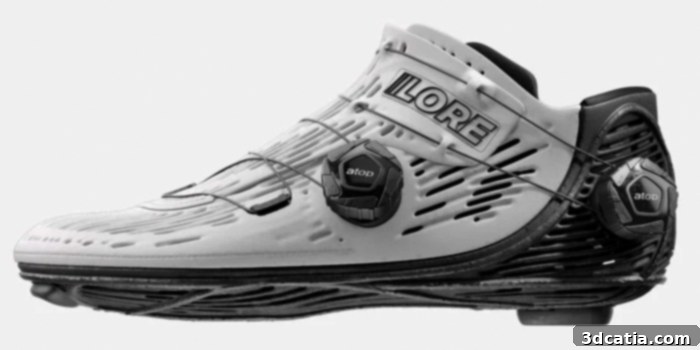
Photo Credits: Lore Cycle
Titomic Secures Pioneering Metal 3D Printing Contract for Offshore Gas Rig in Australia
Australia has steadily emerged as a hub for metal 3D printing innovation, particularly in the realm of cold spray additive manufacturing. This specialized technology is now poised to achieve another significant milestone with Titomic, an Australian additive manufacturing company, announcing a groundbreaking partnership. Titomic has teamed up with Woodside Energy, a leading Australian oil and gas producer, and Monadelphous, an engineering group, to deploy its cutting-edge cold spray technology for corrosion prevention on Woodside’s North Rankin offshore gas platform, located in the Indian Ocean.
Cold spray is a unique metal additive manufacturing process that differs significantly from traditional methods like laser or electron beam melting. Instead of melting metal powders, cold spray accelerates solid metal particles to very high velocities, causing them to plastically deform and bond upon impact with a substrate. This solid-state deposition process has several key advantages: it avoids the thermal stresses and material degradation associated with melting, allows for on-site repairs, and can be used to apply protective coatings or rebuild worn-out components with exceptional material integrity. For an environment as harsh and demanding as an offshore gas platform, these benefits are critical.
The North Rankin platform, one of Australia’s largest offshore gas facilities, is constantly exposed to saltwater, extreme weather, and continuous operational stresses, making it highly susceptible to corrosion. Traditional repair and prevention methods often involve extensive downtime, costly logistics, and complex procedures. Titomic’s cold spray technology offers a game-changing alternative by enabling rapid, on-site application of durable corrosion-resistant coatings. This capability could significantly extend the operational life of the platform’s vital components, reduce maintenance costs, and minimize the environmental impact associated with material replacement and waste.
Titomic highlights that the successful implementation of its cold spray technology on such a critical piece of infrastructure will demonstrate the immense benefits of its on-site repair capabilities. This partnership has the potential to set a new benchmark for maintenance procedures within the global energy sector, showcasing how advanced additive manufacturing can enhance asset integrity, operational efficiency, and safety in challenging industrial environments. It underscores the growing recognition of metal 3D printing as a viable and superior solution for repair, refurbishment, and even manufacturing in industries where reliability and resilience are paramount.
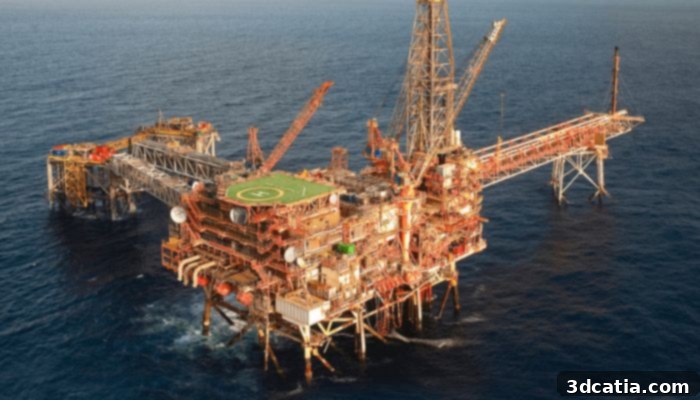
Woodside’s North Ranking offshore gas platform (photo credits: KBR)
BellaSeno Establishes Advanced 3D Printing Center for Medical Implants in Australia
German start-up BellaSeno, a pioneering force in regenerative medicine, is significantly expanding its global footprint and capabilities with the announcement of a new, state-of-the-art 3D printing center in Australia. This dedicated facility will specialize in the production of cutting-edge 3D printed implants for the medical sector, marking a crucial step forward in advanced healthcare solutions. The ambitious goal of this center is to produce up to 100,000 3D printed scaffolds, primarily for breast implants, demonstrating a scale of production previously challenging to achieve.
What sets BellaSeno’s implants apart is their resorbable nature. Unlike traditional implants that remain in the body indefinitely, these scaffolds are designed to gradually degrade and be absorbed by the body over time. As the scaffold slowly dissipates, it provides a temporary matrix that guides the body’s natural tissue regeneration processes, ultimately being replaced by the patient’s own living tissue. This innovative approach significantly reduces the risk of long-term complications often associated with permanent implants, offering a more natural and integrated solution for patients undergoing breast reconstruction or augmentation.
To realize this ambitious vision, BellaSeno will leverage advanced artificial intelligence (AI) to optimize the design and manufacturing processes, ensuring unparalleled precision and customization for each implant. The establishment and operation of this facility are also bolstered by significant funding and support from the Queensland State Government, underscoring Australia’s commitment to fostering medical innovation and establishing itself as a global leader in health technology. This strategic support is vital for accelerating the development and widespread adoption of these revolutionary medical devices.
Mohit Chhaya, CEO of BellaSeno, emphasized the significance of this development: “We have developed a sophisticated no-touch manufacturing approach for our leading-edge products in soft and hard tissue regeneration. The establishment of this novel, fully automated facility will be globally unique and puts BellaSeno and Queensland at the forefront of creating leading-edge medical scaffolds.” The “no-touch manufacturing” approach highlights the company’s dedication to maintaining the highest standards of sterility and precision throughout the production process, crucial for medical applications. This center not only promises to transform breast implant technology but also paves the way for future applications of 3D printed resorbable scaffolds in various other soft and hard tissue regeneration fields, potentially revolutionizing treatments for a wide range of medical conditions.
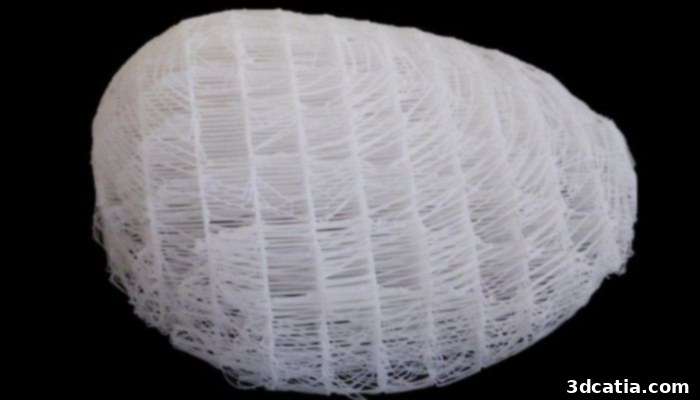
Photo Credits: BellaSeno
NIO’s Amsterdam Showroom Features Sustainable 3D-Printed Walls
In the historic heart of Amsterdam, along the picturesque Keizersgracht canal, stands a 7-storey building that perfectly encapsulates a blend of rich history and cutting-edge modernity. This distinctive structure houses the electric car manufacturer NIO’s showroom, a space that reflects the brand’s commitment to innovation, design, and sustainability. Adding to its already atypical design, the showroom now boasts breathtaking 3D-printed walls, a testament to the creative prowess of the architecture firm Aectual.
Aectual is renowned for its expertise in large-scale architectural 3D printing and its dedication to circular design principles. For the NIO showroom walls, they utilized a remarkably sustainable material composition: recycled aluminum sourced from beverage cartons, meticulously blended with recycled polymers. This innovative mixture underscores a commitment to environmental stewardship by repurposing waste materials into high-value architectural elements. The material was then precisely extruded by robotic arms, allowing for intricate designs and seamless execution that would be challenging, if not impossible, with traditional construction methods.
The use of 3D printing in this context offers numerous advantages beyond sustainability. It grants architects immense design freedom, enabling the creation of unique textures, patterns, and geometries that enhance the aesthetic appeal and spatial experience of the showroom. The ability to customize every aspect of the wall’s design contributes to NIO’s brand narrative of personalized and forward-thinking luxury electric vehicles. Furthermore, robotic extrusion allows for faster construction times and significantly reduces material waste compared to conventional building techniques.
Perhaps one of the most compelling features of these 3D-printed walls is their commitment to the circular economy. Aectual highlights that when the NIO showroom eventually closes or undergoes renovation, the walls are not simply discarded. Instead, the materials can be efficiently crushed and re-processed, allowing the recycled aluminum and polymers to be used again in future 3D printing projects. This closed-loop system minimizes environmental impact and champions a model of design and production that is inherently sustainable, setting a powerful example for the retail and architectural industries on the possibilities of responsible manufacturing.

The showroom with its 3D-printed walls (photo credits: Ossip van Duivenbode)
Nikon SLM Solutions and Howco Forge Strategic Aerospace Partnership
The aerospace industry, with its stringent demands for performance, reliability, and lightweighting, is a prime beneficiary of advancements in additive manufacturing. In a significant development, Howco, a leading global processor of high-performance alloys and manufacturer of critical components, has announced an expanded partnership with Nikon SLM Solutions, a pioneer in metal additive manufacturing technology. This collaboration marks a substantial enhancement of Howco’s capabilities with the addition of two advanced SLM 280 PS metal 3D printers to its existing fleet of machines.
The SLM 280 PS systems utilize Selective Laser Melting (SLM) technology, where high-powered lasers precisely fuse metal powder layers to build complex parts directly from digital designs. This process is ideal for creating intricate geometries and lightweight structures that are impossible to achieve with traditional subtractive manufacturing methods. The primary application for these new machines at Howco will be the manufacture of high-quality aerospace parts from alloy C 103. This particular high-performance alloy is highly prized in the aerospace sector due to its exceptional robustness and ability to maintain structural integrity under extreme temperatures, making it suitable for critical components in jet engines, rocket propulsion systems, and other high-stress applications.
The expanded partnership also grants Howco exclusive 3-year rights to process its proprietary alloy for non-military applications on Nikon SLM’s SLM 280 and SLM 5000 systems. This exclusivity provides Howco with a significant competitive advantage, enabling them to develop and deliver unique solutions to their customers in the commercial aerospace market without immediate direct competition on this specific material. It solidifies their position as a key supplier for advanced aerospace components and fosters deeper collaboration in research and development between the two companies.
Conrad Kao, Director of Additive Manufacturing at Howco, articulated the strategic importance of this collaboration: “Partnering with Nikon SLM Solutions has equipped us with unparalleled technological support, enabling us to expand into new markets beyond our traditional scope. These advanced SLM 280 PS systems empower us to enhance our operational efficiency and cater to the intricate needs of the aerospace industry.” This partnership not only augments Howco’s production capabilities but also enhances their ability to innovate, offering optimized parts that contribute to improved fuel efficiency, reduced emissions, and enhanced safety in aerospace applications. It exemplifies how strategic alliances and cutting-edge 3D printing technology are driving the future of manufacturing in demanding sectors.
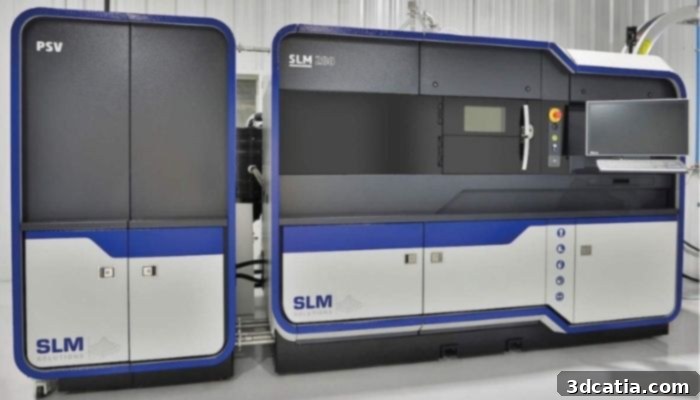
Photo Credits: Nikon SLM Solutions
These developments paint a vivid picture of an industry constantly evolving and delivering solutions that were once confined to the realm of science fiction. From highly personalized athletic gear that boosts performance, to vital infrastructure repairs, life-changing medical implants, sustainable architectural designs, and critical aerospace components, additive manufacturing is proving its versatility and indispensable value across the board. The innovations showcased here underscore the transformative power of 3D printing in driving efficiency, customization, and sustainability for a better future.
What do you think of these exciting advancements in 3D printing, particularly the custom cycling shoes from Lore? We invite you to share your thoughts and insights in a comment below or join the conversation on our LinkedIn, Facebook, and Twitter pages! Don’t forget to sign up for our free weekly newsletter here to receive the very latest 3D printing news directly to your inbox. You can also explore all our informative videos on our YouTube channel for more in-depth content.