
Revolutionizing Resilience: 3D Printing’s Impact on Fireproof Homes, Industry Shifts, and Cultural Preservation
This week, the world of additive manufacturing presents a compelling narrative of innovation, adaptation, and hope. From leveraging cutting-edge 3D printing technology to rebuild communities devastated by wildfires with fire-resistant homes, to major industry players making strategic financial and operational shifts, the sector continues to evolve at a rapid pace. We delve into how 3D printing is not only shaping the future of construction and manufacturing but also playing a crucial role in safeguarding humanity’s rich cultural heritage for generations to come. Join us as we explore these significant developments that underscore the transformative power of 3D printing across diverse applications.
3D Printed Fireproof Homes Emerge as a Solution After LA Wildfires
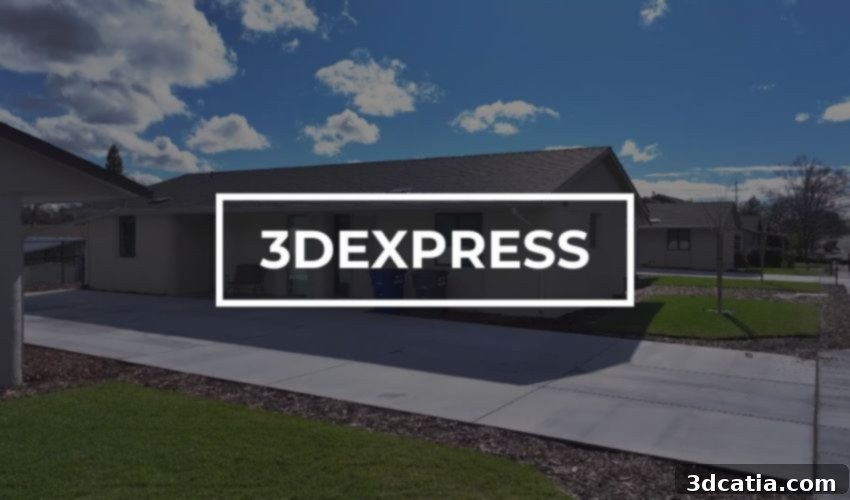
The devastating wildfires that recently swept through Los Angeles left an indelible mark of destruction and instilled a renewed fear of future blazes. As communities embark on the arduous journey of rebuilding, often from the ground up, the critical question of preventing similar catastrophes in the future has taken center stage. A groundbreaking answer is emerging in the form of 3D printed fireproof homes, championing a new era of resilient construction. Companies like Emergent 3D are at the forefront of this movement, offering innovative solutions designed to withstand extreme conditions.
In a significant step forward, a Californian woman who lost her home and possessions in the recent fires has become the first to contract with Emergent 3D for a new, fire-resistant residence in Northern California. This pivotal moment symbolizes a beacon of hope after immense tragedy. Her new home, a spacious 1200-square-foot dwelling, will feature three bedrooms and two bathrooms, meticulously designed and constructed using advanced 3D printing techniques. The most crucial aspect of this project is its inherent fireproof nature, offering future occupants unparalleled safety and peace of mind. Emergent 3D’s approach leverages specialized materials and construction methods that significantly enhance a home’s ability to resist fire, providing a vital layer of protection against the increasingly frequent and intense wildfires in the region. This initiative not only offers a pathway to recovery for affected individuals but also sets a precedent for how communities can rebuild smarter and safer using additive manufacturing technologies.

Photo Credits: ABC7
ICON Secures $56 Million in Funding Following Strategic Layoffs
Texas-based ICON, a trailblazer in the field of 3D printed construction, has consistently made headlines for its ambitious projects in both the residential and space exploration sectors. However, the company recently announced a strategic realignment, which included the difficult decision to lay off over 100 employees. This move was part of a focused effort to pivot towards its next-generation robotic system, specifically designed for printing multi-story homes and buildings utilizing an innovative low-carbon material. This strategic adjustment aimed to streamline operations and concentrate resources on high-impact, future-oriented projects.
Despite the preceding layoffs, ICON has now announced a significant financial boost, having successfully raised approximately $56 million in new funding, as disclosed in recent financial reports. This substantial investment demonstrates a strong vote of confidence from investors in ICON’s long-term vision and its re-focused strategy. While the full implications regarding the previously announced layoffs, which were anticipated around March 8th, remain to be seen, this capital infusion strongly suggests continued market interest and belief in the company’s pioneering 3D construction technology. The funding is expected to accelerate the development and deployment of ICON’s advanced systems, further cementing its position as a leader in sustainable and scalable additive construction. This development highlights the dynamic and often complex financial landscape within the innovative 3D printing industry, where strategic pivots and significant investments are crucial for sustained growth and market leadership.
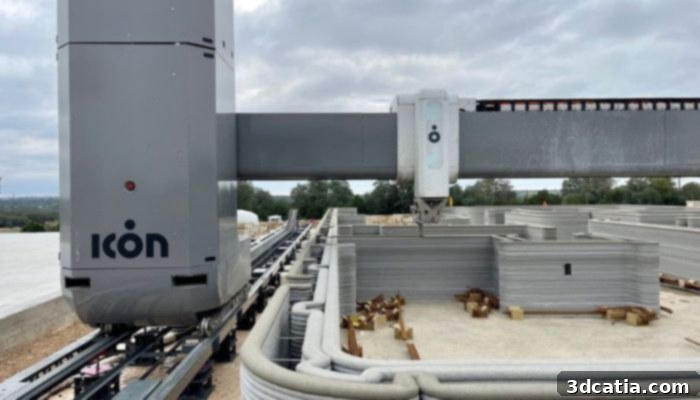
Photo Credits: ICON
Asahi Kasei Discontinues 3D Printing Filaments in North America
In a notable development for the 3D printing materials sector, the Japanese chemical giant Asahi Kasei has announced the cessation of its 3D printing filament business through its North American subsidiary, Asahi Kasei Plastics North America (APNA). This decision means APNA will no longer engage in the development, marketing, or sale of 3D printing filaments in the region. Asahi Kasei initially entered the burgeoning additive manufacturing market in October 2023, offering specialized filaments derived from a modified polyphenylene ether (mPPE) resin, marketed under the brand name XYRON, alongside polypropylene (PP) filaments. These materials were introduced with the promise of enhanced performance characteristics for various industrial applications.
The internal decision to exit the North American filament market suggests potential challenges with profitability or strategic alignment within the highly competitive and rapidly evolving 3D printing materials landscape. While Asahi Kasei is a diversified chemical company with a vast portfolio, the specialized nature of 3D printing filaments may not have yielded the anticipated returns or synergy with their core operations. Despite this discontinuation, the company will continue to offer its Thermolyne pellets, indicating a focus shift or perhaps a more profitable segment within their additive manufacturing offerings. This move by a significant player like Asahi Kasei underscores the dynamic nature of the 3D printing market, where even established chemical companies must continually evaluate the viability and strategic fit of their product lines amidst fierce competition and evolving demand.
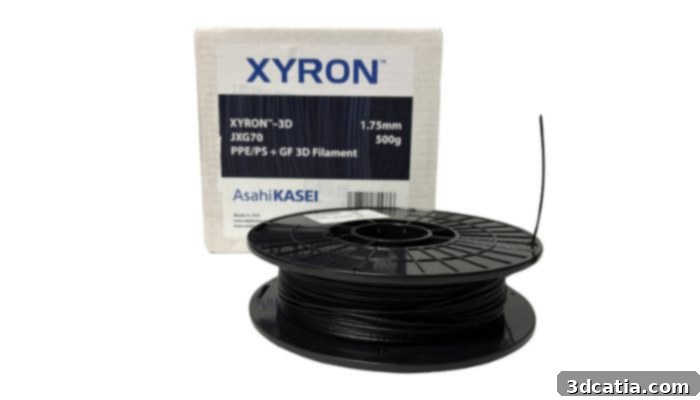
Photo Credits: MatterHackers
Prusa Unveils the Advanced CORE One FDM 3D Printer
Prusa Research, the renowned Czech manufacturer celebrated for its high-quality, open-source 3D printers, has once again made waves with the launch of its newest FDM (Fused Deposition Modeling) machine: the Prusa CORE One. This latest addition to Prusa’s esteemed lineup represents a significant step forward in desktop 3D printing, catering to both novice users and seasoned professionals alike. Designed with precision and versatility in mind, the CORE One aims to elevate the printing experience and expand the range of printable materials.
A key highlight of the Prusa CORE One is its fully enclosed design, which incorporates a highly precise temperature control system. This controlled environment is crucial for improving print quality, especially when working with advanced engineering filaments that are sensitive to temperature fluctuations and drafts. The machine boasts a generous build platform measuring 250 x 220 x 270 mm, providing ample space for a wide array of projects. Furthermore, its engineering for ultra-fast manufacturing processes ensures efficiency without compromising detail. The chamber temperature can reach an impressive 55°C, significantly broadening the spectrum of polymers that can be successfully printed, including those notorious for warping. Adding to its sophisticated features, the CORE One is also equipped with an automatic ventilation system, ensuring optimal air quality and temperature management during lengthy prints. Prusa emphasizes that this new 3D printer strikes an ideal balance of user-friendliness and professional-grade performance. The Prusa CORE One is available for purchase starting at $1199 for the assembled version and a more budget-friendly $949 for the kit form, offering flexibility for various user preferences and skill levels.
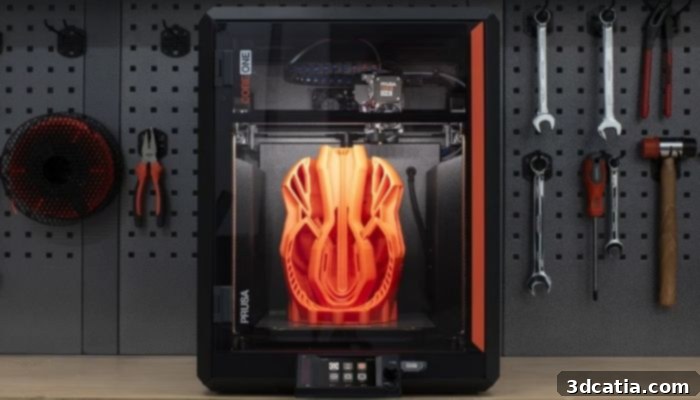
Photo Credits: Prusa
Korean Pavilion 3D Scanned for Advanced Cultural Heritage Preservation
The application of 3D technologies is proving to be an invaluable asset in the critical mission of preserving our shared history and cultural heritage. A recent compelling example comes from South Korea, where the Korean Heritage Service has embraced advanced 3D scanning solutions to create a meticulously detailed digital twin of the Hanbyeongnu Pavilion. This magnificent structure, originally built in 1317, stands as a profound symbol of traditional Korean art and architectural prowess, embodying centuries of cultural legacy.
Like many historical monuments across the globe, the Hanbyeongnu Pavilion has endured the relentless assault of time and natural elements. Tragically, it succumbed to these forces, collapsing in 1972. Although it was diligently rebuilt three years later, its vulnerability underscored the urgent need for more robust preservation strategies. To prevent future loss and ensure the longevity of this national treasure, the Korean Heritage Department made the strategic decision to digitize the entire building. This ambitious project aims to capture every intricate detail, every nuance of color and texture, making the pavilion accessible to scholars, enthusiasts, and the general public worldwide, regardless of physical proximity.
To achieve this remarkable feat, the teams deployed the cutting-edge Artec Ray II LIDAR scanner, a powerful instrument capable of scanning objects up to 130 meters away with unparalleled accuracy. This advanced technology allowed for the creation of a comprehensive digital twin, a virtual replica that preserves the pavilion’s exact form and features. As a representative from the Korea Heritage Service articulates, “By utilizing advanced scanning technology, we can easily and safely collect cultural heritage data. Accurate and well-preserved digital cultural heritage can be freely accessed by households, schools, educational institutions, and businesses, allowing individuals to view it at their desks, print it out, and even spark curiosity to visit these sites in person, thereby significantly contributing to the tourism industry.” This initiative not only safeguards a vital piece of Korean history but also exemplifies the profound impact 3D scanning can have on education, research, and cultural tourism globally, ensuring that historical monuments remain vibrant and accessible for future generations.

Photo Credits: Artec 3D
The latest advancements in 3D printing continue to demonstrate its immense potential to address some of the world’s most pressing challenges, from creating resilient housing in disaster-prone areas to meticulously preserving invaluable cultural artifacts. These stories collectively paint a picture of a technology that is not just evolving, but actively transforming industries and shaping our future. What are your thoughts on these groundbreaking applications of additive manufacturing, especially the emergence of 3D printed fireproof homes in California?
Let us know in a comment below or on our LinkedIn, Facebook, and Twitter pages! Don’t forget to sign up for our free weekly Newsletter here, the latest 3D printing news straight to your inbox! You can also find all our videos on our YouTube channel.