
Unlocking Innovation: A Comprehensive Guide to Rapid Prototyping Technologies
In the dynamic landscape of modern manufacturing and product development, speed and efficiency are paramount. Rapid prototyping has emerged as an indispensable cornerstone, allowing businesses to transform ideas into tangible models with unprecedented agility. A recent study from Dimensional Research, sponsored by Essentium, highlighted that prototyping remains the most widespread application for 3D printing technologies today. While the additive manufacturing (AM) industry is gradually shifting towards mass production, the critical demand for simple and rapid prototyping is projected to remain steady over the next five years. This enduring importance stems from rapid prototyping’s ability to quickly manufacture scale models of physical parts, offering a crucial advantage over traditional methods in terms of cost, timing, and design flexibility.
Rapid prototyping encompasses a group of advanced techniques designed to accelerate the product development cycle. It minimizes risk by allowing designers and engineers to test, validate, and iterate on designs before committing to costly production tooling. Beyond the commonly associated 3D printing, this field includes other powerful methods such as CNC machining, vacuum casting, and rapid injection molding. These technologies collectively empower industries to innovate faster, respond to market demands more effectively, and bring superior products to market. From concept validation to functional testing, rapid prototyping streamlines the entire process, making it a vital investment for companies striving for competitive advantage.
3ERP: A Leader in Global Prototyping Solutions
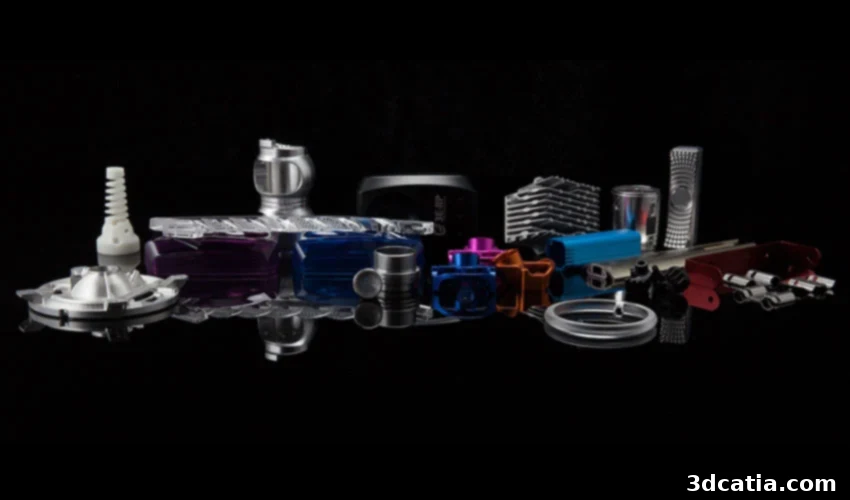
Among the key players facilitating this revolution is the Chinese company, 3E Rapid Prototyping (3ERP). Specializing in comprehensive rapid prototyping and low-volume production services, 3ERP caters to a wide range of industries, including automotive, medical device, aerospace, consumer, and commercial products. We had the opportunity to speak with the company’s CEO, Ronan Ye, who elaborated on their impressive capabilities. According to Ye, 3ERP can deliver anywhere from 1 to 1000+ custom metal or plastic parts globally in as little as ten days. This incredible turnaround time underscores the company’s commitment to speed and customer satisfaction, meeting the urgent demands of product development cycles worldwide. The diverse demand for their services highlights the universal need for rapid prototyping across all sectors, leveraging a spectrum of cutting-edge technologies.
Ronan Ye emphasized the transformative impact of ongoing technological advancements: “Innovations in CNC machining, additive manufacturing, and casting technologies are giving companies and consumers an unprecedented level of design options.” This insight perfectly encapsulates the evolving landscape, where continuous improvements in manufacturing processes unlock new possibilities for intricate designs, optimized performance, and tailored solutions. 3ERP’s ability to harness these diverse technologies positions them as a crucial partner for businesses looking to push the boundaries of design and engineering.
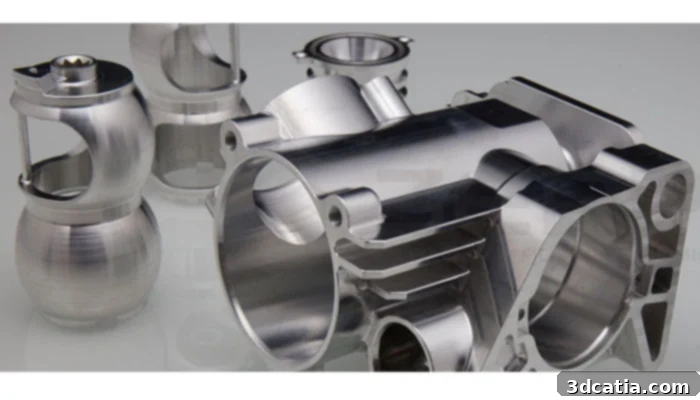
CNC parts | Credits: 3ERP
Exploring the Diverse Technologies for Rapid Prototyping
While often seen as competing methodologies, the two primary technologies for prototyping – 3D printing and CNC machining – are, in fact, highly complementary. Their fundamental difference lies in their approach: 3D printing is an additive process, building objects layer by layer, while CNC machining is subtractive, removing material from a solid block. However, both boast compatibility with a wide array of materials, ranging from various plastics to high-performance metals. This versatility, combined with their unique strengths, makes them powerful tools in a designer’s arsenal.
3D Printing: The Gateway to Design Freedom
Additive manufacturing, more commonly known as 3D printing, offers unparalleled design freedom, enabling the creation of complex geometries and intricate internal structures that would be impossible with traditional methods. Its advantages for prototyping are numerous: excellent shape flexibility, applicability across a multitude of sectors, high accuracy for many applications, and speed for rapid iterations. Furthermore, 3D printing can significantly contribute to cutting both weight and material costs for parts, especially when optimizing designs for topology or lattice structures. The main limiting factor of 3D printing, scalability for mass production, does not apply to rapid prototyping, where small batches and quick turnarounds are the norm.
The emergence of 3D printing has fundamentally altered the economics of prototyping. Historically, creating a prototype using traditional methods often required nearly the same processes, tooling, setup, and associated costs as manufacturing the final product. This made prototyping a prohibitively expensive venture for many businesses, especially smaller enterprises or those with limited R&D budgets. Thanks to 3D printing, this barrier has been significantly lowered. The technology excels particularly when speed is of the essence; the quicker a prototype is needed, the more suitable 3D printing techniques become for generating tangible models for review and testing. This capability accelerates the design cycle, allowing for more iterations in a shorter timeframe.
CNC Machining: Precision and Durability for Critical Applications
Conversely, CNC (Computer Numerical Control) machining offers exceptional precision and surface finish, making it the preferred choice for prototypes requiring very tight tolerances and robust mechanical properties. While typically involving more setup time than 3D printing for one-off parts, CNC shines in its ability to work with virtually any engineering material, producing prototypes that closely mimic the final production part’s strength and durability. 3ERP’s latest report revealed that automotive, aerospace, and metal fabrication companies are the most prominent users of automated, subtractive machining technologies. Ronan Ye further explained, “The automotive industry is most likely to maintain its dominance in CNC usage. Innovation, the need for quick production, and better quality are the main factors propelling it forward, not just in the production of cars, but also in the defense and aerospace industries.” This highlights CNC’s critical role in sectors where safety, performance, and material integrity are non-negotiable.
The synergistic relationship between these technologies is also notable. Many advanced additive manufacturing solutions on the market today integrate CNC mills, allowing for seamless post-processing. This is crucial as most 3D printers, especially those used for industrial applications, require some level of finishing to achieve desired surface quality or dimensional accuracy. This hybrid approach leverages the best of both worlds: the design freedom of 3D printing for complex forms, and the precision and surface finish capabilities of CNC machining for critical features or final touches.
Vacuum Casting and Injection Molding: Bridging the Gap to Production
Beyond 3D printing and CNC machining, other rapid prototyping methods play a crucial role, particularly for low-volume production or when a prototype needs to closely simulate final production materials and processes. Vacuum casting, for instance, uses a silicone mold created from a master pattern (often 3D printed) to produce high-quality plastic parts quickly and economically. This method is ideal for producing small batches (typically 10-50 units) of functional prototypes or end-use parts with excellent surface finish and material properties similar to injection-molded plastics. It offers a cost-effective way to get realistic prototypes without the high investment of production tooling.
For higher volumes or prototypes that need to validate the injection molding process itself, rapid tooling and short-run injection molding come into play. Rapid tooling involves quickly manufacturing molds, often from softer metals or 3D printed materials, which can withstand a limited number of injection cycles. This allows for the production of prototypes or pre-production parts using the actual final production material and process. While more expensive and time-consuming than vacuum casting, it provides invaluable insights into part design for manufacturability, material behavior, and assembly processes, bridging the gap between prototyping and mass production.
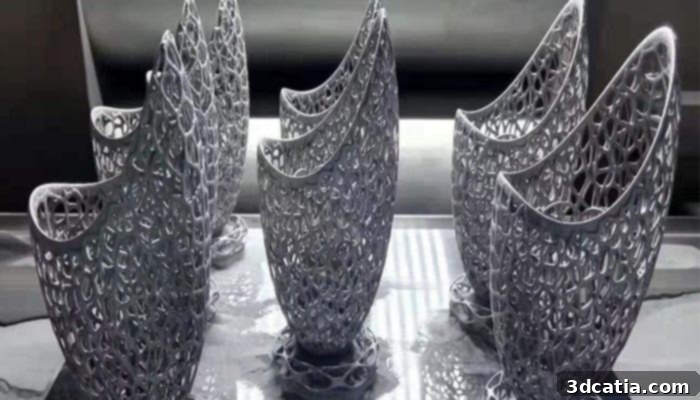
3D Printing Parts using Selective Laser Melting | Credits: 3ERP
The Iterative Design Cycle and Market Impact
Rapid prototyping is not just about making a single model; it’s about enabling a continuous cycle of iteration, testing, and refinement. This iterative process is fundamental to successful product development, allowing designers and engineers to quickly validate concepts, identify flaws, and make improvements with minimal delay and cost. Whether it’s a visual prototype to gauge aesthetics, a functional prototype to test performance, or a proof-of-concept model, each iteration brings the product closer to its optimal form. The faster these iterations can be performed, the quicker a product can evolve from an initial idea to a market-ready solution. This accelerated time-to-market provides a significant competitive advantage, allowing companies to capture opportunities and respond to evolving customer needs more effectively.
In terms of geometric complexity, it is almost impossible for traditional manufacturing methods to compete with additive manufacturing. Design freedom is dramatically increased with 3D printing, allowing for organic shapes, internal channels, and lightweighting structures that optimize part performance without adding significant cost. However, for very high-precision parts, especially those requiring extremely tight tolerances or specific material properties not yet achievable with additive processes, CNC machining remains preferable. The choice of technology also depends on the production volume; generally, the smaller the volume of production required for prototypes, the more cost-effective 3D printing becomes. As volume increases towards low-to-mid scale production, methods like vacuum casting and rapid tooling for injection molding become more viable, bridging the gap between a handful of prototypes and full-scale manufacturing.
A Strategic Partner in Innovation
Companies like 3ERP understand the immense value and strategic interplay of all these technologies. Their comprehensive portfolio, which includes advanced 3D printing, precision CNC machining, vacuum casting, rapid tooling, and injection molding, positions them as a versatile partner for any prototyping need. They offer a holistic approach to product development, guiding clients through the selection of the most appropriate technology based on their specific requirements for material, geometry, volume, and timeline. To discover more about each of these technologies and the comprehensive services offered by 3ERP, you can visit their website HERE.
The Future Outlook for Rapid Prototyping
The field of rapid prototyping continues to evolve at an astonishing pace. Future advancements are expected to bring even more sophisticated multi-material printing capabilities, further integration of AI for generative design and process optimization, and increasingly automated hybrid manufacturing systems. As these technologies mature, rapid prototyping will only become more accessible, efficient, and integral to innovation across all sectors, cementing its status as a vital component of modern manufacturing and product development.