
Revolutionizing Nutrition: 3D Bioprinting for Personalized Dysphagia Diets and Beyond
The global population is experiencing a significant demographic shift, with a rapidly increasing number of elderly individuals. This demographic trend presents both opportunities and challenges for healthcare and social systems worldwide. For instance, in France, individuals aged 65 and over constituted 20% of the population in 2020, a figure projected to rise to an astounding 30% by 2050. This pattern is mirrored in many developed nations, including Japan, where an aging society is already a prominent reality. As people age, various physiological changes occur, and one common challenge that significantly impacts quality of life is dysphagia – difficulty or discomfort in swallowing.
Dysphagia is a prevalent condition affecting millions globally, particularly among the elderly, stroke survivors, and individuals with neurological disorders. It can transform the fundamental act of eating from an enjoyable experience into a daunting and even dangerous task. Symptoms can range from mild discomfort and coughing during meals to severe choking incidents, leading to serious health complications such as malnutrition, dehydration, and aspiration pneumonia. Beyond the physical risks, dysphagia often results in a profound reduction in quality of life, leading to social isolation, anxiety around mealtimes, and a loss of the pleasure associated with food. Current solutions often involve texture-modified foods, such as purees and thickened liquids, which, while crucial for safety, frequently lack sensory appeal and variety, contributing to food monotony and reduced nutritional intake.
Addressing this critical need, researchers at Kyushu University in Japan and Cardiff University in the UK have pioneered an innovative 3D bioprinting method. This groundbreaking approach promises to transform the way we create customized, protein-based gels, precisely tailored to meet the unique dietary requirements of individuals with varying levels of dysphagia. By leveraging sophisticated radio frequency and microwave control, this technology enables unprecedented precision in adjusting the texture, stickiness, and water retention of food, moving beyond generic modified diets to truly personalized nutritional solutions.

A combination machine with a microwave and 3D BioPrinter (Image Credit: Scientific Reports)
3D Bioprinting: A New Era for Personalized Food Textures
For individuals managing dysphagia, mealtimes can often feel restrictive and uninspiring. The limited range of very soft or gel-like foods, though medically necessary, can lead to a lack of dietary diversity and a diminished appetite. The primary goal of this innovative research is to transcend these limitations by developing meals that are not only safe and nutritious but also appealing and enjoyable to eat. This vision is being realized through the creation of a specialized “bio-ink” designed specifically for 3D food printing.
This unique bio-ink is formulated as an ingenious combination: an oil-in-water emulsion blended with a solution rich in proteins and stabilizers. The oil-in-water emulsion contributes to the food’s nutritional value and mouthfeel, while the proteins form the structural basis of the gel. A critical component of this mixture is a small, precisely measured amount of magnesium chloride. This compound acts as a susceptor, allowing the bio-ink to heat efficiently and rapidly when exposed to microwave radiation. This controlled heating process is pivotal, as it transforms the liquid preparation into a stable, ready-to-eat gel with a desired texture, effectively bypassing traditional cooking methods that offer less precision.
To bring these customized foods to life, the research team developed a bespoke 3D bioprinter. Remarkably, this printer was constructed using components from Lego Mindstorms EV3, a testament to the ingenuity and accessible nature of their approach, inspired by existing work at Cardiff University. The use of Lego Mindstorms not only demonstrates a cost-effective and adaptable prototyping method but also hints at the potential for more widespread adoption and development of such technologies. The core of the printing process involves the precise extrusion of the bio-ink through a fine nozzle. As the ink exits the nozzle, it undergoes targeted heating via either radiofrequency or microwaves, initiating the gelation process.
As Shuntaro Tsubaki, the lead researcher at Kyushu University, explains, the team first conducted extensive experiments to determine how different energy frequencies could effectively control the gel’s consistency. This foundational work was crucial for establishing the parameters for precise texture customization. Once optimized, the machine then prints the gel layer by layer, meticulously building up the final desired shape and structure on the print bed. This additive manufacturing approach allows for intricate designs and complex food architectures, far beyond what traditional pureeing methods can achieve. This layered construction also helps to ensure uniform heating and consistent texture throughout the entire food item, addressing a common challenge in texture-modified diets.
The Science Behind Texture Control: Radiofrequency vs. Microwave
One of the most significant breakthroughs of this research lies in the ability to precisely manipulate the food’s texture by adjusting the energy frequency used during the printing process. The researchers discovered a direct correlation between the applied frequency and the resulting characteristics of the protein-based gel. This precise control opens up a spectrum of possibilities for tailoring food textures to individual swallowing capabilities, making eating safer and more enjoyable for dysphagia patients.
At a lower frequency, specifically around 200 MHz, the electromagnetic waves interact with the bio-ink in a manner that promotes the formation of a firmer gel. This lower frequency allows for a more gradual and controlled protein denaturation and cross-linking, resulting in a robust structure that retains its shape exceptionally well. Crucially, gels formed at this frequency also exhibit excellent water retention properties, which is vital for preventing dehydration and maintaining a consistent texture during consumption. This firmer texture could be suitable for individuals with milder forms of dysphagia who require some structural integrity but still need a soft, cohesive food. It bridges the gap between traditional purees and more solid foods, offering a wider range of options.
Conversely, when a higher frequency is applied, such as the widely used 2.45 GHz (similar to standard household microwaves), the gel exhibits different characteristics. At this higher frequency, the rapid and intense heating leads to a softer and more viscous, often stickier, gel. This is due to the more aggressive interaction of microwaves with water molecules within the bio-ink, causing rapid protein coagulation that results in a less rigid network. This softer, stickier consistency is particularly beneficial for individuals with severe dysphagia who require extremely gentle textures that minimize effort during swallowing and reduce the risk of aspiration. The ability to switch between these frequencies provides an unprecedented level of control, allowing caregivers and clinicians to dial in the exact texture needed for each patient’s evolving condition.
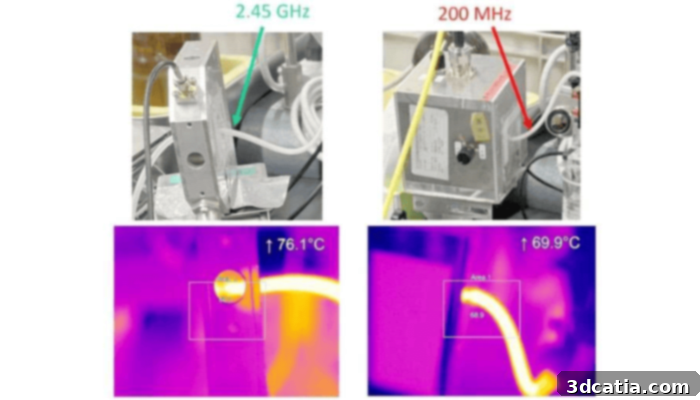
A close-up look at the schematics of the 3D bioprinter using Lego Mindstorms EV3 (Image Credit: Scientific Reports)
Beyond Dysphagia: A World of Possibilities for 3D Food Printing
The implications of this innovative 3D printing technique extend far beyond the realm of dysphagia care. The precision and adaptability demonstrated in controlling food texture and composition open doors to a vast array of applications across the food industry and beyond. This technology holds immense promise for revolutionizing how we produce and consume food on a broader scale, addressing various nutritional, environmental, and culinary challenges.
One exciting prospect is its application in the rapidly developing field of lab-grown meat. Imagine being able to print complex meat structures with controlled texture, mimicking the fibrous nature of muscle tissue. This could accelerate the development of sustainable, ethical, and resource-efficient alternatives to traditional meat production. By accurately controlling the binding and structuring of cultivated cells, this method could lead to more realistic and appealing lab-grown meat products, overcoming current textural limitations.
Furthermore, this technique could be instrumental in creating highly specialized functional or therapeutic foods. For instance, foods could be precisely engineered to deliver specific nutrients, vitamins, or even medication dosages, tailored to individual health conditions or dietary deficiencies. This level of personalization moves beyond standard dietary supplements, integrating therapeutic components directly into enjoyable meal formats. Imagine foods designed to combat specific nutrient deficiencies, support recovery from illness, or manage chronic conditions with unprecedented precision.
The technology also offers significant potential for enhancing food rations, particularly for emergency situations, space exploration, or military applications. By creating compact, highly nutritious, and texture-controlled food items, it could ensure optimal sustenance in challenging environments, where conventional food preparation is impractical. The ability to control water retention and structural integrity could also contribute to extended shelf life and easier consumption in diverse conditions.
Researchers are not stopping there; they are actively exploring the integration of other edible ingredients for 3D printing. They believe this advanced method could also significantly enhance the overall flavor profile of foods. By meticulously controlling the protein texture, it’s possible to influence how flavors are released and perceived in the mouth. Moreover, the ability to create and manipulate the fat phase within the food structure could allow for the precise capture and sustained release of delicate aromas, leading to a richer and more nuanced sensory experience. This level of culinary control could elevate the enjoyment of food for everyone, regardless of dietary restrictions.
What are your thoughts on this revolutionary 3D printing method for developing personalized foods, especially for individuals with dysphagia? We’d love to hear your perspective! Share your comments below or engage with us on our LinkedIn or Facebook pages. Additionally, make sure to sign up for our free weekly Newsletter to receive the latest updates in 3D printing technology directly in your inbox. You can also explore all our insightful videos on our YouTube channel.
*Photo Credits: Scientific Reports