
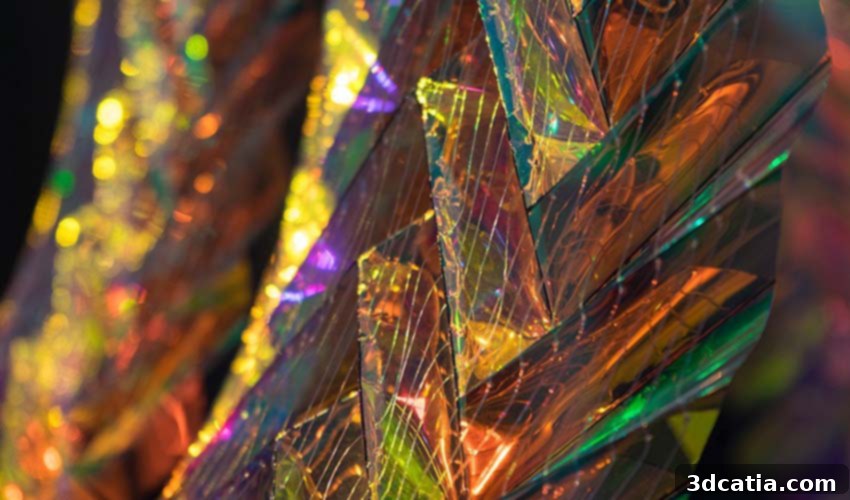
Revolutionizing Fashion: Zap&Buj Integrates 3D Printing, Architecture, and Sustainability
The integration of additive manufacturing into fashion development and production is no longer a novel concept within the technology sector. Numerous pioneering firms have successfully leveraged the transformative power of 3D printing to innovate fashion design and streamline production processes. This fusion of cutting-edge technology with creative design has opened up an expansive realm of possibilities for brands seeking innovation and originality in creating truly unique and bespoke products. Recognising this burgeoning trend, we delved deeper into how companies successfully integrate these advanced technologies. Our conversation led us to Raquel Buj, co-founder of the avant-garde brand Zap&Buj, a visionary studio that masterfully navigates the fascinating intersection of architecture, fashion, and technology. Her insights provide a compelling look into the future of creative industries.
3DN: Can you introduce yourself and elaborate on your personal journey and relationship with 3D printing?
My name is Raquel Buj, and my professional identity spans several disciplines: I am an architect, a fashion designer, an educator, and a dedicated researcher. My initial encounter with 3D printing was through the awe-inspiring works of others. I distinctly remember being captivated by projects such as the innovative shoes crafted in a groundbreaking collaboration between United Nude and 3D Systems, featuring the architectural genius of Zaha Hadid. Equally impactful was the Kinematic Dress by Nervous System, unveiled around 2014-2015, which redefined possibilities in dynamic, customizable fashion. Soon after, the experimental designs of Iris van Herpen, with her relentless exploration of diverse 3D techniques and materials, deeply resonated with my creative vision. These foundational experiences ignited my own desire to experiment. I began conducting initial tests, many of which were, predictably, failures, during a postgraduate course on Architecture and Fashion at ETSAM. However, these early trials were invaluable learning experiences. Later, upon co-founding Zap&Buj with Elena Zapico, we were able to significantly escalate our experimentation, integrating 3D printing into several of our most ambitious designs, transforming complex concepts into tangible, wearable art.

Raquel Buj, co-founder of Zap&Buj, a visionary at the intersection of architecture, fashion, and technology.
3DN: How did the innovative Zap&Buj studio come into existence? What was the vision behind its creation?
Zap&Buj was conceived from a shared passion and unique professional backgrounds as architects and fashion designers. Elena and I envisioned it as a dynamic confluence, a vital meeting place where these two seemingly disparate yet fundamentally connected disciplines could openly interact and influence one another. We affectionately refer to our studio as a “laboratory” because our core mission is deeply rooted in investigative and experimental practices. We continuously explore the intricate relationships between architecture and fashion, not only at a conceptual level, delving into theoretical frameworks and philosophical underpinnings, but also through the practical application and innovative use of materials. Our process involves sourcing and experimenting with a wide array of materials, often drawn from highly unconventional fields, and then meticulously integrating them with advanced technologies. The overarching goal of this experimental approach is to forge new creative horizons, blurring the traditional lines between the inherent ‘hardness’ and structural rigidity of architecture and the fluid, adaptable ‘softness’ of fashion. This fusion allows us to create designs that are both structurally profound and intimately connected to the human form.
3DN: How critical is additive manufacturing to Zap&Buj’s creative process? Could you provide specific examples of its application in your designs?
In our studio, digital manufacturing techniques, particularly 3D printing, are absolutely indispensable. They serve as a foundational tool that empowers us to materialize exceptionally complex organic processes and geometries that would be virtually impossible to achieve through traditional design and fabrication methods. Without 3D printing, many of our most innovative concepts would remain purely theoretical. For instance, in one notable project, we undertook a meticulous study of how humidity propagates and grows across a vertical wall surface. We meticulously translated this natural phenomenon into a detailed 3D digital geometry, meticulously mapping its intricate patterns and evolutionary stages over time. Subsequently, we utilized 3D printing to bring this organic geometry to life, employing a flexible filament printed directly onto a delicate yet elastic tulle fabric. The resulting garment was an incredibly unique elastic jumpsuit designed to adapt seamlessly to the wearer’s body and its various movements. This project perfectly illustrates how 3D printing facilitated the precise materialization of complex organic forms and significantly streamlined the entire iterative process of experimentation and prototyping, allowing us to refine the design to perfection. This ability to rapidly prototype and test complex structures is paramount to our interdisciplinary approach, enabling us to bridge the gap between abstract architectural concepts and tangible, wearable fashion.
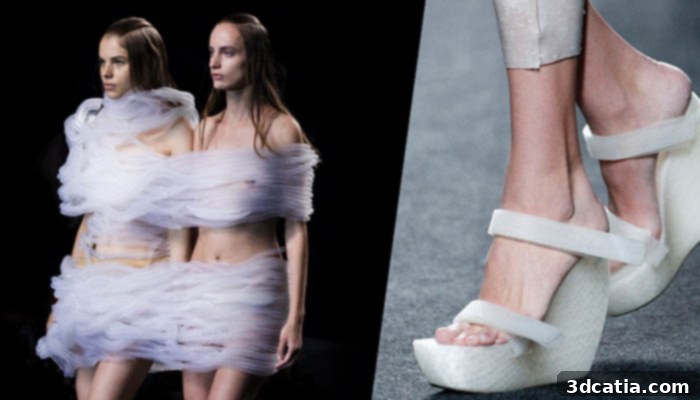
Zap&Buj creates intricate organic designs using advanced 3D printing technology, blurring the lines between art and fashion | Credits: Zap&Buj
3DN: What is your perspective on the evolving relationship between new technologies and the contemporary fashion industry?
The future trajectory of fashion is undeniably heading towards a profound and comprehensive integration of technology, traditional craftsmanship, and an unwavering commitment to sustainability. The thoughtful incorporation of new technologies allows fashion to transcend mere aesthetics, endowing garments with an unprecedented degree of interaction between our bodies and the surrounding environment. This could manifest in smart textiles that respond to external stimuli, wearable technology that monitors health, or garments that actively adapt to changing conditions. Beyond functionality, the synergistic union of advanced technology and artisanal craftsmanship holds immense potential to generate truly unique and highly personalized garments. This approach ingeniously marries the complexity and efficiency afforded by digital manufacturing technologies, such as precise 3D printing and laser cutting, with the invaluable human touch and skill inherent in traditional craft processes. The result is a product that benefits from both technological precision and human artistry, creating items that are not only innovative but also imbued with a deeper narrative and a sense of bespoke quality.
Furthermore, a paramount objective for the garments of the future is to achieve greater sustainability, both in their production processes and in the materials chosen for their creation. This necessitates placing significant emphasis on innovation within this critical area. We are currently witnessing an incredibly exciting movement centered around bio-printing technologies – similar to those already utilized in regenerative medicine. These groundbreaking technologies offer the revolutionary possibility of ‘growing’ our own garments, which are inherently biodegradable. This paradigm shift fundamentally reverses the traditional consumption cycle, moving towards a regenerative model that actively protects our precious natural resources and significantly reduces environmental impact. This holistic approach, integrating technological advancements with sustainable practices and honoring craftsmanship, defines the vanguard of fashion innovation.
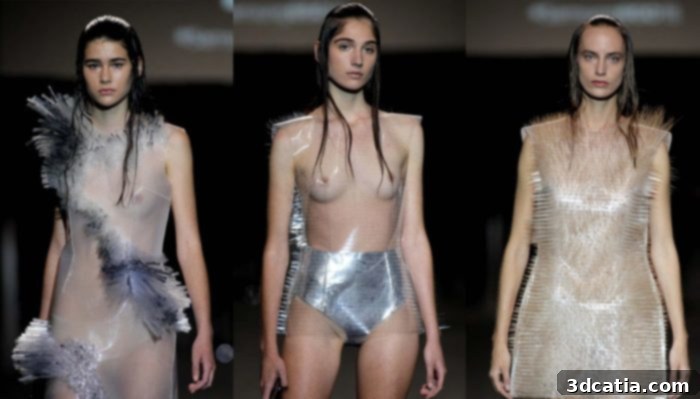
Zap&Buj’s core philosophy emphasizes the seamless integration of technology, craftsmanship, and sustainability in every design | Credits Zap&Buj
3DN: What exciting projects are on the horizon for Zap&Buj?
We have several intriguing projects currently in development and on our radar. One particularly exciting endeavor, which is still in its nascent stages, involves extending the symbiotic relationship we’ve explored between Architecture and Fashion – previously materialized primarily through avant-garde body suits – into the broader realm of architectural design itself. I am profoundly fascinated by this constant, dynamic, and reciprocal dialogue between these two disciplines. Our current exploration seeks to identify that precise meeting point where architecture begins to embody qualities more akin to a garment: becoming more tactile, more responsive, and more intimately adapted to our human bodies and their interactions within space. Imagine structures that possess the inherent flexibility and sensory richness of fabric, or architectural skins that can react and adapt like a second skin. Some of the innovative materials and fabrication techniques with which we have extensively experimented to envelop and adorn the human form could, conceivably, be scaled up and recontextualized to clad and define architectural spaces. This bold concept aims to bring architecture closer to the intimate, personal experience of the body, creating environments that are not just functional but also profoundly sensual and deeply connected to human perception. This constant push and pull between scales and applications defines our ongoing research.
3DN: Do you have any final thoughts or words of wisdom for our readers regarding the future of design and technology?
Absolutely. I sincerely believe that the integration of novel materials and advanced manufacturing technologies into disciplines like fashion is an incredibly fertile and exciting area of exploration. There is a tremendous amount of groundbreaking research currently underway, leading to truly captivating and transformative proposals that are reshaping our understanding of design. I am convinced that the very future of fashion hinges upon our collective ability to generate innovative proposals in the use of materials and technologies. These innovations must serve a dual purpose: fostering a better, more harmonious relationship with people through enhanced comfort, functionality, and personalization, while simultaneously offering efficient and genuinely sustainable solutions for our planet. It is no longer enough for fashion to be merely beautiful; it must also be responsible and forward-thinking. Furthermore, I consider it absolutely essential that these advancements, insights, and alternative approaches are actively communicated and widely shared through platforms like 3Dnatives. By making these new ways of thinking and creating visible to a broader audience, we can collaboratively inspire, educate, and collectively evolve the future of design across all creative industries. The conversation about sustainable and technologically advanced design needs to be pervasive and inclusive.
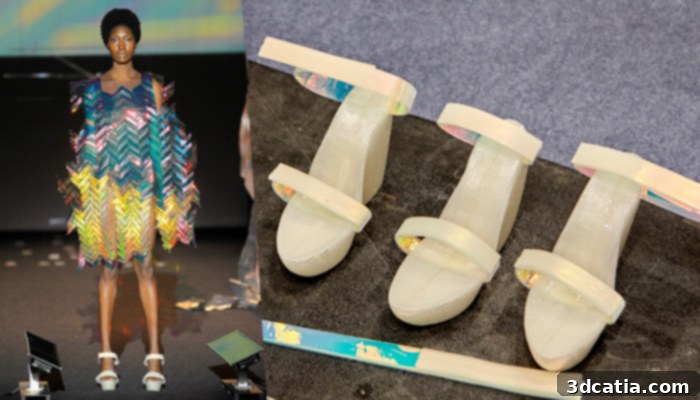
Zap&Buj continues to champion the integration of technology, craftsmanship, and sustainability as core tenets of their design philosophy | Credits Zap&Buj
For those eager to delve deeper into the innovative world of fashion manufacturing through additive processes and to explore more of Zap&Buj’s groundbreaking work, additional information can be found on their official website HERE. We invite you to share your thoughts on Zap&Buj’s unique approach! What do you find most inspiring about their integration of architecture, fashion, and technology? Let us know your opinions in a comment below, or engage with us on our vibrant Facebook and Twitter pages! Don’t forget to sign up for our complimentary weekly Newsletter to receive all the latest news, trends, and breakthroughs in 3D printing delivered directly to your inbox every week!