
Mastering Additive Manufacturing: A Deep Dive into the Role of a 3D Printing Manufacturing Engineer at Deutsche Bahn
Additive manufacturing, commonly known as 3D printing, has rapidly evolved from a niche technology into a cornerstone of modern industrial production. Its transformative potential touches nearly every sector, from aerospace and automotive to healthcare and consumer goods, leading to a vibrant and expanding ecosystem of applications. This technological revolution has not only reshaped how products are designed and manufactured but has also created a diverse array of specialized professions. The “Working 3D” series aims to explore these pivotal roles within the additive manufacturing landscape, detailing their functions, responsibilities, and the essential qualifications required for success. We’ve previously investigated the paths of a pre-sales engineer, an R&D engineer, and a human resources management specialist in this innovative field. Today, we’re privileged to offer an exclusive insight into another critical profession: the manufacturing engineer specializing in additive manufacturing. Through an engaging interview, we introduce Eik Brüser, a manufacturing engineer at Deutsche Bahn, Germany’s national rail service, who plays a crucial role in integrating 3D printing into the complex operations of one of Europe’s largest railway operators.
Meet Eik Brüser: A Pioneer in Additive Manufacturing at Deutsche Bahn
Could you briefly introduce yourself?
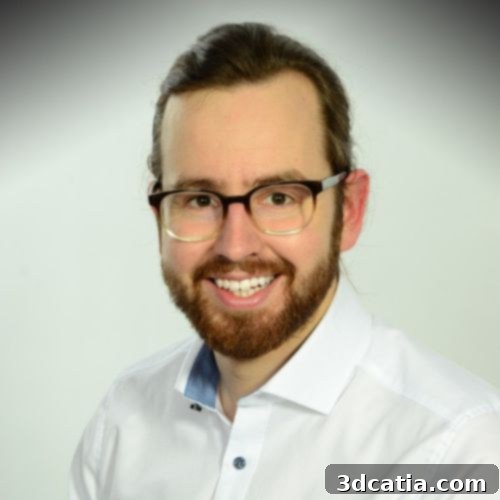
Hello, my name is Eik Brüser, and I am 32 years old. My professional journey has led me to a fascinating role as a manufacturing engineer, specializing in 3D printing, at Deutsche Bahn (DB), the national rail service of Germany. I am based in Nuremberg, a city with a rich industrial heritage, where I contribute to the innovative integration of additive manufacturing technologies into our daily operations. My work involves leveraging the power of 3D printing to enhance various aspects of rail vehicle maintenance and production, ensuring that Germany’s extensive railway network continues to operate efficiently and reliably.
The Path to 3D Printing: A Journey of Discovery and Passion
How did you discover additive manufacturing?
Eik Brüser
My journey into additive manufacturing began serendipitously during my master’s degree in mechanical engineering at the Technical University of Berlin (TU Berlin). While pursuing my studies, I simultaneously worked as a student trainee at a prominent German technology company. It was during this period that the head of the R&D department offered me a pivotal piece of advice. He encouraged me to broaden my disciplinary focus rather than specializing too narrowly as a calculation engineer. This guidance proved to be a turning point. Taking his advice, I decided to diversify my academic pursuits. In addition to my coursework in rail vehicle technology, I enrolled in a course dedicated to additive manufacturing at the university. From the very first lecture, I was captivated by the immense potential of 3D printing. The ability to transform digital designs into physical objects with unprecedented complexity and speed fascinated me deeply. This initial exposure ignited a passion that would profoundly shape my career trajectory.
The true test of my interest came with the onset of the global pandemic and subsequent lockdowns, which led to the closure of university workshops and labs. This challenge, however, became an unexpected opportunity for deeper engagement. Unable to access professional equipment, I took the initiative to buy an affordable 3D printer. This allowed me to delve even further into the intricacies of the subject from home. Through hands-on experimentation and continuous learning, I gradually expanded my understanding and skills. As my projects grew in complexity and scale, the limitations of my initial printer became apparent. This motivated me to build a more robust and larger 3D printer, which I then used to produce prototypes for my academic studies. This period of self-directed learning and practical application not only solidified my expertise but also underscored the accessibility and versatility of 3D printing technology, even for sophisticated engineering tasks. My personal exploration during this time transformed a strong academic interest into a profound professional dedication to additive manufacturing.
A Day in the Life: Eik Brüser’s Pivotal Role at Deutsche Bahn
What is your current role at Deutsche Bahn? What is a typical day like for you?
My current role at Deutsche Bahn is multifaceted and central to our additive manufacturing initiatives. I serve as the technical manager of the 3D printing department at the Nuremberg plant, which is a significant heavy vehicle maintenance facility. In parallel, I am an active member of the core team for the Deutsche Bahn Group’s overarching 3D printing project. This enterprise-wide initiative coordinates additive manufacturing efforts across numerous locations within DB, ensuring a unified strategy and maximum impact. The scale of our operations is considerable; collectively, the DB Group has already successfully implemented over 500 unique use cases, leading to the production of more than 100,000 3D printed parts.
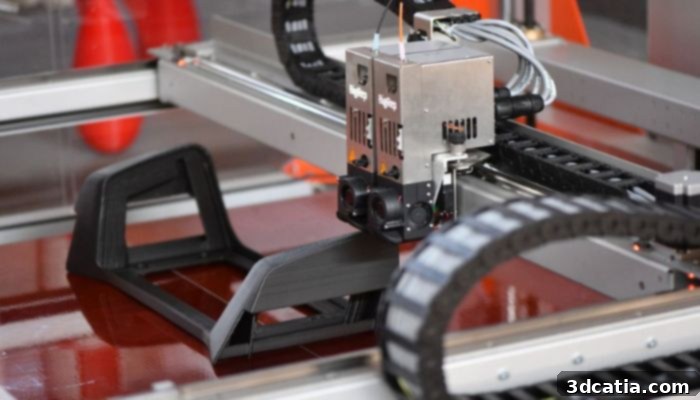
Our workshop in Nuremberg holds a unique position within the Group as the dedicated 3D printing tooling competence center. Our primary focus is on developing and printing plastic production aids using material extrusion (FFF) technology. What sets us apart is our capability to produce large-format components, with a maximum possible component size reaching an impressive 1 cubic meter. These custom-designed production aids are instrumental in enhancing the quality of work performed by my colleagues on the production lines. They ensure reproducible results, significantly ease complex tasks, and, crucially, save valuable production time in maintaining our extensive fleet of trains. By streamlining maintenance processes through innovative 3D printed tools, we contribute directly to getting trains back on the tracks faster, thereby improving operational efficiency and punctuality across the network. While our Nuremberg center specializes in tooling, colleagues at other sites within the Group, and certified rail service providers as needed, focus on the production of 3D-printed final components, covering a broader spectrum of applications within the rail sector.
My daily tasks are incredibly diverse and dynamic, reflecting the evolving nature of our department, which is still undergoing significant development and expansion. This constant evolution ensures that boredom is never an issue. On any given day, my responsibilities might include conducting preliminary costings for new quotations, meticulously assessing the feasibility of incoming tooling requests, and managing all aspects of customer communication. I actively collaborate with my colleagues to identify new potential use cases for additive manufacturing, constantly seeking innovative solutions to operational challenges. A significant portion of my work involves CAD design, often utilizing 3D scanning technologies and subsequent reverse engineering to create precise models for printing. Beyond design and planning, I am also directly involved in machine operation and post-processing (rework). As we are a small, dedicated team in Nuremberg, flexibility is key. During peak periods or when bottlenecks arise, I readily support my colleagues across all areas, ensuring seamless operations and consistently high levels of customer satisfaction, whether for internal DB plants or other units within the Group. In addition to these essential day-to-day operations, a substantial part of my role involves charting the strategic direction of the department. This includes staying abreast of the latest advancements in 3D printers and additive manufacturing technologies on the market, evaluating their potential for Deutsche Bahn, and representing our department at industry conferences and trade fairs, showcasing our innovations and learning from others.
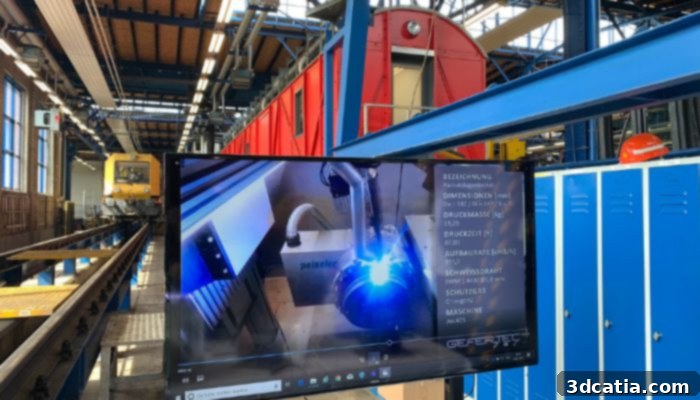
Photo Credits: Deutsche Bahn AG/ Kathrin Werner
Essential Skills and Knowledge: Qualifications for a Manufacturing Engineer in AM
What are the required qualifications to be a manufacturing engineer?
To thrive as a manufacturing engineer specializing in 3D printing, one needs a comprehensive and interdisciplinary skillset. The field of additive manufacturing inherently demands a broad range of knowledge, stretching far beyond mere machine operation. Firstly, a deep understanding of various 3D printing processes is paramount, enabling the selection of the most appropriate technology for a given application, be it FFF, SLA, SLS, or others. This must be complemented by strong knowledge in materials science, which is crucial for choosing the right materials – from polymers and composites to metals – that meet specific functional and environmental requirements. Furthermore, expertise in stress analysis and design for additive manufacturing (DfAM) is vital, allowing engineers to leverage the unique geometric freedoms offered by 3D printing to create optimized, lightweight, and high-performance components. Economic and entrepreneurial thinking is also essential, as projects must be evaluated for their cost-effectiveness and market viability.
Beyond these core areas, a significant amount of knowledge and practical experience in IT and software is invaluable, encompassing CAD/CAM software, slicing programs, and potentially scripting for automation. A solid grasp of the strength and durability of components is critical, especially when designing parts for demanding industrial applications where reliability is non-negotiable. Additionally, a robust basic technical understanding of the mechanics and electronics of 3D printers is highly beneficial for troubleshooting, maintenance, and optimizing machine performance. In my specific context at Deutsche Bahn, these general requirements are augmented by specialized knowledge unique to the rail industry. This includes familiarity with the stringent guidelines, regulations, and standards governing the “railroad cosmos,” as well as comprehensive technical expertise in rail vehicles themselves. This ensures that all 3D printed components and tools adhere to the highest safety and operational standards of a critical infrastructure sector. Finally, a certain degree of resilience is necessary to navigate inevitable technical challenges and setbacks. Coupled with strong soft skills – including excellent communication, teamwork, and customer interaction abilities – this comprehensive profile enables a manufacturing engineer to successfully drive innovation and integrate additive manufacturing into complex industrial environments.
Navigating the Hurdles: Challenges in Additive Manufacturing Integration
What are the biggest challenges in being a manufacturing engineer?
One of the most significant challenges I face as a manufacturing engineer in additive manufacturing is integrating this “new” and often disruptive technology into a large, established corporation like Deutsche Bahn. While the potential of 3D printing is widely recognized, overcoming entrenched processes, bureaucratic hurdles, and traditional mindsets requires persistent effort. Fortunately, I benefit from the active support of my colleagues within the corporate 3D printing project, which fosters a collaborative environment and helps streamline the adoption process. However, a major part of this challenge involves persuading many non-specialist colleagues to rethink conventional design and manufacturing paradigms. Traditional methods often impose geometric limitations that 3D printing completely transcends, allowing for complex internal structures, organic shapes, and functional integration not possible otherwise. Educating stakeholders about these new “degrees of freedom” in design is crucial, as it enables them to envision solutions that were previously unimaginable. In the tooling area, for instance, we can fully exploit these additional design liberties to manufacture tools that would have been exceedingly difficult or entirely impossible to produce using conventional manufacturing processes, significantly enhancing efficiency and ergonomics for our technicians.
Another substantial challenge is managing expectations and cultivating a balanced understanding among our colleagues. While 3D printing is undeniably a powerful and versatile technology, it is not always the best or only solution for every problem. There’s a common misconception that because something *can* be 3D printed, it *should* be. It’s vital to convey that 3D printing, like any manufacturing process, involves time and financial costs. A thorough economic and technical evaluation must always precede the decision to use additive manufacturing. My role often involves critically assessing whether a conventional manufacturing method might be more efficient, cost-effective, or simply more appropriate for a given application. This often requires detailed discussions, cost-benefit analyses, and sometimes, the difficult task of explaining why a proposed 3D printing solution might not be the optimal path forward. Balancing the excitement and innovative potential of 3D printing with pragmatic, results-oriented decision-making is a continuous and demanding aspect of my profession.
(Bild: Deutsche Bahn AG/Oliver Lang)
Charting Your Course: Advice for Aspiring 3D Printing Professionals
What advice would you give to someone who wants to work in the 3D printing industry?
For anyone aspiring to enter the dynamic field of the 3D printing industry, my foremost advice is to recognize the fundamental difference between hobbyist 3D printing and industrial additive manufacturing. Just because you can successfully 3D print something at home doesn’t automatically mean it’s suitable or viable for an industrial environment. The industrial landscape is governed by stringent requirements that often include specific guidelines, rigorous standards, and necessary certifications. These can range from material certifications and process validations to occupational safety standards and industry-specific regulations (e.g., aerospace, medical, or, in my case, rail). When it comes to production tools, for example, it is absolutely essential to involve occupational safety specialists from the very outset. The safety and well-being of your colleagues on the production floor must always be the top priority, and any 3D printed aid must meet uncompromising safety criteria. Thorough research and adherence to these regulatory frameworks are not just good practices; they are non-negotiable prerequisites for successful industrial integration.
Furthermore, be prepared for extensive communication and collaboration across various departments throughout the entire process, from the initial idea conceptualization to the final 3D-printed object. You will frequently encounter resistance, skepticism, and antiquated ways of thinking, particularly in larger, more traditional organizations. These challenges are opportunities to hone your persuasive and diplomatic skills. Do not let such hurdles discourage you. Instead, arm yourself with robust technical expertise and data-driven arguments to convince stakeholders of the benefits and feasibility of additive manufacturing. Your ability to articulate complex technical details clearly, demonstrate tangible advantages, and navigate internal politics will be as crucial as your engineering prowess. The journey of integrating 3D printing into an industrial setting is often an iterative process of education, demonstration, and continuous improvement. For those interested in seeing how Deutsche Bahn specifically leverages this technology, you can find more information about our innovative work in 3D printing on the official Deutsche Bahn website HERE.
What are your thoughts on the rewarding and challenging role of a manufacturing engineer in additive manufacturing? We invite you to share your perspectives and experiences in the comments section below or join the conversation on our LinkedIn, Facebook, and Twitter pages! Don’t miss out on the latest advancements and news in the world of 3D printing; make sure to sign up for our free weekly Newsletter here, delivering all the essential updates straight to your inbox. You can also explore a wealth of informative content, including all our insightful videos, on our dedicated YouTube channel. Join our community and stay connected with the forefront of additive manufacturing innovation!