
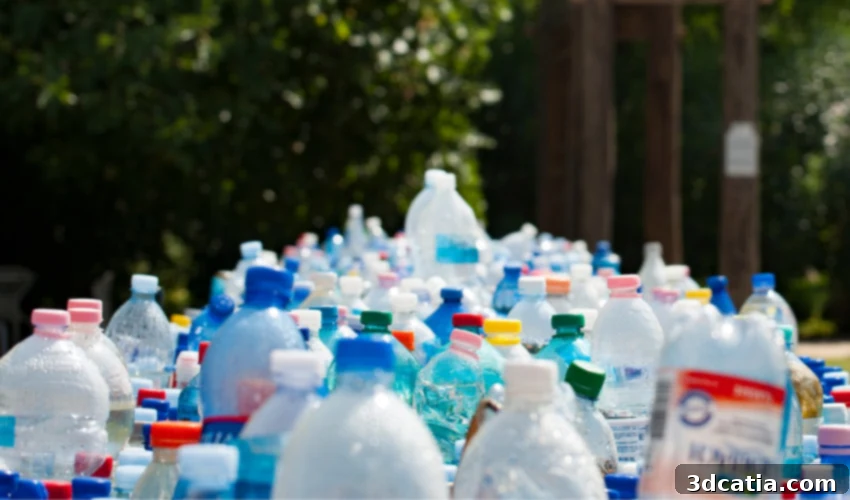
Revolutionizing Packaging: How 3D Printing Drives Sustainability and Innovation
Sustainable packaging is rapidly evolving from a niche concern into an essential, end-to-end business solution. At the forefront of this transformation is 3D printing, also known as additive manufacturing (AM), which is opening up unprecedented possibilities within the sector. By enabling the digital design of packaging and the use of environmentally conscious materials, 3D printing facilitates the creation of high-quality products that directly contribute to businesses’ corporate sustainability goals. However, the journey towards fully sustainable packaging with 3D printing is not without its challenges.
The inherent sustainability of additive manufacturing is rooted in the fundamental principles of environmental stewardship: reduce, reuse, and recycle. Unlike traditional manufacturing methods, which often generate significant waste through subtractive processes, 3D printing builds objects layer by layer. This approach can lead to a remarkable 70 to 90 percent reduction in scrap waste. Beyond waste reduction, 3D printing has spurred numerous material innovations, enabling the repurposing of manufacturing byproducts and the recycling of post-consumer waste, such as plastic bottles, into new, usable filaments. These advancements allow for the creation of innovative packaging solutions that move away from single-use plastics and optimize material consumption, marking 3D printing as a cornerstone in the development of truly sustainable packaging.
The Environmental Imperative: Why Sustainable Packaging Matters
Globally, packaging stands as one of the most substantial contributors to waste. From the boxes encasing consumer electronics and cosmetics to food containers and shipping materials, colossal amounts of packaging waste find their way into landfills. In the United States alone, the Environmental Protection Agency (EPA) estimates that plastic and other packaging waste accounts for nearly 30 percent of the nation’s total annual waste. The urgency of this issue was further underscored in 2018 when China implemented a ban on waste imports, dramatically reducing its recyclable plastics imports by 99 percent. This policy shift left numerous developed nations, including Japan, Germany, the United Kingdom, Belgium, Spain, Italy, France, and the Netherlands, scrambling to manage immense volumes of waste with recycling infrastructures not designed for such capacity. In response to this global crisis and the increasing demand for eco-friendly practices, many companies are now embracing 3D printing technologies to fundamentally rethink and reimagine their packaging solutions.
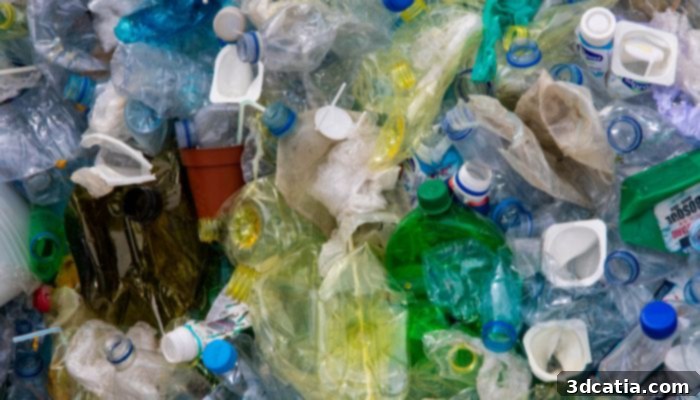
Plastic and other packaging makes up nearly 30 percent of the United States’ total waste annually – 3D printing technologies are bringing to market alternatives to single-use plastic. (Photo Credit: Magda Ehlers/Pexels)
Defining Sustainable Packaging in the Era of 3D Printing
The term “sustainable” has often been co-opted as a marketing buzzword, used by companies to imply that their products are “not harmful to the environment.” While some companies broaden this umbrella to include social responsibility, encompassing fair wages and humane working conditions, our focus here is on the tangible aspects of sustainable packaging facilitated by 3D printing. We delve into production methods (e.g., injection molding, binder jetting), innovative machinery (e.g., ExOne M-Flex, 3D Systems ProJet), and advanced materials (e.g., bio-based resins, wood pulp). Beyond mere marketing claims and consumer preferences, legitimate third-party organizations play a crucial role by providing rigorous verification and certification for 3D-printed packaging items.
For instance, Toly Group, a manufacturer of high-end 3D-printed packaging for luxury cosmetics brands, actively engages with several leading authorities in the sustainability arena. These include ISO 14001 certification for environmental management systems; the CDP (Carbon Disclosure Project), which offers a standardized framework for comparing CO2 emissions and equivalents across various entities; the ISCC (International Sustainability & Carbon Certification), which rigorously analyzes the chain of custody for sustainable materials; and Ecovadis, which assesses corporate social responsibility, including environmental performance. These certifications ensure that claims of sustainability are backed by measurable and verifiable standards, building trust and transparency in the market.
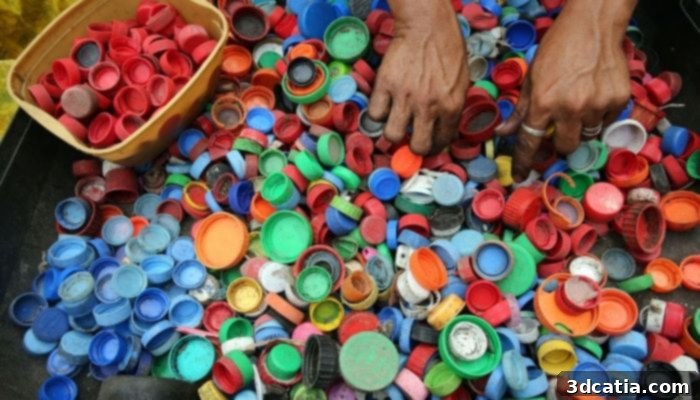
Nielsen consumer research revealed that 73 percent of millennial consumers are willing to pay more for sustainable products — 66 percent of consumers overall. (Photo Credit: Krizjohn Rosales / Pexels)
The compelling business case for investing in sustainable packaging is largely driven by evolving consumer behavior and purchasing decisions. A survey of 550 consumers indicated that 53 percent considered “eco-friendly” packaging labels as a primary indicator of a product’s sustainability, even ranking above claims like “pesticide-free” or “organic.” Furthermore, Nielsen consumer research highlighted that 73 percent of millennial consumers are willing to pay more for sustainable products, a sentiment shared by 66 percent of consumers overall. These statistics clearly demonstrate why businesses are increasingly prioritizing and investing in sustainable packaging solutions. As James A. Kingswell, Innovation Manager at Toly Group, explains, “Our clients are regularly asking us to re-design packaging to be more eco-friendly. This is where 3D printing comes in. It allows us to test prototypes with thinner or hollow parts or lighter weight materials and make sure that the package still reflects the premium quality of the product inside.” This commitment underscores the market’s shift towards greener practices, with 3D printing providing the tools to meet this demand without compromising quality or brand image.
Unlocking Value: Key Benefits of 3D-Printed Packaging
Waste Reduction and Material Optimization
One of the most profound benefits of 3D-printed packaging lies in its ability to significantly reduce waste and optimize material usage. A study by Michigan Technological University revealed that 41 to 64 percent less energy was consumed when an item was 3D printed compared to being manufactured overseas and shipped to the United States. This localized production model, combined with the precision of additive manufacturing, allows companies to achieve substantial cost savings through even minor reductions in material consumption. 3D printing technology enables designs with thinner walls, hollow structures, and optimized geometries, dramatically decreasing the amount of plastic needed without compromising product protection or quality. This efficiency is a key reason why major organizations like L’Oréal, UPS, and FedEx are investing heavily in in-house 3D printing facilities, recognizing the dual benefits of cost reduction and enhanced sustainability. Beyond the environmental impact, integrating sustainability into packaging also boosts marketability for target consumers and helps companies achieve their broader corporate sustainability objectives.
Design Freedom, Prototyping, and Personalization
Beyond environmental advantages, 3D printing offers unparalleled design freedom and scalability, allowing companies to rapidly prototype various packaging designs before committing to expensive production tooling. This iterative design process significantly reduces development costs and time-to-market. Moreover, the technology empowers brands to offer truly personalized packaging experiences for their customers, whether through a selection of pre-designed options or completely bespoke creations. An excellent example is Marchesini, an Italian company established in 1974, renowned for its extensive range of pharmaceutical, cosmetic, and food packaging. As one of the largest European customers of global additive manufacturing leader Stratasys, Marchesini leverages 3D printing to drive innovation in its packaging solutions.
Marchesini’s dedicated 3D printing facility boasts a formidable array of Stratasys FDM and PolyJet printers, including five F270 systems, four Fortus 450mc, a large-scale Fortus 900mc, and two PolyJet multi-material 3D printers. Mirko Fortunati, Mechanical Workshops Coordinator at Marchesini Group, highlights the transformation: “Producing complex, customized parts with traditional manufacturing methods has proved extremely costly and time-consuming, which is no longer suited to the growing demands of today’s packaging industry.” He continues, “Stratasys additive manufacturing has enabled us to overcome these issues and adopt a customized production model. Having this on-demand production capability enables our engineers to take advantage of the greater design freedom enabled by 3D printing, which has empowered Marchesini Group to achieve higher-quality results.” This demonstrates how 3D printing not only enhances sustainability but also revolutionizes the entire packaging design and production workflow.
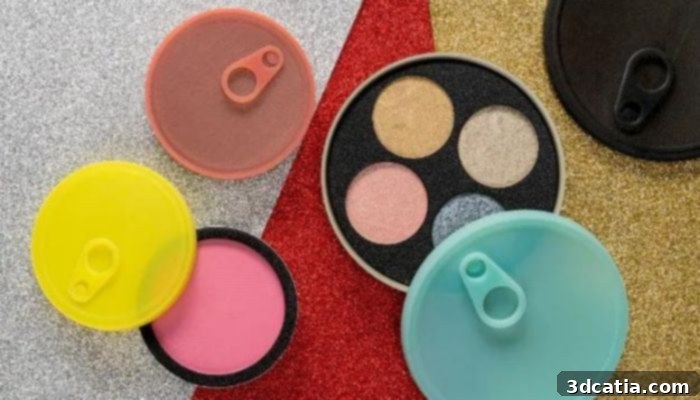
Quadpack, global manufacturer of beauty packaging solutions, uses Stratasys’ J Series 3D printer for its full-color, multi-material capabilities. (Photo Credit: Stratasys)
Decentralized and On-Demand Manufacturing
The concept of decentralized manufacturing, greatly facilitated by 3D printing, offers another significant advantage, particularly highlighted during global disruptions like the COVID-19 pandemic when supply chains faltered and shipping faced severe delays. With 3D printing, companies can rapidly shift production sites because they rely on digital files rather than massive, immobile factories. This agility allows for localized production, reducing reliance on long-distance logistics and minimizing carbon footprints associated with transportation. Furthermore, digital files enable truly on-demand 3D-printed packaging. This means packaging can be produced based on near-exact order quantities, drastically reducing waste from overproduction and minimizing the volume of packaging that ultimately ends up in landfills. This capability is also invaluable for seizing time-sensitive sales opportunities, such as creating targeted, limited-batch packaging for cultural moments like the Olympics or the popular Squid Game phenomenon, with a significantly reduced risk of excess inventory.
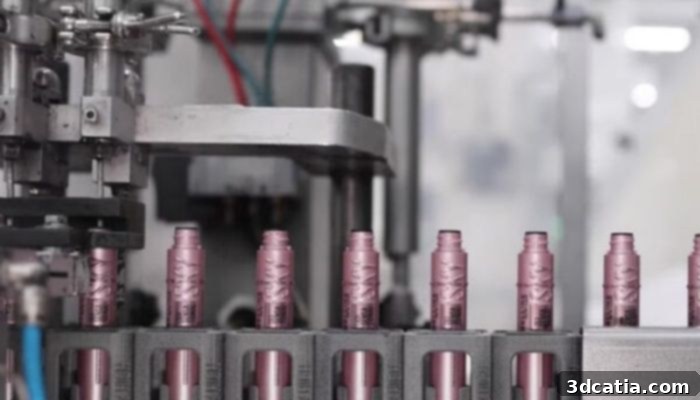
L’Oréal uses HP’s Multi Jet Fusion and biomimetics to reduce the volume of material used in 3D printed packaging. (Photo Credit: HP)
Hybrid Approaches: Combining 3D Printing with Traditional Methods for Sustainability
3D Printed Molds for Injection Molding
The future of sustainable packaging doesn’t solely rely on fully 3D-printed solutions. Hybrid manufacturing methods, which strategically combine additive manufacturing with traditional techniques, offer significant promise. Injection molding, a well-established method dating back to the 19th century, is frequently integrated with 3D printing in innovative ways. 3D printing enhances the sustainability of the injection molding sector by advancing the material science used in tooling. This combination is particularly advantageous because injection molding excels at producing large volumes of parts cost-effectively, while 3D printing is typically better suited for small to medium batches due to material and cost considerations. However, traditional injection molding necessitates expensive and time-consuming metal molds. Here, 3D printing offers a transformative solution: instead of traditional metal molds, FDM, laser sintering, or stereolithography can be used to create 3D-printed molds. This dramatically reduces costs and production delays. Furthermore, 3D printing allows for the creation of more complex mold designs, which in turn enables the production of more optimized and sustainable packaging pieces, leveraging the strengths of both manufacturing methods.
Specialized Tooling for Eco-Friendly Solutions
Another powerful application of 3D printing hybridization for sustainable packaging involves the creation of highly specialized tools. A prime example is Swedish manufacturer Celwise AB, which utilizes ExOne’s metal binder jetting technology to produce intricate metal tooling. This tooling is essential for manufacturing their patented, renewable, and biodegradable food containers and packaging. The Celwise process requires three distinct types of tools within each machine: forming, transferring, and pressing. By employing this method, Celwise reports not only delivering more environmentally friendly products but also reducing manufacturing costs by 50%. David Pierce, Inventor and Co-Owner of Celwise, elaborates: “Our patented technology delivers a recyclable, renewable, and biodegradable product that can be manufactured faster and more affordably than traditional technologies. Advanced manufacturing approaches, which rely on 3D-printed tooling from ExOne, are an important part of our process.” This innovative packaging production method from Celwise uses a molded fiber product as a superior alternative to single-use plastic, a product that can only be realized through additive manufacturing techniques like ExOne’s binder jetting. With Celwise already selling this eco-friendly packaging solution to international companies across the food and beverage, cosmetics, and electronics industries, this illustrates how 3D printing contributes to sustainable packaging not just directly, but also indirectly through enabling advanced tooling for other eco-friendly production methods.
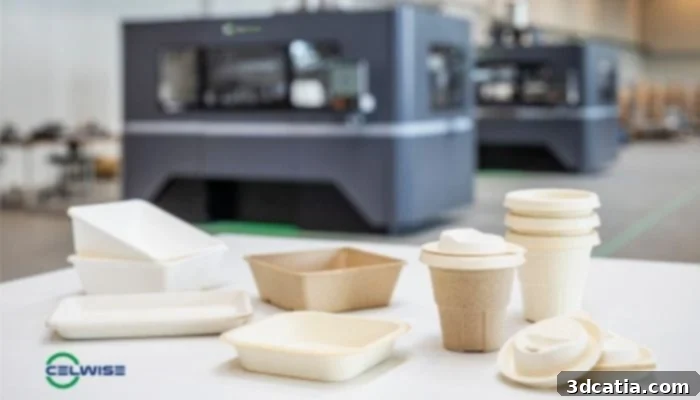
Celwise’s sustainable packaging products made with ExOne’s binder jetting technology. (Photo Credit: ExOne)
The Crucial Role of Material Science and Simulation Tools
Evolving Materials for a Greener Future
A fundamental aspect of sustainable packaging is the materials used in its production. Historically, 3D printing has often relied on non-biodegradable plastics derived from fossil fuels, which pose significant environmental challenges. However, continuous innovations in plastic materials and the development of new alternatives are revolutionizing the landscape, enabling waste to be transformed into valuable products at a fraction of the cost. Biodegradable plastics, often made from natural resources such as maize or cane sugar, are increasingly used for applications like food packaging, disposable cups, and bags. Both compostable and biodegradable materials play a crucial role in reducing the volume of waste in landfills and mitigating plastic pollution in our oceans. It is important to distinguish between these two: while biodegradable packaging breaks down into natural components over time, compostable packaging, when properly disposed of, can become nutrient-rich soil. This makes compostable materials particularly valuable for truly circular environmental benefits, a distinction not always guaranteed with merely biodegradable options. While all plastics will eventually break down due to microbial activity, creating CO2 and biomass, this process can take thousands of years for conventional plastics. The industry is actively addressing this challenge through research into eco-friendly materials such as ocean-reclaimed plastics, bioplastics, and a broader shift towards compostable and biodegradable polymers. A notable recent achievement in 3D printing material science is Materialise’s Bluesint PA12, a 100% recycled powder used for laser sintering that boasts mechanical properties comparable to traditional PA 12 (also known as Nylon 12). Such innovations underscore how 3D printing is a primary driver in the development of sustainable materials and, by extension, sustainable packaging.
Digital Simulation and Optimization
Hand-in-hand with advancements in material science, packaging service providers are increasingly leveraging 3D computer simulations to test various design iterations and pinpoint optimal materials. This capability is at the core of offerings from companies like Dassault Systèmes, renowned for its 3DEXPERIENCE® platform, which seamlessly integrates digital design, simulation, and manufacturing. Beyond the direct support from 3D printing machines for the fast and efficient production of eco-friendly packaging, software plays a crucial role in accelerating the turnover of new packaging designs for existing products. Through advanced 3D modeling, manufacturers can meticulously optimize packaging designs even before they reach the production floor. This involves making informed technical considerations about which material will perform best with a specific design. As Sumit Mukherjee, Chief Technology Officer at Plastic Technologies Inc. and a global customer of Dassault Systèmes, states, “If new package designs can be simulated before any samples are made, bottle and preform design iterations happen more quickly and cheaply, speeding up the entire design chain and resulting in quicker time to market.” This synergy between material science and digital simulation is indispensable for developing truly sustainable and efficient packaging solutions.
Challenges and Considerations for Widespread Adoption
Volume Production Economics
While 3D printing offers undeniable advantages for sustainability and innovation, certain limitations remain, particularly when it comes to high-volume production. As the part count increases, traditional manufacturing technologies often prove significantly more economical than current 3D printing solutions. Olaf Zahra, Chief Officer Technology & Sustainability at Toly Group, explains, “We have conducted extensive studies that show, for volume production, injection molding is still vastly superior to 3D printing from a sustainability perspective. This is mainly because injection molding can produce thousands of pieces per hour compared to the multi-hour builds typical of 3D printing.” He further notes, “Also there are many more sustainable options in terms of materials for injection molding than 3D printing. Having said this, 3D printing is effective, economically and environmentally, where lower volumes are required. The threshold at the moment is somewhere between 10,000 and 15,000 components. The balance will shift in favor of additive manufacturing when prints speed up and bio-based and biodegradable materials become available.” This highlights that while 3D printing is excellent for prototyping, customization, and short runs, scaling for mass production still faces economic and speed hurdles.
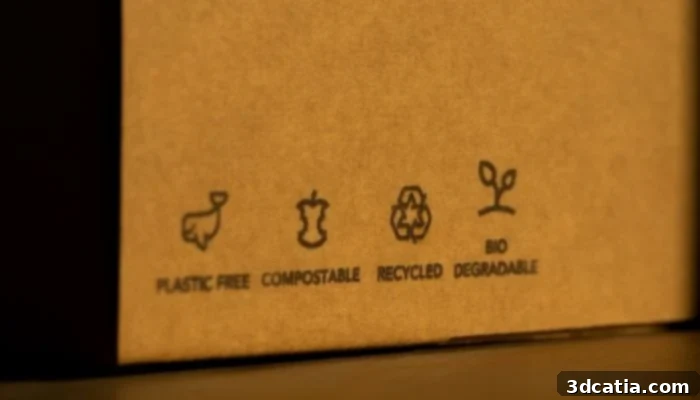
Properly disposing of new sustainable materials presents a challenge for consumers and the existing recycling infrastructure. (Photo Credit: Marcell Viragh / Unsplash)
Infrastructure and Consumer Education
The advent of new sustainable materials, while heralded as a pathway to a greener future, introduces its own set of challenges, particularly concerning existing recycling infrastructure and consumer behavior. Many of these novel bioplastics are visually indistinguishable from traditional petroleum-based plastics. Consequently, consumers often mistakenly mix them into conventional plastic recycling streams or even organic waste containers. This inadvertent mixing can contaminate both the plastic recycling process, leading to entire batches being rejected, and composting efforts, hindering their effectiveness. This confusion highlights a significant obstacle on the path to widespread sustainability: the need for clear labeling, robust sorting technologies, and comprehensive consumer education to ensure that new materials are properly identified and disposed of. According to a 2021 Deloitte UK survey, 22 percent of consumers expressed a lack of interest in buying sustainable products, 15 percent felt they didn’t have enough information, and 16 percent cited high prices as a barrier. Addressing these consumer-side challenges—through education, transparent labeling, and making sustainable options more affordable—is crucial for the successful integration of these innovative materials into a circular economy.
The Path Forward: A Sustainable Future with 3D Printing
In the dynamic marketplace, consumer expectations for sustainable products will only continue to intensify, compelling businesses to consistently enhance their offerings to align with evolving purchasing preferences. On the consumer front, overcoming barriers such as perceived lack of information and higher costs, as highlighted by the Deloitte UK survey, will be paramount. As 3D printing technology continues its rapid advancement, driving down production costs and expanding material possibilities, a critical part of the industry’s mission will be to effectively educate consumers. This will likely involve closer collaboration with trusted sustainable certification organizations to provide accurate and transparent product labeling (e.g., eco-friendly, biodegradable, compostable) and clearly articulate the tangible benefits and value proposition to the consumer. The ongoing pursuit of eliminating single-use plastic will undoubtedly accelerate innovation in material science, yielding even more groundbreaking eco-friendly solutions.
Ultimately, for companies striving for production efficiencies and significant cost savings while meeting environmental mandates, 3D printing technologies are uniquely positioned to deliver on the promise of sustainability. This is achieved through optimized material selection, facilitated by advanced simulation tools; the flexibility and resilience of digitally decentralized manufacturing; and the scalability that allows for tailored production runs, from prototyping to specialized batches. As these technologies mature, they will increasingly empower businesses to create packaging that is not only functional and appealing but also genuinely beneficial for our planet, paving the way for a more sustainable and circular economy.
What are your thoughts on sustainable packaging and the role of 3D printing? Let us know in a comment below or on our Linkedin, Facebook, and Twitter pages! Don’t forget to sign up for our free weekly newsletter here, the latest 3D printing news straight to your inbox! You can also find all our videos on our YouTube channel.
Cover Photo Credit: Mali Maeder / Pexels