
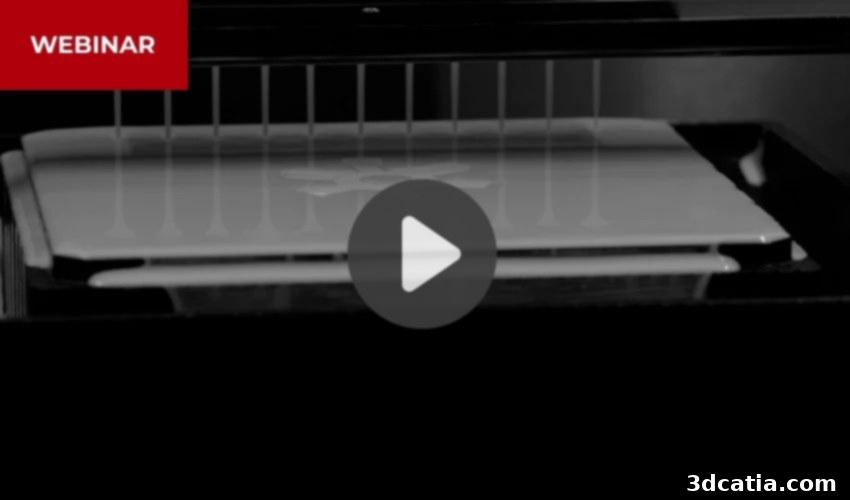
Revolutionizing Ceramic 3D Printing: Unveiling the Power of LIS Technology for Advanced Manufacturing
Ceramic 3D printing stands at the forefront of innovation, offering unparalleled potential across diverse sectors, including highly demanding fields like medical and dental applications, cutting-edge aerospace engineering, and robust industrial manufacturing. Its widespread utility is undeniable, yet conventional ceramic additive manufacturing (AM) methods have historically presented significant barriers to entry and adoption, particularly for traditional ceramic manufacturers grappling with the intricacies of new processes. To overcome these challenges and meet the increasingly stringent demands of modern industry, the pioneering Vienna-based company Lithoz has dedicated its expertise to developing a truly transformative solution: LIS Technology. Laser Induced Slip Casting (LIS) is not merely an incremental improvement but a groundbreaking and revolutionary advancement, largely due to its unprecedented capabilities, such as the efficient processing of dark ceramics and its innovative use of water-based materials. This breakthrough promises to reshape the landscape of ceramic additive manufacturing, opening doors to previously unattainable applications and efficiencies.
The profound implications and advantages of LIS technology were extensively explored in our recent webinar, aptly titled “LIS Technology – The New Way of Ceramic 3D Printing,” which successfully took place on June 29. Participants gained invaluable insights into the myriad benefits and expanded possibilities that this pioneering technology offers to its users. Our panel of distinguished experts delved into critical questions that addressed the core concerns of the industry. We examined ‘How can LIS technology be seamlessly integrated into existing ceramic process chains?’, providing practical strategies for adoption. We explored ‘Why can it process dark ceramics so effectively?’, shedding light on the fundamental scientific principles behind this unique capability. And, of course, we thoroughly discussed ‘What diverse applications and promising business opportunities can be expected from this revolutionary advancement?’, forecasting its impact on various industries.
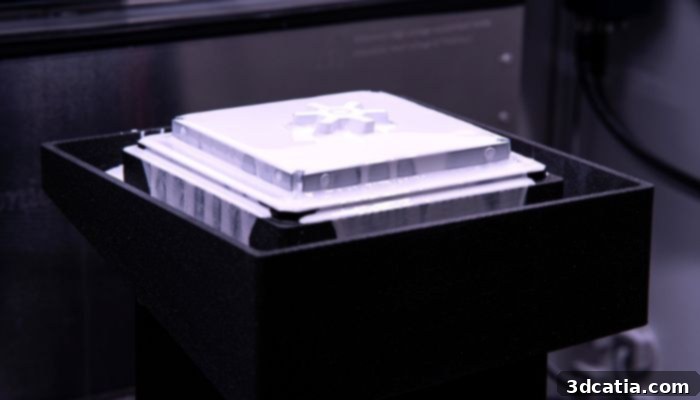
The innovative LIS technology introduces a multitude of advantages and groundbreaking opportunities in the realm of ceramic 3D printing (photo credits: Lithoz GmbH)
We were particularly honored and excited to host Lithoz as our key presenter. Lithoz is globally recognized as a market leader in the development and manufacture of high-performance materials and advanced additive manufacturing systems specifically engineered for the 3D printing of advanced ceramics and bioresorbable ceramics. Their comprehensive suite of products finds extensive application across critical sectors, including highly specialized medical and dental technologies, where precision, biocompatibility, and durability are paramount. Beyond healthcare, a vast array of industrial sectors also reap substantial benefits from Lithoz’s cutting-edge materials and sophisticated printing systems. The ability to produce components with exceptionally complex geometries – intricate internal structures, delicate lattices, and highly functional designs – while simultaneously achieving precisely desired mechanical, thermal, and chemical properties, is a game-changer for manufacturing. Lithoz’s commitment to quality and global reach is evident in its impressive export share, approaching nearly 100%, and its robust team of over 125 dedicated employees worldwide. Further solidifying its international presence, the company established a subsidiary in the USA in 2017 and has maintained stringent quality standards, evidenced by its ISO 9001-2015 certification since 2016. For those who missed the live event, a replay of this enlightening webinar is available below, offering a comprehensive overview of LIS technology and its profound implications.
Webinar Agenda: A Deep Dive into LIS Technology
The webinar was meticulously structured to provide a comprehensive understanding of LIS technology, its distinctions, potential, and real-world applications. The agenda points guided attendees through a focused exploration:
- Introductions: Setting the stage with an overview of the challenges in ceramic 3D printing and the vision behind LIS technology.
- Differences between LIS and LCM: A crucial segment that clarified how Laser Induced Slip Casting (LIS) technology differentiates itself from Lithoz’s established Lithography-based Ceramic Manufacturing (LCM) process. This highlighted LIS as a distinct advancement, particularly in areas like material versatility and processing characteristics for a wider range of ceramic slurries.
- Potential of LIS Technology: An in-depth discussion on the unprecedented capabilities unlocked by LIS, including its ability to handle water-based ceramic materials and efficiently print dark-colored ceramics, which are traditionally challenging for photopolymer-based AM methods due to light absorption.
- Use Cases: Presentation of compelling real-world and prospective applications demonstrating how LIS technology can create value in diverse industries, from medical implants to high-performance industrial components.
Meet Our Expert Panel
The webinar featured insights from leading figures in the field of ceramic additive manufacturing, each bringing a wealth of knowledge and practical experience to the discussion:
 Dr. Johannes Homa, Co-Founder and CEO, Lithoz GmbH
 Dr. Johannes Homa, Co-Founder and CEO, Lithoz GmbH
Dr. Johannes Homa’s profound expertise in additive manufacturing of high-performance ceramics is a direct result of many years of pioneering research conducted at the Vienna University of Technology. Holding a PhD in materials science, Dr. Homa has been an active force in additive manufacturing since 2003. His vision and deep technical knowledge culminated in the co-founding of Lithoz GmbH in 2011, a highly successful spin-off from TU Vienna that quickly rose to become a global leader. As a preeminent expert in ceramic AM, Dr. Homa has authored numerous influential publications and is also the co-inventor of several pivotal patents in the field, underlining his significant contributions to technological advancement. Beyond his leadership role at Lithoz, he has passionately served as a lecturer at various educational establishments and universities since 2006, sharing his knowledge with the next generation of innovators. Furthermore, Dr. Homa is the driving force behind the initiative AM Austria (www.am-austria.com) and serves as the technical director of the Austrian 3D Printing Forum (https://www.3d-printing-forum.at), actively shaping the future of additive manufacturing ecosystems.
Dr. Mühler, CEO, QEP3D GmbH
 Dr. Mühler, CEO, QEP3D GmbH
For over 14 years, Dr. Mühler has been at the forefront of development and process optimization in ceramic 3D printing, with a specific focus on water-based slip systems, a critical area of research initiated during his tenure at TU Clausthal. His extensive work has resulted in numerous publications and his co-inventorship on several patents within the dynamic field of ceramic 3D printing. Dr. Mühler achieved his doctorate in materials science in 2017, with his groundbreaking research in ceramic 3D printing forming the fundamental basis of his doctoral thesis. After contributing several years as a dedicated head of development, he co-founded QEP3D in early 2022, where he now serves as CEO. His deep understanding of water-based ceramic processes aligns perfectly with the innovative approach of LIS technology, offering valuable insights into its material science implications.
Dr. Holger Wampers, Managing Director, Alumina Systems GmbH
 Dr. Holger Wampers, Managing Director, Alumina Systems GmbH
Following his comprehensive studies in mechanical engineering at RWTH Aachen University, Dr. Holger Wampers further specialized, completing his doctorate in the intricate field of technical ceramics. With many years of distinguished service, Dr. Wampers has held diverse responsibilities across various domains within technical ceramics, including dental ceramics, mechanical engineering applications, advanced soldering technology, and the burgeoning sector of 3D printing. For the past 11 years, Dr. Wampers has expertly served as the Managing Director of Alumina Systems, demonstrating exceptional leadership. Under his guidance, Alumina Systems successfully integrated the former Technika Keramicka as. in Hradec Kralove (CZ) into the group, a strategic move completed in 2011. As a genuine first mover in ceramic AM, Alumina Systems made a significant investment by acquiring the very first printer from Lithoz back in 2014, showcasing their early belief in the technology. Today, Alumina Systems continues to innovate, holding its own patents in the field of 3D printing, specifically related to LIS (Laser Induced Slip Casting), and has even developed a pioneering prototype machine in close collaboration with Lithoz. This collaborative effort highlights the rapid industrialization of LIS technology, with a landmark first public presentation of this advanced technology scheduled to take place at this year’s prestigious CERAMITEC exhibition in Munich.
Dr. Steffen Walter, Head of Product and Process Development, Alumina Systems GmbH
 Dr. Steffen Walter, Head of Product and Process Development, Alumina Systems GmbH
Dr. Steffen Walter obtained his degree in Material Science, specializing in ceramic and glass, from the esteemed Friedrich-Alexander-University in Erlangen. He further enriched his academic profile by undertaking post-doctoral research at the University of Trento in Italy, focusing on the development of innovative sol-gel-derived glass-ceramic materials. Commencing in 2001, he embarked on a distinguished career with Corporate Technology at Siemens in Munich, where he made significant contributions to various critical areas. His work at Siemens included the development of high-temperature and ultra-high-temperature materials for both light and X-ray applications, as well as advancing the high-temperature applications of Ceramic Matrix Composites (CMCs). Since 2021, Dr. Walter has been instrumental as the Head of Product and Process Development at Alumina Systems. In this pivotal role, he skillfully coordinates the company’s efforts across multiple Additive Manufacturing technologies, including DLP (Digital Light Processing), LCM (Lithography-based Ceramic Manufacturing), and the exciting new LIS (Laser Induced Slip Casting). Furthermore, he actively champions material development and spearheads research into novel applications, ensuring Alumina Systems remains at the cutting edge of ceramic AM innovation.
The advent of LIS Technology represents a pivotal moment in ceramic additive manufacturing, promising greater accessibility, enhanced material versatility, and expanded application possibilities across numerous industries. We encourage you to engage with this transformative content. Did you attend the webinar with Lithoz? We’d love to hear your thoughts! Share your comments below or connect with us on our LinkedIn, Facebook, and Twitter pages! For the very latest 3D printing news delivered straight to your inbox, don’t forget to sign up for our free weekly Newsletter here. Additionally, you can find all our insightful videos and webinar replays on our dedicated YouTube channel.