
Revolutionizing African Housing: How 3D Printed Homes Address the Continent’s Growing Needs
The global demographic landscape is undergoing profound transformations, presenting unique challenges and opportunities across different continents. While many developed nations are navigating a sustainable phase of aging, characterized by increasing life expectancy and a growing elderly population, other regions are experiencing unprecedented population growth. Sub-Saharan Africa, in particular, stands at the forefront of this demographic shift. Projections from the United Nations are staggering, indicating that Africa’s population is expected to surge from approximately 800 million in 2000 to an astounding 4.5 billion by 2100. Furthermore, by 2050, it is estimated that roughly one in every two humans born globally will be born on the African continent. This exponential growth underscores an urgent and critical need for fundamental infrastructure, with housing being paramount among them.
A rapidly expanding population logically necessitates a corresponding increase in the construction of new homes. Ensuring that every individual has access to safe, adequate, and dignified shelter requires innovative and accelerated building solutions. Traditional construction methods, often labor-intensive, time-consuming, and expensive, struggle to keep pace with such immense demand. This is precisely where cutting-edge technologies like 3D printing emerge as a transformative solution to the escalating global housing crisis, particularly in regions like Africa. The technology has steadily gained traction within the construction sector, demonstrating its potential to deliver rapid, cost-effective, and sustainable building solutions on an unprecedented scale.
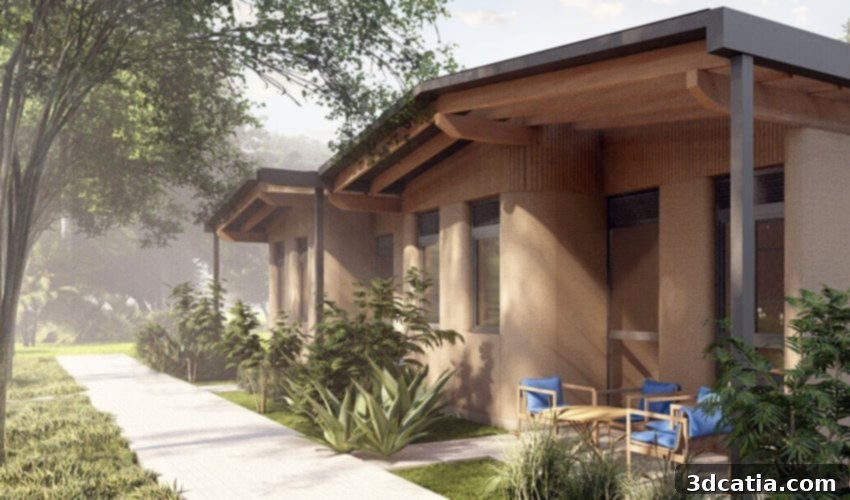
A prime example of this innovative application is the Mvule Gardens project in Kenya, spearheaded by 14Trees. This ambitious initiative is a joint venture between Holcim, a globally recognized leader in sustainable construction materials, and British International Investment (BII), the UK government’s development finance institution dedicated to supporting impactful schemes in developing countries. Less than two years ago, 14Trees announced Mvule Gardens, a groundbreaking plan to construct 52 3D printed homes, marking a significant step towards addressing Kenya’s housing deficit. The project commenced the manufacturing phase of these homes in October 2022, and has since made remarkable progress, successfully completing Phase 1. This initial phase involved the 3D printing of the walls for 10 houses located in Kilifi, a coastal town in Kenya.
The efficiency demonstrated during Phase 1 is particularly noteworthy. The entire housing structure for these 10 units was completed in a mere 10 weeks, utilizing just a single 3D printer. This incredible speed highlights the potential for rapid deployment and scaling that 3D printing offers. The homes themselves are designed to cater to diverse family needs, ranging in size from 56 square meters to 76 square meters and featuring either 2 or 3 bedrooms per unit. Such a variety in housing options allows for greater flexibility and caters to a broader segment of the population in need of affordable and quality housing. The successful completion of this initial phase not only validates the efficacy of 3D printing in construction but also provides a powerful blueprint for future large-scale housing projects across the continent.
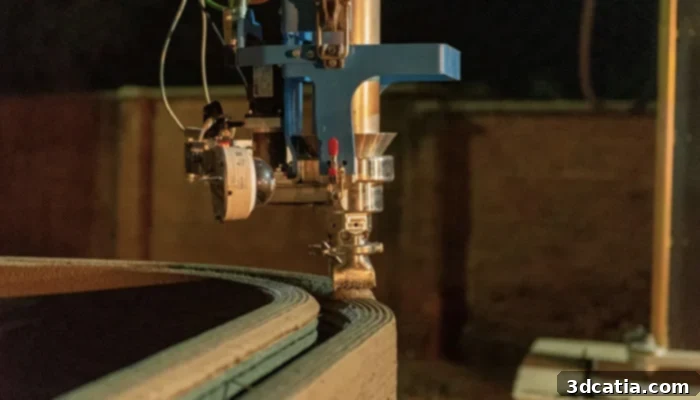
COBOD’s 3D printer is used to manufacture houses
More Affordable and Environmentally Friendly Homes
As anticipated when the Mvule Gardens project was first announced, 14Trees is leveraging advanced 3D printing technology supplied by COBOD, a leading manufacturer renowned for its specialized 3D home printers. Specifically, the joint venture employs COBOD’s BOD2 solution, an industrial-scale construction 3D printer designed for high-speed and precision building. François Perrot, the CEO of 14Trees, emphasizes the multifaceted advantages inherent in this innovative manufacturing process. He states, “With 3D printing, you can solve two problems at once. You can build faster and with better cost efficiency, which will help make affordable housing a reality for the majority. In addition, you can build with less materials, which preserves the resources of the planet for future generations.” This powerful statement encapsulates the dual benefits of 3D construction printing: addressing the immediate housing need while simultaneously championing environmental stewardship.
The speed and cost efficiency touted by Perrot are critical factors in tackling Africa’s housing crisis. By significantly reducing construction timelines, 3D printing allows for a much quicker delivery of homes, thereby alleviating pressure on housing shortages. Moreover, the automation inherent in the 3D printing process leads to reduced labor costs and optimized material usage, directly contributing to overall cost efficiency. These savings are pivotal in making quality housing accessible and affordable for a larger segment of the population that might otherwise be priced out of the conventional housing market. This technological leap represents a significant paradigm shift from traditional methods, which are often hampered by slow processes and escalating material and labor expenses.
Beyond speed and affordability, the environmental benefits of 3D construction printing are substantial and globally significant. According to 14Trees, the adoption of 3D printing in construction can lead to a remarkable reduction in CO2 emissions, by up to 70% when compared to conventional building techniques. This drastic decrease is achieved through several mechanisms, including minimized material waste, optimized designs that use only the necessary amount of material, and often the use of locally sourced or sustainable printing mixtures, reducing transportation-related emissions. The Mvule Gardens project has been recognized for its exceptional commitment to sustainable design, earning the prestigious EDGE Advanced sustainable design certification from the International Finance Corporation (IFC), which is the World Bank’s development finance institution.
This certification is a powerful testament to the project’s dedication to resource-efficient building practices and its potential to achieve zero-carbon status. It marks a historic milestone, being the first 3D printed housing program globally to receive such a high level of sustainable design recognition. This achievement not only elevates the Mvule Gardens project but also sets a new benchmark for environmentally conscious construction worldwide, particularly within the nascent field of 3D printed architecture. The IFC’s endorsement underscores that 3D printing is not just about speed and cost, but also about building in a way that respects and preserves our planet for future generations.
In terms of pricing and accessibility, 14Trees is continuously exploring new innovations to enhance the affordability of their future homes. The joint venture’s commitment aims to offer significant savings, potentially reducing construction costs by up to 20% compared to traditional building methods. Currently, homes at Mvule Gardens are available starting from 3,610,000 Kenyan Shillings, which translates to approximately €26,795. This competitive pricing makes these well-constructed, sustainable homes attainable for a much broader segment of the Kenyan population, contributing meaningfully to the socio-economic development of the region. The project serves as a compelling model for how innovative technology can be leveraged to address complex societal challenges.
Following the successful completion of Phase 1, 14Trees is now embarking on an exciting new phase of the Mvule Gardens project. This next stage will involve the construction of an additional 10 to 15 houses, further expanding the community and demonstrating the scalability of this revolutionary approach to home building. The ongoing development of Mvule Gardens provides invaluable insights into the practical application of 3D printing for mass housing solutions in a developing context, paving the way for similar projects across Africa and beyond. The collaborative effort between Holcim, British International Investment, and COBOD exemplifies how strategic partnerships can drive innovation and deliver tangible benefits to communities in need.
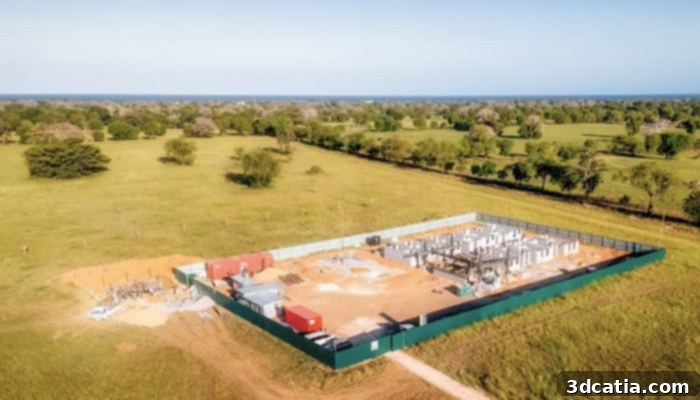
Overview of Phase 1 of the Mvule Gardens project
The Mvule Gardens project by 14Trees stands as a beacon of hope and a practical demonstration of 3D printing’s immense potential to tackle the urgent housing and sustainability challenges faced by Africa. It illustrates how strategic investment, technological innovation, and a commitment to environmental stewardship can converge to create affordable, high-quality, and eco-friendly housing solutions for rapidly growing populations. This initiative is not just about building houses; it’s about building communities, fostering economic development, and setting a precedent for a more sustainable future in construction across the African continent and globally.
What are your thoughts on 14Trees’ pioneering project and the future of 3D printed housing in developing nations? Share your insights and comments below or connect with us on ourLinkedIn,Facebook, andTwitter pages! Stay informed with the latest advancements in additive manufacturing by signing up for our free weeklyNewsletter here, delivering the most current 3D printing news directly to your inbox! You can also explore our comprehensive video content on our dedicatedYouTube channel.
*All photos credit : 14Trees