

U.S. Sanctions 3D Printing Firms Over Alleged Export of Sensitive Defense Prototypes to China
In a significant move underscoring mounting national security concerns, the U.S. Commerce Department’s Bureau of Industry and Security (BIS) recently issued a Temporary Denial Order (TDO) against three U.S.-based 3D printing service providers. The companies—Quicksilver Manufacturing Inc., Rapid Cut LLC, and U.S. Prototype Inc.—all share a common mailing address in Wilmington, North Carolina, indicating a close operational relationship. The TDO, a potent civil sanction, was levied due to serious allegations that these firms engaged in the unauthorized sharing of sensitive blueprints and technical drawings for 3D printing satellite, rocket, and defense-related prototypes with companies in China. BIS has formally identified these activities as posing a significant security risk to the United States, thereby justifying the immediate and severe sanctioning of these additive manufacturing entities.
This decisive action by BIS highlights the critical importance the U.S. government places on safeguarding advanced technological data, especially concerning defense and aerospace applications. A TDO is one of the most severe civil sanctions available to the Commerce Department, reflecting the gravity of the alleged violations. For an initial period of 180 days, the targeted companies will be completely prohibited from exporting any items from the United States. Furthermore, they will be barred from receiving or participating in any export transactions from the country, effectively isolating them from international trade channels crucial to their operations. This punitive measure serves as a stern warning to other entities engaged in manufacturing and technology transfer, emphasizing the U.S. government’s commitment to enforcing export control regulations. This decision is deeply intertwined with broader issues of international relations and geopolitical tensions, mirroring other recent sanctions imposed on entities in countries like Russia in response to geopolitical events such as the invasion of Ukraine, demonstrating a consistent approach to protecting national interests and strategic technologies.
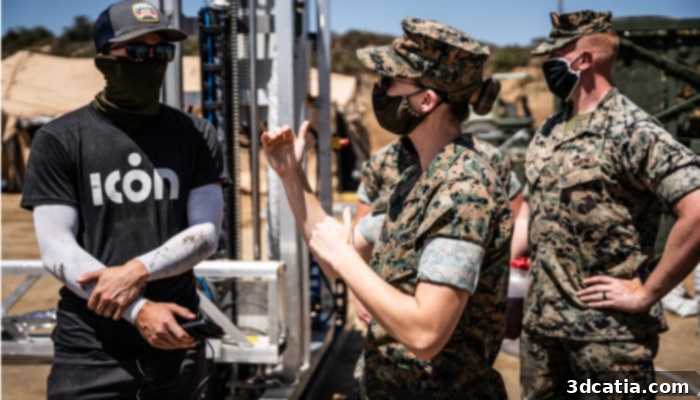
The integration of 3D printing in defense applications is rapidly expanding (photo credits: ICON)
The specific justification for the Temporary Denial Order centers on allegations that the companies were “exporting or causing the export from the United States of controlled technology to China for 3D printing without the required U.S. government authorization.” This refers to technologies deemed critical for national security, which are subject to strict export controls under the Export Administration Regulations (EAR). The violations came to light after the Office of Export Enforcement (OEE), an investigative arm of BIS, was alerted by an unnamed U.S. aerospace and global defense technology company. This company reported a serious export-control violation, specifically concerning the unauthorized transmission of controlled satellite technology data to China. Assistant Secretary of Commerce for Export Enforcement Matthew S. Axelrod minced no words when discussing the rationale behind the decision. He stated, “Outsourcing 3D printing of space and defense prototypes to China harms U.S. national security. By sending their customers’ technical drawings and blueprints to China, these companies may have saved a few bucks — but they did so at the collective expense of protecting U.S. military technology.” This statement succinctly captures the tension between cost-saving measures in manufacturing and the imperative of safeguarding critical intellectual property and defense capabilities against potential foreign exploitation. The implications of such outsourcing extend far beyond immediate financial savings, potentially compromising long-term national security interests and undermining the technological advantage of the United States.
National Security Concerns in Additive Manufacturing: A Growing Threat
The rapid evolution and widespread adoption of additive manufacturing, particularly in highly sensitive sectors such as aerospace and defense, have inevitably brought heightened scrutiny to safety and security protocols. While much of the discussion surrounding safety in these industries traditionally focuses on certifications for flight-worthy parts, material integrity, and operational reliability, the recent BIS actions reveal an entirely different and increasingly critical dimension of concern: national security. Beyond the physical aspects, the digital nature of 3D printing introduces vulnerabilities that were previously less pronounced. For instance, the potential hackability of 3D printers and the digital files they process has emerged as a significant security issue, especially for entities engaged in government contracts or working with classified information. This latest development, involving the unauthorized export of design data, highlights a novel and severe risk, particularly given the burgeoning growth of 3D printing service providers and sophisticated manufacturing capabilities in countries like China. It underscores the multifaceted nature of threats to intellectual property and defense technologies in a globally interconnected manufacturing landscape.
The allegations against Quicksilver Manufacturing Inc., Rapid Cut LLC, and U.S. Prototype Inc. paint a troubling picture of how sensitive information can be compromised. These companies are accused of accepting prototyping contracts from American customers, ostensibly for local production. However, instead of performing the 3D printing in the U.S., they allegedly exported the crucial design information, including technical drawings and blueprints, to partner companies in China. The parts were then reportedly printed abroad and subsequently shipped back to the United States. Crucially, these actions were purportedly carried out without the explicit knowledge or consent of their American customers. This is particularly alarming given that some of the components were related to highly sensitive prototype space and defense technologies, which, if compromised, could provide foreign governments with invaluable intelligence or even the ability to reverse-engineer critical defense systems. The Department of Commerce further notes that these unauthorized transfers occurred despite at least one Quicksilver employee having signed a Mutual Non-Disclosure Agreement (NDA) that explicitly contained language pertaining to U.S. export laws and regulations. Such a violation of a legally binding NDA, especially concerning export-controlled items, demonstrates a clear disregard for compliance and national security protocols. BIS has unequivocally stated that under these circumstances, authorization for exporting these documents would never have been approved, as they inherently present a clear and unacceptable security risk for the nation. This incident highlights significant gaps in oversight and compliance within the supply chain for advanced manufacturing, urging a reevaluation of trusted partnerships.
This case serves as a stark reminder of the sophisticated and often clandestine methods by which sensitive technologies and intellectual property can be transferred. The implications extend beyond immediate economic loss, potentially undermining the technological advantage and military readiness of the United States. The practice of “strawman” outsourcing, where a U.S. company acts as an intermediary to funnel designs to unauthorized foreign entities, poses a substantial threat. It exposes critical supply chain vulnerabilities and erodes trust within the defense contracting ecosystem. The ongoing investigation is poised to delve deeper into the full scope of these activities, potentially uncovering more extensive networks or additional violations. Beyond the immediate TDO, the companies involved could face more severe long-term penalties, including substantial financial fines, permanent denial of export privileges, and even criminal charges for individuals found responsible for knowingly violating export control laws. The Department of Commerce, through BIS, has also issued a critical directive urging customers of Quicksilver Manufacturing Inc., Rapid Cut LLC, and U.S. Prototype Inc. to diligently review their records. This review is essential to determine whether any of their intellectual property or export-controlled technology was potentially provided to these sanctioned companies and subsequently compromised. Proactive record assessment is a vital step for affected clients to mitigate potential damage and understand their exposure. For those seeking more detailed information, the full Temporary Denial Order is publicly accessible HERE, offering transparency into the government’s findings and actions.
This incident underscores the imperative for all businesses operating in the additive manufacturing space, especially those handling defense or dual-use technologies, to conduct thorough due diligence on their partners and maintain rigorous compliance with all export control regulations. The future of secure additive manufacturing hinges on a collective commitment to protecting sensitive information and adhering to national security guidelines. What are your thoughts on this significant decision by the U.S. Commerce Department to sanction these 3D printing companies? We invite you to share your insights in a comment below or join the conversation on our Linkedin, Facebook, and Twitter pages! Don’t forget to sign up for our free weekly Newsletter here to receive the latest 3D printing news directly in your inbox. You can also find all our compelling videos and industry updates on our YouTube channel.