
Thessaloniki Leads the Way: How 3D Printing Plastic Waste is Forging a Zero Waste Future in Urban Spaces
In a pioneering stride towards a more sustainable urban landscape, Greece has become the home of an innovative initiative known as “Zero Waste Future”. This ambitious program, championed by Coca-Cola, is meticulously designed to dramatically reduce waste generation and foster a truly sustainable future. Its core philosophy revolves around direct community involvement, ensuring that every inhabitant of a city plays an active role in transforming their environment. Thessaloniki, a vibrant and historically rich metropolis, was strategically chosen as the inaugural pilot city to launch this groundbreaking project. To provide robust support and a physical hub for this initiative, the state-of-the-art Zero Waste Lab was recently established. This facility has further cemented its commitment to circularity through a significant partnership with The New Raw, an acclaimed association already at the forefront of plastic recycling with its inspiring ‘Print your City’ project. This collaborative effort signifies a powerful synergy between corporate responsibility, innovative design, and community empowerment, setting a new benchmark for urban sustainability.
The concept of transforming urban waste into functional public amenities isn’t entirely new, but The New Raw has certainly perfected its application. Many will recall the remarkable 3D printed street furniture that graced the city of Amsterdam. This innovative project saw the creation of public benches and other urban elements, strategically placed in parks and along streets, becoming an integral part of the city’s fabric. The ingenious aspect was the source material: plastic waste collected directly from the city’s residents. This discarded plastic underwent a meticulous recycling process, being transformed into high-quality 3D printing filament. Through this method, Amsterdam was able to craft a diverse range of original shapes and designs, offering durable, long-lasting furniture that not only served a practical purpose but also provided significant aesthetic and ecological value, truly turning waste into a resource. The Dutch association, The New Raw, driven by a vision for global environmental impact, is eager to expand this successful model far beyond the Netherlands. Their journey has now led them to Greece, where they are collaborating closely with the Zero Waste Lab in Thessaloniki. This collaboration empowers the lab to actively print various components and finished products directly from local plastic waste, demonstrating a tangible, circular economy in action and inspiring other cities worldwide to adopt similar sustainable practices.
Photo Credits: Stefanos Tsakiris
3D Printing Reshapes Urban Landscapes in Thessaloniki
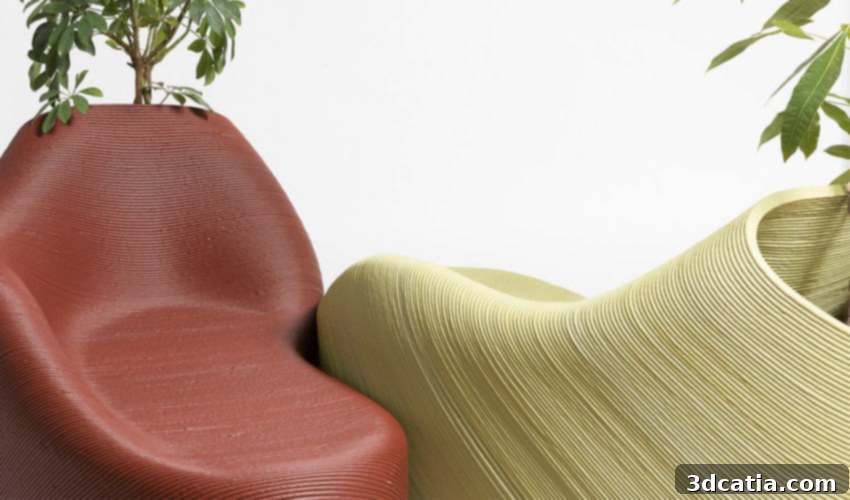
The integration of additive manufacturing, or 3D printing, into urban planning is no longer a futuristic concept but a present-day reality in Thessaloniki. A stroll along the picturesque Nea Paralia promenade, with its stunning sea views, offers a direct glimpse into this innovation. Here, visitors can admire the unique street furniture that was 3D printed just last summer. These aren’t merely benches; they are intelligently designed, multi-functional pieces that also serve as integrated plant pots, bringing greenery and comfort to public spaces. The team at the Zero Waste Lab has meticulously documented the production process, revealing impressive efficiency: each individual piece of furniture requires approximately 12 hours of printing time and utilizes a substantial 100 kilograms of local plastic waste. This highlights not only the speed of modern 3D printing but also its capacity to consume significant amounts of discarded plastic. Since December of last year, the project teams have received and processed an astounding 3,000 unique models and design ideas submitted by the community. These proposals extend beyond simple benches, encompassing a wide array of urban necessities such as robust bike racks, attractive planters, and numerous other innovative and ecologically conscious products, all tailored to meet the specific needs and desires of Thessaloniki’s residents. This active involvement transforms citizens from passive observers into co-creators of their urban environment, fostering a deeper sense of ownership and care for public spaces.
The New Raw association succinctly articulates the profound potential of this urban transformation, stating: “3D printed street furniture incorporates additional functions that promote a healthy and environmentally friendly lifestyle in the city. It is possible to imagine any type of object, from a bike rack, a tree pot, mini gym or to even a library.” This vision extends beyond mere aesthetics, aiming to create public spaces that actively encourage healthier habits and environmental stewardship. Imagine a public park where durable, 3D printed benches double as charging stations, or where play structures also integrate learning elements. The flexibility of additive manufacturing allows for an unprecedented level of customization and multi-functionality that traditional manufacturing methods often cannot achieve. This means cities can design solutions perfectly adapted to their specific needs and cultural context, while simultaneously addressing pressing environmental challenges posed by plastic waste. The ability to produce bespoke urban elements on demand not only reduces waste but also minimizes transportation costs and carbon footprint, contributing significantly to the city’s overall sustainability goals. Thessaloniki is thus not just adopting a new technology but embracing a holistic approach to urban development that prioritizes both ecological health and citizen well-being.
Zero Waste Lab: A Dynamic Hub for Learning, Creation, and Community Engagement
At the very heart of Thessaloniki’s “Zero Waste Future” initiative lies the Zero Waste Lab – a vibrant and interactive space designed to empower and educate the local community. Open four days a week until May, the lab serves as much more than just a production facility; it’s a dynamic environment where residents can actively engage with the principles of the circular economy. The lab offers a unique opportunity for people to familiarise themselves with the intricate process of plastic recycling, observing firsthand how discarded materials are transformed into valuable resources. Residents are encouraged to deposit their own plastic waste at the lab, directly contributing to the feedstock for new urban furniture. But perhaps most impressively, the lab functions as an open forum for innovation. Citizens are invited to submit their own inventive ideas and designs for furniture that they wish to see in their neighbourhoods. This goes beyond simple suggestions; participants have the remarkable autonomy to choose the specific public space where a 3D printed part will be installed, determine its exact shape and colour, and even define any integrated functionalities they envision. This unparalleled level of customization and involvement ensures that the urban furniture genuinely reflects the community’s needs and aspirations, fostering a deep sense of pride and collective ownership.
The Zero Waste Lab; Photo Credits: Stefanos Tsakiris
More than just a manufacturing hub, the Zero Waste Lab functions as an immersive learning environment where the magic of additive manufacturing unfolds before visitors’ eyes. Housing several advanced 3D printers operating simultaneously, the lab actively contributes to the democratisation of technology, making complex industrial processes accessible and understandable to the general public. Visitors can witness the entire lifecycle of plastic transformation, from raw waste to finished product, gaining invaluable insights into sustainable design and production. This hands-on experience not only educates but also inspires, encouraging individuals to adopt more environmentally conscious behaviours in their daily lives. The transparent operation of the lab, coupled with its educational workshops and interactive displays, transforms it into a powerful educational tool, fostering a new generation of environmentally aware citizens. It’s a testament to how local initiatives can have a profound impact on global sustainability challenges. For those eager to delve deeper into the project’s specifics, comprehensive information is readily available on the official website of the laboratory HERE, and a compelling visual overview can be found in the video presented below:
The “Zero Waste Future” program in Thessaloniki represents a significant leap forward in urban sustainability, showcasing a powerful model where technology, community engagement, and environmental stewardship converge. By empowering citizens to become active participants in the recycling and design process, the initiative is not only diverting vast amounts of plastic waste from landfills but also fostering a deeper connection between residents and their urban environment. This project serves as an inspiring blueprint for cities worldwide looking to implement circular economy principles and leverage innovative technologies like 3D printing to create more resilient, beautiful, and sustainable public spaces. The success in Thessaloniki demonstrates that a truly zero-waste future is not just an aspiration but an achievable goal when communities and organizations unite with a shared vision. It underlines the potential for local actions to create global impact, paving the way for a healthier planet and more engaged citizenry.
Has this innovative approach to urban sustainability inspired you to think differently about recycling and waste management? We’d love to hear your thoughts and ideas! Please share your insights in a comment below or join the conversation on our Facebook and Twitter pages. Stay informed about the latest advancements and pioneering projects in the world of 3D printing by signing up for our free weekly Newsletter, delivering all the essential news straight to your inbox!