
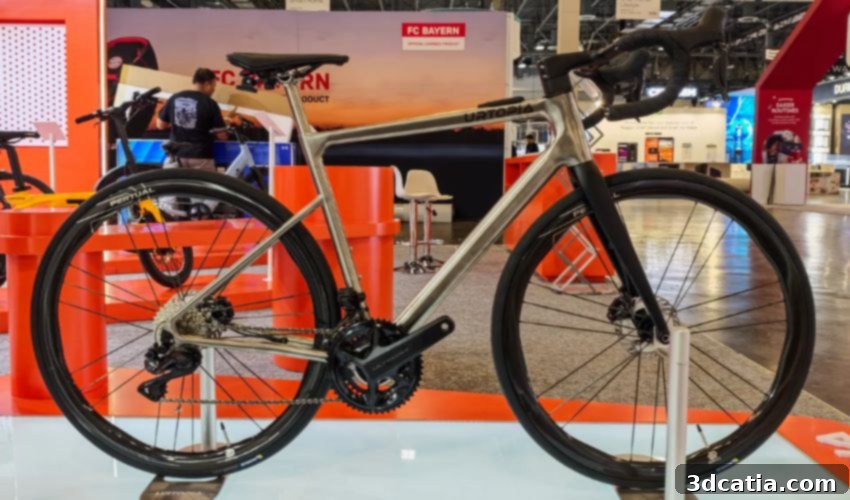
Urtopia Titanium Zero: Redefining Electric Road Bikes with 3D Printed Titanium and Cutting-Edge Innovation
The landscape of personal transportation has undergone a remarkable transformation in recent years, with the electric bicycle emerging as a dominant force. No longer merely a niche product, e-bikes have evolved into a sophisticated, mainstream solution for urban commuting, fitness, and leisurely exploration. This revolution has been significantly propelled by the integration of groundbreaking technologies, none more impactful than additive manufacturing. By enabling unprecedented design freedom and material optimization, 3D printing has facilitated the development of e-bike models that achieve an unparalleled balance of lightness, power, and durability. At the forefront of this innovation stands the Urtopia Titanium Zero, an electric road bike that perfectly encapsulates these advanced capabilities.
Unveiled to considerable acclaim, the Urtopia Titanium Zero boasts a state-of-the-art titanium frame, meticulously crafted using advanced 3D printing techniques. This strategic material choice, combined with an ultra-light motor and a robust, high-density battery, results in an astonishingly low total weight of just 10.8 kg. Such a figure positions the Titanium Zero as one of the lightest electric bikes on the market, promising an agile and responsive riding experience. This model is more than just an e-bike; it represents a powerful fusion of cutting-edge technology and a commitment to sustainable, high-performance mobility, signaling a bold new direction for the cycling industry.
Urtopia’s Journey: From Carbon to Titanium and Smart Mobility
The Urtopia brand, a relative newcomer to the electric bike scene, has quickly distinguished itself through a relentless pursuit of innovation and a keen eye for design. Launched in 2022, the company made an immediate impact with its initial electric bike offering, characterized by an innovative design aesthetic and a high-performance carbon frame. This debut model set the stage for Urtopia’s reputation as a brand unafraid to push boundaries.
Building on this initial success, 2023 saw the Chinese company once again capture headlines with the unveiling of an electric bike featuring integrated ChatGPT technology. This bold move underscored Urtopia’s vision of smart, connected mobility, blending advanced cycling mechanics with artificial intelligence to enhance the rider’s experience. This integration demonstrated the brand’s commitment to not just hardware innovation but also intelligent software solutions, setting them apart in an increasingly competitive market.
The latest chapter in Urtopia’s impressive story unfolded just days ago at CES 2025 in Las Vegas, where the Urtopia Titanium Zero was officially unveiled. This latest offering takes the brand’s innovative spirit to new heights, leveraging advanced materials and manufacturing processes to achieve unprecedented performance metrics. The question on everyone’s mind is: What truly distinguishes the Urtopia Titanium Zero from its predecessors and competitors? What are its core strengths, and what revolutionary features does it bring to the table?
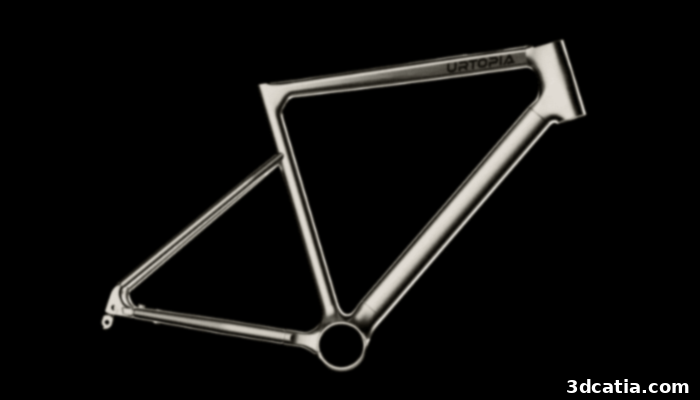
The frame of the Urtopia Titanium Zero is fabricated in titanium thanks to 3D printing.
Urtopia Titanium Zero: An Ultralight Electric Bike For Peak Performance
The Urtopia Titanium Zero is meticulously engineered, distinguished primarily by its use of a titanium frame. This isn’t just any titanium; it’s a high-grade Toray-type alloy, precision-manufactured using advanced 3D printing techniques. The choice of titanium is a strategic one, offering a compelling blend of properties that elevate the riding experience significantly. Titanium is celebrated for its inherent flexibility, which translates into superior comfort over long rides, absorbing road vibrations far more effectively than stiffer materials like aluminum. Concurrently, it boasts remarkable stiffness, ensuring efficient power transfer and responsive handling, crucial for a high-performance road bike. Its exceptional strength-to-weight ratio is another key advantage, contributing significantly to the bike’s overall lightness and durability.
However, it’s important to acknowledge that the production of titanium, particularly through traditional methods, can generate a significant carbon footprint. The application of additive manufacturing for the frame aims to mitigate some of these environmental concerns by reducing material waste inherent in subtractive manufacturing processes and allowing for optimized, topologically complex structures that use less material while maintaining strength. Thanks to this advanced material and manufacturing approach, the entire bike weighs in at an astonishingly low 10.8 kg, making it a featherlight marvel in the e-bike category. Beyond the main frame, titanium is also strategically employed for the seatpost, further contributing to the bike’s integrated lightweight design. In contrast, the wheels and fork are crafted from high-performance carbon fiber, a material renowned for its stiffness, strength, and vibration-damping capabilities, perfectly complementing the titanium frame.
Revolutionary Battery Technology and a Pocket-Sized Powerhouse Motor
Another distinctive feature of the Urtopia Titanium Zero is its innovative solid electrolyte battery. This cutting-edge technology represents a significant leap forward in energy storage for electric bikes. Solid-state batteries offer several compelling advantages over traditional lithium-ion batteries, primarily their ability to achieve a much higher energy density. In the case of the Titanium Zero, this translates to an impressive 300 Wh/kg. This enhanced energy density means that for the same weight, the battery can store considerably more power, potentially leading to extended range and more consistent performance without adding bulk. Furthermore, solid-state batteries are generally considered safer due to the absence of flammable liquid electrolytes, offering greater thermal stability and a reduced risk of overheating or leakage.
Powering this ultralight machine is the Urtopia-designed “Quark DM 1.2” mid-mounted motor. Weighing in at an incredibly modest 1.2 kg, this motor plays a pivotal role in the bike’s overall lightweight architecture. Its compact, “pocket-sized” design belies its robust performance. Mid-mounted motors are generally favored in high-performance electric bikes because they offer a more natural riding feel, better weight distribution, and leverage the bike’s existing gear system for optimal power delivery across various terrains. This results in superior climbing capabilities and a more balanced ride compared to hub motors.
According to Urtopia, the Quark DM 1.2 motor is not just light but also remarkably efficient, boasting one of the world’s most impressive power-to-weight ratios for an electric bike motor. This efficiency ensures that riders experience responsive assistance and consistent performance, whether tackling steep ascents or cruising on flat roads, all while minimizing energy consumption. The synergy between the ultralight titanium frame, the high-density solid electrolyte battery, and this groundbreaking motor truly sets the Urtopia Titanium Zero apart as a benchmark in electric road bike design.
The Role of Additive Manufacturing in Premium E-Bike Design
The implementation of 3D printing, or additive manufacturing, in creating the Urtopia Titanium Zero’s titanium frame is a testament to the technology’s transformative potential in high-performance industries. While the brand has not yet specified the exact 3D printing technologies utilized, methods such as Selective Laser Melting (SLM) or Electron Beam Melting (EBM) are commonly employed for complex metal parts. These processes allow for the creation of intricate, organic geometries that would be impossible or prohibitively expensive to produce with traditional manufacturing techniques. This design freedom enables engineers to optimize the frame for both strength and minimal weight, placing material precisely where it is needed and removing it where it is not, often resulting in lattice structures or hollow sections within the frame. This precision engineering contributes directly to the Titanium Zero’s exceptional lightness and structural integrity.
Moreover, additive manufacturing also facilitates rapid prototyping and iterative design, allowing Urtopia to refine the frame’s ergonomics and performance characteristics with greater speed and efficiency. The ability to produce bespoke components with high accuracy also hints at future possibilities for customization, where frames could be tailored to individual rider specifications for an even more personalized cycling experience. The adoption of 3D printing is a clear indicator of Urtopia’s commitment to leveraging cutting-edge industrial processes to achieve superior product outcomes.
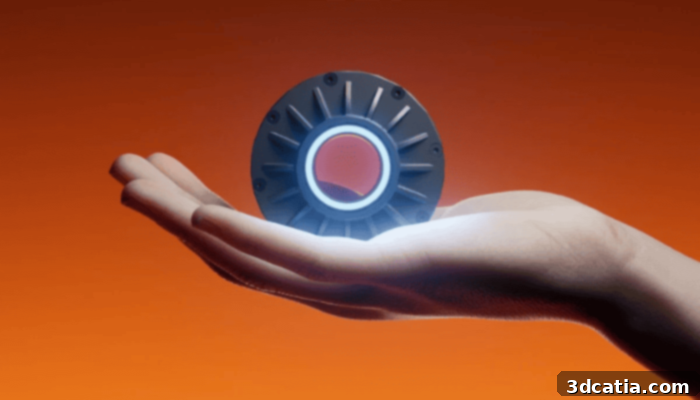
The Quark DM 1.2 motor weighs an incredibly light 1.2 kg, contributing to the bike’s overall low weight.
Anticipation and the Future of Electric Mobility
Despite the excitement surrounding the Urtopia Titanium Zero’s unveiling at CES 2025, specific details regarding its official launch date and retail price for this ultra-light electric road bike remain under wraps. This is not uncommon for revolutionary products showcased at major tech events, as companies often gauge market reaction and finalize production and distribution strategies. The anticipation builds for a bike that promises to set new standards in the premium e-bike segment.
The Urtopia Titanium Zero is more than just a new product; it represents a significant milestone in the evolution of electric bicycles and additive manufacturing. Its innovations in materials, battery technology, and motor design point towards a future where e-bikes are not only highly functional but also incredibly efficient, aesthetically refined, and environmentally conscious. As urban centers continue to seek sustainable transportation solutions and cycling enthusiasts demand higher performance, models like the Titanium Zero will undoubtedly lead the charge, inspiring further innovation across the industry.
What are your thoughts on the Urtopia Titanium Zero and its pioneering use of 3D printed titanium? Do you believe this ultralight electric road bike will revolutionize the market? We’d love to hear your perspective. Share your comments below or engage with us on our LinkedIn, Facebook, and Twitter pages! For more comprehensive coverage on transport news and the latest advancements in mobility, be sure to explore our dedicated landing page. Don’t miss out on the latest insights and breakthroughs; sign up for our free weekly Newsletter here, delivering the freshest 3D printing news straight to your inbox! Additionally, you can find all our engaging video content on our YouTube channel.
*All Photo Credits: Urtopia