
Ursa Major Hadley Engine’s Inaugural Flight: Propelling Hypersonic Travel with Advanced Additive Manufacturing
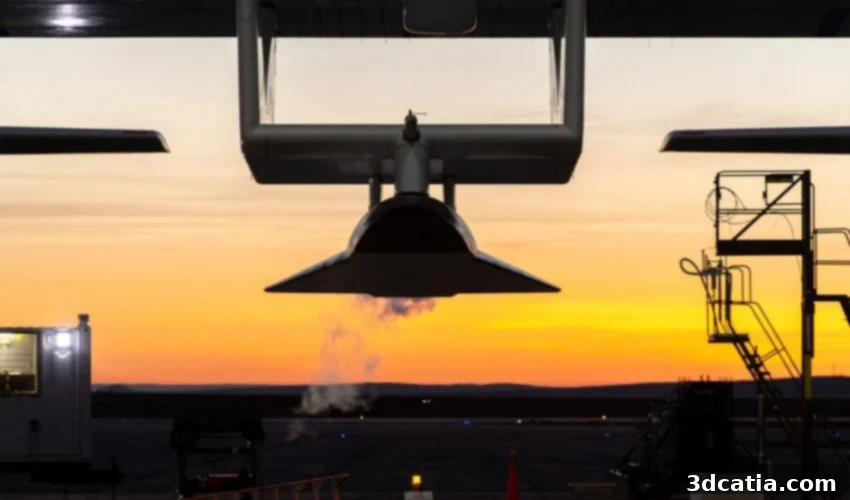
The aerospace industry is undergoing a transformative period, with additive manufacturing (AM), commonly known as 3D printing, consistently demonstrating its immense potential and cementing its critical role, particularly within the space industry. A compelling illustration of this advancement recently emerged from Ursa Major, a company that has rapidly ascended in the Aerospace AM landscape. Just two years after its significant entry into the scene, Ursa Major announced a monumental achievement: the first flight of its Hadley engine. This groundbreaking engine, a testament to the power of 3D printing combined with other cutting-edge techniques, successfully powered a test of Stratolaunch’s Talon-A1 (TA-1) testbed. This development marks a pivotal moment, described by the company as “a major leap forward toward the first flight test of a privately funded hypersonic vehicle,” underscoring the accelerating pace of private sector innovation in high-speed flight technologies.
To truly appreciate the significance of this milestone, it’s worth delving into the background of Ursa Major. Founded in 2015 by Joe Laurienti, a former propulsion engineer from industry giants SpaceX and Blue Origin, Ursa Major quickly established itself as a formidable force in rocket propulsion. Headquartered in Colorado and Ohio, the company has positioned itself as the leading independent rocket propulsion provider in the United States. Furthermore, Ursa Major made history by becoming the first American company to successfully fire an oxygen-rich staged combustion engine – a complex and efficient engine cycle previously only achieved by Russia. The company gained widespread recognition in the 3D printing sector in 2022 when its Advanced Manufacturing Lab in Youngstown, Ohio, delivered its first copper-based, 3D-printed rocket engine combustion chambers. This initial success paved the way for more ambitious projects, culminating in the recent triumph of the Hadley engine’s maiden flight, showcasing the company’s continuous growth and innovative prowess.
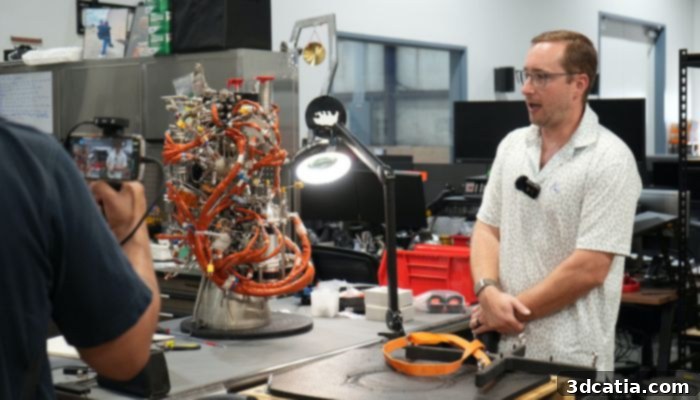
Joe Laurienti with the Hadley engine
The Hadley Engine’s Maiden Flight: A New Era for Hypersonic Propulsion
The first flight of the Ursa Major Hadley engine was a momentous event, powering the Stratolaunch TA-1 testbed during a crucial test flight over the vast expanse of the Pacific Ocean. While Stratolaunch has maintained a degree of confidentiality regarding many specifics of the test, out of respect for its customers and proprietary information, the company did confirm a staggering detail: the test achieved high supersonic speeds, approaching an incredible Mach 5. This velocity is critically important as it represents the threshold at which speed transitions from supersonic to hypersonic, meaning five times the speed of sound. Achieving such speeds in a testbed powered by a privately developed engine signifies a monumental leap in the capabilities of non-governmental entities in the aerospace domain.
Additive Manufacturing: The Core of Hadley’s Design and Production
Beyond the exceptional news for the advancement of private space and aerospace companies, this achievement holds profound implications for the broader market of additive manufacturing, especially within the aerospace sector. The Hadley engine, which is the inaugural product in Ursa Major’s innovative family of propulsion systems, stands as yet another compelling example of an advanced rocket engine brought to fruition through 3D printing. This 5,000-pound-thrust (lbf) liquid oxygen and kerosene engine, employing an oxygen-rich staged combustion cycle, was specifically designed for small launch vehicles and in-space applications. Crucially, 3D printing is not merely an auxiliary technique but a fundamental and integral part of its entire development and manufacturing process. The adoption of additive manufacturing allows Ursa Major to dramatically accelerate its production timeline, reducing the manufacturing process for complex components from months to just a few days, a speed unimaginable with traditional manufacturing methods. This rapid turnaround is vital for quick iteration, cost efficiency, and maintaining a competitive edge in the fast-paced space race.
While Ursa Major’s recent press release offers limited specific details on the exact 3D printing methodologies employed for the Hadley engine, insights from previous announcements provide valuable context. It is widely understood that the Hadley engine components were most likely fabricated using copper and other metal 3D printing techniques. Given Ursa Major’s historical collaborations, particularly with industry leader EOS, it is highly probable that a laser powder bed fusion solution was utilized. This method is renowned for its ability to create intricate geometries and high-performance parts from various metal powders, making it ideal for the demanding environment of rocket engines. Furthermore, Ursa Major has been identified as a customer of Velo3D’s recently unveiled Flow Developer tool. This software is designed to optimize print parameters and significantly enhance the success rate and quality of metal additive manufacturing. Regardless of the precise technology, the successful flight of the Hadley engine serves as undeniable proof of the continued and expanding relevance of metal AM in the aerospace sector, as companies globally strive for advanced capabilities like sustained hypersonic flight. The ability to print complex internal cooling channels, lightweight structures, and integrate multiple components into a single print dramatically reduces part count, assembly time, and potential points of failure, all critical factors for mission success.
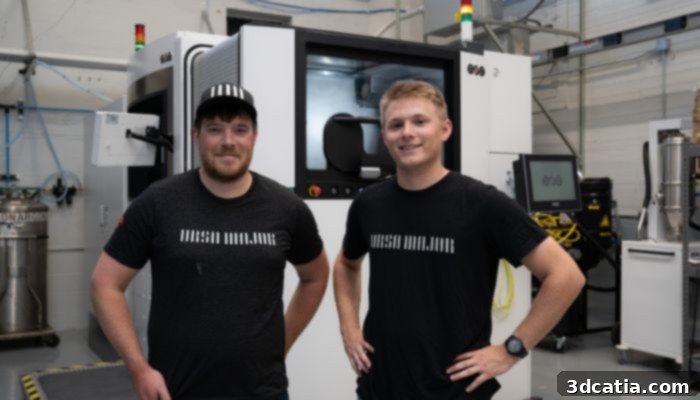
Ursa Major’s Additive Manufacturing Lab in Youngstown, Ohio
The Broader Impact: Private Innovation Driving National Missions
The success of the Ursa Major Hadley engine and its contribution to near-hypersonic flight represents a paradigm shift in how critical aerospace technologies are developed. Historically, advancements of this magnitude were almost exclusively the domain of large governmental agencies and well-established defense contractors. However, as Joe Laurienti, the visionary founder and CEO of Ursa Major, eloquently stated, “For the first time since SpaceX fundamentally transformed space launch with privately developed rockets, Ursa Major and Stratolaunch have come together to advance a critical national mission. Hypersonic flight has been a massive military and governmental challenge. Today, private companies were able to propel a leap forward.” This statement perfectly encapsulates the growing trend of private sector innovation not just complementing, but actively leading the charge in areas previously deemed too complex or capital-intensive for commercial ventures. The agility, speed, and entrepreneurial spirit of companies like Ursa Major are proving indispensable in pushing the boundaries of what’s possible, particularly in critical areas like hypersonic technology which has significant defense and strategic implications.
The ability of additive manufacturing to enable such breakthroughs cannot be overstated. By leveraging 3D printing, Ursa Major can design and produce highly optimized rocket engine components with unprecedented speed and efficiency. This includes intricate geometries for regenerative cooling channels that would be impossible or prohibitively expensive to produce using traditional subtractive manufacturing methods. The enhanced design freedom offered by AM allows engineers to create lighter, stronger, and more thermally efficient parts, directly contributing to the performance and reliability of engines like Hadley. This directly impacts the capability of vehicles like the Stratolaunch Talon-A1 to achieve and sustain hypersonic speeds. Furthermore, the localized and on-demand nature of 3D printing can enhance supply chain resilience, a crucial factor in both commercial and defense applications, ensuring that critical components can be manufactured rapidly and reliably without reliance on complex global supply chains.
Looking Ahead: The Future of Additive Manufacturing in Space Propulsion
The first flight of the Ursa Major Hadley engine is not just an isolated success; it’s a powerful indicator of the future trajectory of aerospace and propulsion technology. It solidifies the position of additive manufacturing as a cornerstone technology for the next generation of rockets and high-speed vehicles. As companies continue to push the boundaries of what’s achievable, the role of 3D printing will only expand, enabling further innovations in engine design, material science, and manufacturing processes. We can anticipate more rapid prototyping, even faster production cycles, and the development of entirely new classes of engines that leverage the unique capabilities of AM. This means more efficient, more powerful, and ultimately more accessible space travel and advanced aerial capabilities. Ursa Major’s journey, from its founding to this historic flight, exemplifies how strategic investment in advanced manufacturing can yield monumental results, transforming aspirations of hypersonic flight into tangible realities.
This achievement is a clear signal that the private space sector, empowered by technologies like additive manufacturing, is not only ready but actively driving the next era of aerospace innovation. You can find out more on Ursa Major’s website HERE. What do you think of the first flight of the Ursa Major Hadley Engine and its implications for hypersonic travel? What other advancements in additive manufacturing in space do you anticipate we’ll see from companies like Ursa Major? Let us know in a comment below or on our LinkedIn, Facebook, and Twitter pages! Don’t forget to sign up for our free weekly newsletter here, the latest 3D printing news straight to your inbox! You can also find all our videos on our YouTube channel.