
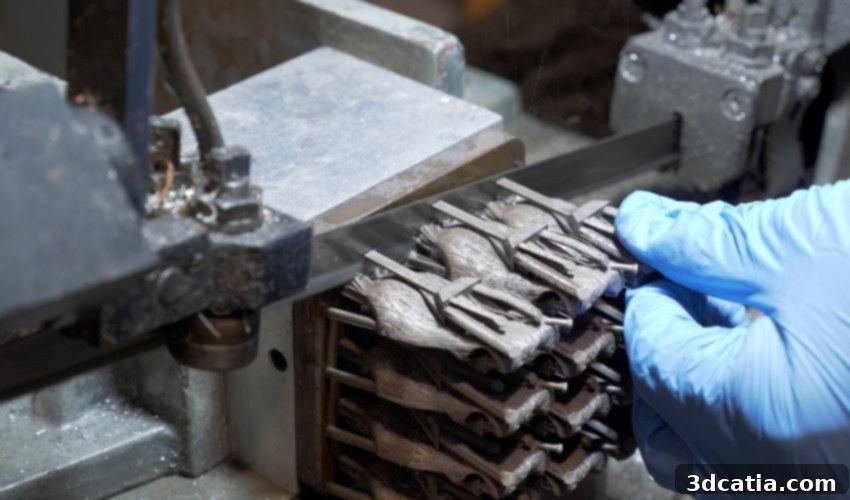
3D Printing Takes Center Stage: Celebrating Oscar Wins for Pinocchio and Black Panther: Wakanda Forever
The remarkable ascent of 3D printing as an indispensable technology within the dynamic film and movie industry is no longer a hidden secret. From the versatility of Fused Deposition Modeling (FDM), capable of rapid prototyping and durable props, to the precision of Material Jetting, which delivers highly detailed and multi-material components, and myriad other additive manufacturing techniques, filmmakers are increasingly leveraging these innovations. The primary appeal lies in their ability to facilitate the creation of exquisitely detailed and complex props, intricate costumes, and unique set pieces at a significantly reduced cost and accelerated timeline compared to traditional fabrication methods. This year, the profound value of additive manufacturing in creative storytelling has been emphatically validated, with two distinct projects heavily utilizing 3D printing technology receiving prestigious awards at the Oscars. These groundbreaking achievements highlight the technology’s growing influence: Guillermo del Toro’s Pinocchio secured the Best Animated Feature award, while Ruth E. Carter garnered Best Costume Design for Black Panther: Wakanda Forever, marking a truly historic moment for both the industry and additive manufacturing.
While this year’s double victory for 3D printing is undeniably significant, it’s crucial to acknowledge that it’s not the first instance of a 3D printing-involved project earning an Academy Award. What makes this particular year exceptional is the magnitude of the recognition and the individual achievements. For Ruth E. Carter, this win is her second Oscar, cementing her place in history as the first Black woman to ever win two Academy Awards. Furthermore, she becomes the first costume designer to receive an Oscar for both an original film and its sequel, demonstrating sustained excellence. It’s noteworthy that 3D printing played a crucial role in her first win for the original Black Panther film, underscoring its consistent utility in her visionary designs. The fact that additive manufacturing was integral to at least two of the year’s most acclaimed and high-profile cinematic productions, and directly contributed to their triumphs in such prestigious categories, is a powerful testament to its transformative power. Consequently, we delve deeper into both projects to explore the specific applications and the groundbreaking impact of additive manufacturing in bringing these cinematic masterpieces to life.
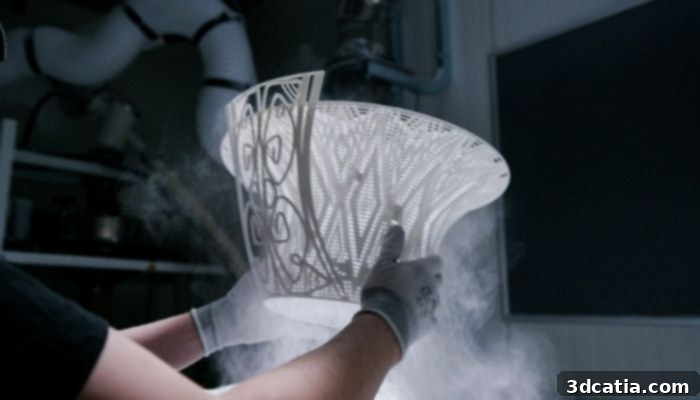
SLS 3D printing was used to create this incredible crown for Marvel’s Black Panther: Wakanda Forever, helping to lead to a second Oscar win for designer Ruth E. Carter (photo credits: Materialise)
A New Era for Animation: 3D Printing with Stainless Steel for Guillermo del Toro’s Pinocchio
Guillermo del Toro’s Pinocchio achieving the Oscar for Best Animated Feature is an extraordinary accomplishment, especially considering it triumphed over formidable contenders such as Disney’s popular Turning Red, the critically acclaimed stop-motion darling Marcel the Shell with Shoes On, and the visually stunning Netflix production The Sea Beast. This victory not only celebrated the film’s artistic merit and unique narrative but also marked a significant milestone in the animation industry: Pinocchio himself, the film’s central character, holds the distinct honor of being the first puppet ever constructed using 3D printed stainless steel. This innovative application underscores a paradigm shift in stop-motion animation, demonstrating how cutting-edge technology can enhance traditional artistry.
The Intricate Art of Stop-Motion and Additive Manufacturing
For many years, 3D printing has been a crucial tool in the realm of stop-motion filmmaking. Its unparalleled ability to render the minutest, most intricate details with exceptional accuracy and consistency makes it perfectly suited for an art form that demands precision at every frame. Pioneering studios like LAIKA, renowned for films such as Kubo and the Two Strings, have extensively utilized these technologies to create countless facial expressions, highly detailed props, and durable armatures. Now, with Pinocchio, additive manufacturing continues to prove its criticality in pushing the boundaries of stop-motion animation, enabling levels of complexity and durability previously unattainable. The creation of the stainless steel Pinocchio puppet is just one of several recent projects that exemplify how 3D printing is being deployed in diverse and innovative ways to redefine what’s possible in filmmaking.
Driving Innovation: The UK’s Made Smarter Program and Pinocchio’s Creation
The groundbreaking creation of the 3D printed stainless steel puppet was a direct result of concerted efforts to advance the adoption and application of additive manufacturing within the UK’s creative industries. Mackinnon & Saunders, the esteemed company behind the film’s puppet-making – also celebrated for their work on iconic figures like Bob the Builder and Postman Pat – sought assistance from the Made Smarter North West adoption program. This government-funded initiative is specifically designed to empower Small and Medium-sized Enterprises (SMEs) within the manufacturing sector to embrace digitalization, pursue decarbonization goals, and stimulate growth through the integration of new technologies and essential skills. Made Smarter proved instrumental in providing the critical support and resources needed. It enabled the skilled puppeteers at Mackinnon & Saunders to rigorously test and trial novel 3D printing techniques, particularly in collaboration with Laser Prototype Europe (LPE), a specialist in metal additive manufacturing. This partnership allowed them to explore the frontiers of metal 3D printing for miniature, articulated components, ultimately leading to the revolutionary Pinocchio puppet.
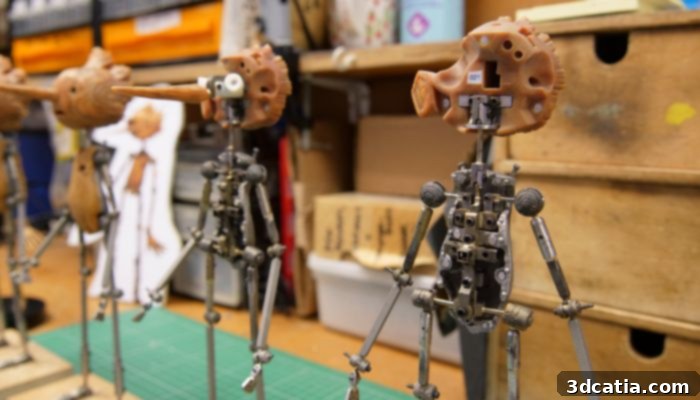
The Pinocchio puppets are the first to be made using 3D printed stainless steel (photo credits: Mackinnon & Saunders)
Peter Saunders, a veteran puppeteer and co-founder of Mackinnon & Saunders, reflected on this pioneering endeavor, stating, “We have developed a vast repository of knowledge about 3D printing over many years, and all that accumulated expertise was channeled directly into the creation of Pinocchio. The Made Smarter program arrived at the absolute perfect time. It provided us with crucial access to funding and expert advice, allowing us to thoroughly trial the very latest advancements in metal printing machines. Our collaborators at LPE genuinely understood our ambitious vision and pushed their machines to their absolute maximum capabilities to achieve the incredibly fine metal printing work required to retain every delicate detail. Crucially, they also ensured that all the intricate parts fit together seamlessly to construct a fully articulated, moving puppet.” He further emphasized the success of their efforts by adding, “The animators who worked with Pinocchio were absolutely delighted with the outcome, not only because it was an exceptionally delicate puppet, allowing for nuanced performances, but also because it proved to be virtually indestructible.” This combination of artistic fidelity and practical durability, made possible by 3D printed stainless steel, undoubtedly contributed to the film’s success and its eventual recognition with the Oscar for Best Animated Feature, showcasing the profound impact of combining traditional craftsmanship with modern additive manufacturing.
Historical Achievement in Costume Design: Ruth E. Carter and Black Panther: Wakanda Forever
The other celebrated Oscar winner significantly influenced by 3D printing technology was Ruth E. Carter, who made history with her win for Best Costume Design for Black Panther: Wakanda Forever. As the visionary Costume Designer for the Marvel saga, Carter seamlessly integrated 3D printing into her creative process through a pivotal collaboration with renowned 3D designer Julia Koerner. Their collective aim was to manifest designs that exquisitely fused traditional African aesthetics with the futuristic allure of Afrofuturism – a perfect sartorial representation of the technologically advanced and culturally rich nation of Wakanda. While additive manufacturing certainly wasn’t the sole technique employed in crafting these magnificent pieces, it played an absolutely key, transformative role in several designs. Specifically, it provided unparalleled freedom in design, enabling the creation of complex geometries and textures that would be exceptionally challenging, if not impossible, to achieve with conventional manufacturing methods.
Crafting Royalty: The 3D Printed Crown and Necklace
A prime example of this innovative partnership is the stunning 3D printed crown and necklace created for Queen Ramonda, portrayed by the esteemed Angela Bassett. These iconic pieces were meticulously developed in collaboration with Materialise, a global leader in 3D printing solutions, utilizing Selective Laser Sintering (SLS) technology. SLS is particularly well-suited for such applications due to its ability to produce highly intricate, robust, and lightweight parts from powdered materials. Materialise highlighted that 3D printing was indispensable in achieving the desired outcome: a piece that possessed the necessary structural integrity and stiffness to maintain its elaborate form, yet was simultaneously comfortable and lightweight enough for an actress to wear during filming. The resulting crown and necklace were not merely accessories; they were show-stopping elements that perfectly conveyed the regal bearing and powerful presence of the Queen of Wakanda. Their clever and eye-catching design showcased the intricate capabilities of additive manufacturing, blending artistic vision with practical requirements for cinematic production.
A Legacy Forged in Innovation
Ruth E. Carter’s second Oscar win is a monumental achievement, not just for her personally, but for the entire creative industry. It underscores her status as a trailblazing artist who consistently pushes the boundaries of costume design. Her adoption of 3D printing, first for the original Black Panther and then for its sequel, exemplifies a forward-thinking approach that embraces technology as a partner in artistic expression. The ability of 3D printing to create custom-fit, geometrically complex, and visually striking elements allowed Carter to fully realize her Afrofuturistic vision, contributing significantly to the immersive and fantastical world of Wakanda. Her success clearly demonstrates that additive manufacturing is no longer a niche tool but a proven, integral component in achieving cinematic excellence and historical recognition.
The Expanding Horizon: 3D Printing’s Indispensable Role in Film’s Future
The Oscar victories for both Pinocchio and Black Panther: Wakanda Forever serve as irrefutable proof of 3D printing’s solidified position as a transformative force in the entertainment industry. These accolades move beyond mere technical curiosities, firmly establishing additive manufacturing as a mature and essential tool for delivering unparalleled creative freedom, efficiency, and innovation to filmmakers. Whether it’s crafting durable and intricately articulated stop-motion puppets from advanced metal alloys or designing complex, culturally significant costumes with unprecedented geometric detail and comfort, 3D printing consistently provides solutions that push artistic boundaries and enhance storytelling.
Looking ahead, the future implications are vast. As 3D printing technologies continue to evolve – with advancements in materials science, multi-material capabilities, speed, and cost-effectiveness – their integration into film production workflows will only deepen. We can anticipate even wider adoption across various departments, from pre-visualization and set design to practical effects and even character development. This trend promises to democratize access to high-fidelity props and intricate designs, enabling independent filmmakers and major studios alike to bring increasingly ambitious visions to the screen. The ability to rapidly iterate designs, customize components precisely, and achieve complex forms that are impractical or impossible with traditional methods means that 3D printing will continue to be a catalyst for innovation, shaping the aesthetic and narrative possibilities of cinema for years to come.
What are your thoughts on the pivotal role of 3D printing in these award-winning films and its profound influence in helping them secure Oscar glory? We invite you to share your perspectives in a comment below or join the conversation on our LinkedIn, Facebook, and Twitter pages! Don’t miss out on the latest advancements and news in additive manufacturing—be sure to sign up for our free weekly Newsletter here, delivering the freshest 3D printing insights straight to your inbox! Additionally, explore our comprehensive collection of videos on our YouTube channel for more in-depth content.