
Revolutionizing Industries: Top 5 Groundbreaking 3D Printing Innovations This Week
This week, the world of additive manufacturing continues to push the boundaries of innovation, showcasing its profound impact across diverse sectors. From life-changing medical interventions to sustainable infrastructure and advanced industrial solutions, 3D printing is consistently proving its transformative power. In this issue of #3DExpress, we’re thrilled to highlight five remarkable developments that have captured significant attention. We’ll delve into a revolutionary 3D-printed facial implant successfully used in a hospital setting, an innovative underwater drone designed for critical maritime operations, a new approach to making metal 3D printing more accessible, a pioneering bridge constructed from a repurposed wind turbine blade, and a stunning concrete arch created through a unique architectural collaboration. Each of these stories underscores the versatility, efficiency, and sustainability potential that 3D printing brings to the forefront of modern engineering and design. Join us as we explore these exciting advancements that are shaping our future. Enjoy reading and have a great weekend!
Transforming Patient Care: 3D Printing Facial Implants with PEEK
In a significant leap forward for personalized medicine, the University Hospital Basel successfully performed its first operation on March 18th, implanting a custom 3D-printed facial implant. This breakthrough highlights the immense potential of point-of-care manufacturing in healthcare. What makes this particular achievement stand out is that the implant was manufactured directly on-site at the hospital, meticulously tailored to the patient’s specific anatomical data. This seamless coordination between patient assessment, design, and production ensures an unparalleled level of customization and precision, drastically improving surgical outcomes and patient comfort.
The hospital utilized the cutting-edge XT 220 MED medical 3D printer from 3D Systems for this intricate procedure. This specialized printer is engineered for deployment within a clean room environment, specifically meeting the stringent requirements of medical applications. Furthermore, all associated post-processing procedures are rigorously validated, ensuring the highest standards of safety and efficacy. The ability to produce implants directly at the point of care fosters an unprecedented level of collaboration between surgeons, medical technicians, and engineers. Prof. Florian Thieringer from the University Hospital Basel eloquently summarized the profound advantages of this approach: “By being directly involved here at the hospital in both the design and manufacture of patient-specific implants, we can tailor treatments precisely to individual needs, respond more quickly and improve surgical outcomes.” This direct integration of additive manufacturing within the clinical workflow not only accelerates the availability of custom implants but also enhances the overall quality and adaptability of patient treatments, paving the way for a new era in surgical care.
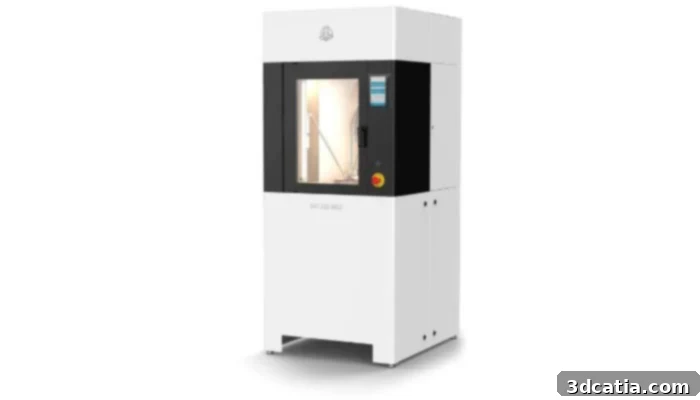
Photo Credits: 3D Systems
ROYAL3D Unveils ShearWater: A 3D-Printed Water Drone for Advanced Maritime Operations
Royal3D, a prominent Dutch company celebrated for its expertise in specialized 3D printing services, has unveiled a groundbreaking prototype: the ShearWater Aquatic Drone. This autonomous drone is specifically engineered for critical operations within the demanding maritime sector, promising to revolutionize how industries approach monitoring, data collection, and risk mitigation in extreme underwater and surface environments. The ShearWater is not just an ordinary drone; its design emphasizes modularity and parametric adaptability, allowing for versatile configurations and easy integration into various maritime tasks.
The development of the ShearWater Aquatic Drone received partial support from the European Union’s forward-thinking CrossRoads program, underscoring its potential for significant industrial impact. A cornerstone of the drone’s innovative design lies in Royal3D’s advanced 3D printing technology, which incorporates infrared cameras to meticulously control the adhesion of layers during the manufacturing process. This sophisticated technique ensures superior structural integrity and reliability, crucial for a device operating in harsh aquatic conditions. Furthermore, the ShearWater is ingeniously reinforced with PETG fibers, a material choice that endows it with an optimal balance of lightness, stiffness, and exceptional durability, making it resistant to corrosion and wear typical in marine settings.
While currently a prototype, Royal3D envisions the ShearWater as more than just a proof of concept. It represents a vital stepping stone for companies seeking to integrate sophisticated autonomous systems into their maritime operations. Its capabilities extend to diverse applications, from detailed underwater inspections of infrastructure and environmental monitoring to supporting search and rescue missions and collecting vital oceanographic data. By offering a robust, adaptable, and cost-effective solution, the ShearWater is poised to become an indispensable tool, enhancing safety, efficiency, and precision across the global maritime industry.
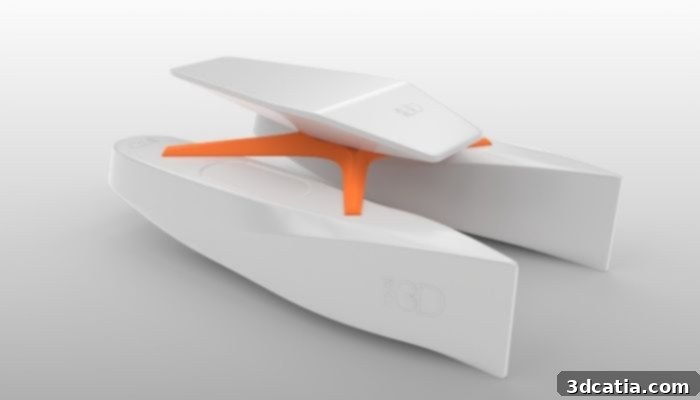
Photo Credits: ROYAL3D
Additive Plus Drives Affordability and Accessibility in Metal 3D Printing
Metal 3D printing, while offering unparalleled capabilities for complex geometries and advanced material properties, has traditionally been characterized by high costs and operational complexities, limiting its widespread adoption. This week, Californian start-up Additive Plus announced a significant push to democratize this technology with the unveiling of a new range of metal laser powder bed fusion machines, aiming to make metal additive manufacturing far more affordable and user-friendly for a broader market.
Additive Plus introduced three distinct 3D printers: the A30, A50, and A100. These models are differentiated by their build volumes, scaling from the most compact to larger capacities, and offer options for laser power—either 200 or 300 watts—to suit various application needs. This flexibility ensures that users can select a machine that best fits their specific production requirements. Crucially, these printers boast compatibility with a wide array of materials, including robust steels, various high-performance alloys, and lightweight aluminum, further expanding their utility across diverse industrial sectors. By supporting common engineering metals, Additive Plus positions its machines as versatile tools for innovation.
The company asserts that its AO range has been thoughtfully engineered for both intensive research and development applications and efficient small-series production. The compact footprint of these machines makes them suitable for environments where space is a premium, such as university labs, prototyping workshops, or specialized manufacturing facilities. Perhaps the most compelling aspect is the price point: the entry-level A30 can be ordered for a starting price of just $59,000. This figure is remarkably affordable when compared to many competing metal 3D printing solutions currently on the market, which can often cost hundreds of thousands of dollars. While the true comparability of results and overall cost-effectiveness with established high-end systems will be a crucial factor in long-term market acceptance, Additive Plus is undoubtedly setting a new benchmark for accessibility in metal additive manufacturing, potentially lowering barriers to entry for countless businesses and innovators looking to harness the power of metal 3D printing.
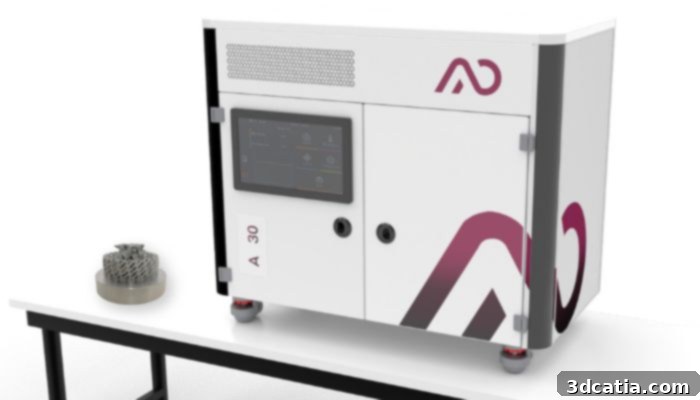
The A30 3D printer is the smallest model (photo credits: Additive Plus)
From Turbine Blade to Public Way: A 3D Printed Bridge Made Out of a Wind Turbine Blade
In an extraordinary example of circular economy principles and advanced manufacturing, a Dutch company has achieved something truly remarkable by repurposing a decommissioned wind turbine blade into a functional, 3D-printed modular bridge. This innovative project, spearheaded by Poly Products, a firm renowned for its extensive expertise in composite processing, highlights a creative solution to the growing challenge of wind turbine blade waste. These massive components are notoriously difficult to recycle, often ending up in landfills due to their complex composite materials.
The resulting structure is a crucial component of the Circular Viaduct Project, an ambitious initiative led by the Dutch Ministry of Infrastructure and Water Management. The core objective of this project was twofold: to develop an innovative and sustainable bridge solution, and concurrently, to effectively reuse blades from a nearby wind farm that was undergoing decommissioning. By intercepting these blades before they became waste, the project demonstrates a powerful commitment to sustainability and resourcefulness. The finished bridge spans an impressive 39 feet (12 meters) in length and measures 10 feet (3 meters) wide, engineered to safely support loads of up to 5 tons, making it suitable for pedestrian and light vehicle traffic.
Perhaps the most compelling aspect of this endeavor is its ability to fully harness the inherent potential of the wind turbine blades themselves. These blades are manufactured to be exceptionally strong, lightweight, and highly resistant to extreme weather conditions—properties that are precisely what is needed for a durable and long-lasting bridge. By utilizing the existing material, the project significantly minimizes the demand for new raw materials, dramatically reducing its environmental footprint and contributing to a more sustainable infrastructure. This pioneering application of 3D printing and material repurposing truly embodies the essence of “reduce, reuse, recycle,” showcasing how innovation can transform industrial waste into valuable public assets and set a precedent for future sustainable construction practices.
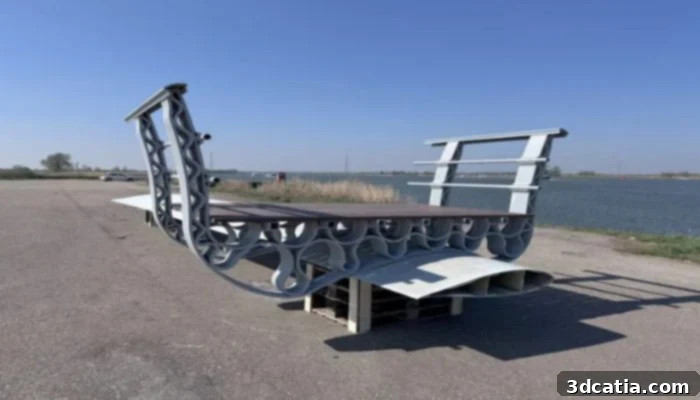
Photo Credits: Poly Products
Vertico and Zaha Hadid Architects Unveil ‘Aevum’: A 3D Printed Concrete Arch Bridging Craft and Technology
In a powerful statement about the convergence of traditional craftsmanship and cutting-edge digital fabrication, Dutch company Vertico, a leader in large-scale 3D concrete printing, has presented its latest ambitious project. In collaboration with the globally acclaimed Zaha Hadid Architects (ZHA), they designed and constructed an extraordinary arch named ‘Aevum’ for the prestigious INTERNI exhibition ‘Cre-Action’ at the University of Milan La Statale. This installation is far more than a simple structure; it is a profound exploration of architectural possibilities, embodying a dialogue between the past and the future of building.
The ‘Aevum’ structure spans an impressive 6 x 6 meters and cleverly combines two distinct arches. One arch is meticulously crafted from marble, representing the enduring legacy of traditional architectural techniques and artisanal skill. Juxtaposed against this is the other arch, which was revolutionary 3D printed from concrete. This pairing not only creates a visually striking contrast but also serves as a tangible demonstration of how advanced additive manufacturing can coexist and complement established building methods, allowing for forms and efficiencies previously unattainable with conventional construction. Zaha Hadid Architects’ iconic fluid and complex geometries, typically challenging to achieve, are made possible through Vertico’s precise concrete 3D printing technology.
The speed and efficiency of this project are particularly noteworthy. According to Vertico, the entire process, from receiving the intricate CAD model to the delivery of all 21 individual components for assembly, took a mere two weeks. The actual 3D printing process for all these components was completed in an astonishingly short 48 hours. This rapid production timeline underscores the immense potential of 3D concrete printing to accelerate construction schedules and reduce lead times for complex architectural elements. Volker Ruitinga, CEO of Vertico, emphasized the significance of this project: “This project is a real milestone because it establishes the legitimacy of 3D-printed concrete by placing it alongside the craftsmanship of marble. The speed, low cost, freedom of form and short delivery times that additive manufacturing promises are clearly demonstrated here.” The ‘Aevum’ arch stands as a testament to how architectural innovation, driven by 3D printing, can create visually stunning and structurally sound masterpieces that challenge conventional notions of design and construction, paving the way for more sustainable and creatively liberated building practices.
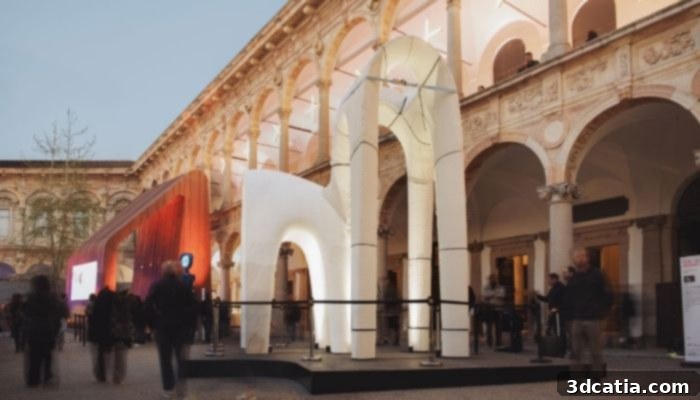
Photo Credits: Vertico
The rapid advancements in 3D printing continue to amaze, offering innovative solutions across vital sectors. From enhancing personalized medical treatments with custom facial implants to pioneering sustainable infrastructure by repurposing wind turbine blades, and from democratizing metal additive manufacturing to pushing the boundaries of architectural design with concrete arches, the versatility of this technology is undeniable. These five stories merely scratch the surface of how additive manufacturing is not just improving existing processes but actively creating entirely new possibilities, fostering greater efficiency, customization, and environmental responsibility.
What are your thoughts on these incredible applications of 3D printing, particularly its use in life-changing medical procedures or its potential to drive a circular economy? We invite you to share your insights in a comment below or join the conversation on our LinkedIn, Facebook, and Twitter pages! For more cutting-edge news delivered directly to your inbox, don’t forget to sign up for our free weekly Newsletter here. You can also explore all our videos and interviews on our YouTube channel. If your interests lie specifically in the medical and dental applications of 3D printing, be sure to visit our dedicated section HERE for more specialized content and updates.
*Cover Photo Credits: 3D Systems