
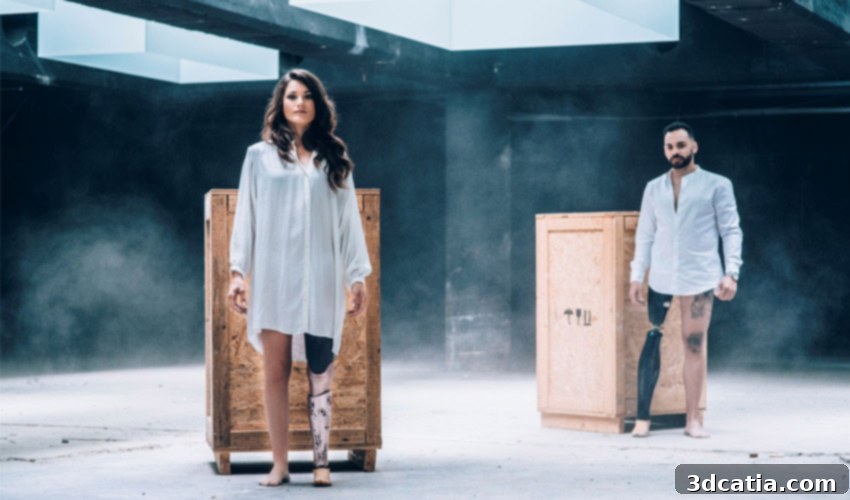
UNYQ Unveils Revolutionary 3D Printed Prosthetic Leg Socket: Enhancing Mobility and Personalized Care
UNYQ, a pioneering company based in San Francisco, has consistently been at the forefront of innovation in medical wearables through the strategic application of 3D printing technology. With a dedicated focus over the past five years, UNYQ has specialized in creating sophisticated prosthetic and orthotic devices that not only restore function but also integrate seamlessly into the lives of their users. In a significant advancement for the field of assistive technology, the company recently announced the official launch of its state-of-the-art 3D printed prosthetic leg socket. This groundbreaking product represents the newest addition to their expanding portfolio of highly customized medical devices, promising a new era of comfort, functionality, and personalization for amputees worldwide. The unveiling of this innovative prosthetic solution took place on March 15th at the prestigious British Association of Prosthetics and Orthotists (BAPO) event in the UK, marking a pivotal moment for UNYQ and the broader prosthetics industry.
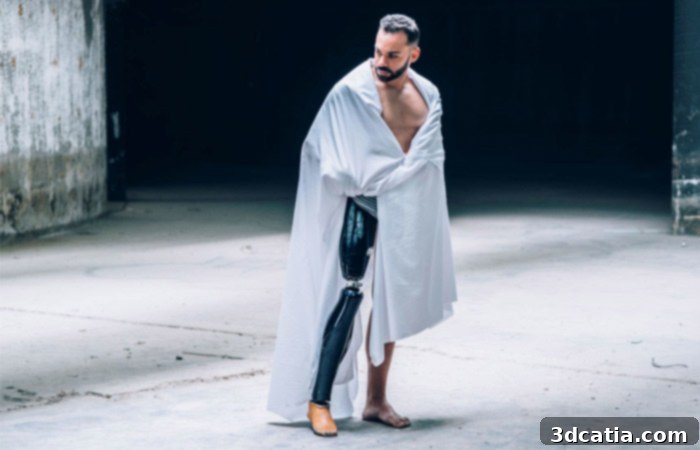
Introducing the UNYQ Prosthetics Wear Line: A Vision for Total Leg Solutions
The launch of the new 3D printed leg socket is a crucial component of UNYQ’s ambitious “Prosthetics Wear Line” project. This initiative embodies the company’s long-term vision to offer a comprehensive and integrated range of prosthetic devices, moving away from fragmented solutions towards a holistic approach. The ultimate goal, as projected at the time of announcement, was to provide amputees with a complete prosthetic leg product by the end of 2021, ensuring a unified and streamlined experience from socket to foot. Manuel Boza, Co-Founder and VP of Prosthetics at UNYQ, articulated the company’s excitement and strategic direction during the launch, stating, “We are thrilled to announce the launch of the UNYQ Socket today. This is another step forward in being able to provide amputees with a total leg solution. A solution where it’s practically one component, rather than a mishmash of different elements bolted together. We are working hard to further develop our prosthetics wear line, as well as the other exciting medical wearables in our pipeline, to continue to support our end users.”
This emphasis on a “total leg solution” highlights a significant shift in prosthetic design philosophy. Traditionally, prosthetic limbs have often been assembled from disparate components sourced from various manufacturers, leading to potential compatibility issues, aesthetic inconsistencies, and a less natural feel for the wearer. UNYQ’s vision, powered by additive manufacturing, aims to overcome these challenges by designing and producing components that are engineered to work together seamlessly, enhancing both the functional performance and the aesthetic integration of the prosthetic limb.
The Transformative Power of 3D Printing in Assistive Devices
Indeed, the advent and rapid evolution of 3D printing technology have profoundly eased the daily lives of individuals with disabilities, unlocking unprecedented levels of customization, affordability, and design freedom. This innovative manufacturing method allows for the creation of complex geometries that are perfectly tailored to individual body shapes and functional requirements, a critical advantage in the realm of medical devices. Beyond prosthetics, several remarkable devices have emerged for this purpose, showcasing the versatile applications of additive manufacturing. Examples include the Feelobject tool, which uses 3D printed tactile maps to assist the visually impaired in navigating their environment, offering a new dimension of independence. Similarly, practical modular wheelchairs like those conceptualized by Wheelwear demonstrate how 3D printing can lead to lighter, stronger, and more customizable mobility solutions that adapt to diverse terrains and user needs. Furthermore, the technology has facilitated the production of multiple prostheses that are not only significantly less expensive than traditional alternatives but also highly functional and robust. This affordability broadens access to life-changing devices for many who previously could not afford them, democratizing advanced medical technology.
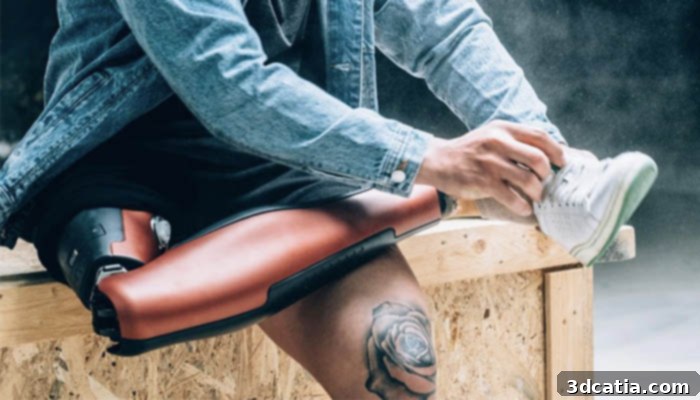
In line with these broader trends, UNYQ’s core philosophy has always centered on delivering solutions that are not only functionally superior but also aesthetically pleasing and lightweight. The psychological impact of a prosthetic that looks good and feels comfortable cannot be overstated; it significantly contributes to the user’s self-confidence and willingness to integrate the device fully into their daily life. The new 3D printed leg socket perfectly embodies this philosophy, designed to be visually appealing while offering optimal performance. An additional benefit of this innovative socket is its seamless compatibility with UNYQ’s existing line of personalized 3D printed prosthetic leg covers. These covers allow users to express their individuality and personal style, transforming what was once a purely medical device into a fashion statement, further enhancing user acceptance and overall satisfaction. This integration ensures that the aesthetic component is not an afterthought but an intrinsic part of the UNYQ user experience.
The UNYQ Socket: A Functional, Lightweight, and Aesthetic Digital Health Solution
The 3D printed prosthetic leg socket from UNYQ is engineered to be the critical interface between the user’s residual limb and the rest of the prosthetic leg. Its design and material properties are optimized for maximum comfort, stability, and control, which are paramount for effective mobility. What truly sets this socket apart is its integration of advanced technology: it is equipped with sophisticated sensors that meticulously record the user’s activity data. These sensors can track a variety of metrics, including the number of steps taken, the distance walked, and even potential calories burned. This data collection capability represents a significant leap forward in personalized prosthetic care.
For the user, this means having access to real-time insights into their activity levels, enabling them to monitor their fitness progress, set personal goals, and remain motivated. It transforms the prosthetic from a passive aid into an active health monitoring tool. For clinicians, the collected data offers invaluable information, allowing them to gain a deeper understanding of how the prosthesis is being used in daily life. This data can inform adjustments to the prosthetic fitting, optimize rehabilitation strategies, and even help in preventing secondary complications. It facilitates a more precise and data-driven approach to patient care, ensuring that the prosthetic truly meets the individual’s needs and activity profile. The ability to track fitness and exercise at any given time empowers both users and their healthcare providers to work collaboratively towards better health outcomes.
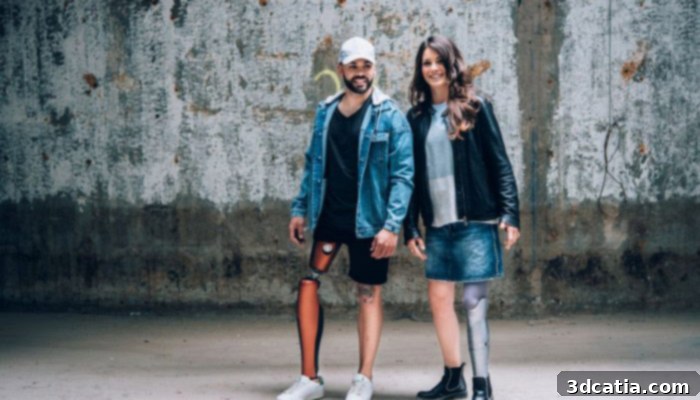
Furthermore, the nature of 3D printing makes the UNYQ socket easily replicable. This is a considerable advantage for several reasons. Firstly, it means that an amputee can possess more than one prosthetic leg or socket without the prohibitive costs and time associated with traditional manufacturing methods. This flexibility allows for different sockets tailored for various activities, or simply provides a backup in case of damage or wear. The digital design files can be stored and printed on demand, reducing lead times and ensuring consistent quality. This on-demand manufacturing capability also simplifies the process of creating updated or replacement sockets as a user’s residual limb changes over time due to swelling, weight fluctuations, or muscle atrophy, ensuring a continuous optimal fit. This level of customization and ease of production underscores the potential of 3D printing to revolutionize the accessibility and maintenance of prosthetic devices.
Market Reach and Future Outlook
Following its introduction, UNYQ had ambitious plans to make its 3D printed product widely available. By the end of 2019, the company expected to supply its innovative 3D printed prosthetic leg socket to multiple clinics across various regions, expanding access to this advanced solution for a greater number of amputees. This rollout strategy was designed to integrate the UNYQ socket into existing prosthetic care pathways, allowing clinics to offer a cutting-edge option that combines personalized design with integrated technology. The broader adoption of such solutions within clinical settings is vital for driving forward the standards of prosthetic care and ensuring that amputees benefit from the latest technological advancements. For those interested in learning more about this groundbreaking device and UNYQ’s mission, additional information is readily available on UNYQ’s official website HERE.
The introduction of the UNYQ 3D printed prosthetic leg socket marks a significant milestone in the journey towards creating more functional, comfortable, and personalized prosthetic solutions. By leveraging the power of 3D printing, UNYQ is not only addressing the physical challenges faced by amputees but also considering the psychological and social aspects of living with a prosthetic limb. The integration of aesthetics, lightweight materials, and smart technology positions this device as a leading example of how digital manufacturing can enhance quality of life and foster greater independence. As the field of medical wearables continues to evolve, UNYQ remains a key player, pushing the boundaries of what is possible and setting new benchmarks for patient-centric care.
What are your thoughts on UNYQ’s newest solution and the potential of 3D printing to transform the lives of amputees? We invite you to share your perspectives and engage in the conversation by leaving a comment below or joining us on our Facebook and Twitter pages! Stay informed about the latest innovations and breakthroughs in additive manufacturing by signing up for our free weekly Newsletter, delivering all the essential news in 3D printing straight to your inbox!