
Enhancing 3D Printed Pea Protein: Cold Plasma Unlocks New Potentials for Plant-Based Food Innovation
The food industry faces a myriad of complex challenges, from meeting global nutritional needs to addressing environmental sustainability and catering to diverse dietary preferences. 3D printing technology offers innovative solutions to many of these hurdles, promising a future where food production is more precise, customizable, and efficient. This revolutionary approach allows for the creation of foods with specific shapes, flavors, and consistencies, opening doors to highly specialized products. Imagine tailored meals for children with particular nutritional requirements, or soft, easily digestible foods for individuals with swallowing difficulties (dysphagia). Furthermore, 3D printing facilitates the precise control of individual nutrient content, enabling the development of personalized nutrition solutions.
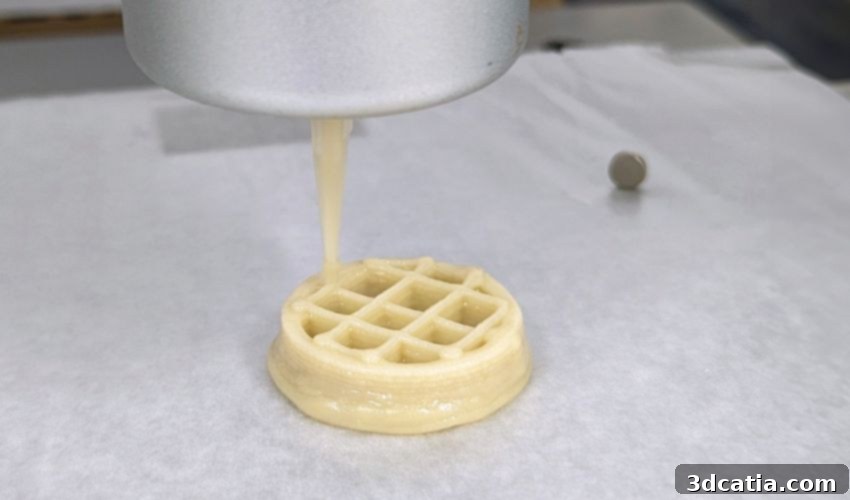
One of the most exciting frontiers in this domain is the emergence of 3D printed meat and plant-based alternatives. These innovations are not just novelties; they are actively encouraging consumers to rethink their eating habits, driving a global shift towards more sustainable and ethical food choices. However, translating the vision of 3D printed plant-based proteins into a stable, appealing, and scalable reality has presented significant technical obstacles. A primary challenge lies in establishing the structural integrity and stability of the printed product, especially after the extrusion process. Fortunately, groundbreaking research from the University of Alberta is paving the way forward. Researchers there have successfully demonstrated how applying cold plasma treatment to pea protein can achieve a significantly improved structure when 3D printed, marking a pivotal step for the future of plant-based foods.
The Power of Pea Protein: A Sustainable and Nutritious Foundation
Pea protein stands out as an exceptional candidate for plant-based innovation. It is widely recognized as one of the most economical, nutritious, and sustainable protein sources available. Rich in essential amino acids, particularly branched-chain amino acids (BCAAs), it supports muscle growth and recovery, making it popular in sports nutrition. Beyond its robust nutritional profile, pea protein is also naturally hypoallergenic, making it a safe and accessible option for individuals with common food allergies, such as those to dairy, soy, or gluten. This broad appeal underscores its potential to become a staple in diverse dietary plans.
The pea protein utilized in the University of Alberta study is sourced from legumes cultivated on the vast prairies of Canada, highlighting its regional and sustainable origins. This versatile protein is already a common ingredient across various food categories, found in the production of bread, cereals, plant-based dairy substitutes like milk and yogurt, and a wide array of meat alternatives. Its extensive range of existing applications underscores its potential as a true alternative to animal-based foods, capable of contributing significantly to a more widespread adoption of plant-based diets. For this transition to accelerate, however, plant-based products must be utterly convincing in terms of taste, texture, and form – qualities that 3D printing is uniquely positioned to enhance, as evidenced by its success in other food applications.
Despite its numerous advantages, pea protein has faced a significant hurdle in the realm of 3D food printing: its inherent inability to adequately retain its printed shape after extrusion. This structural instability has severely limited its potential to be transformed into complex, appealing, and functional plant-based meat or other food alternatives. Products often deform or collapse, failing to meet the desired aesthetic and textural standards consumers expect. This structural limitation has, until now, been a major impediment to fully realizing pea protein’s promise in advanced food manufacturing. However, the innovative approach developed by the University of Alberta researchers offers a compelling solution to this long-standing problem, opening up unprecedented possibilities.
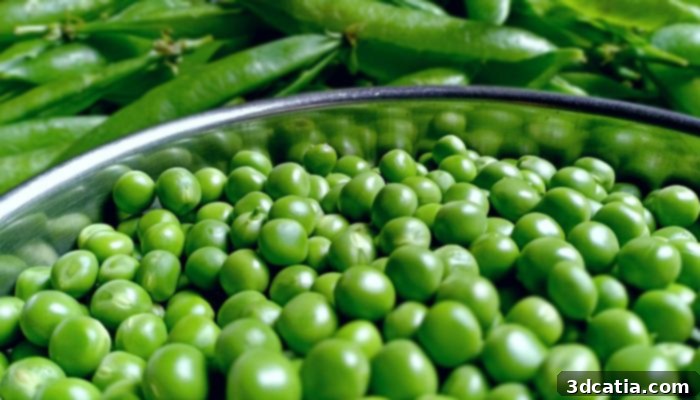
Pea protein is an inexpensive source of protein. Researchers at the University of Alberta have found a way for it to retain its shape after 3D printing, opening up new avenues for establishing plant-based protein sources.
3D Printing Gives Shape, Cold Plasma Gives Stability: A Novel Combination
The core of this breakthrough lies in the application of cold plasma treatment to enhance the structural properties of pea protein. Cold plasma is an ionized gas that operates at near-room temperatures, making it a highly attractive non-thermal processing method for food applications. Unlike traditional high-heat treatments that can degrade nutrients and alter flavor profiles, cold plasma can modify surface properties, sterilize, and induce structural changes in materials without significant heat exposure. This makes it ideal for sensitive food ingredients like proteins.
In their innovative approach, the researchers meticulously prepared a specialized pea protein “ink.” This ink, designed for optimal printability, was then mixed with water that had been activated using cold plasma. More specifically, they utilized plasma-activated microbubble water (PAMB). PAMB is created by passing gas through water under cold plasma conditions, generating reactive oxygen and nitrogen species within tiny bubbles. When this PAMB was incorporated into the protein mixture, it initiated subtle but significant structural modifications within the pea protein molecules. The resulting substance was then subjected to a controlled heating and cooling process – crucial steps for achieving the desired rheological properties – before being precisely printed using a 3D food printer. The overarching goal was not merely to create a printed object, but to achieve an appealing shape and texture that possessed exceptional durability and structural integrity.
Optimized Printing Parameters and Remarkable Results
During the intricate 3D printing process, the research team placed particular emphasis on the precise adjustment of printing parameters. Factors such as temperature, ambient humidity, and printing speed are absolutely crucial for determining the quality and structural integrity of the final printed products. These parameters influence the flow characteristics of the protein ink, its solidification rate, and ultimately, its ability to maintain complex geometries. The meticulous optimization of these variables ensured that the full potential of the PAMB-treated pea protein could be realized during extrusion.
The comparative results were striking. When compared to pea proteins enriched with conventional distilled water, the PAMB-treated protein gels exhibited significantly superior structure and dimensional stability immediately after printing. This means the printed objects held their intended shape without collapsing or deforming, a monumental step forward for 3D printed plant-based foods. M.S. Roopesh, one of the distinguished co-authors of the study, attributes this remarkable improvement to a fundamental structural change within the pea protein molecules induced by the PAMB water. This modification likely involves changes in protein conformation, aggregation, or cross-linking, which collectively enhance the gelation properties and mechanical strength of the material.
Roopesh eloquently summarizes the profitable results and highlights the diverse new fields of application that this breakthrough unlocks for pea protein: “By improving the gelation and 3D printability, pea protein can be used in several applications, including expanding the selection and boosting the structural properties of plant-based meat and cheese.” This implies that future plant-based meat alternatives could achieve textures, chewiness, and fibrous structures more akin to traditional animal meats. Similarly, plant-based cheeses could develop better melting characteristics, sliceability, and mouthfeel, directly addressing common consumer complaints about current alternatives. The ability to precisely control the texture and form through 3D printing, combined with enhanced stability, means a higher quality, more satisfying eating experience for consumers, which is critical for market adoption.
Future Outlook and Accessibility of Research
The potential for customization is particularly exciting, as it could enable the production of foods tailored to individual dietary needs, health conditions, or even aesthetic preferences. Imagine printing a meal with specific protein, carbohydrate, and fat ratios, enriched with particular vitamins or minerals, all in an appealing and novel form. The emphasis on scalability ensures that these innovative processes can transition from laboratory experiments to efficient, large-scale industrial production, making personalized and sustainable plant-based foods accessible to a broader population. This research represents a significant leap forward in addressing global food security, promoting health, and fostering environmental stewardship.
The comprehensive findings of this seminal study, titled “Improvement in 3D printability, rheological and mechanical properties of pea protein gels prepared by plasma activated microbubble water,” were officially published in June 2024. This important work can be found in the esteemed scientific journal Food Bioscience and is readily accessible through ScienceDirect. For those interested in delving deeper into the experimental approach, detailed methodologies, and specific results of this pioneering research, the full article is available HERE. Exploring the study provides a deeper understanding of the scientific rigor and innovative spirit driving the future of food technology.
What are your thoughts on this exciting new approach to enhancing 3D printed pea protein and its potential impact on the food industry? We invite you to share your insights, questions, or predictions in a comment below. You can also engage with us and our community on ourLinkedIn,Facebook, andTwitter pages! To stay informed about the very latest advancements and news in the dynamic world of 3D printing, don’t forget to sign up for our free weeklyNewsletter here, delivered straight to your inbox. Additionally, you can find all our engaging videos and in-depth content on our officialYouTube channel.
*Cover Photo Credits: Pauline Chan