
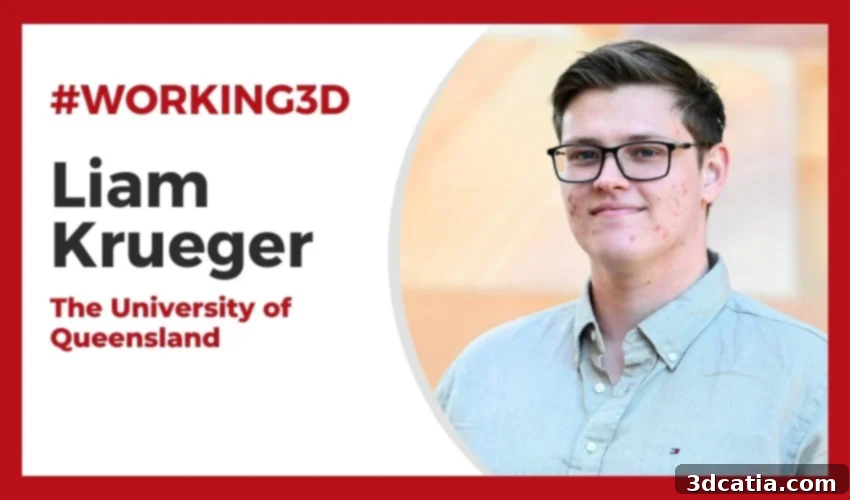
Shaping the Future of Medicine: Liam Krueger on Pharmaceutical 3D Printing Innovation
The landscape of healthcare is being continuously reshaped by groundbreaking technological advancements, and additive manufacturing in the medical sector stands at the forefront of this revolution. Innovations and novel applications are flourishing at an unprecedented pace, vividly demonstrating the immense potential of 3D printing technologies to profoundly improve the daily lives of countless patients worldwide. The pharmaceutical field, in particular, is experiencing a transformative shift, with the gradual but consistent launch of various forms of 3D printed medication serving as a powerful testament to these ongoing advances. The strategic integration of 3D printing offers unparalleled capabilities, enabling the creation of medicines with precisely personalized dosing of active pharmaceutical ingredients. Furthermore, it allows for the combination of multiple drugs into a single tablet, meticulously tailored to the unique needs of each individual patient. This technology also facilitates the modification of a drug’s shape, size, and consistency, making it significantly more palatable and easier to administer for specific patient populations, such as children or the elderly, thereby enhancing adherence and therapeutic outcomes. To gain deeper insights into this dynamic field and understand what it truly means to conduct pioneering research in 3D printing for the pharmaceutical industry, we had the privilege of interviewing Liam Krueger, an accomplished PhD student specializing in pharmaceutical 3D printing at the prestigious University of Queensland.
3DN: Could you introduce yourself?
Hello, my name is Liam Krueger, and I am a qualified pharmacist currently in my final year as a PhD student. My research focuses intensely on the 3D printing of pharmaceuticals, a cutting-edge field I’m exploring at the University of Queensland, located in Australia. I completed my pharmacy degree in 2020 and transitioned directly into my PhD program, a journey that has been incredibly rewarding. While I am now approaching the culmination of this significant chapter, my passion and motivation for continuing my research in this innovative domain remain as strong as ever. I am deeply committed to contributing to the advancement of personalized medicine through additive manufacturing.
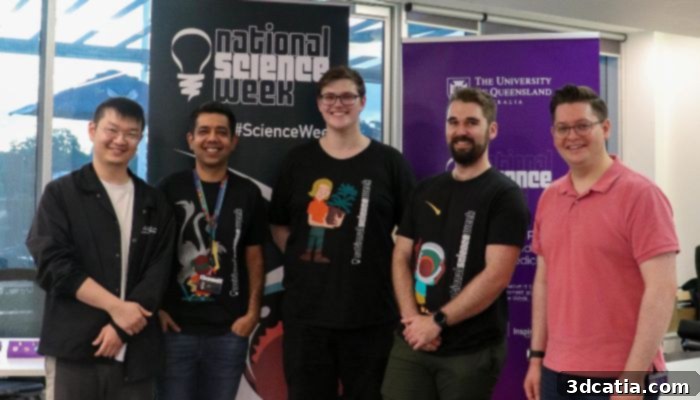
Liam Krueger, center, with colleagues from the University of Queensland.
3DN: How did you discover additive manufacturing?
My introduction to additive manufacturing came during my time as an undergraduate pharmacy student. My research supervisor at the time, Professor Amirali Popat, who now serves as my primary thesis supervisor, was deeply involved in an exciting project centered around extrusion and fused deposition modeling (FDM). This particular area of research immediately captivated my interest due to its innovative approach to drug delivery and formulation. The concept of creating complex structures and personalized dosages through 3D printing was fascinating. Since that initial exposure, our dedicated 3D printing section within the university has experienced substantial growth and expansion. We have significantly scaled up our capabilities, now boasting two advanced hot-melt extruders and an impressive array of a dozen 3D printers, allowing us to pursue a wider range of experimental designs and accelerate our research in pharmaceutical additive manufacturing.
3DN: What is your current role? What is a typical day like?
As a PhD student dedicated to pharmaceutical 3D printing, my days are primarily structured around intensive lab work, meticulous research, and academic writing. A substantial portion of my work involves hands-on experimentation, particularly with novel polymer blends. My team and I focus on combining these polymers with various active pharmaceutical ingredients (APIs) to thoroughly test numerous critical aspects. These include the long-term stability of the drug product, its printability using our specialized equipment, and crucially, the precise speed and profile of drug release, which dictates how the medication functions within the body. I frequently find myself engaged in the intricate process of modifying and optimizing our hot-melt extruder and a variety of 3D printers. This customization is essential to ensure compatibility with some of the unique and diverse polymers we investigate, each possessing distinct processing requirements. Many of these polymers exhibit highly varied properties, such as their biocompatibility – how well they interact with biological systems; their dissolution rate – how quickly they break down; their melting point – a critical factor for extrusion; and their pH sensitivity, which can influence drug release in different parts of the gastrointestinal tract. Other physical characteristics like brittleness or flexibility after extrusion are also vital considerations for the final drug product’s integrity and patient experience.
Beyond the printing and formulation aspects, we also employ a suite of sophisticated analytical methods to gain a deeper understanding of our drug products. High-Performance Liquid Chromatography (HPLC) is routinely used to quantify drug content, assess purity, and identify any potential degradation products, ensuring the quality and consistency of our formulations. Thermogravimetric Analysis (TGA) helps us determine the thermal stability of both the drug and the polymer, identifying degradation temperatures and measuring solvent content. Differential Scanning Calorimetry (DSC) provides invaluable information about the drug’s physical state, specifically whether it exists in a crystalline or amorphous form, and its thermal transitions like melting points and glass transition temperatures. Understanding these thermal properties is crucial as they directly impact drug solubility, stability, and ultimately, its bioavailability. All these analytical techniques combined allow us to meticulously characterize our 3D-printed pharmaceuticals, ensuring their safety, efficacy, and suitability for clinical application.
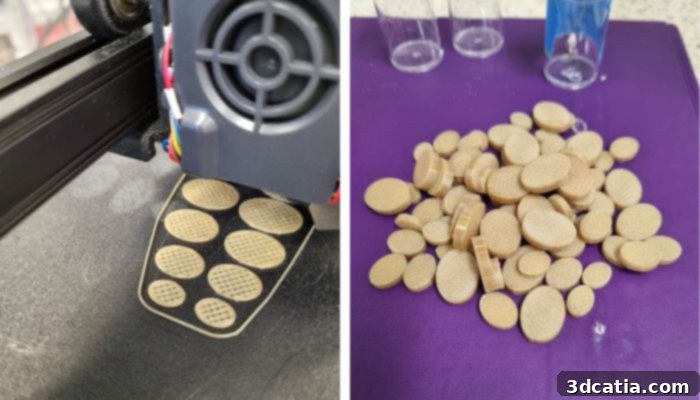
3D printing makes it possible to create customized drugs in terms of consistency and dosage to meet specific patient needs.
3DN: What qualifications and experience are required for your role?
Generally, to embark on a PhD program in a field like this, a strong academic foundation is essential. This typically includes holding a bachelor’s degree or a higher qualification, coupled with demonstrable research experience. This experience can be gained through various avenues, such as an extensive undergraduate research project, an honors thesis, or a master’s degree program. However, I believe that this particular field, at the intersection of pharmaceuticals and 3D printing, is inherently multidisciplinary, meaning there are many diverse and valuable paths one can take to contribute. For instance, my background as a pharmacist provides me with a critical understanding of clinical applications, patient needs, drug mechanisms, and the real-life implications of pharmaceutical development. This clinical perspective is invaluable when designing drug formulations that are both effective and practical for patient use. Conversely, individuals with a robust background in mechanical engineering or software engineering would find their skills incredibly useful in optimizing the extrusion and printing processes, designing custom printer components, or developing sophisticated control software. Similarly, expertise in polymer chemistry is highly advantageous, as it directly applies to identifying, synthesizing, and characterizing the most suitable polymers for specific drug delivery applications, considering factors like biodegradability, release kinetics, and stability. Before commencing this project, my knowledge of the intricate workings of 3D printers was relatively limited. However, my PhD journey has been a testament to continuous learning and skill development, leading me to not only develop novel polymer blends but also design innovative tablet formulations that hold significant promise for future integration into medical clinics, ultimately enhancing personalized patient care.
3DN: What are the biggest challenges you face in your work as a pharmaceutical researcher in 3D printing?
In my role as a pharmaceutical researcher in 3D printing, several significant challenges consistently emerge. One of the primary hurdles is securing adequate funding, particularly without a strong industrial partner. High-level scientific research, especially in a cutting-edge field like this, requires substantial investment in specialized equipment, advanced materials, and skilled personnel. While securing grants is possible, industry collaboration often provides more stable and long-term financial support, accelerating the pace of discovery and development. On a positive note, the evolution of Fused Deposition Modeling (FDM) technology towards open-source platforms has made the core printers and their associated software much more accessible, which helps to lower initial setup costs for research. However, for pharmaceutical applications, stringent requirements often necessitate highly specialized and sometimes proprietary equipment.
Another significant challenge I’ve encountered is the relatively limited number of researchers specifically focused on pharmaceutical 3D printing within Australia. This scarcity can make it difficult to foster a broad collaborative network, limiting opportunities to exchange ideas, share resources, and collectively tackle complex problems. A more robust research community would undoubtedly accelerate innovation and problem-solving within the field. Perhaps the most intricate and pressing concern, however, revolves around the regulatory status of 3D-printed pharmaceuticals. The type of customized drug production we are pursuing often falls into a complex “gray area” that sits ambiguously between traditional pharmaceutical compounding and large-scale manufacturing. Compounding involves the preparation of individualized medications by pharmacists to meet specific patient needs, typically in smaller batches. Manufacturing, conversely, involves the mass production of standardized drug products under strict regulatory guidelines. In Australia, and indeed internationally, there are very few established precedents or clear regulatory pathways for customized 3D-printed pharmaceuticals being supplied directly to patients. This delicate situation demands ongoing and robust collaboration between academic researchers, pharmaceutical industry stakeholders, and regulatory bodies such as the Therapeutic Goods Administration (TGA) in Australia, the FDA in the United States, and the EMA in Europe. Developing clear, comprehensive guidelines for quality control, safety, efficacy, and intellectual property for these personalized medications is paramount. Despite these complexities, the large-scale integration of this transformative technology into clinical practice appears to be an inevitable reality in the near future, promising a new era of truly personalized medicine.
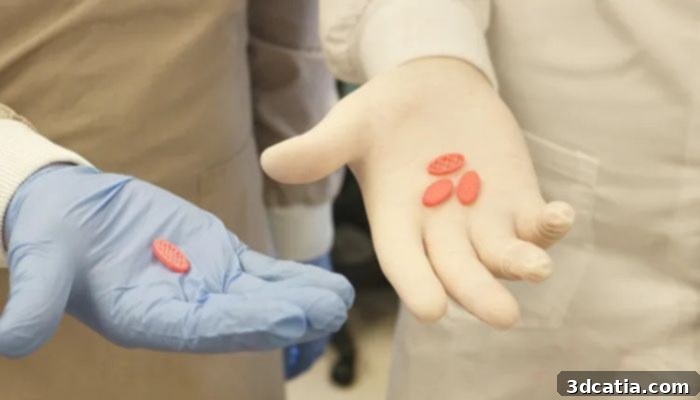
3D printing of drugs is already a reality, but the research continues.
3DN: What advice would you give to someone who wants to work in the pharmaceutical and 3D printing sector?
My strongest advice for anyone aspiring to work at the exciting intersection of pharmaceutical research and 3D printing technology is this: if you possess a genuine passion for combining these two dynamic fields and an opportunity presents itself, you should absolutely seize it without hesitation! This is a truly nascent field, still in its early stages of development, but the level of interest and investment in it continues to grow at an incredibly rapid pace. We are on the cusp of a revolution in personalized medicine, and in the next few years, this technology could fundamentally alter the way we approach drug formulation, delivery, and patient care. It’s a sector brimming with potential for innovation, significant impact, and continuous learning. Don’t be afraid to dive into this multidisciplinary domain; your unique background, whether in pharmacy, engineering, chemistry, or another scientific discipline, will be a valuable asset. You can find out more about Liam Krueger’s extensive work and contributions to this field by visiting his profile HERE.
What are your thoughts on Liam Krueger’s insightful developments and pioneering research work in pharmaceutical 3D printing? Let us know your perspective in a comment below or connect with us on ourLinkedIn,Facebook, andTwitter pages! Don’t forget to sign up for our free weeklyNewsletter here, to receive the latest 3D printing news directly to your inbox! You can also find all our compelling videos and interviews on ourYouTube channel.
*All Photo Credits: Liam Krueger/ The University of Queensland