
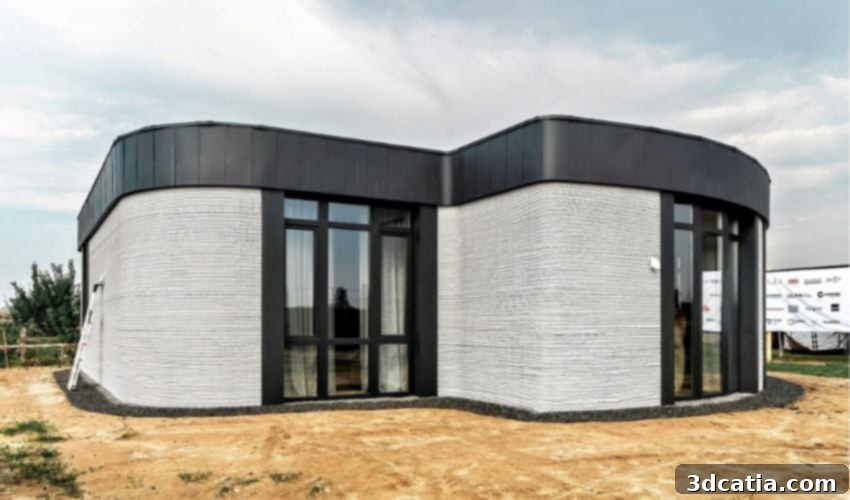
Pioneering Post-War Reconstruction: Ukraine’s UTU Unveils First 3D-Printed House in Irpin
In a powerful demonstration of innovation and humanitarian spirit, 3D printing has once again proven its transformative potential within the construction sector. Ukrainian startup UTU, a cutting-edge manufacturer specializing in 3D printers for residential buildings, has achieved a significant milestone by completing the manufacturing of a new home in Irpin, a town located west of Kiev. This remarkable accomplishment marks a historic first for Irpin, an area profoundly scarred by the recent conflict, signaling a new chapter in its recovery and reconstruction efforts.
The newly constructed 3D-printed house stands as a symbol of hope and resilience. It has been generously donated to the family of Yaroslav Berezov, a brave Ukrainian soldier who tragically lost his life in combat. His family has already moved into the comfortable 130-square-meter residence, which was brought to life in an astonishingly short period – a mere 58 hours of printing time. This project not only showcases the incredible speed and efficiency of additive manufacturing but also highlights its vital role in providing rapid, dignified housing solutions for those most affected by conflict.
A Beacon of Hope in Post-War Irpin
The town of Irpin has endured immense devastation, leaving countless families displaced and homes destroyed. In this challenging landscape, the arrival of a 3D-printed home offers more than just shelter; it represents a tangible step towards rebuilding lives and communities. The rapid construction of the Berezov family’s 130-square-meter, three-bedroom house stands in stark contrast to the lengthy timelines often associated with traditional building methods, providing immediate relief and stability to a family in desperate need.
This initiative by UTU extends beyond mere construction; it is a profound act of humanitarian support. By providing a modern, secure, and comfortable home to the family of a fallen hero, UTU is demonstrating how advanced technology can be harnessed for social good and post-conflict recovery. The ability to quickly erect durable structures in areas that have suffered extensive damage is crucial for facilitating the return of displaced populations and fostering a sense of normalcy amidst ongoing challenges. This project serves as a powerful testament to the ingenuity and compassion driving Ukraine’s recovery efforts.
UTU’s Revolutionary 3D Printing Technology
Startup UTU is rapidly establishing itself as a trailblazer in the construction market, driven by its commitment to innovation and efficiency. The company has engineered a sophisticated 3D concrete printer featuring an advanced robotic arm, designed to tackle the complexities of on-site construction with unparalleled precision. This state-of-the-art machine boasts an impressive printing volume, capable of producing circular structures up to 220 square meters or square structures up to 140 square meters, all achievable without the need to reposition the printer.
UTU’s primary objective is to deliver comfortable, high-quality housing solutions through a system that prioritizes mobility and rapid deployment. The printer’s design allows it to be transported and set up quickly at any construction site, significantly reducing logistical complexities and project timelines. According to the manufacturer, the entire setup process – from deployment to full operational readiness – takes a mere 2 to 3 hours. This exceptional speed and ease of setup are critical differentiators, making 3D printing an increasingly viable and attractive option for urgent housing needs and large-scale reconstruction efforts.
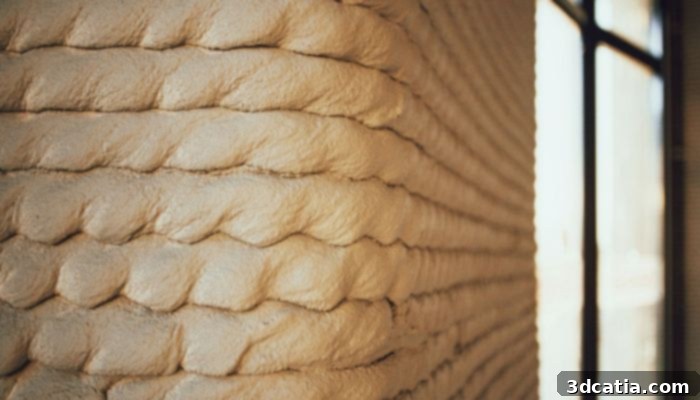
3D printer deposits successive layers of concrete to build walls
The technological prowess of UTU’s printer lies in its ability to automate the intricate process of laying concrete, layer by layer, with remarkable accuracy. This method not only accelerates construction but also minimizes human error, ensuring consistent quality throughout the building process. The robotic arm’s precision allows for intricate architectural designs and robust structural integrity, offering a level of flexibility and speed that traditional construction methods often struggle to match. This forward-thinking approach positions UTU at the forefront of the additive manufacturing revolution in the global construction industry.
The Science Behind the Structure: Innovative Materials and Efficiency
The house constructed in Irpin is a testament to the advanced material science underpinning UTU’s technology. The startup reports that the entire 130-square-meter structure was completed using an impressive 72 tonnes of material in just 58 hours. While the exact composition of the material is proprietary, UTU’s website indicates a strong collaboration with Henkel, a global leader in adhesive technologies. The teams utilized a bespoke concrete mix derived from a specialized mortar developed by Henkel, engineered to produce a uniformly consistent and high-quality concrete for 3D printing applications.
This specially designed mortar is a cornerstone of UTU’s efficient construction process. A key advantage is its ability to be prepared directly within the printer itself. This innovative feature eliminates the need for additional, bulky mixing equipment on-site, leading to significant savings in both equipment purchase costs and operational expenses. Furthermore, the precise control over the material mixture ensures optimal printability, reducing waste and enhancing the overall structural integrity of the printed walls. The consistency achieved through this bespoke concrete formulation is vital for the smooth, continuous operation of the 3D printer, enabling the rapid build times observed in projects like the Irpin house.
The integration of such specialized materials with automated printing technology underscores a broader shift towards more sustainable and resource-efficient building practices. By minimizing waste, optimizing material usage, and streamlining the construction workflow, UTU is not only building houses faster but also doing so with a reduced environmental footprint. This synergy between advanced materials and cutting-edge printing technology holds immense promise for the future of construction, particularly in areas where resources are scarce or rapid deployment is critical.
Beyond Structure: A Home Designed for Resilience and Comfort
The house provided to the family of soldier Yaroslav Berezov is more than just a structure; it’s a meticulously designed home offering both comfort and critical safety features. Spanning 130 square meters, it includes three spacious bedrooms and is thoughtfully designed to serve as a secure shelter when needed. In the context of the ongoing conflict, incorporating such protective elements is not just an added luxury but a vital necessity, providing peace of mind to its occupants.
Safety is paramount in the Irpin home, which is why it integrates advanced security measures. The windows are fitted with bulletproof glass, offering enhanced protection against potential threats. Furthermore, the walls are engineered with unique cavities filled with monolithic concrete, designed to block moving signals. This feature can be critical in preventing electronic surveillance or interference, adding an extra layer of security and privacy for the residents. These thoughtful additions underscore UTU’s commitment to building homes that are not only efficient and durable but also inherently safe and resilient in challenging environments.
The house, fully equipped and decorated, represents a new beginning for the Berezov family. Their positive feedback, attesting to the home being “totally functional and pleasant to occupy,” highlights the successful fusion of advanced construction techniques with livable design. The provision of a safe, modern, and comfortable living space allows the family to focus on healing and rebuilding their lives, honoring the sacrifice of Yaroslav Berezov with a lasting legacy of care and support. This project embodies the principle that technology can, and should, serve humanity by addressing fundamental needs with innovative solutions.
A Collaborative Vision for Future Construction
This pioneering project in Irpin is not solely the result of UTU’s efforts; it is a testament to extensive collaboration and community spirit. A diverse team of approximately one hundred individuals contributed to bringing this house to life. This included a wide array of professionals: skilled architects who shaped the vision, talented decorators who ensured a welcoming aesthetic, creative designers who optimized functionality, and various furniture and appliance manufacturers who equipped the home. This multi-disciplinary approach underscores the fact that even with advanced 3D printing technology, human expertise and collaboration remain indispensable for creating truly functional and habitable spaces.
The synergy between UTU’s technological capabilities and the collective expertise of designers, builders, and suppliers showcases a promising model for future construction projects. This collaborative ecosystem ensures that while the core structure is rapidly printed, the finishing touches and interior amenities are crafted with the same attention to detail as any traditionally built home. If you’re intrigued by the technical specifications and capabilities of the UTU machine that made this possible, you can find more detailed information by clicking HERE.
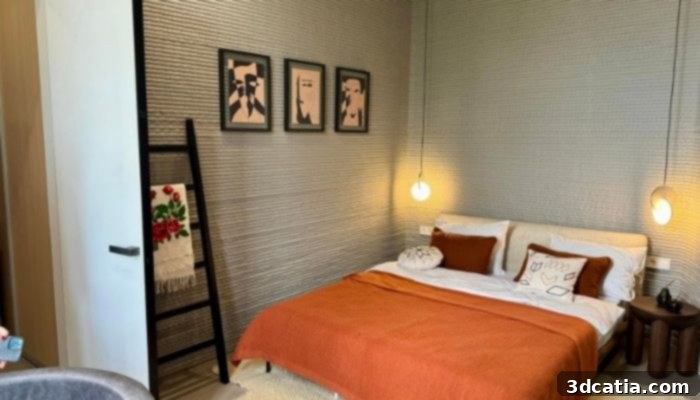
The interior of the 3D printed house in Ukraine
The Broader Impact: 3D Printing as a Catalyst for Change
The successful deployment of a 3D-printed home in Irpin by UTU has significant implications far beyond Ukraine’s borders. It highlights the immense potential of additive manufacturing to address global housing crises, particularly in regions affected by natural disasters, conflict, or extreme poverty. The speed, cost-effectiveness, and design flexibility offered by 3D printing represent a paradigm shift in how we conceive and execute construction projects. This technology can provide rapid, scalable, and resilient housing solutions, significantly reducing the time and resources typically required for traditional building methods.
As the world grapples with growing populations and the urgent need for sustainable infrastructure, 3D printing in construction stands out as a viable and innovative path forward. It promises reduced material waste, lower labor costs, and the ability to construct complex geometries that would be challenging or impossible with conventional techniques. Projects like UTU’s in Irpin serve as powerful case studies, demonstrating that 3D-printed homes are not just conceptual possibilities but functional, durable, and rapidly deployable realities capable of making a profound difference in people’s lives and facilitating large-scale reconstruction efforts around the globe.
What are your thoughts on this groundbreaking 3D-printed house in Ukraine and the future of additive manufacturing in construction? We invite you to share your insights in a comment below or join the conversation on our social media channels: LinkedIn, Facebook, and Twitter pages! Don’t forget to sign up for our free weekly newsletter here for the latest 3D printing news delivered straight to your inbox! You can also explore all our videos and in-depth content on our YouTube channel.
*All Photo Credits: 3D Technology UTU