
Mastering 3D Printing Post-Processing: Essential Solutions for Cleaning, Finishing, and Coloring
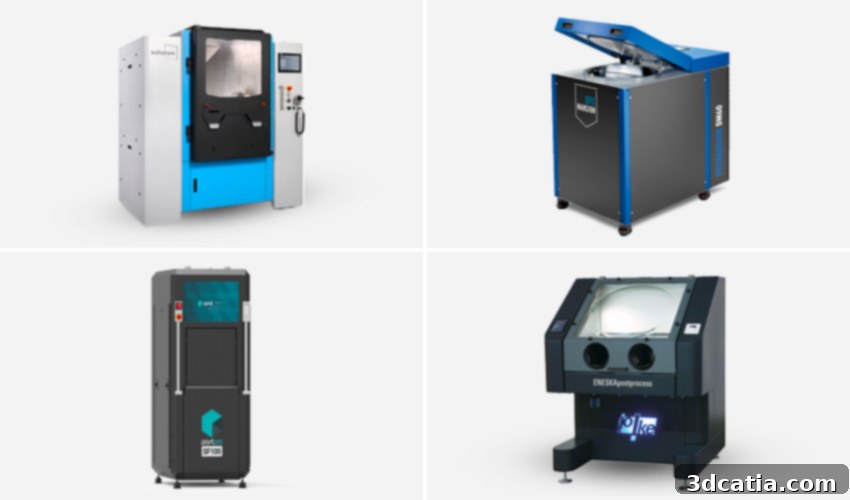
The journey of an additively manufactured part rarely concludes once it leaves the 3D printer. In fact, the post-processing phase is often a critical and time-consuming step, varying significantly depending on the 3D printing technology employed. Recent industry studies highlight this challenge, with a significant 55% of respondents in 2022 identifying the time required for post-processing as a major hurdle. This pervasive issue has spurred innovation across the additive manufacturing sector, leading to the development of faster, more accessible, and increasingly automated solutions. This article delves into the diverse range of post-processing solutions available on the market, categorizing them by their primary function: cleaning, surface treatment, and coloring. Each solution is presented with its manufacturer, listed in alphabetical order for easy reference.
Before we explore these advanced systems, it’s important to clarify our focus. This guide specifically highlights manufacturers specializing in dedicated post-processing machinery. While many 3D printer manufacturers, such as Formlabs with its cleaning and heat treatment solutions, or SLS specialists offering de-powdering machines, also provide integrated post-processing options, our emphasis here is on independent innovators driving specialized advancements in this crucial stage of additive manufacturing.
Part Cleaning and Support Removal
After a 3D printer completes a build, the raw part is seldom ready for immediate use. A crucial initial step involves removing excess material and support structures. For powder bed fusion technologies, whether metal or plastic, this process is known as de-powdering. In the case of resin-based technologies, it’s typically referred to as cleaning. Support structures, which stabilize a part during printing, also need removal. While some supports can be detached manually, complex geometries or metal processes often necessitate specialized machinery for efficient and precise removal.
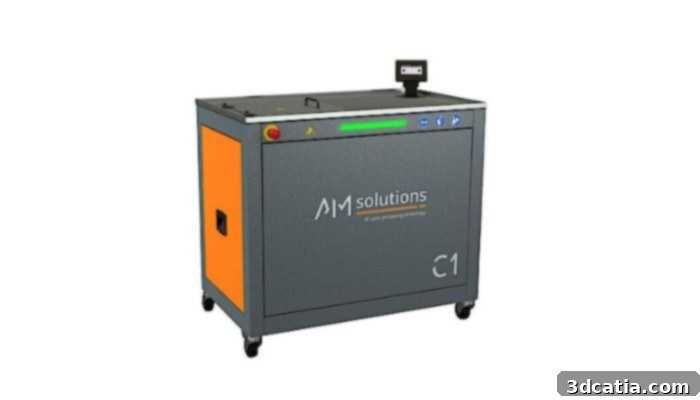
AM Solutions C1 for Photopolymer Cleaning
The AM Solutions C1 offers an efficient and gentle post-processing solution specifically designed for photopolymer 3D-printed products. Capable of handling parts up to 340 x 440 x 170 mm (L x W x H), it excels in cleaning objects where intricate details are paramount. The C1 employs a combination of mechanical action and controlled heat to effectively remove support material and residual resin without damaging delicate features. Its versatility is enhanced by customizable standard settings, allowing users to tailor the cleaning process to specific part requirements. For industrial applications, the machine ensures quality assurance through a data logger that meticulously documents crucial process variables, including temperature and treatment time. Furthermore, the C1 is engineered for cost-effective operation, featuring level monitoring and saturation sensors that optimize compound usage, thereby minimizing operating expenses.
Joke Technology’s ENESKApostprocess for Powder and Support Removal
With a legacy spanning approximately 80 years in surface technology, Joke Technology GmbH brings its expertise to additive post-processing with the ENESKApostprocess. Unveiled at Formnext in Frankfurt in 2019, this robust system is primarily a de-powdering machine, but its capabilities extend far beyond simply removing excess powder. The ENESKApostprocess is equally adept at separating parts from the substrate plate and efficiently removing complex support structures. Recognizing the health risks associated with inhaling fine dust generated during post-processing, the ENESKApostprocess is designed as a completely enclosed and housed machine. It integrates essential extraction and filtration equipment, ensuring a safe working environment and protecting operators from harmful airborne particles, making it an indispensable tool for industrial applications.
Quill Vogue and its Wash Static Station for PolyJet Parts
Quill Vogue offers specialized cleaning solutions for 3D printed components, with its Wash Station Static solution specifically tailored for post-processing parts created with Stratasys PolyJet technology. This machine is lauded by the manufacturer for its user-friendliness and its ability to remove print media efficiently, often in under 5 minutes, using pressurized cold water for optimal results. It features a wide-angle jet for rapid material removal and a powerful, concentrated precision jet, ideal for navigating and cleaning complex geometries. Enhanced visibility is provided by an integrated LED light, while easy-to-use foot controls simplify operation. The system also includes a filtering system and a soundproofing mechanism, contributing to a quieter working environment. Available in both standard and XL sizes, and in open or closed formats, the Wash Station Static caters to a variety of production needs.
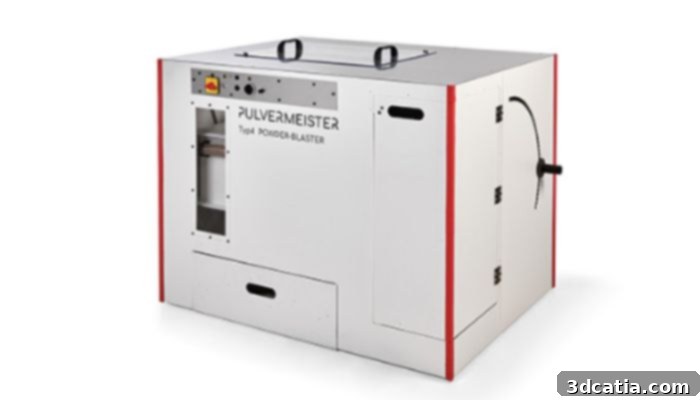
PULVERMEISTER’s Typ 4 for Efficient Powder Cleaning
The Typ 4 represents the latest advancement in post-processing from PULVERMEISTER, a German manufacturer renowned for its solutions in powder-based plastic 3D printing. This machine incorporates the company’s proprietary technology, enabling efficient removal of components while simultaneously allowing the used powder to be recycled for subsequent prints. Measuring 1.3m x 1m x 1m and weighing approximately 280 kg, the Typ 4 is designed for ease of use. Its operating parameters can be adjusted with a single scale, offering control over the extent of de-powdering and part stress. Remarkably, the Typ 4 can process 20 liters of product in less than 15 minutes, delivering ready-to-use parts in a significantly reduced timeframe. Key advantages include the high reusability of purified used powder, short processing times, and consistently high-quality finished parts. From an ecological and economic perspective, the entire process consumes low energy, contributing to both environmental friendliness and cost savings. The PULVERMEISTER Typ 4 is readily available for order directly from the company’s website.
Solukon and its SFM-AT200 for Automated Metal De-powdering
Solukon, an Augsburg-based German company, is a leading innovator in automated de-powdering systems for additive manufacturing, providing robust industrial post-processing solutions. Among their advanced offerings is the SFM-AT200, an entry-level de-powdering system engineered for the efficient and thorough cleaning of laser-fused metal parts. The core of its powder removal process is the patented Smart Powder Recovery technology. Parts are placed within a sealed chamber where targeted vibrations and automated rotation meticulously clean them. This technique significantly accelerates the post-processing workflow, achieving up to a 90% reduction in processing time. Critically, the SFM-AT200 adheres to stringent safety standards, featuring an explosion-safe design crucial for handling reactive metal powders. Its high cleaning accuracy makes it particularly well-suited for demanding applications in medical and laboratory sectors. Furthermore, Solukon’s solution promotes sustainability by enabling the reuse of metal powder, thereby reducing raw material consumption for new parts.
Advanced Surface Finishing Techniques
Surface finishing is a crucial post-processing step that refines the exterior of 3D printed parts, ensuring they meet precise specifications regarding desired average roughness, dimensional consistency, and aesthetic quality. This process is essential not only for improving the visual appeal but also for enhancing functional properties, mechanical performance, and durability, all while carefully preserving the fine details intrinsic to the 3D printed object.
3DFinisher, the Post-processing Solution From 3D Nextech
3D Nextech, an innovative Italian startup spun off from the Scuola Superiore Sant’Anna in Pisa, is dedicated to advancing products and technologies within 3D printing and digital manufacturing. Their standout solution, the 3DFinisher, is designed for the professional and automated post-processing of parts made from ABS, ASA, and cellulose acetate. This machine is an invaluable asset for the additive manufacturing industry, as it delivers a superior surface finish to FFF (Fused Filament Fabrication) 3D printed parts. Given that FFF technology typically leaves noticeable layer lines and roughness, solutions like the 3DFinisher are instrumental in improving both the mechanical properties and the final aesthetic performance of parts, achieving results comparable to those of injection molding processes.
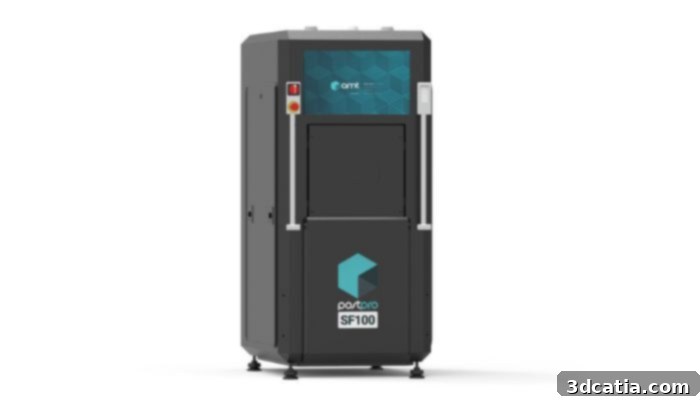
The PostPro SF100 from AMT for Chemical Vapor Smoothing
The PostPro SF100 is a flagship surface finishing solution from AMT, specifically engineered for polymer 3D printed parts. This machine leverages AMT’s proprietary chemical vapor smoothing (Vapor Smoothing) technology to effectively smooth and seal the surface of components. Equipped with an advanced automation system and a generous 100-liter processing chamber, the PostPro SF100 is built for high-volume production, promising increased productivity and a significant reduction in cost per part, according to the manufacturer. Its compact and ergonomic design ensures it occupies minimal space while remaining user-friendly in operation. AMT highlights that their chemical vapor smoothing technology not only dramatically improves the surface quality and aesthetic appeal of parts but also enhances their mechanical performance. Furthermore, it seals the surface, making parts easier to clean, dye, and coat, all while maintaining precise dimensional accuracy and eliminating visible fixing marks.
DLyte – DLyte Pro 500 for Dry Electropolishing of Metals
The DLyte series encompasses advanced machines utilizing the patented DryLyte® technology, specifically designed for the surface finishing of metal alloys across various industries. The DLyte Pro 500 stands out as one of the most sophisticated, powerful, and versatile machines currently available, offering fully automated, high-quality finishing. DryLyte® technology represents an innovative and pioneering dry electropolishing system developed to significantly improve the surface finish of metal components. The DLyte Pro 500 features eight perimeter spindles, each capable of accommodating parts up to 200 x 300 mm, allowing for the simultaneous polishing of multiple parts using diverse supports. Additionally, it integrates a central spindle for processing larger components (up to 500 x 300 mm). Its hardware boasts several advantages, including easy access, low maintenance requirements, customizable configurations, and an efficient exhaust system with a carbon filter that ensures no dust emission. This technology respects part tolerances, delivering a mirror finish and consistent, homogeneous results while effectively preventing common side effects such as oxidation or orange peel texture.
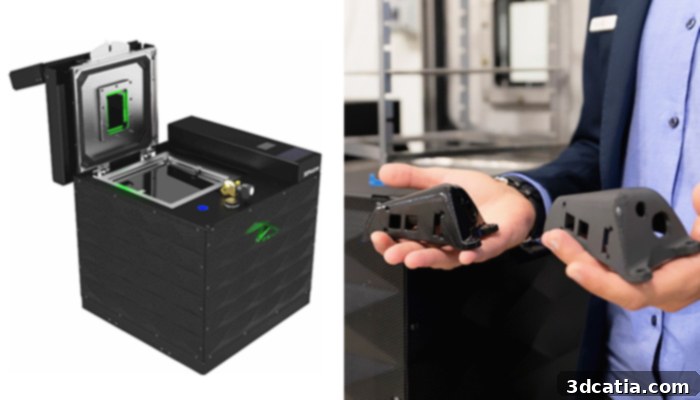
The Smoothit from Metalizz for Polymer Part Finishing
The Smoothit by Metalizz offers an automated solution for surface smoothing of 3D printed polymer parts, demonstrating broad compatibility with various technologies including SLS, MJF, FDM, SLA, and DLP. This advanced machine employs a unique MiM – Measured Incremental Multilayering – process to achieve its superior finishes. When utilized in conjunction with the Metalfog machine, the Smoothit can produce colored finishes with a striking metallic sheen, thanks to the proprietary Look Like Chromium® application. Its rapid prototyping capabilities make the Smoothit an ideal choice for both intricate design tasks and demanding production operations.
Key benefits of the Smoothit include its ability to deliver quick, ultra-smooth finishes, alongside simplified cleaning and finishing operations. It comes fully equipped with an intuitive touch-screen interface and an integrated decontamination system, ensuring a clean and safe process. A notable feature is the ability to recover unused varnish for future applications, enhancing cost-efficiency and sustainability. The machine optimizes production times with an impressive average cycle time of just 5 minutes. It operates with high-solid chemical reagents, utilizing varnish concentrations over 85% and volumes up to 10 liters. For environmentally conscious users, the Smoothit is designed to be eco-efficient and environmentally friendly, prioritizing user safety throughout its operation. Manufactured entirely in France, the Smoothit presents a compelling option for high-quality polymer part finishing.
PostProcess – DECI Duo for Dual-Function Post-Processing
PostProcess Technologies presents the DECI Duo, a versatile post-processing machine dedicated to both surface finishing and the efficient removal of support structures from 3D printed parts. This multifunctional system is fully automated and boasts a space-saving design, making it suitable for various industrial environments. The DECI Duo is compatible with a wide array of 3D printing materials, including resins, thermoplastics, and even metals, offering rapid processing times even for parts with complex geometries. A standout feature is its Thermal Atomized Fusillade (TAF) technology, which employs two vertically targeted jet streams emitting pressure waves. This unique combination of compressed air, cleaning agent, and suspended particles ensures an optimal surface finish, enhancing both the aesthetic and functional qualities of the printed components.
Advanced Coloring and Dyeing Solutions
Coloring, often referred to as dyeing, typically represents the third and often final step in the post-processing workflow for 3D printed parts. This stage allows for aesthetic enhancement and, in some cases, can add functional properties. While various colors can be applied, white or light-colored parts generally offer the most suitable base for achieving vibrant and consistent dyeing results.
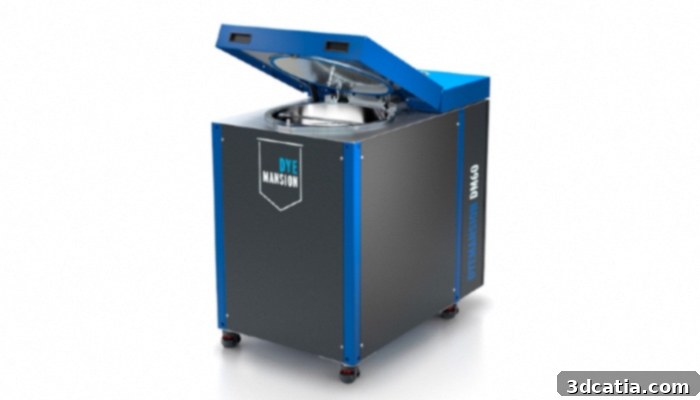
DyeMansion – DM60 for Industrial Coloring
German manufacturer DyeMansion is recognized for offering one of the market’s leading industrial coloring solutions: the DM60 machine. This system utilizes DyeMansion’s proprietary DeepDye Coloring (DDC) technology, capable of completing mid-size build jobs in an impressive timeframe of less than 150 minutes. The DM60 boasts an unparalleled color variety in the market, providing access to 170 RAL colors, specialized hues for the automotive industry, and the unique flexibility to match virtually any custom color. To simplify this otherwise complex process, DyeMansion integrates RFID chips into all color cartridges. These chips store vital information such as material type, volume, desired finish, and specific color, enabling the system to automatically adjust parameters for optimal material and surface compatibility. Upon scanning a cartridge, all process-relevant data is transmitted to the DM60, initiating a fully automated coloring cycle. DyeMansion offers a comprehensive “Print-to-Product” workflow, which includes not only advanced coloring machines but also integrated cleaning and surfacing solutions, providing a holistic approach to post-processing.
Girbau – DY 130 for HP Multi Jet Fusion Parts
Girbau, a Spanish company specializing in the 3D printing sector, has developed the DY 130, a post-processing machine designed to provide a colored finish exclusively for parts produced on HP Multi Jet Fusion 3D printers. This solution comes with a variety of predefined programs, simplifying the dyeing process. While it is optimized for achieving deep black finishes, customers can also experiment with other colors. Girbau’s machine is fully automated, requiring no constant supervision, which significantly enhances ease of use and operational efficiency. The DY 130 is also equipped with an internal tank that allows for the recycling of the dye for at least five uses, promoting sustainability and reducing material waste. According to the Spanish manufacturer, this post-treatment process offers a substantial reduction in the cost per piece, potentially halving it compared to other automatic dyeing equipment currently available on the market, making it an economically attractive option for HP MJF users.
The rapid evolution of 3D printing technologies has been paralleled by significant advancements in post-processing solutions. From meticulous cleaning and support removal to sophisticated surface finishing and vibrant coloring, these specialized machines are transforming the way 3D printed parts are brought to their final, functional, and aesthetically pleasing forms. Automation, efficiency, and sustainability are at the forefront of these innovations, making additive manufacturing workflows more streamlined and accessible than ever before. Choosing the right post-processing solution is critical for optimizing quality, reducing costs, and achieving desired performance for your 3D printed components.
What are your thoughts on these diverse post-processing solutions for 3D printing? Share your insights in a comment below or connect with us on our LinkedIn, Facebook, and Twitter pages! Don’t miss out on the latest 3D printing news—sign up for our free weekly Newsletter here. You can also discover all our videos on our YouTube channel.