
Weekly 3D Printing Insights: Top 5 Videos Covering Training, Color, Events, Mass Production, and Bioprinting Breakthroughs
Welcome back to our Sunday showcase of the most compelling developments in the world of additive manufacturing! This week, we delve into five pivotal videos that illuminate various facets of 3D printing, from foundational training to groundbreaking biomedical applications. As the industry continues its rapid expansion and diversification, staying informed about the latest trends, technologies, and challenges is more crucial than ever. Our curated selection aims to provide valuable insights for professionals, enthusiasts, and newcomers alike, offering a comprehensive look at how 3D printing is evolving and impacting different sectors. Prepare to explore the critical role of education, the vibrant advancements in color printing, key industry events, strategies for industrial-scale production, and revolutionary scientific research. Happy Sunday, and enjoy this week’s essential viewing!
Top 1: ImplementAM Emphasizes the Indispensable Role of Training for Additive Manufacturing Success
The journey toward widespread adoption and industrialization of additive manufacturing often encounters two significant hurdles: a pervasive lack of education and insufficient specialized training. These obstacles can impede progress, limit innovation, and slow down the integration of 3D printing technologies into mainstream production processes. Addressing this critical gap is paramount for the industry’s sustained growth. This is where organizations like ImplementAM have carved out an essential niche, dedicating themselves to expanding and democratizing access to high-quality additive manufacturing training across the United States. Through their engaging and accessible sessions, ImplementAM is effectively building a more skilled workforce, empowering individuals and companies to fully leverage the potential of 3D printing.
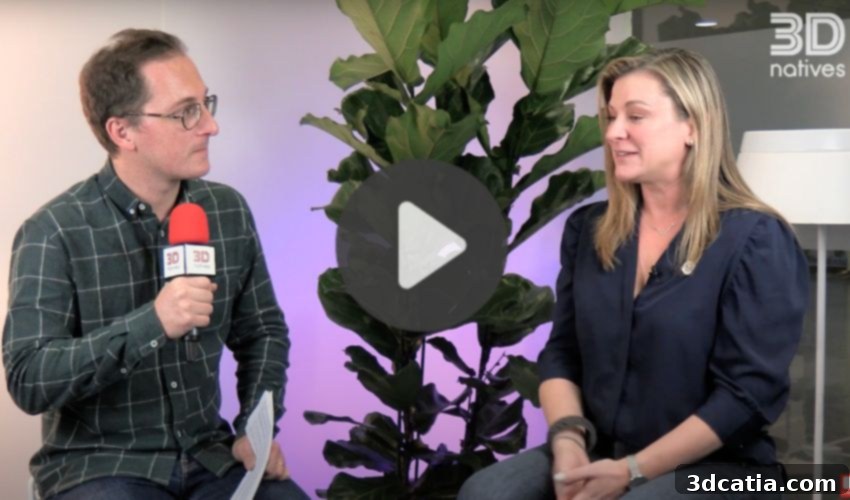
In this insightful video, we gain direct perspectives from two key figures driving this initiative: Kristin Mulherin, a co-founder of ImplementAM, and Stefan Jones, whose journey serves as a compelling success story born from effective training. Their discussion sheds light on the profound impact of education as additive manufacturing transitions from a niche prototyping tool to an industrialized production method. As the complexity of 3D printing technologies increases, so does the demand for professionals proficient in design for additive manufacturing (DfAM), machine operation, maintenance, material science, and quality control. ImplementAM’s strategic goals are centered around cultivating this expertise, ensuring that the additive manufacturing ecosystem is supported by a robust and knowledgeable talent pool. This segment underscores that investing in human capital through comprehensive training is just as vital as investing in cutting-edge hardware and software.
Top 2: Unlocking the Spectrum – A Deep Dive into True Color 3D Printing Evolution
While many 3D prints might feature a splash of color, achieving genuinely vibrant, multi-material, and precisely accurate color 3D printing has historically been a significant technological challenge. The ability to produce objects with a full spectrum of colors, intricate gradients, and varied material properties within a single print unlocks a new realm of possibilities, moving beyond simple aesthetics to functional and hyper-realistic applications. Traditional 3D printers often rely on single-color filaments or resins, making multi-color designs either difficult or impossible without post-processing. However, a select group of manufacturers is pushing the boundaries, leading the charge in developing sophisticated solutions for true color additive manufacturing.
Among these innovators, the Japanese company Mimaki stands out as a recognized leader, particularly through its advanced material jetting solutions. Material jetting technology allows for the deposition of multiple photopolymer resins simultaneously, each capable of being dyed with different pigments, enabling the creation of parts with exceptional color fidelity and textural variations. In this compelling video, produced in collaboration with Dassault Systèmes, viewers are invited to explore the fascinating evolution of color 3D printing. The segment highlights the incredible range of materials now compatible with these advanced systems, from rigid plastics to flexible elastomers, and showcases a myriad of applications. These include the creation of more realistic prototypes and models for product development, highly detailed packaging concepts that capture brand essence, immersive props and characters for the entertainment industry, and even intricate anatomical models for medical training and surgical planning. The synergy between Mimaki’s hardware innovation and Dassault Systèmes’ design software is paving the way for unprecedented creative freedom and functional versatility in the 3D printing landscape.
Top 3: RAPID + TCT 2024 Returns to California – A Premier Event for Additive Manufacturing
With the curtain now fallen on Formnext 2023, the additive manufacturing world eagerly anticipates a fresh calendar of industry events, each promising new innovations, insightful discussions, and unparalleled networking opportunities. Among these, RAPID + TCT stands as one of the most significant and influential gatherings in North America. Widely regarded as a cornerstone event for the entire additive manufacturing community, RAPID + TCT serves as a critical platform for showcasing cutting-edge technologies, fostering collaborations, and driving the industry forward.
The organizers recently made an exciting announcement regarding a significant change of dates and location for the 2024 edition. In a highly anticipated move, the event will now take place in June in the vibrant city of Los Angeles, California. This marks the first time in almost a decade that RAPID + TCT will be held on the West Coast, bringing the dynamic energy of additive manufacturing closer to the innovation hubs of Silicon Valley and the broader Pacific region. This strategic relocation offers fresh opportunities for attendees to connect with a diverse array of industry leaders, technology providers, and academic researchers. The video from SME provides an excellent preview of what exhibitors and visitors can expect next year, including keynote presentations from visionaries, in-depth technical sessions, hands-on demonstrations of the latest 3D printing hardware and materials, and invaluable opportunities for professional development and business growth. Whether you are an engineer, a designer, a researcher, or a business leader, RAPID + TCT 2024 promises to be an indispensable event for staying ahead in the rapidly evolving world of additive manufacturing.
Top 4: Mastering Design Rules for Scalable Mass Production with 3D Printing
As 3D printing matures beyond its prototyping origins, the industry is increasingly focused on its potential for mass production. Many sectors are now looking to additive manufacturing to produce end-use parts at scale, seeking advantages in customization, design complexity, supply chain optimization, and reduced material waste. However, transitioning from one-off prints to high-volume manufacturing with additive technologies presents a unique set of challenges. Unlike traditional manufacturing methods, the nature of 3D printing requires a distinct approach to design, process optimization, and material selection to achieve cost-effectiveness, repeatability, and consistent quality.
This is precisely where the principles of Design for Additive Manufacturing, or DfAM, become indispensable. DfAM encompasses a set of methodologies and guidelines that enable designers and engineers to fully exploit the capabilities of 3D printing technologies while mitigating their limitations. It involves considering factors such as part orientation, support structure requirements, minimum wall thickness, optimal geometries for strength and weight, and post-processing implications, all from the initial design phase. Understanding which additive manufacturing technologies are best suited for specific applications and materials also plays a crucial role in successful mass production. To demystify this complex area, Slant 3D, a company specializing in high-volume 3D printing, has released an insightful video outlining eight essential design rules. These rules are meticulously crafted to help optimize 3D printed parts for efficient and economical mass production. By adhering to these guidelines, manufacturers can significantly enhance print success rates, reduce material consumption, accelerate production times, and ultimately lower the cost per part, making additive manufacturing a viable option for large-scale industrial applications. This video is a must-watch for anyone aiming to bridge the gap between additive prototyping and industrial-scale production.
Top 5: Groundbreaking Achievement – 3D Printed Hair Follicles in Lab-Grown Skin
In a truly remarkable feat of biomedical engineering, researchers have successfully demonstrated the ability to 3D print functional hair follicles within lab-grown skin. This innovative breakthrough, which we briefly highlighted earlier in the week, represents a monumental step forward in the field of regenerative medicine and could have far-reaching implications for restorative health therapies. The ability to precisely control the placement and development of complex biological structures like hair follicles using additive manufacturing techniques opens up entirely new avenues for treating a range of conditions, from severe burns to various forms of alopecia.
This pivotal achievement was realized by a dedicated team at Rensselaer Polytechnic Institute (RPI), led by Associate Professor Pankaj Karande, one of the project’s principal investigators. In this fascinating video, Professor Karande offers an in-depth explanation of the methodology behind this groundbreaking research. Viewers will learn about the intricate bioprinting process, the specialized bio-inks and cell types utilized, and the challenges overcome to successfully integrate these printed structures into living tissue constructs. The potential applications of this technology are vast and transformative. It could pave the way for more effective treatments for burn victims, enabling the regeneration of full-thickness skin complete with hair, sweat glands, and nerve endings. Furthermore, it offers hope for individuals suffering from hair loss, providing a pathway to creating personalized hair grafts. Beyond therapeutic applications, this research also promises to significantly advance our understanding of hair biology and skin development, offering new models for drug discovery and disease study. This video from RPI provides a captivating look into the future of bioprinting and its profound impact on human health.
We hope this week’s selection of top 3D printing videos has provided you with valuable insights and sparked your curiosity about the ongoing innovations in additive manufacturing. From the crucial emphasis on specialized training to the vibrant advancements in color printing, the strategic planning of major industry events, the critical design considerations for mass production, and the awe-inspiring breakthroughs in bioprinting, the industry continues to push the boundaries of what’s possible. What are your thoughts on these developments? Do you agree with ImplementAM’s assertion regarding the indispensable role of comprehensive training in fostering the growth and industrialization of the additive manufacturing sector? We invite you to share your perspectives and engage with our community!
Let us know your opinions in the comments section below, or connect with us on our social media channels: LinkedIn, Facebook, and Twitter! To ensure you never miss out on the latest 3D printing news, breakthroughs, and event highlights, don’t forget to sign up for our free weekly Newsletter here, delivered straight to your inbox. You can also explore our extensive library of videos and stay updated on all things additive manufacturing by visiting our official YouTube channel. Thank you for joining us, and we look forward to bringing you more exciting content next week!