
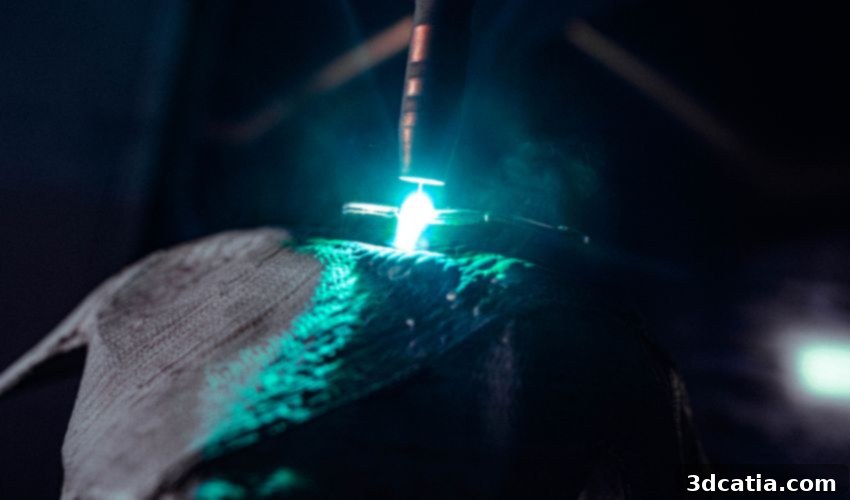
BMW Drives Automotive Innovation: Scaling Production with Wire Arc Additive Manufacturing (WAAM)
The automotive industry stands as a formidable pioneer in the adoption and integration of advanced manufacturing technologies, with additive manufacturing (AM) leading the charge. This revolutionary approach, often referred to as 3D printing, has transformed how vehicles are designed, prototyped, and produced. Major global players, including industry titans like Ford, Ferrari, Volvo, and Aston Martin, have consistently integrated AM processes into their sophisticated assembly lines and development workflows. This widespread adoption underscores the technology’s critical role in driving efficiency, enabling complex geometries, and accelerating product development cycles within the highly competitive automotive sector. In a significant recent announcement, the renowned German luxury car manufacturer, BMW, has revealed a substantial expansion of its additive manufacturing capabilities, specifically through the strategic adoption of Wire Arc Additive Manufacturing (WAAM). This move signals a new chapter in BMW’s journey with 3D printing, focusing on large-scale components and pushing the boundaries of vehicle production.
BMW’s Enduring Commitment to Additive Manufacturing
BMW’s engagement with additive manufacturing is far from a recent phenomenon; it’s a testament to a long-standing commitment to innovation. The company has a well-documented history of leveraging 3D printing across diverse applications, showcasing its versatility and strategic importance. From optimizing performance in elite sports to revolutionizing personal mobility, BMW has consistently explored the potential of AM. For instance, the company famously utilized laser powder bed fusion (LPBF) to create 3D printed spikes for Olympic bobsleds, providing a tangible competitive edge through custom-designed, lightweight components. Beyond athletic endeavors, BMW has also ventured into creating advanced bikes with 3D printed parts, demonstrating how AM can enhance both aesthetics and functionality in consumer products. For many years, additive manufacturing has been an integral part of BMW’s production toolkit, primarily for prototyping and creating complex, low-volume functional parts. This latest announcement, however, highlights a strategic shift: BMW’s intent to employ WAAM for the fabrication of even larger components, opening up new avenues for innovation in vehicle architecture and design.
Understanding Wire Arc Additive Manufacturing (WAAM)
Wire Arc Additive Manufacturing (WAAM) is a metal 3D printing technique that utilizes an electric arc to melt metal wire, depositing it layer by layer to build a three-dimensional object. It’s essentially a robotic welding process reimagined for additive manufacturing. WAAM offers several distinct advantages, particularly for the automotive sector. One of its most significant benefits is its ability to produce large-scale metal components quickly and cost-effectively, thanks to its high deposition rates. Unlike powder-based processes like LPBF, which are excellent for intricate, high-resolution parts, WAAM excels at generating robust, structural components that require substantial material volumes. The process also allows for the use of readily available welding wires, offering a wide range of metal alloys including steel, aluminum, and titanium, which are crucial for automotive applications. This combination of speed, scale, and material versatility makes WAAM an attractive solution for manufacturing parts that might be challenging or expensive to produce using traditional methods or other AM techniques. By adopting WAAM, BMW is specifically targeting a gap in their existing AM capabilities, enabling them to explore designs and functionalities previously unachievable with smaller-scale or powder-based additive processes.
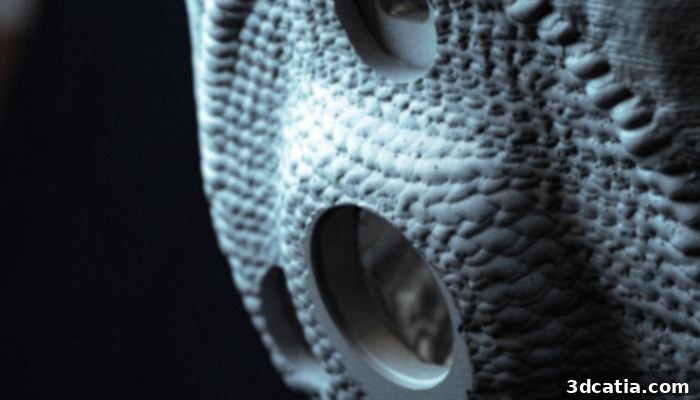
A close up of a part made by BMW using WAAM
Strategic Adoption: Why BMW is Investing in WAAM
While this announcement marks an official expansion, BMW’s journey with WAAM is not entirely new. The company’s recent press release clarifies that the BMW Group has been rigorously trialing and testing this advanced process for a number of years, with initial investigations dating back to 2015. This extensive period of research and development underscores BMW’s methodical approach to integrating new technologies. Since 2021, a dedicated WAAM cell, supplied by MX3D, has been operational at their Additive Manufacturing Campus in Oberschleißheim, specifically for the production of test components. This long-term engagement indicates that BMW has moved past the experimental phase and is now confident in the maturity and potential of WAAM for more substantial applications.
The primary driver behind this accelerated adoption of WAAM is its unparalleled capability for creating large-scale components, a characteristic for which the technology is particularly renowned. BMW is not only capitalizing on this core benefit but also leveraging other inherent advantages of WAAM. Jens Ertel, Head of BMW Additive Manufacturing, explains the broader implications: “In this early stage it is already clear that the WAAM process can result in lower emissions in the production process. The lower weight of the components, their advantageous material usage ratio, and the option to use renewable energy means that the components can be produced more efficiently.” This statement highlights BMW’s commitment to sustainability and efficiency, demonstrating how WAAM aligns with their environmental goals. By producing lighter parts, vehicles can achieve better fuel efficiency and reduce overall carbon footprint. Furthermore, the optimized material usage inherent in additive processes, combined with the potential to power WAAM operations with renewable energy, positions this technology as a cornerstone for more sustainable automotive manufacturing practices. This holistic approach showcases BMW’s vision for a greener and more efficient future in vehicle production.
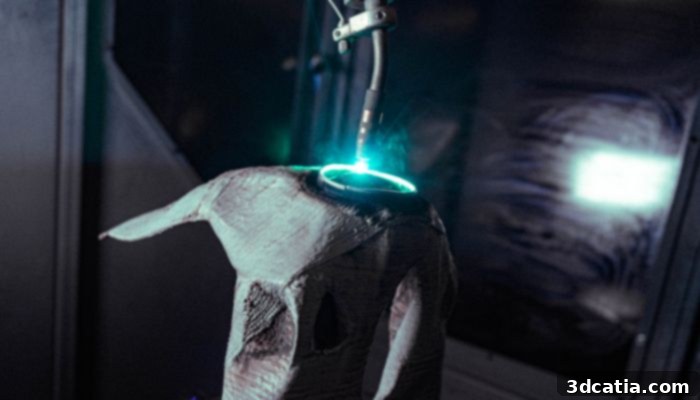
A component being made using WAAM
Generative Design and the Future of BMW Parts
Looking ahead, BMW anticipates a transformative impact from WAAM. The company expects to begin testing end-use parts, particularly those designated for critical vehicle areas such as the body, drive systems, and chassis. These rigorous tests are a precursor to vehicle trials, which are scheduled to commence in 2025. This aggressive timeline underscores BMW’s confidence in WAAM’s readiness for production-level applications. Coupled with this strategic move is an increased emphasis on generative design, a computational design methodology that allows engineers to input design goals and constraints, letting AI algorithms explore thousands of design solutions. When integrated with WAAM, generative design unlocks unprecedented levels of design freedom, enabling the creation of optimized, lightweight, and structurally efficient components that would be impossible to manufacture with traditional methods. BMW harbors high hopes for the parts created using this powerful combination of technologies, anticipating significant advancements in performance, weight reduction, and material optimization.
This expanded use of WAAM and generative design does not, however, signify a departure from other additive manufacturing methods. BMW continues to develop and integrate a diverse portfolio of AM technologies, including Laser Powder Bed Fusion (LPBF). A prime example is their latest concept car, the BMW Vision Neue Klasse, which extensively utilized AM for various intricate components, particularly in its lighting and interior elements. This multi-faceted approach demonstrates BMW’s understanding that different additive manufacturing processes excel at different tasks, allowing them to select the most appropriate technology for each specific application. Karol Virsik, Head of BMW Group Vehicle Research, perfectly encapsulates this vision: “It’s impressive to see how WAAM technology has developed from research to become a flexible tool for not only test components but also series production components. The use of generative design methods enables us to make full use of design freedom and thus the potential of the technology. That was unthinkable just a few years ago.” His statement reinforces the idea that the synergy between advanced manufacturing and intelligent design is crucial for pushing the boundaries of what’s possible in automotive engineering. For more detailed information, the official press release from BMW can be accessed HERE.
The Road Ahead: Impact and Industry Outlook
BMW’s comprehensive adoption of Wire Arc Additive Manufacturing for large-scale components marks a significant milestone, not just for the company but for the entire automotive sector. It solidifies BMW’s position as a leader in industrial additive manufacturing applications, continually pushing the envelope of what’s achievable with 3D printing. This strategic investment in WAAM suggests a future where critical structural and functional vehicle components can be produced with unprecedented efficiency, customization, and sustainability. The potential implications are vast, ranging from reduced lead times and supply chain optimization to the ability to create highly optimized, lightweight designs that contribute to vehicle performance and environmental goals. Such a bold move by a major automotive OEM like BMW is likely to inspire other car manufacturers to evaluate and potentially integrate WAAM into their own production strategies. As the technology matures and its benefits become more apparent, we may witness a broader industry shift towards large-format metal additive manufacturing, further accelerating the transformation of automotive design and production.
Join the Conversation
What are your thoughts on BMW’s expanded adoption of WAAM 3D printing? Do you believe other car manufacturers will soon follow suit in integrating this robust technology for large-scale component production? Let us know your insights and predictions in a comment below! You can also engage with us on our social media channels: connect with us on LinkedIn, follow our updates on Facebook, and join the discussion on Twitter. Don’t miss out on the latest advancements and news in the world of 3D printing – be sure to sign up for our free weekly newsletter here, delivering all the essential updates straight to your inbox! For more visual content and in-depth analyses, explore all our videos on our YouTube channel.
*All Image Credits: BMW