
Unlocking Precision: A Deep Dive into Advanced 3D Scanning Sprays, Metal AM, and Printer Reviews
Welcome to our weekly exploration of the fascinating world of additive manufacturing and 3D scanning. This week, we delve into a range of exciting innovations designed to push the boundaries of what’s possible in digital fabrication. From ingenious solutions that revolutionize 3D scanning accuracy to groundbreaking advancements in metal additive manufacturing and a thorough review of a professional FDM printer, we cover the technologies shaping tomorrow’s industries. We’ll also continue our educational miniseries on the anatomy of 3D printed parts, focusing on crucial elements like walls and supports, and explore the transformative impact of 3D printing in the dental sector. Join us as we uncover how these cutting-edge developments are making 3D technology more accessible, precise, and powerful than ever before.
Elevating 3D Scanning Quality with AESUB Sprays
3D scanning has become an indispensable tool across various industries, from reverse engineering and quality control to design and medical applications. However, achieving high-quality scans isn’t always straightforward. Certain object characteristics – such as transparency, reflectivity, or very dark surfaces – can pose significant challenges for optical 3D scanners. These surfaces often absorb or refract light in ways that prevent the scanner from accurately capturing the object’s geometry, leading to incomplete data, noise, and ultimately, a lower quality 3D model. This is where specialized solutions become crucial.
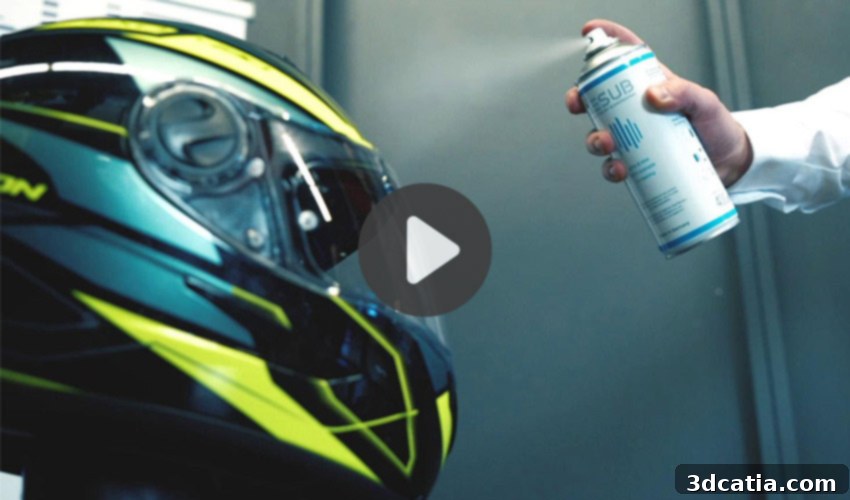
Addressing these common hurdles, the German company AESUB has developed a revolutionary line of scanning sprays designed to drastically improve the reliability and accuracy of 3D scan data. Their innovative sprays create an ultra-thin, homogeneous matte white coating on the object’s surface. This uniform layer ensures that the scanner’s light beams are consistently reflected, allowing for comprehensive and precise data capture. The result is a clean, highly accurate scan, free from the distortions and data gaps typically associated with challenging surfaces.
One of the most significant advantages of AESUB sprays is their convenience and efficiency. Many of their products are self-evaporating, meaning the fine white layer disappears completely after a few hours, leaving no residue on the scanned object. This eliminates the need for post-cleaning, saving valuable time and labor, and making the scanning process incredibly streamlined. This feature is particularly beneficial for delicate or valuable items where residue removal could be problematic. AESUB offers various formulations, including permanent options for situations where a lasting coating is preferred. By choosing the right AESUB spray, users can optimize their workflow, achieve superior scan results, and unlock the full potential of their 3D scanning equipment for a wide array of applications, from intricate industrial components to large-scale artistic pieces. Witness the effectiveness of AESUB sprays in action by watching the video below:
Revolutionizing Metal Part Production with Tritione Dominant MoldJet Technology
Metal parts are the unsung heroes of our modern world, forming the backbone of virtually every industry. From the intricate components within our smartphones to the robust structures supporting our transportation networks, and the precision instruments used in medical fields, the ubiquity and critical importance of metal fabrication cannot be overstated. Traditional manufacturing methods for metal parts, while effective, often involve lengthy lead times, high tooling costs, and limitations on design complexity. The advent of additive manufacturing has begun to transform this landscape, offering unprecedented capabilities for producing complex geometries and customized components.
Among these innovations, Tritione Dominant’s MoldJet Technology stands out as a pioneering approach to metal additive manufacturing. This innovative process addresses several shortcomings of existing metal 3D printing methods, particularly in terms of speed, cost-efficiency, and the ability to produce large quantities of parts without sacrificing intricate detail. Unlike some binder jetting systems, MoldJet technology uses a unique process involving the creation of sacrificial molds, which are then filled with metal powders and a binder. This proprietary method allows for the rapid creation of molds and subsequent part consolidation, leading to a highly efficient production pipeline.
The key advantages of MoldJet Technology include its ability to achieve high-resolution metal parts with excellent surface finish, making it suitable for demanding applications in automotive, aerospace, medical, and consumer goods sectors. Furthermore, the technology promises enhanced material versatility, allowing for a broader range of metal alloys to be processed. By leveraging this sophisticated additive manufacturing approach, manufacturers can move from a digital concept to tangible, high-performance metal parts with unprecedented speed and economic viability. This represents a significant leap forward in making large-scale, customized metal production a practical reality for a wider range of industries, effectively democratizing access to advanced metal fabrication. To learn more about how this technology is reshaping metal manufacturing, watch the insightful video below:
Hands-On Review: Testing the BCN3D Epsilon W50 3D Printer
In the realm of professional FDM (Fused Deposition Modeling) 3D printing, BCN3D has carved out a significant reputation for delivering reliable and high-performance machines. Hailing from Spain, BCN3D continues to innovate with its range of industrial-grade 3D printers, designed to meet the rigorous demands of engineers, designers, and manufacturers. Among their impressive lineup, the Epsilon W50 stands out as a flagship model, promising a blend of precision, versatility, and efficiency for a wide array of applications.
Our team at 3Dnatives had the invaluable opportunity to put the BCN3D Epsilon W50 through its paces. From the initial unboxing experience to extended periods of rigorous printing, we conducted a comprehensive test to evaluate its capabilities across various parameters. Over 180 hours of continuous 3D printing, our expert, Elliot, generated numerous parts using an assortment of materials, pushing the machine to its limits to provide a thorough and unbiased assessment. The unboxing itself revealed a well-packaged and robust machine, indicative of its professional-grade construction. Setting up the Epsilon W50 was intuitive, a testament to BCN3D’s user-centric design philosophy.
One of the Epsilon W50’s most compelling features is its Independent Dual Extrusion System (IDEX). This innovative design allows the two printheads to operate completely independently, enabling advanced printing modes that significantly enhance productivity and versatility. With IDEX, users can print two different materials simultaneously (e.g., a primary material and a soluble support material for complex geometries), print two identical parts at once (Duplication Mode), or create mirrored copies (Mirror Mode). These functionalities not only accelerate production but also open up possibilities for more intricate designs and improved part quality by leveraging soluble supports for easier post-processing. Furthermore, the Epsilon W50 boasts an impressive build volume, allowing for the creation of larger prototypes and end-use parts, catering to industrial requirements. Its enclosed print chamber and advanced thermal control ensure consistent printing environments, crucial for working with engineering-grade materials like ABS, Nylon, PC, and various composites, beyond standard PLA.
Elliot’s feedback from the extensive testing highlighted the machine’s exceptional reliability and consistency, even during long print jobs. The print quality consistently met professional standards, demonstrating clean lines and accurate dimensions. This makes the Epsilon W50 an ideal choice for businesses and research institutions looking for a dependable workhorse capable of producing high-quality, functional parts with efficiency. Our full review, including the unboxing and printing demonstrations, is encapsulated in the video below, offering a visual testament to the Epsilon W50’s capabilities:
Anatomy of 3D Printed Parts: Understanding Walls and Supports
Continuing our insightful miniseries on the fundamental anatomy of 3D printed parts, this second installment delves into two critical structural elements: walls and supports. These components play pivotal roles in determining the structural integrity, aesthetic quality, and overall success of a 3D print. Understanding their function and how to optimize them is essential for anyone looking to achieve professional-grade results from their additive manufacturing projects, regardless of the printing technology used.
Walls, often referred to as perimeters or shells, form the outer and inner boundaries of a 3D printed object. They are crucial for creating the part’s external surface finish, providing structural rigidity, and ensuring features like watertightness or airtightness. The number of walls, their thickness, and their infill density directly impact the strength, weight, and material consumption of a print. For instance, a part requiring high strength or abrasion resistance might benefit from a greater number of perimeters, while a purely aesthetic model could use fewer. Walls are particularly important for surfaces that are not directly parallel to the build platform, as they define the contours and details of the object. Proper wall settings in slicing software are paramount for achieving a smooth surface finish, accurate dimensions, and preventing issues like ghosting or gaps.
On the other hand, Supports are sacrificial structures specifically designed to brace and hold up portions of a 3D print that would otherwise print in mid-air – commonly known as overhangs or bridges. Without supports, these unsupported sections would deform, sag, or fail completely during the printing process, leading to print failures or compromised part quality. Supports come in various forms, including tree-like structures, lattice patterns, or solid blocks, and can be printed from the same material as the part or from a different, often soluble, material. The choice of support type and density depends on the geometry of the overhangs, the material used, and the desired surface finish. While essential for complex geometries, supports must be carefully considered during the design phase (Design for Additive Manufacturing – DfAM) to ensure they can be easily removed without damaging the part and to minimize post-processing efforts. Effective support strategies balance structural necessity with ease of removal and minimal impact on the final part’s appearance. Learn more about the intricacies of walls and supports, and how to master their application, in the detailed video below:
Additive Manufacturing’s Transformative Role in Dentistry
The medical sector, more than perhaps any other, thrives on personalization and precision. This is where the inherent advantages of 3D printing truly shine, offering an unparalleled ability to create custom, patient-specific devices and tools. In dentistry, the integration of 3D technologies has moved beyond novelty to become a cornerstone of modern practice, revolutionizing everything from diagnostics to treatment and restorative procedures. For years, dental professionals have leveraged 3D printing to produce a vast array of applications tailored precisely to individual patient anatomies, leading to more effective, comfortable, and aesthetically pleasing outcomes.
From highly accurate dental models and orthodontic aligners to surgical guides for implant placement and bespoke crowns and bridges, 3D printing offers a versatile toolkit for dental labs and clinics. The process typically begins with intraoral scanning of a patient’s mouth, generating a precise digital 3D model. This model is then used to design the custom dental appliance using specialized CAD software. Finally, the digital design is sent to a 3D printer, which fabricates the physical object with remarkable speed and accuracy, often using biocompatible resins or ceramic-filled materials. This digital workflow streamlines production, reduces errors, and significantly shortens the turnaround time for custom dental solutions.
Several key players have specialized in this rapidly expanding niche, offering dedicated hardware, software, and materials for dental applications. Companies like 3D Systems, Formlabs, and Stratasys have developed comprehensive ecosystems tailored to the unique demands of dentistry. 3D Systems, for instance, offers a range of high-performance dental machines, exemplified by their NextDent 5100. This printer is renowned for its speed, accuracy, and compatibility with a broad portfolio of NextDent materials, enabling the production of a wide range of dental devices with clinical precision. The integration of 3D printing not only enhances patient care by providing perfectly fitting and comfortable devices but also improves clinic efficiency and expands the range of treatments available. This synergy between advanced manufacturing and dental science continues to unlock new possibilities, promising a future of increasingly personalized and accessible dental care. Discover the characteristics and capabilities of machines like the NextDent 5100 in the video demonstration below:
We hope this week’s roundup has provided valuable insights into the dynamic world of 3D printing and scanning. From solving critical scanning challenges with AESUB sprays and advancing metal part production with Tritione Dominant’s MoldJet Technology, to our comprehensive review of the BCN3D Epsilon W50 and an in-depth look at the structural components of 3D prints, the innovations continue to reshape industries. The transformative impact of additive manufacturing in dentistry further underscores the versatility and precision these technologies bring to critical applications. What are your thoughts on these advancements? We’d love to hear from you!
Share your opinions and insights in a comment below or connect with us on our Facebook, Twitter, and LinkedIn pages! Don’t miss out on the latest developments in additive manufacturing – sign up for our free weekly Newsletter here and get all the crucial 3D printing news delivered straight to your inbox!