
Top 5 3D Printing Innovations: From Lunar Bases to DIY Tech – 2023 Holiday Edition
Happy holidays and welcome to our curated selection of the top 5 most captivating 3D printing videos of the week! As 2023 draws to a close, we’re taking a special holiday edition dive into the incredible evolution and future prospects of 3D printing technology. This week’s lineup showcases the diverse applications of additive manufacturing, from high-level industry analysis in ‘Sectors UpClose,’ featuring an insightful interview with Davide Sher of VoxelMatters, to groundbreaking projects like China’s ambitious lunar base construction. We also explore the realm of creative freedom, demonstrating how enthusiasts are building lifelike Star Wars droids, scanning and printing beloved pets, and even revolutionizing personal tech with customized accessories. Each video provides a unique perspective on this innovative technology, highlighting its potential to transform industries, inspire creativity, and even save you money. Join us on this fascinating journey to uncover the vast capabilities and diverse applications of 3D printing, and perhaps you’ll even discover the perfect last-minute stocking stuffer or a project to kickstart your new year!
Top 1: The 3D Printing Sector In Focus
Our inaugural video this week offers a deep dive into the business and technological landscape of 3D printing, presented through the insightful Reuters video segment, “Sectors UpClose.” Host David Pollard engages in a compelling conversation with Davide Sher, CEO of VoxelMatters, a globally recognized leader in 3D printing market research and publishing. Their discussion meticulously traces the evolution of 3D printing over the past several decades, from its nascent stages in the 1980s to its current dynamic state, and casts a forward-looking gaze upon its promising future. They illuminate the industry’s significant growth, emphasizing key advancements that are driving innovation. The conversation specifically highlights the transformative potential of 3D printing in areas such as sustainable manufacturing, where localized, on-demand production can significantly reduce waste and supply chain complexities, and the efficient production of intricate, high-performance industrial tools that were previously impossible to create.
However, the segment doesn’t shy away from addressing the critical hurdles impeding 3D printing’s widespread adoption, such as material limitations, scalability challenges, and the need for greater standardization. Crucially, they underscore the potential game-changing role of Artificial Intelligence (AI) in overcoming these obstacles, envisioning AI-driven design optimization, predictive maintenance, and automated process control. The discussion also brings into focus established industry titans like 3D Systems and Stratasys, dissecting their pivotal technologies and the inherent challenges associated with scaling additive manufacturing solutions for mass production. Furthermore, the conversation extends to cutting-edge niche sectors, including bioprinting, where companies are harnessing advanced volumetric 3D printing technology to create complex biological structures and tissues. The segment concludes by envisioning 3D printing’s expansive future across diverse industries such as food, construction, and aerospace – sectors where additive manufacturing is poised to act as a powerful catalyst for more efficient, customized, and ultimately more sustainable production methods, revolutionizing everything from personalized nutrition to lightweight aircraft components and rapid construction of modular housing.
Top 2: China’s 3D Printed Lunar Project
Our second featured video presents a fascinating report from China’s CCTV news agency, detailing an ambitious project by Chinese scientists to utilize 3D printing for constructing structures on the moon. This groundbreaking initiative is aimed at supporting future manned lunar missions, envisioning a permanent human presence beyond Earth. The core concept involves creating specialized, oval, egg-shaped designs for these lunar structures, engineered with an innovative structural integrity that negates the need for cumbersome support columns or load-bearing beams. This design choice is critical for minimizing material usage and maximizing structural stability in the unique lunar environment. The overarching plan is to establish a “warm and stable living and working environment on the lunar surface,” which would enable Chinese astronauts to inhabit these structures outside of their spacecraft, providing enhanced safety, comfort, and operational capacity for long-duration missions.
The report meticulously explores the design philosophies and the profound environmental considerations inherent in building on the moon. These include challenges posed by the lunar vacuum, extreme temperature fluctuations, harmful radiation, and the utilization of lunar regolith as a primary construction material. The application of 3D printing is seen as a crucial enabler for in-situ resource utilization, significantly reducing the logistical and cost burdens of transporting building materials from Earth. While this research is currently ongoing, it represents a monumental leap in space exploration and offers potentially fruitful resources and methodologies not only for future missions to the moon but also for subsequent expeditions to Mars and other celestial bodies. The implications of establishing off-world habitats through additive manufacturing are truly immense, heralding a new era in humanity’s quest for interplanetary expansion.
Top 3: Bringing a Star Wars Droid to Life with 3D Printing
For fans of sci-fi and robotics, our third video from M.M’s Prop Shop is an absolute must-watch! This thrilling narrative details the ambitious and highly successful endeavor of building a full-scale K-2SO droid, famously known from Star Wars: Rogue One. The video meticulously showcases the entire fabrication process, starting from the meticulous 3D printing of individual parts, progressively moving from the intricate feet assemblies to the massive torso, articulate arms, and the distinctive head. The creators place a strong emphasis on strategic planning during the printing phase, optimizing print orientations and settings to manage time efficiently and minimize material waste. They openly discuss the significant challenges encountered, such as the complexities of printing such exceptionally large pieces with minimal support structures to preserve surface quality, and the practical difficulties of handling the considerable weight of the assembled project as it progresses.
The assembly of the K-2SO droid itself is a testament to ingenious engineering and craftsmanship. It involves a sophisticated integration of various components, utilizing robust bolts for major connections, finely detailed resin-printed fingers for expressive dexterity, and custom wire joints to achieve realistic articulation. This stage demands an extraordinary level of careful attention to detail and precision work to ensure the droid’s functionality and aesthetic accuracy. What makes this project truly astonishing is the revelation that the entire droid, despite its imposing size and complexity, was brought to life in just under three weeks, printed entirely on a single 3D printer! This remarkable achievement not only underscores the capabilities of modern desktop 3D printing technology but also highlights the dedication and skill of the prop-making community. Watch the entire captivating process in the video below and prepare to be inspired by the power of additive manufacturing to turn fictional constructs into tangible reality.
Top 4: 3D Scan and Print Your Dog!
Ever thought about immortalizing your furry friend in a tangible 3D print? Our fourth video demonstrates the intriguing process of 3D scanning a pet, putting the Mole 3D scanner by 3DMakerPro to a rigorous real-world test. Popular YouTuber Frankly Built undertakes a true challenge of 3D scanning prowess as he attempts to capture the likeness of his dog, Maya, who, as he charmingly admits, proves to be less than cooperative. Despite Maya’s energetic resistance and playful wiggles, Frankly Built endeavors to scan her face, encountering several humorous hurdles and showcasing the raw realities of scanning live subjects. The video highlights the scanner’s impressive ease of use and its ability to produce decent output even under challenging conditions, though achieving a perfect, flawless scan of a constantly moving target remains a significant feat.
Throughout the demonstration, viewers gain valuable insights into the scanner’s simplicity and user-friendly interface. Frankly Built acknowledges a brief initial learning curve, common with new technologies, but expresses strong confidence in the Mole 3D scanner’s immense potential for a wide array of applications, from hobbyist projects to more practical uses. This video not only entertains but also informs, proving that with a little patience and the right tools, 3D scanning can open up new avenues for personalized keepsakes and creative projects involving our beloved companions. Imagine custom figurines, unique art pieces, or even tailored accessories for your pets! Watch the entire captivating experience below and see if you too can embark on the journey to 3D scan and print your own cherished pet soon, preserving their unique charm for years to come.
Top 5: Get Creative and Save Money by 3D Printing Your Tech Accessories
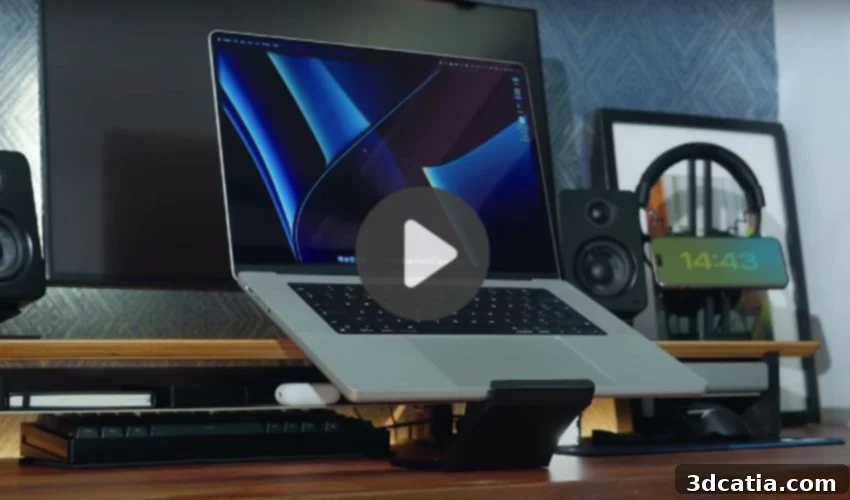
In an era where premium tech accessories can come with eye-watering price tags, our final video offers a brilliant and cost-effective alternative. Many of us simply don’t have the budget or the patience to spend hundreds, or even thousands, on a name-brand computer stand or charging dock. For those seeking practical and affordable solutions, YouTube’s Chris Wilmshurst has a fantastic answer: 3D printing. This insightful video details his experimental journey into 3D printing various Apple accessories, driven by the dual goals of maximizing usefulness and leveraging the abundance of free, readily available designs online. Chris established stringent conditions for his experiment: all designs had to be free to download, require no additional non-3D printed parts, and most importantly, had to be genuinely practical and functional in everyday use.
The array of items he successfully printed is impressive and diverse, including a sleek HomePod stand to enhance audio aesthetics, a compact MacBook charger cable organizer for better portability, a versatile webcam stand for improved video calls, a robust MacBook stand for ergonomic workstation setup, a convenient Apple Watch charging stand, an integrated iPhone charger mount, an Apple TV cradle for neat media organization, and even a dedicated phone mount specifically designed for gaming. Chris’s experience highlighted common challenges in DIY 3D printing, such as selecting the optimal filament type for specific applications (e.g., PLA for aesthetics, PETG for durability) and adapting designs to fit personal needs or printer tolerances. Nevertheless, the resulting prints proved exceptionally useful and functional, significantly enhancing his tech organization and daily workflow. Chris passionately advocates for recognizing and appreciating the talented designers who generously offer their creations for free, encouraging viewers to explore these vast repositories of designs and acknowledge the contributors. Links to his chosen printer and the specific designs are conveniently provided in the video description. And for those who aren’t Mac users, the good news is that these same design platforms host countless options for Windows and Android devices, empowering everyone to customize their tech setup creatively and economically!
*Cover photo credits: Chris Wilmshurst / YouTube