
Revolutionizing Production: Key Business & Financial Updates in the 3D Printing Industry
The landscape of 3D printing, also known as additive manufacturing, is continuously evolving at an unprecedented pace. This transformative technology is not only fostering the introduction of groundbreaking innovations but is also profoundly reshaping production chains across various industries, enabling companies to achieve unprecedented levels of efficiency, customization, and speed. In this special edition, we delve into the most impactful business and financial news from the dynamic world of 3D printing. Join us as we explore the latest investment trends, crucial financial performance reports, strategic company acquisitions, and ambitious expansion strategies undertaken by some of the industry’s most prominent players. These developments collectively underscore the robust growth and immense potential that additive manufacturing holds for the global economy, pushing the boundaries of what’s possible in manufacturing and beyond.
Strategic Expansions and Collaborative Innovations: Sintavia and HP Lead the Way
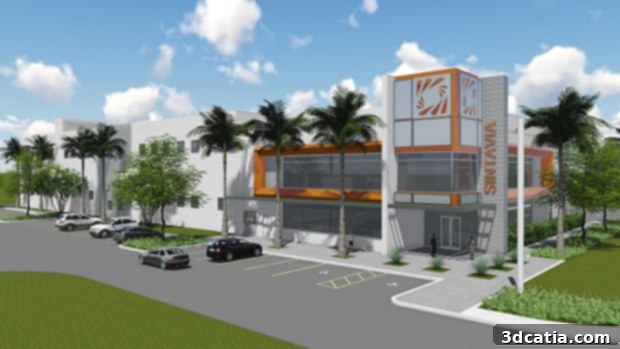
Global metal additive manufacturing leader, Sintavia, has unveiled ambitious plans to significantly bolster its production capabilities with the construction of a state-of-the-art 55,000 square foot 3D printing facility in Hollywood, Florida. This massive expansion is set to quadruple the company’s existing production capacity, marking a pivotal moment for advanced metal manufacturing. The new facility represents a substantial investment of over $20 million in cutting-edge 3D printing machinery, poised to enhance Sintavia’s ability to serve the demanding aerospace, defense, and industrial sectors. Beyond technological advancement, this project is also a significant job creator, expected to generate 135 new high-skilled positions. The inauguration of this impressive facility is anticipated in mid-2018, further solidifying Florida’s growing reputation as a hub for advanced manufacturing.
Meanwhile, technology giant HP continues to fortify its dominant position within the global 3D printing market through a series of strategic initiatives aimed at broadening the accessibility and adoption of additive manufacturing. HP has established numerous 3D printing demonstration and training centers worldwide, designed to serve as crucial educational and experiential hubs. These centers are meticulously equipped with HP’s advanced additive manufacturing machines, offering visitors and potential clients the opportunity to witness and understand “production scenarios” firsthand. This approach is instrumental in facilitating a critical industry shift from traditional “Rapid Prototyping” towards full-scale “Rapid Production,” emphasizing the technology’s capability for end-part manufacturing. Furthermore, HP has forged a key partnership with Henkel Adhesive Technologies. This collaboration is focused on driving innovation in materials science, specifically working to create more advanced powder-based materials that will unlock new applications and expand the versatility of HP’s Multi Jet Fusion technology. This strategic alliance underscores HP’s commitment to ecosystem development and pushing the boundaries of what is achievable with 3D printing. For more detailed insights into HP’s advancements, you can find additional information here.
Significant Investments Fueling Additive Manufacturing Growth and Innovation
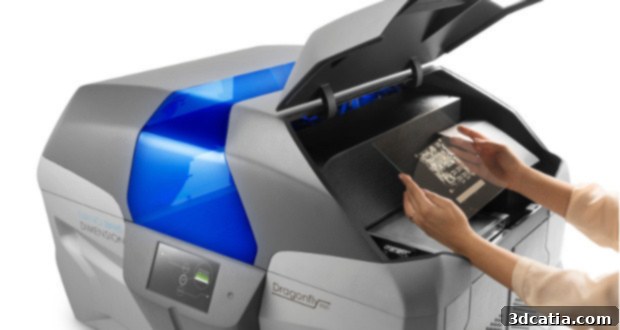
The dynamic growth of additive manufacturing is being powerfully propelled by significant investments across various sectors, signaling strong confidence in its future potential. Israel-based Nano Dimension, a pioneering company renowned for its specialization in the 3D printing of PCBs (Printed Circuit Boards), has successfully raised $4.7 million through a private placement agreement. This substantial capital injection will further empower Nano Dimension to maintain its leadership in the rapidly expanding field of 3D printed electronics. Beyond their core expertise, the company has also bravely ventured into the bioprinting sector, undertaking critical research to recreate human tissue and cells, specifically focusing on kidneys. Following the release of their Q1 2017 results, Nano Dimension reported current revenues of $118,000, representing a significant increase of $72,000 compared to Q4 of 2016. This impressive revenue growth highlights the accelerating demand for their innovative technologies and their expanding market presence in high-growth areas.
The United Technologies Corporation (UTC), a global leader in aerospace and building technologies, has announced several pivotal investments aimed at advancing its research and development capabilities in additive manufacturing. Central to these initiatives is the establishment of a $75 million “Additive Manufacturing Center of Excellence.” This state-of-the-art facility is designed to significantly accelerate the deployment and integration of various metal and polymer additive technologies across UTC’s diverse business units. A primary focus will be on groundbreaking applications such as the development of next-generation aircraft engines, which stand to benefit immensely from the lightweight and complex geometries achievable with 3D printing. This strategic move directly positions UTC as a formidable competitor against other aerospace heavyweights like GE and Rolls Royce, showcasing their commitment to leveraging additive manufacturing for future innovation and market leadership.
In Canada, the University of Waterloo has secured a substantial investment of $27 million towards the creation of an advanced additive manufacturing center. This new facility is poised to streamline and significantly enhance the university’s research efforts within the expansive field of additive manufacturing. Thanks to robust partnerships with key industry players and significant financial backing from the government, this center will not only house more than 80 dedicated employees but also foster a collaborative environment. It aims to bridge the gap between academic research and industrial application, helping to bring the community closer together through shared technological advancements and innovative solutions. This investment underscores the critical role of academic institutions in driving the future of 3D printing.
Further cementing the academic contribution to additive manufacturing, UC Santa Barbara is embarking on cutting-edge research and development into “extreme materials” following a $3 million investment. Under the expert leadership of Professor Tresa Pollock, this research initiative is expected to yield transformative results for high-performance applications. The findings are particularly anticipated to bring positive advancements for critical components in the construction of rockets, highly efficient airplane turbines, and advanced hypersound vehicles. The development of materials capable of withstanding extreme conditions is crucial for the next generation of aerospace and defense technologies, making this research a vital component of future innovation in additive manufacturing.

On the commercial front, Stage One, the renowned creative company celebrated for its iconic work, including the London 2012 Olympic cauldron, has announced the launch of Fluxaxis. This new venture is a $1.29 million startup explicitly dedicated to providing advanced manufacturing platforms. Fluxaxis will integrate a comprehensive suite of services, prominently featuring sophisticated 3D printing and cutting-edge 3D scanning technologies. This initiative aims to cater to diverse industries requiring bespoke, high-quality manufacturing solutions, leveraging Stage One’s extensive experience in complex design and fabrication to offer innovative production capabilities to a broader market.
In the aerospace sector, Australian company Gilmour Space Technologies has successfully raised $3.7 million through a Series A funding round, notably led by the prominent venture capital firm Blackbird Ventures. This crucial funding injection will enable Gilmour Space to significantly accelerate its pioneering efforts in developing advanced rockets that utilize innovative 3D printed solid fuel. This technology promises to make space access more efficient and cost-effective. Furthermore, the investment will support the expansion of their dedicated engineering team, with plans to add 20 new engineers. This growth will further bolster their research and development capabilities, propelling them towards future milestones in commercial spaceflight and additive manufacturing applications for propulsion systems.
Industry Financial Performance: Analyzing Results from Stratasys and Sigma Labs
Even as the industry surges forward with innovation and investment, a look at financial reports provides essential context. Industry giant Stratasys has released its Q1 financial results, reporting total sales of $163.2 million. While this figure represents a slight decrease when compared to the $167.9 million reported during the same period last year, the annual loss should not be a cause for immediate alarm. In fact, a positive trend emerged: the annual loss amount significantly decreased from $23.1 million in the first quarter of 2016 to a more manageable $13.9 million in the first quarter of 2017. This reduction in losses is overall fantastic news for the industry giant, signaling improved operational efficiency and a stronger path towards profitability. For the entire 2017 fiscal year, Stratasys projects a total turnover ranging between $645 million and $680 million, reflecting a confident outlook for their continued market presence and innovation in 3D printing solutions.
Sigma Labs, a specialized solutions provider for in-situ monitoring in 3D metal printing, particularly vital for the aerospace and defense sectors, has also published the results of its quarterly report. The report indicated a notable fall in sales, from $358,455 to $150,203. However, it is crucial to understand the context behind this slump. This decline is primarily attributed to increased sales in 2016, which benefited significantly from a highly profitable, one-time order that the company successfully completed for Aerojet Rocketdyne. Therefore, the decrease in the current quarter’s sales reflects a comparison against an exceptionally strong previous period, rather than a fundamental downturn in their core business or market demand for their critical quality assurance technologies in metal additive manufacturing.
Do you want a weekly summary of all the latest news in 3D printing? Then sign up for our weekly newsletter and follow us on Facebook and Twitter for real-time updates and exclusive content!