
Pioneering Functional 3D Printed Human Brain Tissue: A New Era for Neuroscience and Neurological Disease Research
In a groundbreaking achievement that promises to revolutionize our understanding of the human brain, researchers at the University of Wisconsin-Madison have successfully created the first-ever functional 3D printed human brain tissue. This synthetic tissue, meticulously engineered to mimic the growth patterns and functional capabilities of natural brain tissue, opens unprecedented avenues for exploring the brain’s complexities and developing innovative treatments for debilitating neurological disorders. Conditions such as Alzheimer’s and Parkinson’s, which currently lack effective cures, stand to benefit immensely from this monumental scientific advancement.
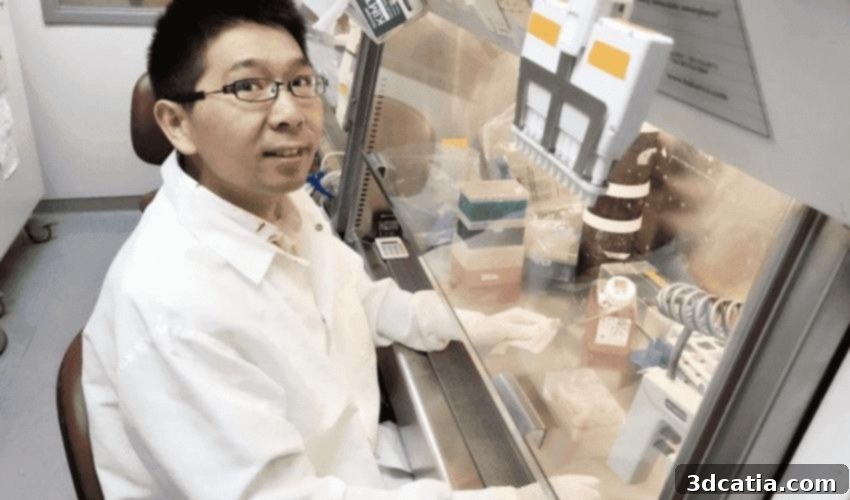
The innovative approach, spearheaded by a dedicated team, utilizes a unique horizontal 3D printing method combined with stem cell-derived neurons. This sophisticated technique fosters the robust growth of nerve cells and facilitates the intricate formation of neural networks, mirroring the sophisticated architecture naturally present within the human brain. Su-Chun Zhang, a distinguished Professor of Neurology at the University of Wisconsin-Madison, emphasizes the profound significance of this breakthrough. He views it as a critical step forward for the global scientific community, offering an unparalleled opportunity to delve into the intricate interplay between individual brain cells and the distinct regions that govern our thoughts, emotions, and bodily functions.
Photo Credits: Freepik
Elaborating on the far-reaching implications of this remarkable achievement, Professor Zhang stated, “This could be a hugely powerful model to help us understand how brain cells and parts of the brain communicate in humans. It could change the way we look at stem cell biology, neuroscience, and the pathogenesis of many neurological and psychiatric disorders.” His words underscore the transformative potential of this research, which extends across multiple scientific disciplines and promises to reshape our approach to neurological health.
The Innovative Horizontal 3D Printing Method for Brain Tissue
Previous attempts at 3D printing brain tissue have often faced significant hurdles, primarily due to limitations inherent in traditional printing methodologies. Professor Zhang and Yuanwei Yan, a distinguished scientist in Zhang’s laboratory, identified these challenges and engineered a novel solution. Their team’s breakthrough stems from a radical departure from the conventional vertical layering technique commonly employed in 3D printing. Instead, they embraced a sophisticated horizontal approach, which proved instrumental in overcoming prior constraints and enabling the creation of viable, functional brain tissue.
The Power of Induced Pluripotent Stem Cells and Bio-Ink
Central to this innovative method is the strategic incorporation of brain cells – specifically, neurons derived from induced pluripotent stem cells (iPSCs). These remarkable cells are synthetically generated and possess the extraordinary capacity to differentiate into virtually any cell type within the body, including specialized neural cells. To facilitate their precise placement and growth, these iPSC-derived neurons are encapsulated within a highly adaptable “bio-ink” gel. Unlike the more rigid bio-inks used in earlier experiments, this novel gel offers superior flexibility and compatibility, creating an optimal microenvironment for cellular development and interaction. The choice of iPSCs is critical, as it allows researchers to generate patient-specific brain tissue models, offering a personalized approach to understanding and treating neurological conditions.
This pioneering horizontal 3D printing technique, coupled with the advanced bio-ink, enables cells to effectively communicate and integrate with one another in a manner that closely mimics natural brain development. The bio-ink acts as a supportive scaffold, effectively containing the delicate tissue cells and preventing their dispersion while simultaneously granting the neurons the essential freedom to grow, extend their processes, and form intricate connections. As a result, the printed cells establish robust connections not only within each individual layer but also across different layers, thereby forming complex neural networks that strikingly resemble the sophisticated architecture of the human brain. Within these meticulously crafted networks, the neurons engage in dynamic interaction, exchanging vital signals and establishing synaptic connections through the precise release and reception of neurotransmitters. This level of functional integration is a critical factor in the tissue’s viability and its potential for high-fidelity modeling of brain activity.
Transformative Potential for Neurological Disorder Research and Drug Discovery
The ability to 3D print functional human brain tissue marks a new era for neuroscience and biomedical research, offering unprecedented opportunities for understanding and combating some of humanity’s most challenging diseases. As Yuanwei Yan aptly noted, “Our tissue stays relatively thin and this makes it easy for the neurons to get enough oxygen and enough nutrients from the growth media.” This critical characteristic ensures the long-term viability and functionality of the printed tissue, making it an ideal platform for in-depth studies.
Addressing Alzheimer’s and Parkinson’s
One of the most immediate and profound applications of this advanced 3D printed brain tissue is in the study of complex neurological disorders like Alzheimer’s and Parkinson’s disease. These conditions are characterized by intricate cellular degeneration and dysfunction, which have been notoriously difficult to model accurately in traditional laboratory settings or animal models. With this new human brain tissue, scientists can now observe the progression of these diseases at a cellular and network level in a more physiologically relevant context. Researchers can introduce specific genetic mutations associated with these diseases into the iPSCs before printing, creating disease-specific models that manifest key pathological hallmarks, such as amyloid plaque formation in Alzheimer’s or alpha-synuclein aggregation in Parkinson’s. This allows for a deeper understanding of disease mechanisms, identification of new therapeutic targets, and observation of how different regions of the brain interact in both healthy and diseased states.
Advancing Drug Screening and Personalized Medicine
Furthermore, this innovative brain tissue model is set to revolutionize drug discovery and testing. Current methods often rely on animal models, which may not always accurately reflect human physiology and disease responses, leading to high failure rates in clinical trials. The 3D printed human brain tissue offers a more precise and ethically sound alternative. Pharmaceutical companies and researchers can now screen potential drug candidates directly on human brain tissue, assessing efficacy, toxicity, and potential side effects with greater accuracy. This could significantly accelerate the development of new treatments, reduce research costs, and minimize the reliance on animal testing. Beyond general drug discovery, the use of patient-derived iPSCs means that it might eventually be possible to print personalized brain tissue models for individual patients. This would enable clinicians to test various treatments on a patient’s own tissue, identifying the most effective therapeutic strategies and paving the way for truly personalized medicine in neurology.
Looking Ahead: Challenges and Future Directions
While this breakthrough is undeniably monumental, it is also important to acknowledge that the complexity of the human brain is vast, and there are still significant challenges ahead. Current 3D printed brain tissue models are relatively small and simple compared to the entire human brain. Future research will focus on increasing the complexity and scale of these models, incorporating different cell types (e.g., glial cells, astrocytes, oligodendrocytes) to create more comprehensive brain structures and mimicking the diverse microenvironments found in various brain regions. The ultimate goal is to achieve an even higher level of functional integration and mimicry, including the development of vascular systems to sustain larger tissue constructs over longer periods.
The ethical implications of creating increasingly sophisticated brain models also warrant ongoing discussion. As these models become more advanced, careful consideration must be given to their capabilities and the potential for developing consciousness or sentience, though this remains a distant prospect. The University of Wisconsin-Madison’s pioneering work lays a strong foundation for these future explorations, positioning it at the forefront of bioengineering and neuroscientific innovation.
Conclusion: Paving the Way for Deeper Brain Understanding
The successful 3D printing of functional human brain tissue by the University of Wisconsin-Madison researchers represents a colossal leap forward in our quest to understand the most complex organ in the human body. By overcoming previous technical limitations and developing a sophisticated horizontal printing method with adaptable bio-inks and iPSC-derived neurons, the team has provided scientists with an unprecedented tool. This model holds immense promise for deciphering the intricate mechanisms of neurological disorders, accelerating drug discovery, and potentially leading to personalized treatments. As research in this area continues to evolve, we can anticipate a future where our capacity to explore, diagnose, and treat brain-related conditions is transformed, offering new hope to millions worldwide.
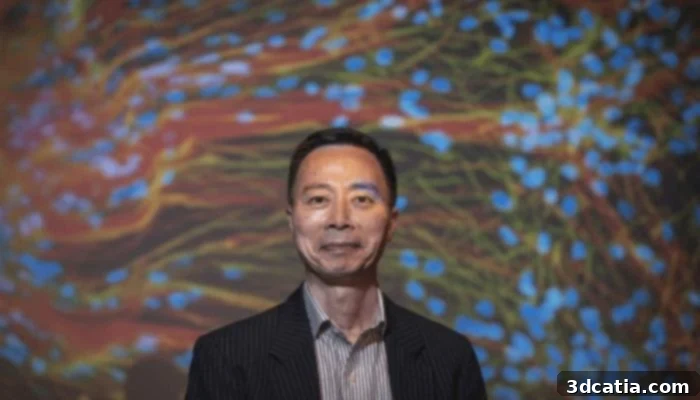
Su-Chun Zhang, Professor of Neurology. (Photo credits: University of Wisconsin-Madison)
Engage and Learn More
What are your thoughts on this remarkable advancement in 3D printed brain tissue? We invite you to share your insights in a comment below or join the conversation on our LinkedIn, Facebook, and Twitter pages! Don’t miss out on the latest developments in 3D printing; remember to sign up for our free weekly newsletter here, delivering the most current news straight to your inbox! Additionally, you can explore all our engaging videos on our YouTube channel.