
Discover the Future: Top 5 Revolutionary 3D Printing Innovations This Week
Welcome to our weekly roundup, where we highlight the most impactful and fascinating developments in the world of 3D printing and additive manufacturing. This week, we’ve scoured the landscape to bring you the TOP 5 videos showcasing how this transformative technology is not just evolving, but actively reshaping industries, daily life, and even our perception of what’s possible. From culinary breakthroughs that redefine what we eat to advancements in autonomous transport, military logistics, medical training, and accessible metal fabrication, 3D printing continues to demonstrate its incredible versatility and profound potential. Join us as we explore how these innovations are setting the stage for a future built on precision, customization, and rapid innovation. We delve into cutting-edge applications like 3D printed plant-based steak, an autonomous 3D printed bus making a difference on campus, the U.S. Navy’s ingenious use of on-demand 3D printing for critical parts, a groundbreaking public medical 3D printing lab in South Africa, and Desktop Metal’s user-friendly approach to metal additive manufacturing. Each story underscores the dynamic and accelerating pace of change driven by this technology. We hope you find these insights as exciting and inspiring as we do! If you’re eager for more captivating content, be sure to visit and subscribe to our Youtube channel for an even broader collection of 3D printing videos. Enjoy the journey into tomorrow, and have a fantastic Sunday!
Top 1: Reinventing Steak Through 3D Printing for a Sustainable Future
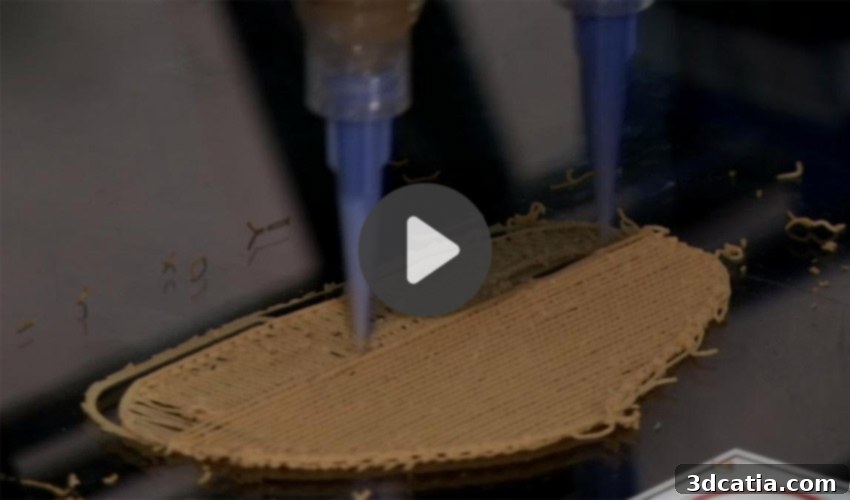
Imagine a delicious, guilt-free steak that looks, cooks, and tastes like traditional meat, but is entirely plant-based. This week, at the prestigious Mobile World Congress in Barcelona, food technology innovator NovaMeat unveiled precisely that: a brand new kind of steak, meticulously crafted using 3D printing technology. This revolutionary product is composed of a carefully balanced blend of rice protein, peas, and seaweed fibre, ingredients chosen not only for their nutritional value but also for their ability to replicate the complex texture and mouthfeel of conventional meat. The integration of 3D printing allows for precise control over the fibre alignment and density, which is crucial for achieving a realistic chew and bite. The NovaMeat team not only showcased their innovative printed steak but also cooked it live on their stand, inviting curious visitors to taste-test this glimpse into the future of food. This development holds immense promise for addressing global challenges such as environmental sustainability, ethical concerns regarding animal welfare, and the growing demand for alternative protein sources. By offering a plant-based option that doesn’t compromise on sensory experience, NovaMeat is paving the way for more sustainable and humane food systems. Check out the video below to witness this culinary marvel and learn more about how 3D printing is transforming the food industry!
Top 2: On-Demand Parts and the Agile Supply Chain of the U.S. Navy
In a testament to the versatility and immediate utility of additive manufacturing, the U.S. Navy is ingeniously employing small desktop FDM (Fused Deposition Modeling) 3D printers to produce a vast array of everyday parts, tools, and critical components. This innovative approach is significantly streamlining their logistics and enhancing operational readiness, especially in remote or deployed environments where traditional supply chains can be slow and cumbersome. The Navy’s journey into on-demand fabrication began with relatively simple items, such as door handles. They quickly discovered the remarkable ease and efficiency of the process, with parts being produced in as little as four hours. This initial success ignited a realization: the potential of this technology was virtually limitless, bounded only by imagination and design capability. Today, these compact 3D printers are churning out an impressive diversity of items, including replacement buttons for radio equipment, various vehicle components, and intricate reticular structures of all kinds. The ability to print parts on-site eliminates the need to stock extensive inventories, reduces shipping times, and provides an agile solution for urgent repair or customization needs. This not only translates to significant cost savings but also ensures that vital equipment remains functional, bolstering mission effectiveness. The adoption of FDM 3D printing represents a paradigm shift for military logistics, demonstrating how decentralized manufacturing can empower forces with unprecedented adaptability and self-sufficiency. Explore the video below to see how this revolutionary approach is being implemented!
Top 3: Olli Arrives at the University of Sacramento, Revolutionizing Campus Mobility
Many will recall Olli, the groundbreaking autonomous shuttle developed by Local Motors, which garnered significant attention for its innovative design and manufacturing process leveraging advanced 3D technologies. We’re thrilled to report that Olli has now officially arrived on the vibrant campus of the University of Sacramento in California, marking a significant step forward in integrating smart, sustainable transportation into everyday life. This intelligent vehicle, a prime example of how 3D printing enables rapid prototyping, custom design, and efficient production of complex parts, offers a glimpse into the future of urban and campus mobility. Upon its arrival, several enthusiastic students were given the unique opportunity to experience Olli firsthand, riding in this state-of-the-art shuttle. The primary goal for Olli’s deployment on campus is to enhance student convenience and accessibility, providing seamless transportation to various points across the university grounds. By offering an efficient, on-demand transport solution, Olli aims to significantly ease the daily commute for students, reduce reliance on personal vehicles, and contribute to a greener, more connected campus environment. Its autonomous capabilities mean it can navigate routes intelligently, optimizing travel times and offering a safe, comfortable, and futuristic ride. This initiative not only showcases the practical applications of 3D printed autonomous vehicles but also positions the University of Sacramento at the forefront of adopting innovative smart campus solutions. Witness Olli in action and discover how it’s making student life easier in the video below.
Top 4: Pioneering Medical 3D Printing with a Public Laboratory in South Africa
A monumental stride in medical innovation has been made in Cape Town, South Africa, with the opening of the continent’s first public additive manufacturing laboratory dedicated specifically to health. This groundbreaking center, spearheaded by a visionary doctor, is poised to revolutionize healthcare delivery and medical training across the region and beyond. The laboratory’s core mission is to enable the on-demand fabrication of all kinds of anatomical models, utilizing advanced 3D printing technologies. These highly accurate, patient-specific models are indispensable tools for medical professionals. They allow surgeons to meticulously prepare for the most delicate and complex operations, providing a tangible, realistic replica of a patient’s anatomy to plan incisions, anticipate challenges, and practice procedures beforehand. This pre-operative planning significantly reduces risks, improves surgical outcomes, and shortens operating times. Beyond surgical preparation, 3D medical printing in this public laboratory will play a crucial role in enhancing medical education. It will help train doctors, regardless of their specialty, by providing hands-on experience with intricate anatomical structures. Furthermore, these models can aid in a deeper understanding of various diseases, allowing medical researchers and practitioners to visualize pathologies in three dimensions, leading to more accurate diagnoses and potentially life-saving interventions. This initiative underscores the transformative power of 3D printing in personalized medicine, fostering local innovation and ultimately contributing to saving countless lives by improving the quality and accessibility of healthcare. Dive into the video to explore the incredible impact of this facility.
Top 5: On-Demand Metal 3D Printing Made Accessible with Desktop Metal
Metal 3D printing has long been recognized for its potential to create complex, high-performance parts with unprecedented design freedom, but its adoption has often been hindered by complexity and cost. Desktop Metal is changing this landscape dramatically, making on-demand metal additive manufacturing more accessible and user-friendly for a wider range of industries. At the heart of this revolution is their innovative ‘fabricate’ software, a key component that demystifies the intricate process of metal 3D printing. This intuitive software platform is designed with the user in mind, allowing for a seamless transition from digital design to physical metal component. Through simple, interactive slider bars, users can effortlessly navigate and control various stages of the design and printing process. This includes setting parameters, optimizing geometries, and visualizing their part’s components in real-time within a 3D space. The software eliminates much of the guesswork and specialized knowledge traditionally required, empowering engineers and designers to unleash their creativity without needing to be additive manufacturing experts. Desktop Metal’s comprehensive workflow integrates design, material preparation, printing, and post-processing into a cohesive and efficient system. From the initial 3D CAD model all the way to a high-quality, finished metal part, their technology ensures precision, repeatability, and robust mechanical properties. This breakthrough means that producing functional metal prototypes, custom tooling, and even end-use parts is now faster, more affordable, and within reach for businesses of all sizes, accelerating innovation across sectors like automotive, aerospace, consumer products, and industrial machinery. Watch the video below for an in-depth look at the complete Desktop Metal workflow, demonstrating how they are democratizing metal 3D printing.
What an incredible week it has been for 3D printing! From edible innovations and streamlined military logistics to transformative campus transportation, life-saving medical advancements, and accessible metal fabrication, the range of applications continues to expand at an astonishing rate. These TOP 5 videos vividly demonstrate that additive manufacturing is not just a niche technology, but a powerful force driving progress across diverse sectors globally. The ability to create complex geometries, customize solutions, accelerate prototyping, and optimize supply chains is making 3D printing an indispensable tool for engineers, designers, healthcare professionals, and innovators worldwide. We hope you enjoyed this dive into the latest and most exciting developments. Your thoughts and feedback are invaluable to us! Did any of these videos particularly capture your imagination or spark new ideas? Drop a comment below or engage with us on our Facebook and Twitter pages. We love hearing from our community and discussing the future of this incredible technology. And to ensure you never miss out on the cutting-edge news and insights, don’t forget to sign up for our free weekly Newsletter, delivering all the latest updates in the 3D industry straight to your inbox!