

Revolutionizing the Tokyo Olympics: 3D Printed Podiums Champion Sustainable Innovation
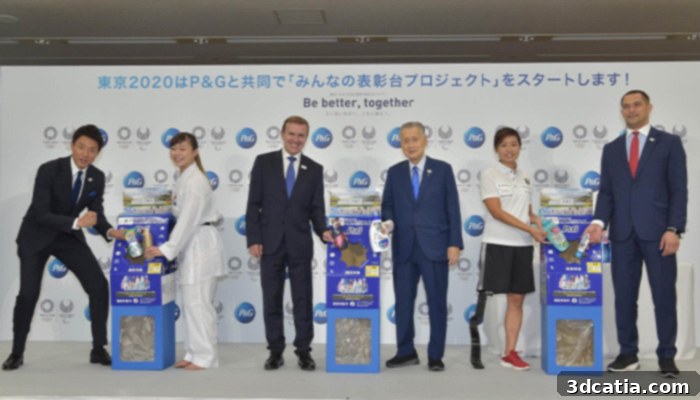
The transformative potential of additive manufacturing continues to expand, reaching unprecedented domains and demonstrating remarkable versatility. Once primarily confined to rapid prototyping, 3D printing technology is now integral across a diverse range of sectors, including aeronautics, automotive, fashion, and food production. Its innovative applications have even extended into the world of sports, fundamentally altering how equipment is designed and manufactured. Building on this widespread adoption, additive manufacturing achieved a historic milestone at the Tokyo 2020 Olympic and Paralympic Games. For the first time in the prestigious event’s long history, 3D printing played a pivotal role in creating the ceremonial structures where athletes received their medals. This groundbreaking initiative saw Procter & Gamble (P&G), in close collaboration with the Tokyo 2020 Organising Committee and the International Olympic Committee (IOC), develop and produce 98 unique 3D-printed podiums. These innovative structures were not only a symbol of athletic achievement but also a powerful statement on environmental responsibility, as each podium was manufactured exclusively using recycled plastic materials, diligently collected from public contributions and recovered from ocean clean-up efforts.
This ambitious project, officially known as the Tokyo 2020 Podium Project, underscored a significant commitment to sustainability and innovation within the global sporting spectacle. The choice to utilize 3D printing for the podiums highlighted the technology’s capacity for intricate design, material efficiency, and localized production, aligning perfectly with the overarching goals of the Games. Beyond the logistical benefits, the project served as a tangible demonstration of how large-scale events can integrate advanced manufacturing techniques with environmental consciousness. The collaboration between P&G, a multinational consumer goods giant, and the Olympic committees showcased a shared vision for reducing waste and promoting a circular economy, setting a new benchmark for future international events.
The aesthetic and symbolic elements of the 3D-printed podiums were entrusted to the acclaimed designer Asao Tokolo, renowned for his work on the distinctive Tokyo 2020 emblems. Tokolo’s vision for the podiums transcended mere functionality, aiming to encapsulate the rich tapestry of Japan’s cultural heritage, its deep-rooted traditions, and the universal values espoused by the Olympic movement. Through a thoughtful combination of intricate design patterns and carefully chosen colors, including the historically significant indigo dye, Tokolo masterfully conveyed a narrative of Japan’s continuous evolution while paying homage to its storied past. The very material of the structures—recycled plastic—was not just a practical choice but a deliberate symbol, reflecting the Olympic Games organizers’ profound commitment to environmental stewardship and their dedication to fostering a more sustainable future.
The podiums were 3D printed using recycled plastics, symbolizing a commitment to sustainability. (Photo Credit: International Olympic Committee)
Pioneering Sustainability: 3D Printed Podiums Forged from Recycled Plastic
At the core of the Tokyo 2020 Podium Project was an unwavering commitment to sustainable development, realized through the innovative use of recycled plastics for every single podium. This ambitious undertaking required a monumental effort in material sourcing and processing. Procter & Gamble, working hand-in-hand with the International Olympic Committee and the Tokyo Organising Committee, spearheaded a comprehensive collection campaign. Plastics were meticulously gathered from a wide array of sources, including schools, retail stores, and corporate offices across Japan, mobilizing communities in a collective effort to divert waste from landfills. In an even more impactful initiative, P&G, leveraging its partnership with the United Nations Environment Program (UNEP) and its impactful #CleanOceans program, also recovered substantial quantities of plastic waste directly from marine environments. This multi-faceted recycling campaign was strategically designed not only to secure the necessary raw materials but also to raise public awareness about responsible consumption and the urgent need to address plastic pollution. The volume of material recovered through these dedicated efforts proved sufficient to manufacture all 98 ceremonial structures, a testament to the power of collaboration and community engagement. Marc Pritchard, P&G’s Chief Brand Officer, encapsulated the spirit of the initiative, stating, “Sustainability is at the heart of this effort, and P&G is proud to work with Tokyo 2020 and the IOC to demonstrate how consumers can participate in reducing plastic waste.” This statement underscored the project’s dual aim: to create physical structures and to inspire a broader societal shift towards environmental consciousness.
The primary objective of the Tokyo 2020 Podium Project extended beyond simply manufacturing the podiums; it aimed to create a robust system for collecting and repurposing post-consumer plastic waste. Specifically, the project set an ambitious target to gather 1.5 million pieces of plastic packaging, predominantly composed of polyethylene and polypropylene, from consumers. These collected plastics were then processed and transformed into recycled plastic resin, which served as the feedstock for the 3D printing process. This closed-loop system represented a tangible step towards a circular economy, where waste is minimized, and resources are continually reused. The environmental benefits of this initiative were meticulously calculated and communicated, providing concrete evidence of its positive impact. For every single piece of plastic recycled through the program, a significant saving of 75 grams of carbon dioxide equivalent was achieved, mitigating greenhouse gas emissions. Over the entire scope of the project, the collective recycling of 1.5 million plastic pieces accumulated through the program translated into an astonishing energy saving equivalent to powering a typical household for an impressive 112 years. These metrics vividly illustrate the profound environmental contribution made possible by this innovative approach to resource management and manufacturing. Marie Sallois, the department director in charge of organizational development, branding, and sustainability at the IOC, articulated the broader implications of the project, concluding: “The Tokyo 2020 Podium project is an excellent example of how the Olympic Games can inspire sustainable change in the host city and country. We are very excited to see this project take shape, adding to our global efforts to tackle plastic waste. The IOC will continue to work closely with the Tokyo Organising Committee to ensure that sustainability is an integral part of the Olympic Games 2020 and the legacy that they create.” Her words underscore the project’s role as a catalyst for ongoing sustainable practices, extending its influence far beyond the duration of the Games themselves.
The implementation of 3D printing technology for the podiums offered several distinct advantages that further enhanced the project’s sustainability goals and overall success. Additive manufacturing inherently allows for highly efficient material usage, reducing waste compared to traditional subtractive manufacturing methods. By building structures layer by layer, only the necessary material is consumed, which is particularly crucial when working with recycled resources. Furthermore, 3D printing enabled a high degree of design flexibility and customization, allowing Asao Tokolo’s intricate designs to be realized with precision. This technology also facilitates localized production, potentially reducing transportation costs and carbon footprint associated with shipping finished goods from distant factories. The ability to rapidly prototype and iterate designs, though not explicitly highlighted for this specific project, is a fundamental strength of 3D printing that contributes to efficient development cycles and resource optimization.
The Tokyo 2020 Podium Project serves as a powerful precedent, showcasing how major international events can become platforms for pioneering sustainable innovation. By integrating cutting-edge additive manufacturing with a robust circular economy model, the Olympic Games not only celebrated athletic excellence but also championed environmental responsibility on a global stage. This initiative paves the way for future events and industries to reconsider their manufacturing processes and material sourcing, encouraging the adoption of similar eco-friendly practices. The legacy of these 3D-printed podiums extends beyond their temporary use during the medal ceremonies; they stand as enduring symbols of human ingenuity, collaborative spirit, and a collective commitment to protecting our planet for generations to come. This project demonstrated that sustainability and technological advancement are not mutually exclusive but can, in fact, be powerful allies in addressing some of the world’s most pressing environmental challenges.
What are your thoughts on the Olympic Games’ innovative 3D-printed podiums and their commitment to sustainability? Share your insights in a comment below or join the conversation on our Facebook and Twitter pages. Don’t forget to sign up for our free weekly newsletter to stay informed with all the latest news in 3D printing, delivered straight to your inbox!
Cover Photo Credit: International Olympic Committee