
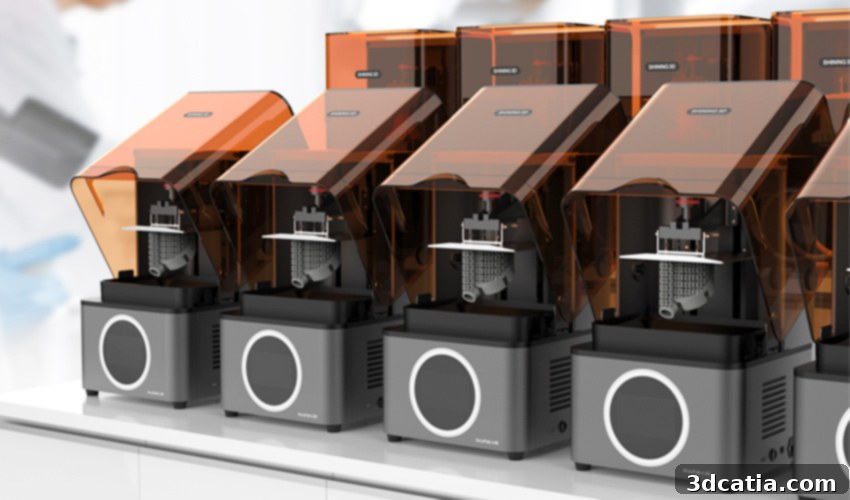
Ultimate Guide to Choosing a Resin 3D Printer: Expert Insights & Applications
The landscape of additive manufacturing has been continuously evolving, and one of its pioneering technologies, resin 3D printing, stands out for its remarkable precision and ability to capture intricate details. The journey began in 1986 when Charles Hull secured one of the first commercial patents in the 3D printing sector for Stereolithography (SLA). This groundbreaking process utilizes a focused laser to meticulously polymerize liquid photosensitive resins, solidifying them layer by layer to form a three-dimensional object. Since Hull’s invention, the field of photopolymerization has expanded significantly, leading to the development of other prominent methods such as Digital Light Processing (DLP) and LCD-based resin printing. Unlike SLA, which cures resin point by point with a laser, DLP and LCD technologies employ a screen to project an entire image of a layer, curing the whole section of resin in a single, rapid pass. While each method possesses unique operational characteristics and advantages, resin additive manufacturing, in general, is widely acclaimed for its exceptional precision and the unparalleled fineness of detail it can achieve, particularly when compared to other processes like Fused Deposition Modeling (FDM). This inherent accuracy makes it ideal for applications requiring high fidelity. But for those looking to delve into this exciting technology, the question often arises: how does one choose the right resin 3D printer? Which specific process aligns best with diverse manufacturing needs and project requirements? To shed light on these critical questions, we sought the wisdom of three distinguished experts in the field, gathering their invaluable insights and recommendations.
Our panel of experts brings a wealth of experience from various facets of the 3D printing industry. Our first interviewee is Bo Pang, a dedicated 3D printing product manager at SHINING 3D, a globally recognized leader in providing advanced imaging and resin 3D printer solutions. With an impressive eight years in the industry, Mr. Pang has primarily contributed his expertise within SHINING 3D’s R&D department, specializing intently on resin 3D printing technologies and their continuous advancement. Joining him is Robin Brockötter, the astute 3D printing supply chain manager for Europe and the UK at Hubs, a formidable entity that operates the world’s largest peer-to-peer network of comprehensive 3D printing services. Mr. Brockötter has dedicated eight years to Hubs, accumulating deep knowledge of material selection and process optimization. Completing our expert trio is Julien Montenero, a highly skilled facial, dental, and maxillofacial prosthesis technician. Mr. Montenero has been an early and consistent adopter of resin technology, leveraging its capabilities for a diverse range of critical medical applications over the past 15 years, providing a vital user perspective.
- Bo Pang
- Robin Brockötter
- Julien Montenero
Why Turn to Resin 3D Printing? Unpacking the Advantages of Photopolymerization
At the core of resin additive manufacturing’s appeal is its unparalleled capability to produce exceptionally detailed parts with remarkable surface finishes and high precision. This intrinsic quality sets it apart in many manufacturing scenarios. However, within the realm of photopolymerization, the specific characteristics still vary significantly across different processes. Robin Brockötter elaborated on what users can realistically expect from these technologies, highlighting the distinctions: “The specifications of different resin printers vary considerably from one brand to another. For instance, when we look at LCD printers, which are generally more accessible and affordable than industrial-grade SLA machines, the resolution of the screen directly dictates the ultimate precision of the final print. The layer thickness, a crucial parameter for detail, is typically an adjustable setting. This can range anywhere from ultrafine 25 microns up to 200 microns per layer, a setting often used for faster ‘draft mode’ printing on systems like those from Formlabs. In stark contrast, laser-based SLA printers are generally acknowledged for delivering the absolute highest precision and superior surface quality among all resin technologies.” This distinction is vital for users prioritizing either cost-efficiency or absolute fidelity.
Beyond sheer precision, resin 3D printing is exceptionally well-suited for applications demanding accurate model reproduction. For Julien Montenero, this process has been transformative, enabling him to faithfully replicate the intricate models essential for his work. He shared his experience, stating: “The process offers an unprecedented quality of execution. Beyond this technical aspect, it empowers us to validate and execute our work in a consistently reliable and faithful manner. Thanks to 3D printing, we can establish and precisely reproduce our aesthetic and functional plans, ensuring exact matches for custom prosthetics.” This ability to achieve high-fidelity reproduction is critical in fields where perfect alignment and form are paramount, such as dental or medical applications.
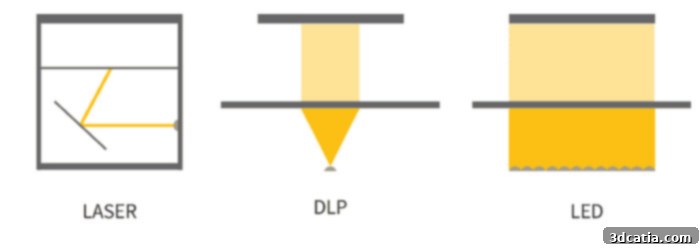
The different 3D resin printing processes
Another pivotal factor to weigh when considering resin 3D printing is the expanding availability and sophistication of its materials. While traditionally the material selection was not as extensive as with FDM printing, recent advancements in resin chemistry are rapidly broadening the spectrum of applications, even for desktop resin 3D printers. Bo Pang articulated this growing trend: “Benefitting from the many material improvements in resin 3D printing, more and more engineers are starting to deploy resin 3D printers on their desks. Indeed, the technology is ideal for making functional prototypes quickly and efficiently. Instead of outsourcing the prototyping process and enduring weeks of waiting, a desktop resin 3D printer can accomplish most of the job within mere hours. Furthermore, there are now many high-performance engineering materials available, boasting properties comparable to widely used thermoplastics like ABS, Polycarbonate (PC), or even flexible materials like Silicone Rubber.” This evolution in material science is transforming resin printing from a niche prototyping tool into a versatile manufacturing solution.
Diverse Resin 3D Printing Applications: From Medical to Jewelry
Additive manufacturing has permeated numerous sectors, and certain processes are inherently better suited for specific application types. Resin 3D printing exemplifies this, proving ideal for creating intricate figurines, highly detailed architectural models, and playing a particularly transformative role within the medical sector, especially in dental applications. Bo Pang from SHINING 3D elaborated on this significant impact: “The most suitable and impactful application for resin 3D printing is arguably in the dental field. Almost every dental application can significantly benefit from resin 3D printing, including orthodontics, various restorations, and complex implant planning. To illustrate the scale, the top orthodontics manufacturers globally print over 700,000 models daily using resin technology, a testament to its reliability and efficiency.” This perspective is strongly echoed by Julien Montenero, who quickly embraced resin machines to not only fabricate prototypes for crowns and bridges but also to create custom prostheses for breasts, noses, ears, and other facial and body parts. The proven biocompatibility of certain specialized resins is particularly valued and appreciated by healthcare professionals, enabling direct patient contact applications.
However, the utility of resin 3D printing extends far beyond the medical field. It is also immensely popular within the jewelry industry, where its precision is crucial for producing highly accurate molds used in the traditional lost-wax casting process. Pang emphasized this application, noting, “Jewelry creation is another critically important application for resin 3D printing. Technologies like DLP and LCD are capable of printing ultra-high details and features, even those smaller than a human hair. A significant number of jewelry designers are now utilizing 3D printers in conjunction with specialized wax resins to create their intricate designs and master models directly in-house, significantly streamlining their production workflow.” This allows for rapid iteration and customization, changing how artisans approach design and manufacturing.
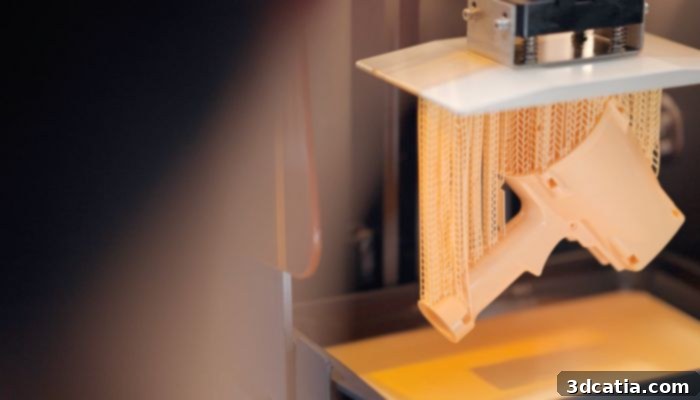
Resin 3D printing can be used for a wide variety of applications (photo credits: Shining 3D)
Robin Brockötter also underscored the expansive utility of resin 3D printing across a broad spectrum of applications, reiterating the significant impact that careful material selection can have on the performance and aesthetics of the final part. He explained: “Resin printing is characterized by its exceptionally high precision and truly excels for visual end-uses where surface finish and intricate details are paramount. Resins are now available in an incredibly wide range, meticulously optimized for diverse applications thanks to their unique properties. These properties can include everything from impressive flexibility and superior toughness to excellent castability for processes like lost-wax casting. For example, different types of clear resins can be expertly polished to achieve a pristine, glass-like finish, making them perfect for transparent prototypes or aesthetic components. Conversely, generic white, grey, and black resins are frequently preferred for initial prototyping parts, especially those that are being rapidly iterated and validated just before moving into mass production methods such as injection molding.” This flexibility in materials truly unlocks the potential of resin 3D printing.
Overcoming Challenges: Mastering the Art of Resin 3D Printing
Despite its impressive capabilities, venturing into resin 3D printing is often perceived as a steeper learning curve compared to more accessible technologies like FDM, which beginners commonly choose as a starting point. To consistently achieve successful prints with resin, one must master a specific set of parameters, including precise exposure times, the optimal speed of the build plate, and even ambient environmental conditions like temperature. Bo Pang highlighted the multifaceted considerations involved, stating that a lot of different aspects need careful attention. These encompass print size, desired accuracy, printing speed, material compatibility, efficient nesting of parts, selecting appropriate slicing software, and perhaps most crucially, the post-processing workflow. He particularly emphasized the critical importance of effective design and the post-processing stages: “Nesting and slicing represent the foundational first steps for any 3D printing job. A good software package can significantly streamline the pre-processing phase, making it both quick and easy. Most reputable 3D printer companies offer free trials for their software, so it’s highly advisable to ensure you are comfortable and happy with the software before making a purchase. Furthermore, resin 3D printing inherently requires crucial wash and post-curing steps. A compatible curing station is absolutely essential, as it can significantly strengthen the printed part by a remarkable 30% to 50%. Likewise, an efficient washing station can lead to substantial savings in labor costs, simplifying the entire post-processing workflow and making it far more manageable.” Neglecting these steps can compromise part quality and longevity.
Another inherent challenge associated with resin processes is the unavoidable necessity of printing supports. During the intricate printing process, these strategically placed supports meticulously hold the part onto the build plate, preventing deformation and ensuring structural integrity. Once the printing is complete, these supports must be carefully removed, which is part of the post-processing phase. This usually involves several steps: thoroughly washing the part to eliminate any residual uncured resin, and then often annealing or post-curing it to fully develop its mechanical properties and strength. While these steps add complexity, this challenge can be significantly mitigated with expert design knowledge and careful planning. Robin Brockötter explained how Hubs actively assists customers in navigating these complexities when they aim to create parts using resin 3D printing: “We also provide comprehensive design recommendations that are specifically aimed at improving various facets of the print, such as overall printability, enhancing part strength, optimizing material consumption, and much more. All this is, of course, meticulously done while carefully accounting for the inherent limitations and specific requirements of the SLA process itself. This attention to detail includes focusing on smaller, yet crucial, elements, such as optimizing the support structures absolutely necessary to print the parts or determining the minimal wall-thickness required for a successful, robust print. For example, if your design incorporates complex internal features or delicate overhangs, we make sure our production partners orientate the part in a manner that effectively minimizes the need for extensive or difficult-to-remove support structures, thereby simplifying post-processing and reducing potential damage.”
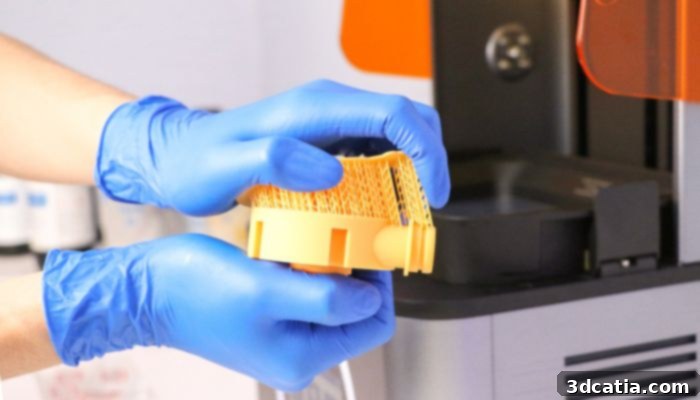
Resin 3D printed parts must be printed with supports which then need to be removed (photo credits: Shining 3D)
How to Choose a Resin 3D Printer: Key Considerations and Expert Advice
The foundational starting point for intelligently choosing a resin 3D printer lies in a thorough identification of its intended applications. This initial assessment involves asking a series of crucial questions: What specific objects will you primarily print? How frequently will the machine be in operation? What precise mechanical, aesthetic, or functional properties do you expect to impart to the final printed part? These fundamental questions are absolutely essential for accurately refining your needs and subsequently selecting the most appropriate and effective additive manufacturing solution. Robin Brockötter elaborated further on this critical initial step: “Similar to how we would recommend a specific type of resin, it is paramount to understand the intended application when you are in the process of choosing a resin printer. Are you working for a professional company that requires the machine to run continuously, 24/7, for producing customized dental mouthguards with high throughput? Or are you a hobbyist who occasionally prints unique designs and prototypes every now and then for personal projects? These significant considerations will profoundly impact which specific resin 3D printer you ultimately decide to purchase, influencing factors like durability, speed, build volume, and overall investment.”
Once this thorough reflective process is well underway and your core needs are identified, our experts universally advise actively testing different machines and exploring various avenues for evaluation. This might involve engaging with a specialized 3D printing service provider, visiting local fablabs, or attending industry trade shows to get hands-on experience. Julien Montenero explicitly detailed his recommendation: “It is absolutely necessary to conduct a comprehensive study of your specific needs and associated costs, directly in relation to your primary activity, in order to meet your expectations as accurately and as quickly as possible. It is critically important to perform numerous tests before committing to a final choice. Thanks to the multitude of vibrant 3D printing communities currently available across various online networks, finding a reputable provider for all sorts of 3D printing solutions is now accessible to virtually everyone. By actively testing different machines and processes, the comparison of results becomes much easier and more tangible, thereby greatly simplifying the choice of equipment, whether it’s the primary printer itself or essential post-processing materials and stations.”
Bo Pang also highlighted the often-underestimated importance of reliable support when making a substantial investment in a 3D printer. He concluded with a vital piece of advice for prospective buyers: “The 3D printing industry is still very much in its early stages of development and continuous evolution. As such, it is highly probable that you will encounter various questions, challenges, or issues when actively using the product. A 3D printer is not akin to typical consumer electronics; it possesses its own distinct learning curve and operational intricacies. Therefore, we should always make the conscientious choice to select a product from a company that can unequivocally provide not only a reliable and robust product but also appropriate and thorough training resources, and crucially, excellent ongoing customer service and technical support. This comprehensive support ecosystem is vital for long-term success and satisfaction.”
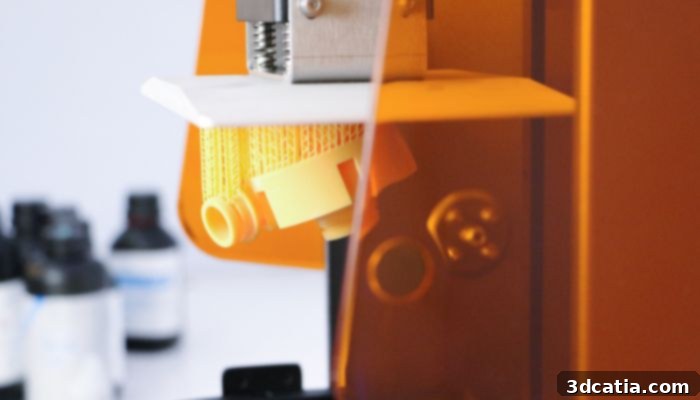
Photo Credits: Shining 3D
Do you currently utilize resin 3D printing in your work or hobbies? Which specific resin 3D printer model would you personally recommend or choose, and why? We invite you to share your valuable insights and experiences in a comment below or connect with us on ourLinkedIn,Facebook, and Twitter pages! To stay abreast of the very latest developments and news in the dynamic world of 3D printing, don’t forget to sign up for our completely free weeklyNewsletter here, delivering breaking news directly to your inbox! You can also explore all our informative and engaging videos on our dedicatedYouTube channel.
*Cover Photo Credits : 3Dnatives