
Revolutionizing Additive Manufacturing for Defense: DARPA’s SURGE Program
The Defense Advanced Research Projects Agency (DARPA) stands at the forefront of technological innovation, constantly pushing the boundaries to secure the national interests of the United States. Established in 1958 in direct response to the Soviet Union’s pivotal launch of Sputnik a year prior, DARPA was created with a clear and ambitious mandate: to ensure the nation would “never again face a strategic technical surprise.” This foundational principle drives the agency’s unique approach, which prioritizes transformational breakthroughs over incremental advancements. DARPA actively seeks out and invests in high-risk, high-reward projects that have the potential to fundamentally reshape capabilities, fostering a culture of radical innovation that has, throughout history, led to technologies like the internet, GPS, and stealth technology.
Within this expansive portfolio of groundbreaking initiatives, one program, in particular, captures the attention of the advanced manufacturing community: SURGE, an acronym for Structures Uniquely Resolved to Guarantee Endurance. This innovative DARPA program is poised to usher in a new era for additive manufacturing (AM) by radically rethinking the conventional, machine-centric methodology of part qualification. Instead of the current paradigm, which heavily focuses on the arduous and often protracted process of perfecting AM machines to consistently produce materials with known properties, SURGE proposes a paradigm shift. Its core objective is to accurately predict the structural life and performance of each individual additively manufactured part directly at the point of production. This represents a significant pivot, moving the emphasis from merely qualifying the manufacturing machine to meticulously assessing the integrity and long-term viability of every unique part.
The challenges inherent in qualifying 3D printed parts for critical applications, especially in the defense sector, are substantial. Current methods often involve extensive, time-consuming, and costly material property testing and process optimization cycles that can span months, if not years, and accrue costs soaring into the millions of dollars. This laborious process is necessary due to the inherent complexities and variability in AM processes, where factors like powder quality, laser parameters, build orientation, and post-processing steps can significantly influence the final part’s microstructure and mechanical properties. Such variability makes it exceedingly difficult to guarantee consistent performance and reliability, which are non-negotiable requirements for components deployed in demanding military environments. SURGE aims to circumvent these traditional bottlenecks by developing a more agile, data-driven approach that ensures reliability and accelerates the deployment of AM components.
To spearhead this ambitious vision, SURGE has strategically partnered with leading research institutions. The journey began on February 3rd, with SURGE awarding a significant $6.2 million contract to the Southwest Research Institute (SwRI). Just a week later, demonstrating the program’s accelerated trajectory and broad scope, SURGE entered into an additional, even larger contract, this time with HRL Laboratories, amounting to $8.9 million. While specific, intricate details regarding the contractual agreements and the precise scope of work for each partner remain largely undisclosed, the overarching mission guiding both collaborations is crystal clear. Both SwRI and HRL Laboratories will be instrumental in exploring “a new approach where the life of every unique part is predicted at the point of production based directly on data captured during manufacturing.” SwRI brings extensive expertise in materials science, mechanical engineering, and non-destructive evaluation, crucial for understanding part performance. HRL Laboratories, known for its pioneering work in advanced materials and manufacturing processes, complements this with capabilities in sensing technologies and data analysis.
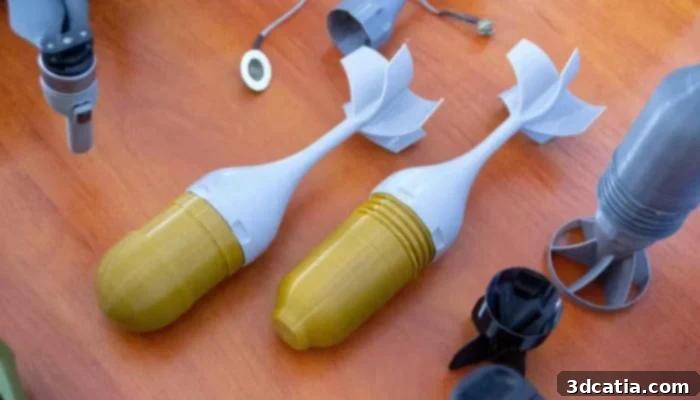
A prototype of 3D printed weaponry, not from DARPA (Image credit: Mari1408 Dreamstime.com)
The methodology envisioned by the SURGE team is multi-faceted and highly innovative, integrating cutting-edge technologies to achieve its predictive goals. As reported by Military Aerospace Electronics, the program intends to combine three critical pillars: advanced in-situ sensing technologies, sophisticated process modeling, and robust microstructure-based fatigue-life prediction methods. In-situ sensing involves embedding or integrating sensors directly into the additive manufacturing process to capture real-time data about temperature, melt pool dynamics, solidification rates, and other critical parameters as the part is being built. This continuous stream of data provides an unprecedented level of insight into the manufacturing process, allowing for immediate feedback and anomaly detection.
Complementing in-situ sensing, process modeling leverages computational tools to simulate the complex physical phenomena occurring during additive manufacturing. These models can predict how variations in machine parameters or material inputs will affect the microstructure and resulting properties of the printed part. By linking this modeling with the real-time data from in-situ sensors, SURGE aims to create a comprehensive digital twin of each component as it’s manufactured. Finally, microstructure-based fatigue-life methods will utilize the detailed understanding of the material’s internal structure – derived from both sensing and modeling – to predict how a part will behave under various stress conditions over its operational lifespan. These predictions will not be theoretical exercises but will be rigorously derived from extensive experimental validation, ensuring their accuracy and reliability. By shifting the focus to evaluating each part while it is being produced, rather than after the fact, SURGE anticipates significant reductions in qualification time and overall costs, ultimately accelerating the adoption of AM for critical applications.
The current approach to additive manufacturing qualification, particularly for high-stakes applications, often necessitates an exhaustive and iterative process. It involves meticulously fine-tuning AM machines to repeatedly produce materials with established, verifiable properties. This method, while capable of achieving high standards, is notoriously time-consuming and expensive. As SURGE’s research highlights, this can entail months or even years of intensive process optimization and material property testing, with financial outlays that can easily exceed millions of dollars. Such a protracted and costly cycle severely limits the agility and responsiveness of AM, especially when developing new designs, utilizing novel materials, or introducing new machines. It creates a significant barrier to entry and slows down innovation in critical sectors like defense.
In stark contrast, SURGE’s innovative approach promises to unlock the full, unprecedented potential of additive manufacturing. By enabling precise, real-time life prediction for individual parts, the program aims to fundamentally change how AM is deployed. This new paradigm would permit virtually any geometry to be produced on any qualified machine, at any time, and in any location, without the need for extensive, time-consuming requalification. This flexibility is particularly transformative for the military, where the ability to manufacture critical structural parts on demand, even in forward operating bases or remote locations, could revolutionize logistics, supply chain resilience, and battlefield readiness. By being able to rigorously guarantee the structural life of each part through data-driven assessment, SURGE will empower the defense sector to deliver more robust, reliable, and longer-term solutions, providing a decisive advantage in mission-critical scenarios and significantly enhancing national security capabilities.
An Ongoing and Strategic Investment in Additive Manufacturing for Defense
The substantial contracts forged between SURGE, SwRI, and HRL Laboratories are not isolated incidents but rather integral components of a much broader and strategically significant trend. They represent just a fraction of the manifold investments the United States’ defense services have consistently made in favor of additive manufacturing. This ongoing commitment underscores a recognition at the highest levels of the transformative potential AM holds for military operations and national security. Last week alone, it was widely reported that the United States Air Force is actively integrating 3D printed drag reducers onto its cargo aircraft, a clear example of how AM is improving efficiency and performance in existing systems. Furthermore, just the week prior, the Spanish-American company Supernova secured a pivotal contract to 3D print energetic materials for the Department of Defense, demonstrating AM’s application in highly specialized and critical domains.
The widespread adoption and growing enthusiasm for additive manufacturing within the defense sector are rooted in its compelling array of advantages. First and foremost, the technology offers a significant pathway to reduce both manufacturing costs and lead times. By eliminating the need for expensive tooling and allowing for rapid prototyping and iteration, AM can dramatically streamline the development and production cycles of new components. Beyond cost and speed, AM excels in enabling the creation of complex geometries that are impossible or cost-prohibitive to produce with traditional manufacturing methods. This design freedom allows for optimized parts that are lighter, stronger, and more efficient, particularly beneficial for aerospace and advanced military systems.
Moreover, additive manufacturing is uniquely positioned to enhance logistical resilience. It facilitates rapid repairs, on-demand replacements, and the production of unique, highly customizable parts. For defense applications, these capabilities are especially critical for operations in the field or in remote locations. Imagine a scenario where a crucial spare part for a drone or a vehicle breaks down on a forward operating base. Instead of waiting weeks or months for a replacement to be shipped through a complex supply chain, AM allows for the part to be printed locally, significantly reducing downtime and maintaining operational readiness. This ability to produce parts closer to the point of need also bolsters supply chain security, reducing reliance on vulnerable global manufacturing networks and mitigating risks associated with geopolitical instabilities.
The strategic implications of SURGE’s advancements are profound. By providing a scientifically robust and data-driven method for guaranteeing the life of additively manufactured parts, the program removes a significant barrier to the widespread adoption of AM for the most critical military applications. It will enable defense agencies to confidently deploy 3D printed components in aircraft, naval vessels, ground vehicles, and even advanced weaponry, transforming how these systems are designed, maintained, and operated. The potential for SURGE to fundamentally change the game for additive manufacturing in defense remains a compelling prospect, promising enhanced operational efficiency, reduced logistical burdens, and ultimately, a stronger national security posture. You can learn more about the program and its objectives by visiting the official DARPA website, where further details are often provided: DARPA SURGE Program.
For those interested in the broader impact of additive manufacturing across various sectors, especially aerospace and defense, a wealth of information and analyses are available. To delve deeper into how 3D printing is shaping military capabilities and aerospace innovation, explore dedicated resources focusing on aerospace and defense 3D printing. Staying informed about the latest advancements in this rapidly evolving field is crucial. Consider subscribing to a free weekly 3D printing newsletter to receive the most current news directly in your inbox. Additionally, a wide array of visual content and in-depth discussions on additive manufacturing can often be found on platforms like YouTube channels dedicated to the topic, providing further insights into the technological innovations driving this industrial revolution.
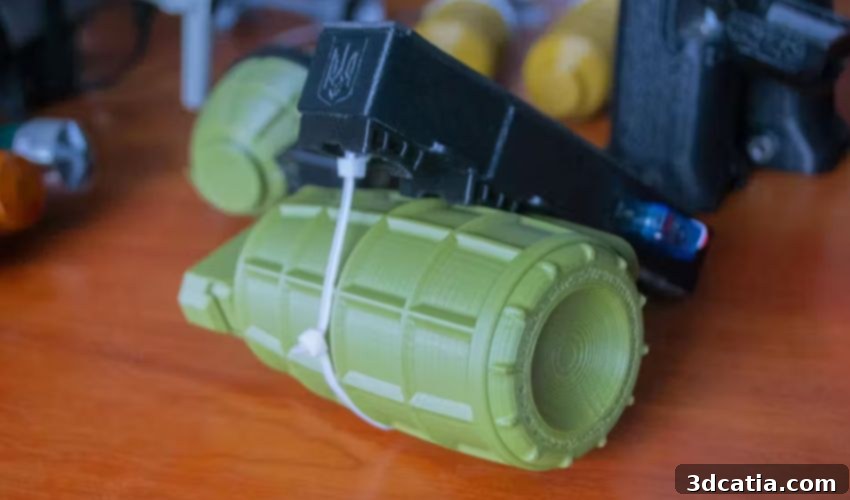
*Cover Photo: Example of 3D printed weaponry, not from DARPA (Credit: Mari1408 Dreamstime.com)