
Unpacking the Future of 3D Printing: Stratasys’ Vision from RAPID + TCT 2024
RAPID + TCT 2024, a premier event in the additive manufacturing (AM) industry, brought together over 400 exhibitors, showcasing the latest innovations and offering invaluable insights into the rapidly evolving landscape of 3D technologies. With such a vast array of companies and groundbreaking advancements on display, the event served as a critical platform for industry leaders to share their perspectives on the future of manufacturing. To delve deeper into these crucial conversations, 3Dnatives had the distinct opportunity to engage with some of the sector’s most influential figures, seeking answers to pressing questions about technology evolution, market trends, and strategic directions.
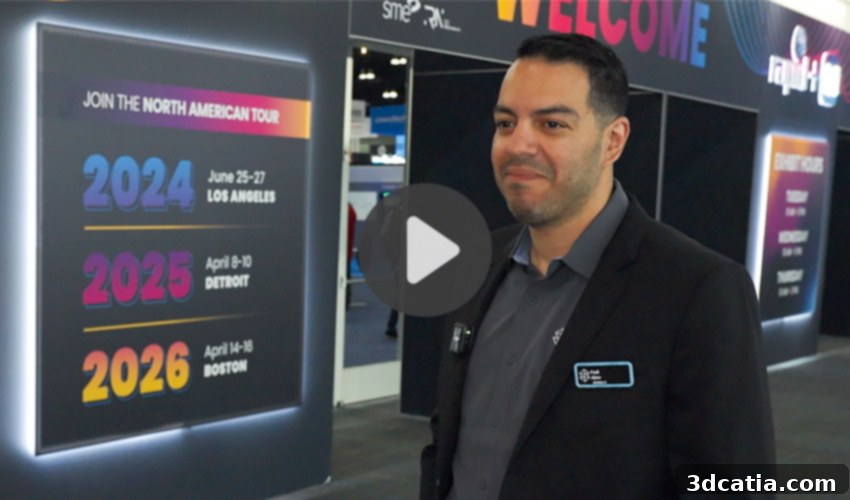
Among the distinguished voices at RAPID + TCT 2024, we were particularly keen to sit down with Fadi Abro from Stratasys, a globally recognized leader and pioneer in the 3D printer manufacturing space. This exclusive interview provided a profound look into Stratasys’s strategic vision for additive manufacturing, exploring its current state and future implications. From the foundational evolution of AM technology to the critical advantages and undeniable importance of industry events like RAPID + TCT, Abro’s insights illuminated how Stratasys continues to drive innovation and shape the trajectory of the additive manufacturing landscape. For a direct glimpse into these discussions, we invite you to watch the video below, capturing key moments and perspectives from our chat.
Stratasys’ Enduring Impact on Additive Manufacturing
Stratasys has long been synonymous with innovation in 3D printing, consistently pushing the boundaries of what’s possible with additive technologies. With a history rooted in the very beginnings of fused deposition modeling (FDM), Stratasys has evolved into a powerhouse offering a diverse portfolio that includes PolyJet, SAF, P3, and Origin One technologies. This breadth of technological expertise allows them to address a vast spectrum of industrial applications, from rapid prototyping and tooling to advanced end-use parts in demanding sectors like aerospace, automotive, medical, and consumer goods. Fadi Abro’s presence at RAPID + TCT underscored Stratasys’s unwavering commitment to leadership and its proactive role in guiding the industry towards more robust, scalable, and economically viable additive solutions. Their approach is not just about building printers, but about creating comprehensive ecosystems that integrate materials, software, and services to unlock new possibilities for manufacturers worldwide.
The Evolution of AM: From Prototype to Production
One of the core themes highlighted by Stratasys is the significant shift in additive manufacturing’s role over the past decades. What began primarily as a tool for rapid prototyping has steadily matured into a reliable method for industrial-scale production. This evolution is driven by several factors, including advancements in machine reliability, precision, speed, and the introduction of high-performance engineering-grade materials. Stratasys has been at the forefront of this transformation, developing systems capable of producing parts with exceptional mechanical properties, surface finishes, and repeatability. This transition from ‘prototyping’ to ‘production’ is not merely a semantic one; it represents a fundamental change in how industries perceive and integrate 3D printing into their supply chains, enabling design freedom, customization at scale, and localized manufacturing previously thought impossible. The conversation with Fadi Abro emphasized this pivotal shift, showcasing how Stratasys is equipping businesses to leverage AM for direct manufacturing applications, thereby streamlining processes and reducing time to market.
Key Trends Shaping the Future of 3D Printing
Industrialization and Automation
A major trend discussed was the accelerating industrialization of AM. This involves not only larger, faster, and more robust printers but also greater integration into existing factory workflows through automation. Stratasys is focusing on solutions that enable lights-out manufacturing, predictive maintenance, and seamless data exchange within smart factory environments. This drive towards automation is crucial for reducing operational costs, improving efficiency, and ensuring consistent part quality at scale, making AM a truly competitive manufacturing method.
Material Innovation and Diversity
The power of additive manufacturing is inextricably linked to the materials it can process. Fadi Abro elaborated on the importance of continued advancements in material science. Stratasys continually invests in developing new polymers, composites, and elastomers that expand the application possibilities of 3D printing. From biocompatible resins for medical devices to high-temperature thermoplastics for aerospace components, the availability of diverse, high-performance materials is critical for meeting the stringent requirements of various industries and unlocking new use cases for AM.
Sustainability and Supply Chain Resilience
In an era marked by increasing environmental consciousness and supply chain disruptions, additive manufacturing offers compelling solutions. Stratasys emphasized AM’s potential to enable on-demand production, reduce material waste through optimized designs, and facilitate localized manufacturing, thereby minimizing transportation emissions. By producing parts only when and where they are needed, companies can build more resilient and sustainable supply chains. This focus on sustainability aligns with global initiatives and offers a significant competitive advantage for businesses adopting AM.
Software Integration and Workflow Optimization
Beyond hardware, software plays an increasingly vital role in optimizing the AM workflow. Stratasys is committed to developing intelligent software solutions that cover the entire process, from design and simulation to print preparation, monitoring, and post-processing. Integrated software platforms streamline operations, reduce human error, and enhance overall productivity, making additive manufacturing more accessible and efficient for a broader range of users. This holistic approach ensures that the entire digital thread of manufacturing is seamlessly connected.
The Indispensable Value of Industry Events like RAPID + TCT
The conversation with Fadi Abro also highlighted the profound significance of industry gatherings such as RAPID + TCT. In a rapidly evolving field like additive manufacturing, these events serve as vital nexus points for knowledge exchange, networking, and collaborative innovation. They provide an unparalleled opportunity for companies like Stratasys to showcase their latest technologies, engage directly with customers and partners, and gather crucial feedback from the market. Moreover, attendees benefit immensely from live demonstrations, educational sessions, and direct interactions with experts, gaining a comprehensive understanding of current trends and future directions. These face-to-face interactions foster partnerships that accelerate technological development and drive the adoption of AM across new sectors. RAPID + TCT, therefore, isn’t just a trade show; it’s a barometer for the industry’s health, a catalyst for innovation, and a critical forum for shaping the future of manufacturing.
Stratasys’s Vision for a Manufacturing Future Transformed
Looking ahead, Stratasys envisions a future where additive manufacturing is not just an alternative but an integral and indispensable component of global manufacturing strategies. Their ongoing research and development efforts are focused on pushing the boundaries of material capabilities, enhancing print speeds and reliability, and further integrating AM solutions into digitally connected factory environments. The goal is to empower manufacturers to unlock unprecedented levels of design freedom, customize products on demand, reduce lead times, and build more resilient and efficient supply chains. Fadi Abro’s insights from RAPID + TCT 2024 painted a vivid picture of a manufacturing landscape increasingly shaped by the agility, efficiency, and innovative power of 3D printing. Stratasys is committed to leading this transformation, providing the tools and expertise necessary for industries to thrive in this new era of digital manufacturing.
Were you able to stop by Stratasys at RAPID + TCT? What excites you most about their presence at the show or their vision for the future of additive manufacturing? Let us know in a comment below or on our LinkedIn, Facebook, and Twitter pages! Don’t forget to sign up for our free weekly newsletter here for the latest 3D printing news straight to your inbox! You can also find all our videos and more insightful interviews on our YouTube channel, continuing to explore the innovations shaping the future of 3D printing.