
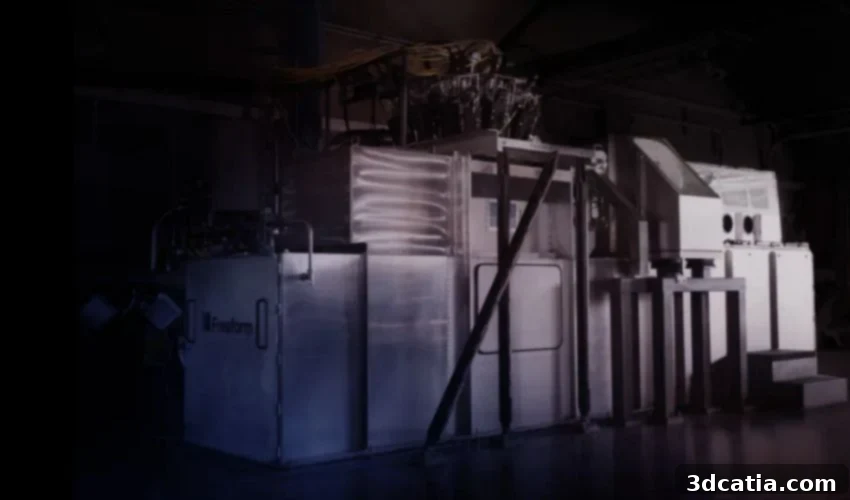
Freeform Revolutionizes Metal 3D Printing with AI: Secures $14M Investment from NVIDIA and AE Ventures
In 2019, a visionary team of former SpaceX engineers embarked on a mission to redefine advanced manufacturing, founding Freeform – a pioneering company dedicated to metal 3D printing. Their innovative approach meticulously integrates cutting-edge artificial intelligence (AI), robust hardware-accelerated computing, and a sophisticated autonomous factory architecture. This powerful combination is designed to consistently produce metal parts of unparalleled quality, precision, and efficiency, setting new benchmarks in the industrial sector. Freeform’s ambition is to overcome long-standing limitations in additive manufacturing by infusing intelligence into every stage of the production process, from design optimization to final quality assurance.
This week marked a significant milestone for the Los Angeles-based innovator. Freeform proudly announced the successful securing of a substantial investment round, totaling $14 million, from two prominent strategic partners: NVIDIA’s NVentures and AE Ventures. This capital injection, as reported by TechCrunch, represents a transformative moment for Freeform, providing the crucial resources needed to dramatically accelerate its ambitious roadmap. NVIDIA’s involvement through NVentures signals a strong validation of Freeform’s AI-centric vision for industrial transformation. With these significant funds, Freeform is poised to supercharge its metal additive manufacturing capabilities, leveraging the full potential of advanced AI to push the boundaries of what’s currently achievable in high-volume, high-precision industrial production. This investment underscores the growing recognition of AI’s critical role in the future of manufacturing.
Freeform’s strategic focus, as highlighted in its official press release, addresses a critical and long-standing challenge within the modern manufacturing landscape: the pervasive lack of intelligent process control in conventional 3D metal printing. Traditional additive manufacturing methods often grapple with inconsistencies stemming from unpredictable material behavior, thermal stresses, laser variations, and environmental variables. These factors can lead to internal defects, inconsistent mechanical properties, higher scrap rates, and prolonged qualification times, particularly for mission-critical parts. Freeform posits that the intelligent implementation of AI is the definitive solution to these systemic issues. By continuously learning and adapting from every single print operation, their AI system can dynamically predict and mitigate potential inconsistencies in real-time. This continuous feedback loop allows for instantaneous adjustments to print parameters, ensuring superior quality, unprecedented repeatability, and optimal part performance across all manufactured components. While machine learning has been integrated into various facets of additive manufacturing for several years – assisting in the generation of intelligent designs, optimizing build parameters, and enhancing quality assurance protocols – Freeform is committed to advancing this technology far beyond its current applications, aiming for a truly autonomous and self-optimizing production paradigm that minimizes human intervention and maximizes output quality.
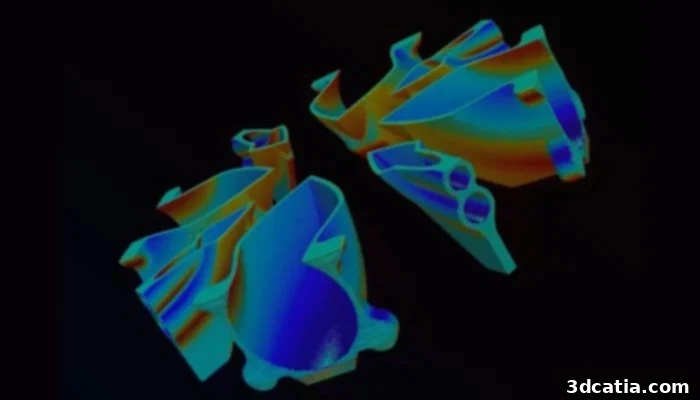
A pivotal aspect of this strategic investment is Freeform’s integration into NVIDIA Inception, a prestigious program specifically designed to support and accelerate the growth of innovative startups by providing access to cutting-edge technology, resources, and expertise. This partnership extends beyond financial backing, as Freeform will gain direct access to NVIDIA’s state-of-the-art accelerated computing platform. This formidable platform, powered by NVIDIA’s advanced GPUs and CUDA architecture, is set to bolster Freeform’s already sophisticated AI-driven manufacturing platform, significantly enhancing its computational capabilities and processing power. The tangible benefits of integrating such advanced AI are profound. Freeform’s proprietary AI technology boasts the ability to predict manufacturing outcomes in real-time, instantaneously adjusting parameters and processes to maintain optimal conditions throughout the print cycle. This unprecedented level of predictive control ensures that each and every metal part produced is delivered with exacting precision and comprehensive digital verification. Digital verification involves advanced in-situ monitoring and analysis, comparing actual print data against ideal models to guarantee conformance to design specifications. Furthermore, the platform’s deep understanding and real-time manipulation of the complex physics governing metal 3D printing processes – such as melt pool dynamics, solidification rates, and thermal gradients – empower Freeform to fabricate highly advanced metal components with unprecedented speed and accuracy, far surpassing the limitations and potential for human error inherent in conventional manufacturing methods.
Erik Palitsch, the esteemed CEO and co-founder of Freeform, articulated the profound synergy between NVIDIA’s technological prowess and Freeform’s core mission during the announcement. In his statement, Palitsch emphasized how this collaboration will redefine the possibilities within metal additive manufacturing, particularly concerning speed and quality. “Building on NVIDIA’s technology allows us to push the boundaries of what metal 3D printing can achieve, giving us the power to produce high-quality, digitally verified parts at speeds that were unimaginable a few years ago,” he stated. This sentiment underscores the transformative impact that accelerated computing combined with intelligent AI is expected to have on the entire production lifecycle. By reducing iteration cycles and enabling faster validation, Freeform can significantly shorten time-to-market for complex components, offering a competitive advantage to its clients in rapidly evolving industries. The ability to guarantee quality through digital verification further reduces post-processing and inspection costs, streamlining the entire manufacturing workflow.
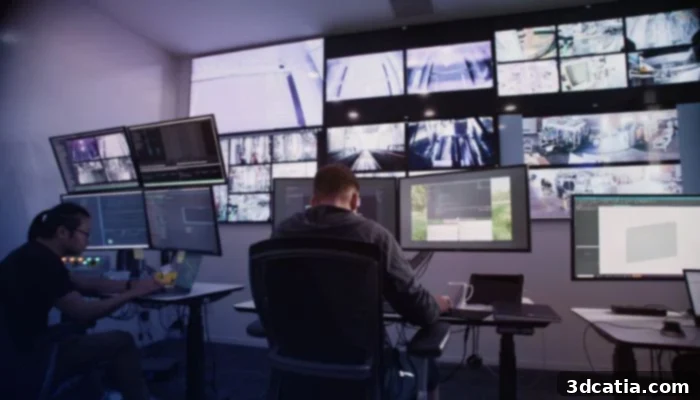
Beyond enhancing its existing platform, Freeform is also actively engaged in the ambitious endeavor of constructing what promises to be the world’s first truly AI-native, fully autonomous metal 3D printing factory. This groundbreaking facility is envisioned as a paradigm of Industry 4.0, where every aspect of the manufacturing process is intelligently managed and optimized, with minimal human intervention. Its sophisticated system will intricately weave together advanced sensing technologies – such as high-resolution cameras, thermal sensors, and spectroscopic analysis – precision process control mechanisms, and continuous machine learning algorithms. This integrated approach will allow the factory to dynamically adjust manufacturing parameters in real-time, responding to minute variations in material properties, environmental conditions, or machine performance. This ensures unwavering precision, impeccable quality, and unparalleled scalability for industrial-scale production. Mohamed “Sid” Siddeek, Corporate Vice President at NVIDIA and the insightful head of NVentures, eloquently spoke of Freeform’s immense potential to disrupt and elevate the entire additive manufacturing sector. “[Freeform’s] use of real-time AI-driven process controls and cutting-edge metrology systems sets a new standard for metal additive manufacturing,” Siddeek affirmed. This new standard implies a fundamental shift from reactive quality control, where defects are identified after production, to proactive process management, where potential issues are predicted and prevented before they can impact part quality, thereby revolutionizing efficiency and reliability.
Freeform’s Metal Additive Manufacturing for the Future: Expanding Horizons and Industrial Impact
The newly secured funding is not only designated for the construction of this pioneering autonomous factory but will also be strategically allocated to several other critical areas that underpin Freeform’s ambitious growth trajectory. A significant portion will be invested in expanding its comprehensive portfolio of printable materials, enabling a wider array of applications and catering to diverse industrial requirements. This expansion is crucial for addressing the specific material properties demanded by various high-stakes sectors, from high-strength alloys for structural components to superalloys for extreme temperature environments. Simultaneously, Freeform plans to substantially increase its production capacities, specifically targeting the demanding requirements of industries such as aerospace and defense, energy, semiconductor manufacturing, and the automotive sector. Each of these industries presents unique challenges and opportunities for metal additive manufacturing, including the need for lightweighting, complex geometries, reduced lead times, and enhanced performance. The potential for Freeform’s technology has already garnered significant attention, with aerospace giant Boeing actively planning to certify and scale Freeform’s advanced metal parts for both commercial aviation and defense applications in the near future. This partnership with Boeing underscores the trust and validation that Freeform’s innovative approach has already achieved within one of the most stringent and quality-demanding industries globally, highlighting the technology’s readiness for widespread industrial adoption and its capability to meet the highest safety and performance standards.
“To meet the demands of the 21st century, companies need technology that can move as fast as their ideas,” remarked Eugene Kim of AE Ventures, articulating the core philosophy behind their investment. He further elaborated on Freeform’s unique position in the market: “Freeform is light years ahead in metal additive manufacturing, offering a scalable, flexible solution that ensures quality at every stage—from prototype to full-scale production. This is the breakthrough the aerospace industry has been waiting for. AE Ventures partnered with the highest levels of Boeing’s technical staff to review Freeform’s printing capability, and we have walked away extremely confident in their ability to revolutionize metal additive manufacturing.” This resounding endorsement from a major aerospace investor, backed by rigorous technical review from Boeing, speaks volumes about the maturity and disruptive potential of Freeform’s technology. The ability to seamlessly transition from rapid prototyping to validated, high-volume production with consistent, verifiable quality is a critical game-changer for industries that traditionally face long lead times, high costs, and complex qualification processes associated with conventional manufacturing methods. Freeform’s approach promises to unlock unprecedented levels of design freedom and manufacturing agility.
According to Freeform CEO Erik Palitsch, the industrial manufacturing sector is long overdue for a fundamental paradigm shift, moving away from legacy processes that no longer meet modern demands. “The industrial world has operated under the same constraints for far too long,” Palitsch asserted, highlighting the limitations imposed by outdated processes that restrict innovation and increase costs. “We’re throwing out the old playbook. By combining AI, supercomputing, and advanced sensing, we’re empowering industries to move from concept to mass production at record speed—and at a fraction of the cost.” This bold statement encapsulates Freeform’s vision of a future where design innovation is no longer hindered by manufacturing limitations. The integration of artificial intelligence allows for intelligent optimization of print parameters, reducing material waste, energy consumption, and the need for costly trial-and-error iterations. Supercomputing provides the computational muscle for complex simulations, real-time process adjustments, and rapid data analysis, enabling unparalleled speed. Meanwhile, advanced sensing networks continuously monitor and feed data back into the AI, creating a closed-loop system of continuous improvement and predictive maintenance. This synergistic approach promises not only unparalleled speed and cost-efficiency but also a significant reduction in environmental impact through optimized material usage and energy footprint, fostering a more sustainable manufacturing ecosystem. Freeform’s strategy is not merely an incremental improvement but a fundamental re-imagining of how high-value metal parts are designed, produced, and qualified, opening up new possibilities for engineers and product developers across critical sectors globally. For a more detailed understanding of Freeform’s recent strategic investment, readers are encouraged to consult its official press release, available here.
What are your thoughts on Freeform’s pioneering efforts to seamlessly integrate AI with metal additive manufacturing? We invite you to share your insights in a comment below or engage with us on our dedicated LinkedIn, Facebook, and Twitter pages! Furthermore, don’t miss out on the latest advancements and breaking news in the dynamic world of 3D printing; make sure to sign up for our free weekly newsletter here, delivered directly to your inbox! For visual content and deeper dives into additive manufacturing technologies, you can also explore all our videos on our dedicated YouTube channel.
*All Photo Credits: Freeform