
Additive Manufacturing for Defense: US Army & UCF Optimize 3D Printed Magnesium Alloys for Lighter Military Gear
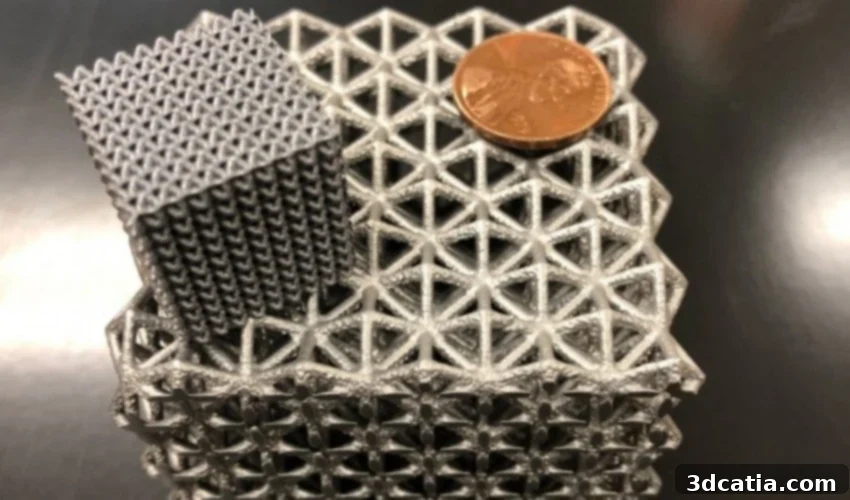
The strategic integration of advanced manufacturing technologies continues to redefine capabilities across various sectors, with defense leading the charge in leveraging these innovations for enhanced operational readiness. Once again, the United States military has demonstrated a keen interest in harnessing the power of 3D printing. In a significant collaboration, researchers from the United States Army have partnered with academic experts from the University of Central Florida (UCF) to push the boundaries of additive manufacturing. This joint effort successfully focused on optimizing the 3D printing process for a specialized magnesium alloy, WE43, achieving higher density in intricate micro-lattice structures. This breakthrough is poised to enable the Army to supply future soldiers with extremely lightweight yet robust components, fundamentally altering logistics and soldier performance.
One of the most widely recognized and transformative advantages of additive manufacturing is its unparalleled ability to produce parts that are significantly lighter than those manufactured using conventional methods. This inherent benefit serves as the primary impetus behind this particular research initiative. The sheer weight of equipment carried by American soldiers in the field is a critical concern; for instance, standard combat gear alone can weigh upwards of 43 pounds, and this figure does not even account for any specialized equipment a soldier might need for a specific mission. Consequently, comprehensive research into innovative methods for literally lightening this load is of paramount importance for national defense and soldier well-being.
Dr. Brandon McWilliams, the lead researcher for 3D printing metals at the United States Army Combat Capabilities Development Command (DEVCOM) Army Research Laboratory, articulated the strategic rationale behind this groundbreaking project: “Current systems are too heavy, which increases burden to the Soldier, reduces fuel efficiency and degrades mission effectiveness. It is my goal as an Army researcher to conduct research, which has the maximum chance of success of transition from basic and applied research stage to practical application in order to enable transformational overmatch.” This statement underscores the military’s commitment to not just incremental improvements, but to achieving “transformational overmatch” through advanced technological integration.

U.S. Soldiers are expected to carry heavy equipment with them on uncertain terrain. For this reason, increasingly the Army has looked into ways to lighten packs through technology like 3D printing (photo credits: .S. Army DEVCOM Army Research Laboratory)
Addressing the Weight Challenge: Why Lightweighting Matters
The impact of heavy loads on soldiers extends far beyond mere discomfort. It directly affects their agility, endurance, and overall combat effectiveness. Prolonged carrying of heavy gear can lead to increased fatigue, musculoskeletal injuries, and reduced cognitive function, all of which compromise a soldier’s ability to perform under pressure. Furthermore, lighter equipment not only benefits the individual soldier but also has broader logistical and strategic advantages. Reduced weight translates to lower fuel consumption for transport vehicles, longer operational ranges, and the ability to carry more essential supplies or additional specialized equipment. This ripple effect of weight reduction contributes significantly to enhanced mission success and increased operational flexibility for the entire military force.
The United States Army Research Project with UCF: A Deep Dive into Innovation
Achieving significant weight reduction without compromising strength or durability is a complex challenge, one that often proves easier to conceptualize than to execute. This inherent difficulty was the driving force behind the collaborative research project with UCF, an initiative that originated from the United States Army’s forward-thinking Open Campus program. This program is designed to foster partnerships with academic institutions and industry to accelerate technological advancements crucial for national security. The project’s core objective was two-fold: to optimize the additive manufacturing process for a high-strength magnesium alloy and to successfully fabricate complex micro-lattice structures using this material. A substantial portion of the research was dedicated to the intricacies of 3D printing with magnesium alloy, a material known for its lightweight properties but also its manufacturing challenges.
Dr. McWilliams elaborated on the material selection: “We used a magnesium alloy known as WE43, which has only been successfully 3D printed by a handful of researchers. In this work, we optimized the process to achieve higher density than previously reported and used that to produce and characterize lattice structures made up of WE43.” This statement highlights the novelty and difficulty associated with working with WE43 in an additive manufacturing context, underscoring the significance of their success in achieving superior material density.
The Power of WE43 Magnesium Alloy and Micro-Lattice Structures
According to the diligent researchers, WE43 stands out as a high-strength, high creep-resistant magnesium alloy. Its exceptional properties make it suitable for a demanding range of applications. Notably, it can withstand operational temperatures reaching up to 300°C (572°F) while simultaneously exhibiting excellent mechanical properties and superior corrosion resistance. This unique combination of attributes positions WE43 as an ideal material not only for critical defense applications, where components are exposed to extreme conditions, but also for other high-performance sectors such as aerospace, automotive, and even biomedical industries where lightweighting and durability are paramount.
However, the project’s ambition extended beyond merely validating the material; it also aimed to optimize additive manufacturing processes specifically for the creation of micro-lattice structures. These sophisticated geometries offer a groundbreaking advantage: they enable the production of significantly lighter parts that remarkably retain or even enhance their structural strength and rigidity. Lattice structures achieve this by distributing stress more effectively across a larger surface area while minimizing the overall material volume used. They derive their strength from their intricate, interconnected network of struts and nodes, often mimicking natural biological structures like bone, which are renowned for their optimal strength-to-weight ratios. The ability to precisely control the internal architecture of a material at a micro-scale is virtually impossible with traditional manufacturing techniques, highlighting why advanced additive manufacturing is indispensable for their creation.
For this particular application, laser powder bed fusion (LPBF) was employed. LPBF is a popular and highly precise metal additive manufacturing technology that involves using a high-power laser to selectively melt and fuse metallic powder particles layer by layer. This process allows for the creation of complex geometries with exceptional detail and high density, making it perfectly suited for fabricating the delicate yet strong micro-lattice structures from WE43. The precision of LPBF ensures that each strut and node within the lattice is formed accurately, which is crucial for the structural integrity and performance of the final lightweight component. The ability to customize these internal structures opens up new avenues for designing components with tailored mechanical properties, leading to materials that are not only lighter but also potentially stronger and more resilient under specific loads.
Future Implications and Strategic Outlook
The successful outcomes of this research represent a pivotal step in the ongoing modernization efforts of the Army’s current weapon systems and equipment. The immediate next phase of this critical research will involve a rigorous evaluation of the high strain rate and ballistic properties of these 3D-printed materials. This testing is indispensable for military applications, as it will determine how these lightweight components perform under extreme conditions, such as sudden impacts or projectile strikes. Understanding their resilience and behavior under such stresses is crucial for their eventual deployment in real-world scenarios, ensuring that enhanced lightweighting does not come at the expense of soldier safety or operational effectiveness. The findings from this comprehensive research have been published in the esteemed peer-reviewed journal Materialia, offering valuable insights to the wider scientific and engineering communities. Readers interested in delving deeper into the technical specifics of these findings can access the full article HERE.
This collaborative success between the U.S. Army and UCF exemplifies the profound potential of interdisciplinary research in driving innovation for defense. By harnessing advanced additive manufacturing techniques and specialized materials like WE43 magnesium alloy, the military is not merely seeking to lighten the load but to fundamentally redefine the capabilities of future soldiers and weapon systems. The ability to rapidly design and produce bespoke, high-performance, and lightweight components will significantly impact everything from individual soldier gear to complex aerospace structures and next-generation vehicle platforms. This strategic investment in materials science and additive manufacturing ensures that the United States military maintains its technological edge, providing soldiers with unparalleled advantages on the battlefield and beyond. As additive manufacturing technologies continue to evolve, we can anticipate even more transformative applications emerging from such crucial research partnerships, paving the way for a new era of defense capabilities.
What are your thoughts on this latest research into 3D printing optimization for military applications? Do you believe the US military will increasingly integrate additive manufacturing across various domains? We invite you to share your perspectives and engage with our community. Let us know your insights in a comment below or connect with us on our Facebook, Twitter, and LinkedIn pages! For the latest updates in the world of 3D printing, sign up for our free weekly Newsletter here, delivering cutting-edge news directly to your inbox!
All Photo Credits: U.S. Army DEVCOM Army Research Laboratory